



The sequence of events that led to the cancellation of Adelaide Writers Week revolve around two central questions. First, what, if any, should be the limits of free speech? Second, what, if anything, should disqualify a person from being heard? In the aftermath of the Bondi Terror Attack, the urgency in answering these questions has seen the Commonwealth Parliament recalled specifically to debate proposed legislation that will, amongst other things, redefine how the law answers such questions.
Beyond the law, what does ethics have to say about such fundamental matters in which freedom, justice and security are in obvious tension?
I have consistently argued for the following position. First, there should be a rebuttable presumption in favour of free speech. That is, our ‘default’ position is that there should be as much free speech as possible. However, I have always set two ‘boundary conditions’. First, there should be a strict prohibition against speech that calls into question or denies the intrinsic dignity and humanity of another person. Anything that implies that one person is not as fully human as another would be proscribed. This is because every human rights abuse – up to and especially including genocide – begins with the denial of the target’s humanity. It is this denial that makes it possible for people to do to others what would otherwise be inconceivable. Second, I would prohibit speech that incites violence against an individual or group.
As will be obvious, these are fairly minimal restrictions. They still leave room for people to cause offense, to harangue, to stoke prejudice, to make people feel unsafe, and so on. That is why I have come to the view that something more is needed. In the past, I have struggled to find a principle that would allow for the degree of free speech that is needed to preserve a vibrant, liberal democracy while, at the same time, limiting the harm done by those who seek to wound individuals, groups or the whole of society by means of what they say.
In particular, how do you respond to someone who foments hatred of others – but falls just short of denying their humanity?
It recently occurred to me that the principle I have been looking for can be found in the most unlikely of places: the football field. I was never any good at sport and was always the obvious ‘weak link’ in any team. So, I took a particular interest in the maxim that one should “play the ball and not the person”. Of course, the idea is not exclusively one for sport. Philosophy has long decried the validity of the ad hominem argument – where you attack the person advancing an argument rather than tackle the idea itself. Christianity teaches one to ‘loathe the sin and love the sinner’. In any case, whether one takes the idea from the football field or the list of logical fallacies or from a religion, the idea is pretty easy to ‘get’. In essence: feel free to discuss what is being done – condemn the conduct if you think this justified. However, with one possible exception, do not attack those whom you believe to be responsible.
The one possible exception relates to those in positions of power – where a decent dose of satire is never wasted. That said, the powerful can make bad decisions without being bad people – and calling their integrity into question is often cruel and unjustified. Beyond this, if powerful people preside over wrongdoing, then let the courts and tribunals hold them to account.
The ‘play the ball’ principle commends itself as a practical tool for distinguishing between what should and should not be said in a society that is trying to balance a commitment to free speech with a commitment to avoid causing harm to others. It is especially important that this curbs the tendency of ‘bad faith’ actors (especially those with power) to cultivate an association between certain ideas and certain people. For example, we see this when someone who merely questions a political, religious or cultural practice is labelled as a ‘bigot’ (or worse).
In practice, we will now explicitly apply the ‘play the ball’ principle when curating of the Festival of Dangerous Ideas (FODI) – adding it to the matrix of issues we take into account when developing and presenting the program. FODI seeks to create spaces where it is ‘safe to’ encounter challenging ideas. For example, it should be possible to discuss events such as: the civic rebellion and repression in Iran, the Russian war with Ukraine, Israel’s response to Hamas’ terror attack, and so on … without attacking Iranians, Shia, Russians, Ukrainians, Israelis or Palestinians. Indeed, I think most Australians want to be able to discuss the issues – no matter how challenging – knowing that they will not be targeted, shunned or condemned for doing so.
I recognise that there are a couple of weaknesses in what I have outlined above. First, I know that some people identify so closely with an idea that they feel personally attacked even by the most sincerely directed question or comment.
Yet, in my opinion, a measure of discomfort should not be enough to silence the question. We all need to be mature enough to distinguish between challenges to our beliefs and threats to our identity.
Second, while the prohibition against the incitement of violence is clear, the other two I have proposed are much more ambiguous. As such, they might be difficult to codify in law.
Even so, these are principles that I think can be applied in practice – especially if we are all willing to think before we speak. A civil society depends on it.

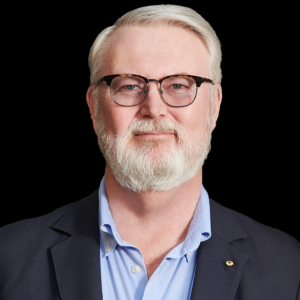
BY Simon Longstaff
Simon Longstaff began his working life on Groote Eylandt in the Northern Territory of Australia. He is proud of his kinship ties to the Anindilyakwa people. After a period studying law in Sydney and teaching in Tasmania, he pursued postgraduate studies as a Member of Magdalene College, Cambridge. In 1991, Simon commenced his work as the first Executive Director of The Ethics Centre. In 2013, he was made an officer of the Order of Australia (AO) for “distinguished service to the community through the promotion of ethical standards in governance and business, to improving corporate responsibility, and to philosophy.” Simon is an Adjunct Professor of the Australian Graduate School of Management at UNSW, a Fellow of CPA Australia, the Royal Society of NSW and the Australian Risk Policy Institute.
Ethics in your inbox.
Get the latest inspiration, intelligence, events & more.
By signing up you agree to our privacy policy