


Paul Thomas Anderson’s One Battle After Another, widely considered to be the frontrunner in the Oscars race for Best Picture, shouldn’t really work.
It’s set in the future (kind of), and its characters rail against a government that the film doesn’t really try to draw or explain. Its tone freewheels about the place from black comedy to action film. Some of the performances, like Teyana Taylor’s turn as a revolutionary and reluctant mother, are tender and human; others, like Sean Penn’s vicious army officer, border on caricature.
But despite such a vast mish mash of ideas and styles, at its core the film explores the dangers of a perceived disconnect between the personal and the political – more broadly, how we choose to respond to disenfranchisement through our personal morality and interpersonal relationships.
Macro and micro
Films about politics tend to fall into one of two camps. They either pick the broadest possible canvas, looking at societal issues from a top-down view – take Oliver Stone’s JFK, or more recently, Adam McKay’s Vice. Or, they go micro, and fixate on the lives of individuals caught up in times of political unrest – Costa-Gavras’ Missing, or the spate of “serious men looking through files” films, with All The President’s Men being the clearest example. The focus of the former type of film is history itself; the focus of the second type of film is the people who are shaped by history.
Anderson’s film, however, sidesteps this binary entirely, by casting the personal as inherently political. In his film, politics isn’t something that happens outside the characters’ houses, out in the “real world”. Instead, every single personal relationship is fraught with societal implications, and its characters are constantly juggling what is good “for the cause”, and what is good for their own lives.
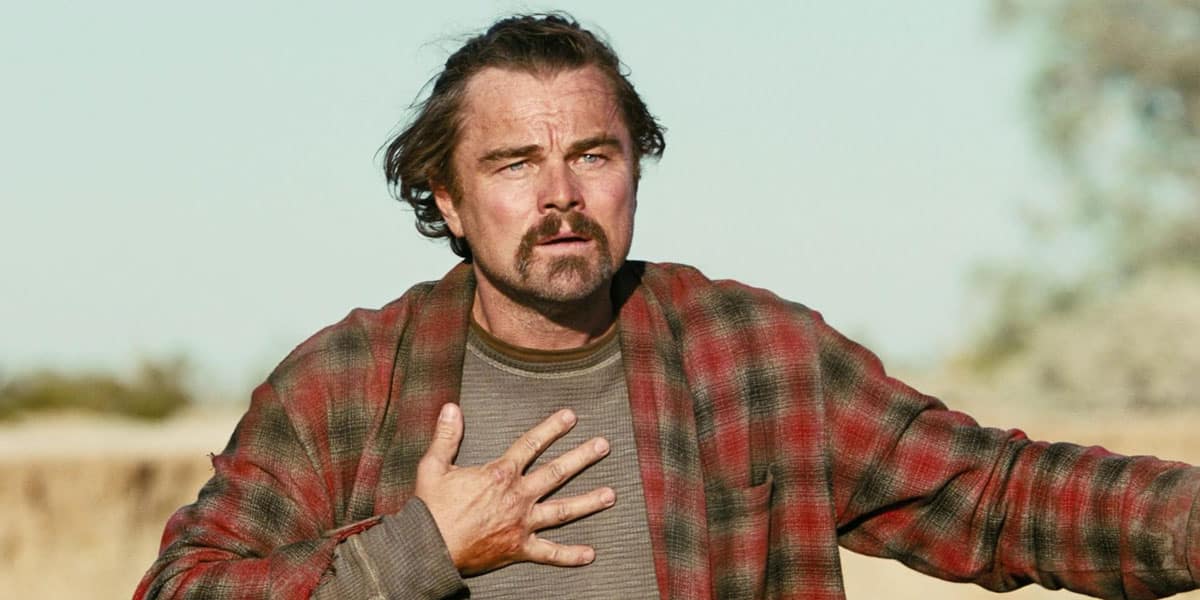
Take the strained relationship between Leonardo DiCaprio’s frazzled revolutionary, Bob, and his daughter Willa (Chase Infiniti). Bob, once a firm believer in violent insurrection, has become addled by alcohol and pot, adrift in a world that he doesn’t understand. Willa, by contrast, is fully versed in that world; her group of friends freely explore their gender, much to Bob’s confused chagrin. Father and daughter squabble constantly, each subtly casting the other as ill-equipped to deal with the world and its horrors. Bob thinks that Willa is inherently vulnerable and naive; Willa thinks that Bob is a dusty relic of the past.

Such personal clashes are stand-ins for a much broader clash concerning different approaches to revolution. Their ideologies aren’t snipped off from their day-to-day lives. Politics is something that they both embody, so it influences their every interaction; their every word. As a result, their beliefs cause constant friction in their home – and as their views stagnate, so too does their relationship.
Violence versus humanism
It’s not just Willa and Bob who struggle in this way, either. One of the film’s key plot strands is a relationship of sorts, conducted between Perfidia Beverly Hills (Taylor) and Col. Steven J. Lockjaw (Penn). Ideologically, the two are as opposed as could be imagined; she’s a revolutionary, he’s a racist fascist. But interpersonally, they are constantly drawn together, an attraction that sits at cross-purposes to their views.

They’re not entirely different, however. Lockjaw has sacrificed any closeness with his fellow human beings – Perfidia included – in the pursuit of a sad, violent fascist wet-dream. His political ideology has led to a complete disconnection from those around him, sending him on a hateful rampage that culminates in him violently threatening his own daughter. And in Perfidia’s case, a belief that the political must come above and beyond the personal leads her to abandon her own family, and sell out her friends.
One Battle After Another makes it clear that Lockjaw’s warped understanding of the world is far more harmful than Perfidia’s – it doesn’t completely equate the two. But nonetheless, Anderson does consistently make a light mockery of those who abandon those closest to them in favour of “the cause”, whatever that might be.
There’s no victory in becoming a “perfect revolutionary” who doesn’t know how to interact with friends, parents, or lovers.
Moreover, he doesn’t seem to believe such a thing is even possible. When we meet Bob, for instance, his politics are good – he has not stopped stoking the fires of resistance and revolution – but his home life is a mess. As a result, he’s a figure of sad comedy; constantly befuddled, clad in his dressing gown, unable to meaningfully engage with a world that is filled with other human beings, not just revolutionary cries.
And in this way, we understand “politics” as just a way of describing the organisation of human lives – and so any political ideology that forgets about the value of a single human connection is inherently flawed. One Battle After Another advocates for a type of revolution that tackles the personal and the political, by acknowledging that they are one and the same thing.
Freedom is found at the film’s conclusion, not just because Willa is now a fully-fledged revolutionary, using a pirate radio to find new battles to fight. It’s found because she and Bob have now come to a place of true peace and understanding with one another. By contrast, Perfidia and Lockjaw fail to find such healing – Perfidia disappears from the film entirely, and Lockjaw ends up gassed to death by the very individuals that he considered his compatriots. Their ends are lonely, in a very literal sense.
In this way, Anderson reminds us that the macro is made up of the micro. As the old saying by activist Mariame Kaba goes, hope is a discipline that requires practice in every interaction, and in every sphere, whether we’re dealing with the broader world, or those closest to us. What changes tyranny? Not just the big battles. But the little ones too: one after another.


BY Joseph Earp
Joseph Earp is a poet, journalist and philosophy student. He is currently undertaking his PhD at the University of Sydney, studying the work of David Hume.
Ethics in your inbox.
Get the latest inspiration, intelligence, events & more.
By signing up you agree to our privacy policy