

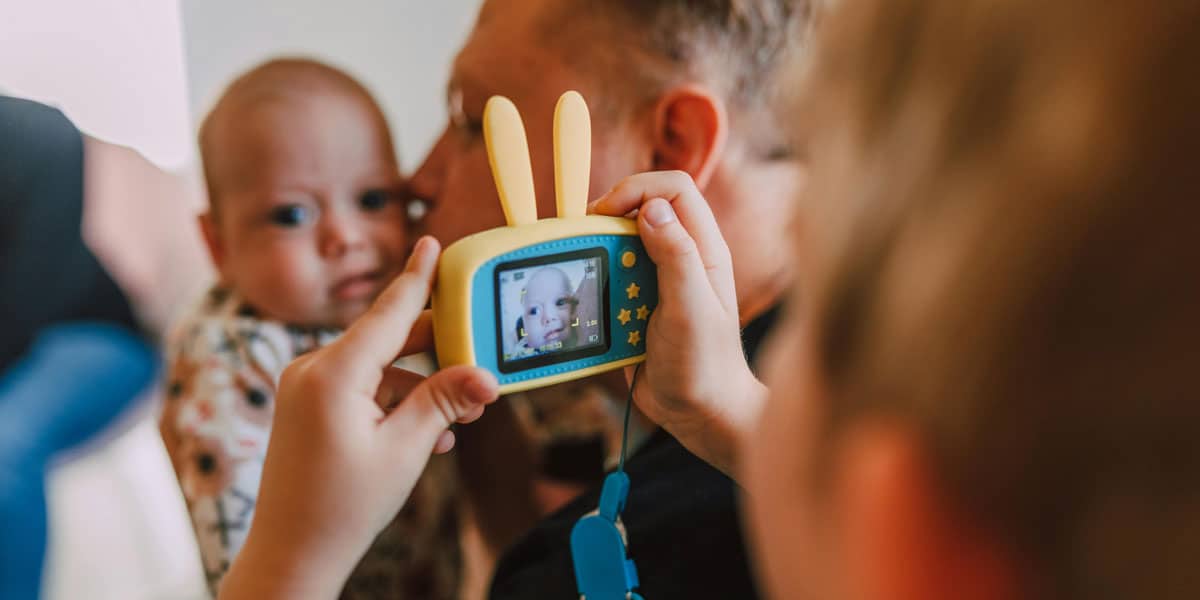
Before they learn to read, some children have already built an entire online audience. Their lives – from birthday parties to emotional breakdowns – are shared, sponsored, and monetised.
In a digital world driven by content and clicks, the world of kidfluencing forces us to confront a difficult question: what do we owe the children growing up on camera?
Kidfluencing refers to the practice of featuring children prominently in monetised social media content, often on platforms like Youtube, Instagram and Tiktok. Typically, these accounts are run by parents or guardians, but the child’s personality, appearance and daily life are the main attraction.
It’s a phenomenon that raises serious ethical questions, not only about labour laws and consent, but also the commodification of identity in a digital economy. There’s a difference between recording your child’s first steps as a cherished family memory and uploading them to a platform that pays per view. Kidfluencing transforms ordinary family life into entertainment, monetised through brand deals and advertising.
One of the most well-known examples is Ryan’s World, a YouTube channel that began when Ryan Kaji was just three years old, after videos of him enthusiastically unboxing and reviewing toys went viral. Filmed largely at home with his parents behind the camera, the channel quickly expanded into skits, branded merchandise and licensing deals, amassing millions of subscribers worldwide. According to Forbes, Ryan Kaji (and by extension, his family) earned over $29 million in 2020 alone, making him one of the highest-paid Youtubers in the world.
On Instagram and TikTok, children model clothes, promote products and star in sponsored content – sometimes before they can even spell their name. At face value it seems like a bit of harmless fun, or for some, a win-win. The child gets toys, fame, maybe a financial head start in life. The parents maintain control over the content, often managing accounts and brand deals behind the scenes, with household finances often tied to its success. The audience is entertained. However, things are rarely as simple as they appear.
No child can fully grasp the implications of being filmed, the permanence of their digital footprint, or consent to a video that may follow them into adulthood. With growing reports of exploitation, the risks become harder to ignore.
Unlike traditional child actors, who are protected by specific labour laws and compensated through trust accounts (e.g. the Coogan law in the US), kidfluencers operate in a largely unregulated space. In 2020, France became one of the first countries to mandate that earnings from children in monetised content be placed in secure funds. By contrast, Australia remains in a legal grey zone, leaving young content creators vulnerable not just to online predators but, more troublingly, to exploitation within their own homes.
In many kidfluencing households, the line between parent and producer is blurred. The parents become managers, marketers and editors. Their home becomes a set, and their childhood becomes content. High profile cases such as YouTube star Piper Rockelle – who rose to fame in early adolescence as part of a ‘squad’ channel, illustrates the risk of this dynamic, with lawsuits from former collaborators alleging emotional abuse, coercive filming practices and adult control over earnings recently surfacing. It’s easy to say that the parents only want the best for their children, but what happens when the child’s image pays the mortgage? How easy is it then to switch off the camera, to reject a lucrative brand deal, when another viral moment could be seconds away?
There’s a creeping danger when parenting becomes performative, when the child’s real-life experiences are filtered through purely what is most ‘engaging’ in the online world.
As philosopher Jean Baudrillard warned, we live in an era of simulacra, where the representations of reality become reality. For kidfluencers, this means the curated online persona, that is optimised for algorithms and audience approval can overtake the authentic self, encouraging children to perform an identity shaped by what attracts views rather than who they are offline.
A child’s right to privacy, to make decisions and mistakes and to grow without millions watching, should not be a luxury. It is essential to healthy development. Yet, in the rush to publicly document every cute moment in pursuit of greater engagement and revenue, we are building a digital archive that a child never agreed to create and cannot erase. Philosopher John Stuart Mill once argued that “the worth of a state in the long run is the worth of the individuals composing it.” Denying children meaningful control over their own identities undermines that worth from the very beginning.
What happens when children are denied the right to meaningfully choose how they participate in the state of their own lives? Imagine turning 16 and discovering a decade of your most vulnerable and embarrassing moments permanently online, shared not by bullies, but by your own parents. In a society that rightly criticises government surveillance and defends the right to be forgotten, how it be justified denying children of those same rights within their homes?
So where does that leave us? Should children be banned from appearing online altogether? Not necessarily. However, allowing kidfluencing to continue ethically requires a far more robust framework than currently exists. Such a framework would need to recognise children as rights-bearing individuals, not extensions of a family brand. This could include clear limits on filming hours, mandatory protection of earnings in independent trust accounts and regular review of a child’s participation as they grow older and gain the capacity to meaningfully consent or withdraw consent altogether.
Just as importantly, ethical boundaries must be drawn between parenting and employment. Children should not be pressured to perform or disciplined for not consenting or be valued primarily for their commercial output. Oversight mechanisms, whether legal or platform-based, are necessary to ensure parents are not acting simultaneously as guardians and employers without accountability. Above all, this requires a cultural shift, one that values the unseen, unrecorded moment of childhood as deeply as the ones we post.
In today’s digital age, parents act as the curators of their children’s identities, shaping how they are seen long before children can define themselves. When moments of play, emotion and vulnerability are repeatedly framed for public consumption, a child’s sense of self risks becoming entangled with performance and audience approval. The danger is not only exploitation for profit, but the gradual erosion of a child’s ability to grow, change and experiment with identity away from public scrutiny. A childhood lived under observation can narrow who a child feels allowed to be.
We owe it to children to protect their right to develop an identity that is not permanently fixed, searchable or shaped by the expectations of strangers. Let them just be kids.
The price of playtime by Dana Carr is one of the Highly Commended essays in our Young Writers’ 2025 Competition. Find out more about the competition here.


BY Dana Carr
Dana is a 16-year-old student with a passion for STEM and the entailing ethical issues of rapidly emerging technologies. Often running, making music, or baking - where she likes to find time to reflect, now more than ever, her interest in how the digital world shapes young people.
Ethics in your inbox.
Get the latest inspiration, intelligence, events & more.
By signing up you agree to our privacy policy