

Anonymity can help people speak truth to power or remain safely out of the limelight. But it can also be used to avoid accountability. When should we have a right to know who someone really is?
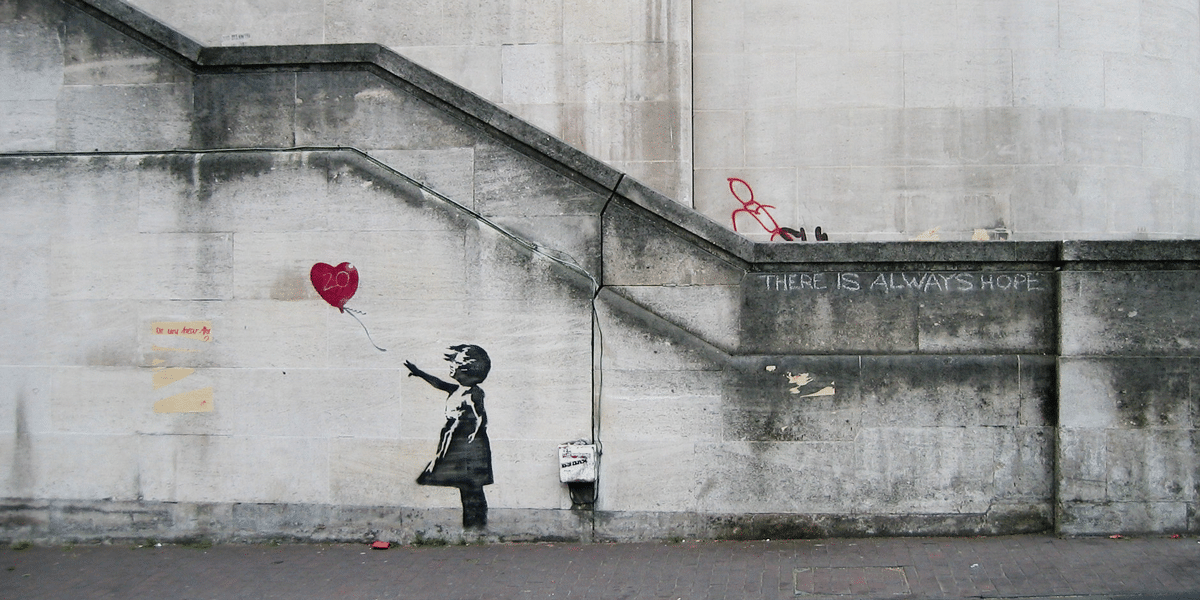
Do you know the true identity of the elusive street artist, Banksy? What about the pseudonymous inventor of Bitcoin, Satoshi Nakamoto? Do you know the name of the person (or people) behind the notorious “Q” drops that drove the QAnon conspiracy movement?
If you are curious, the good news is that reporters have worked hard to unmask these hidden figures: a recent Reuters article claims to have definitively revealed the identity of Banksy; an exhaustive New York Times investigation purports to have pinpointed the man behind the Satoshi Nakamoto pseudonym; and a 2021 HBO documentary delves into the colourful characters that appear to have posted as Q.
But should we read these articles or watch this documentary? Are we entitled to know who they are? Or do the subjects deserve to remain anonymous?
There are some very good reasons why someone might want to remain anonymous. Anonymity can protect those who speak truth to power or express views that go against the dominant narrative. It’s a protective feature that allows journalists to uncover facts in the public interest without putting sources at risk. It enables people to voice opinions that can be judged on their merit without listeners being distracted by the messenger. It can also help people avoid the invasive limelight that inevitably surrounds anyone who draws the attention of the public eye.
However, the same shield of anonymity can also help people escape accountability for their actions.
Who says what
In a liberal society, each of us has a basic right to privacy. That means we have a right to restrict the distribution of personal information about us. That extends to a right to remain anonymous in spaces where our true identity isn’t required. But these are not inviolable rights; there will be circumstances where necessity or other factors override our right to remain anonymous.
One of those factors is that, sometimes, people need to know who is saying something in order to know whether it’s legitimate or not. There’s a big difference between some random person on the street declaring you “guilty” and a judge in a courtroom doing the same thing. Similarly, it’s important to know that the person giving you advice on drug dosage is a certified medical professional rather than someone’s unqualified uncle (a point that is often overlooked in online discourse).
This is why it was arguably justified to unmask Q, who purported to be an operative within the United States government. Their very name implied they had Q clearance, which gives access to highly classified information. If they were not who they said they were, people would likely have seen their posts in a very different light.
Had Q been making statements that were in the public interest, such as leaking evidence of serious wrongdoing by the government, then it might justify maintaining anonymity to protect their safety. However, many of Q’s posts gave demonstrably false information and fuelled destructive conspiracy theories, so there was good reason to override anonymity and seek to reveal their identity.
Public interest is a key test when deciding whether it’s justified to override someone’s wish to remain anonymous. However, public interest doesn’t just mean whatever the public is interested in, it means information that is of benefit to the public.
In the case of Satoshi Nakamoto, one of the journalists responsible for seeking his true identity stated that it was in the public interest to do so:
“One of the most significant inventors of the past century was unknown. That didn’t seem right to me. Eighteen months ago, I decided enough was enough. I needed to know who this person was, and I felt strongly that the public should too.”
But was it really necessary to know the name of the individual who invented Bitcoin? Unlike Q, it was the message that Nakamoto had that was important, not the messenger. The Bitcoin architecture could have been written by anyone and it would have still had the same impact. Just because people are intensely curious about who the inventor was doesn’t necessarily justify overriding their desire for anonymity.
Held to account
However, sometimes it’s important to know who someone is because they need to be held accountable for the influence they have. If Nakamoto were the CEO of a major technology company, we would want to have a way to question him about his intentions or to criticise bad decisions. However, once the Bitcoin paper was published, its operation is entirely out of Nakamoto’s hands. That doesn’t mean the individual behind the pseudonym might not be involved in Bitcoin businesses today. But in that case, we just hold them accountable for their actions in their current role.
There is one dimension that one could argue is in the public interest: some estimates say Nakamoto has over a million Bitcoin to his name, worth upwards of US$80 billion. Were he able to sell it all at the current market rate, that would make him one of the wealthiest people on the planet.
That power makes it more important to understand Nakamoto and his intentions when it comes to generating personal wealth and the future of Bitcoin. Although, to date, Nakamoto has not sold a single Bitcoin. Even if Nakamoto did start selling his stash of Bitcoins – which, in itself, might lead to revealing his identity – that doesn’t necessarily justify unmasking him. Any holder of great wealth is entitled to dispose of it as they please, within the bounds of the law.
On the other hand, Nakamoto’s tremendous potential wealth places a target on his back should his identity be revealed. Malicious actors could seek to extort or intimidate them into handing over some of their wealth. That gives us a good reason to be very cautious when deciding whether to reveal his true identity.
Outside the law
Public interest was also cited as a reason to unmask the street artist, Banksy. The Reuters journalists claim that “the public has a deep interest in understanding the identity and career of a figure with his profound and enduring influence on culture, the art industry and international political discourse”. However, as stated above, just because the public wants to know something doesn’t mean it has a right to know.
But Reuters also appealed to accountability.
“The people and institutions who seek to shape social and political discourse are subject to scrutiny, accountability, and, sometimes, unmasking. Banksy’s anonymity – a deliberate, public-facing, and profitable feature of his work – has enabled him to operate without such transparency.”
One of the central tenets of ethics is that individuals ought to be held accountable for their actions (with qualifiers, of course). And one of the reasons some people might seek anonymity is to avoid accountability.
But would the power of Banksy’s art to “shape social and political discourse” change if his name was known (we already know he’s an English man of middle age from previous works)? Perhaps one could level claims of cynicism or hypocrisy if his message was at odds with his lifestyle. But that might be one reason Banksy wishes to remain anonymous: so that the message isn’t distracted by the messenger.
Another factor is that Banksy’s art is – in most jurisdictions – illegal. That appears to be one of the justifications that Banksy had for concealing his identity early in his career.
Although, these days, it seems most authorities are inclined to welcome a Banksy work in a public space, due to the attention it draws and value it creates, rather than wanting to lock him up. So, it appears that even those who could hold Banksy legally accountable are already choosing not to do so, making his unmasking less justified in this regard.
Banksy has also made it clear that he is mistrustful of authority and many mainstream institutions, and anonymity is necessary for him to be able to speak truth to power. Indeed, should his identity be confirmed, then it would be significantly more difficult for him to travel and do his work in public spaces, or to avoid being arrested.
What these cases all show is that we need to carefully weigh an individual’s right to privacy and desire for anonymity against other concerns to ensure we have good reason to unmask them. If anonymity enables deception or prevents people being held to account for harming others, then there might be good reason to reveal their true identity.
But we must remember that, in the absence of good reasons to unmask someone, we ought to respect their desire for anonymity. Sometimes revealing someone’s true identity might put them at serious risk. So, just because we’re intensely curious about someone is, that doesn’t necessarily justify revealing their true identity.
Image: Dominic Robinson, Flickr

BY Tim Dean
Tim is the Resident Philosopher at The Ethics Centre, where he holds the Manos Chair of Ethics, and is an Honorary Associate at the University of Sydney. He has a Doctorate in philosophy from the University of New South Wales on the evolution of morality and specialises in ethics, public philosophy and critical thinking. He is the author of How We Became Human and has worked as an editor and writer for media outlets including The Conversation, Cosmos and Australian Life Scientist. He is the recipient of the Australasian Association of Philosophy Media Professionals’ Award for his work on philosophy in the public sphere. He has delivered workshops for businesses, NFPs and governments across Australia and Asia, including Facebook, Commonwealth Bank, KPMG, Sydney Opera House, Art Gallery of NSW, Clayton Utz, RSPCA, state and local governments, and many others.
Ethics in your inbox.
Get the latest inspiration, intelligence, events & more.
By signing up you agree to our privacy policy