

Let’s say you’re on your way to a first date. You’re entering into a situation that requires you to present the best version of yourself. It’s unlikely that you’ll begin by talking about something heinous you once did – bullying someone, stealing from a loved one, or even just committing some minor act of very human cruelty.
And if you did obscure that part of your past, no-one at this stage would judge you – we don’t expect immediate and totalising honesty, not even in the initial stages of intimacy. But we do tend to expect honesty at some point. The question is: when?
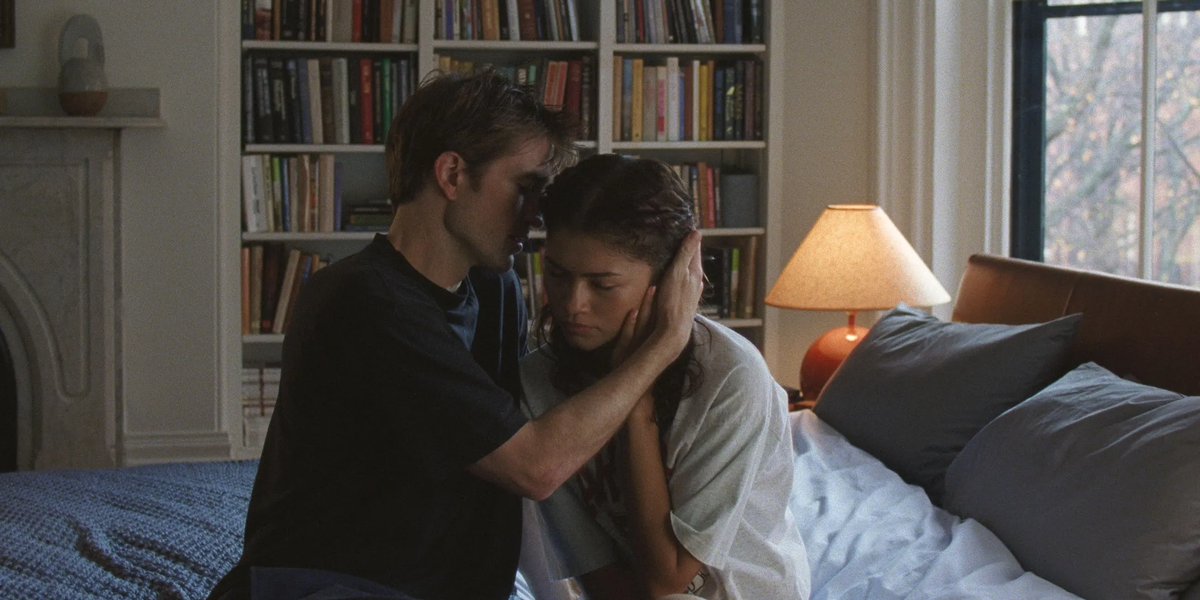
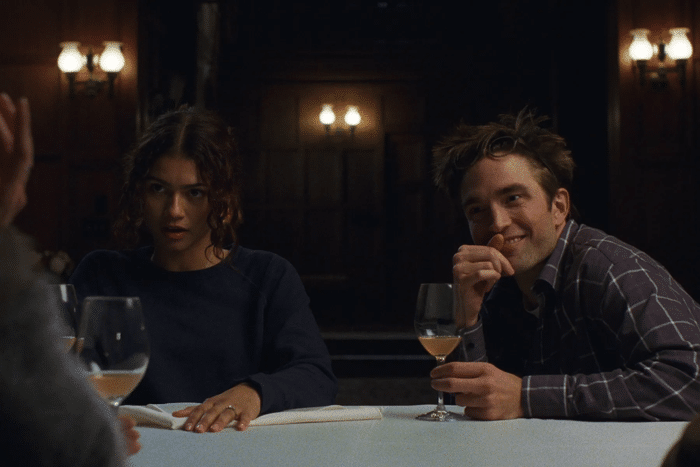
The Drama, the new film by provocateur Kristoffer Borgli, dramatises this extraordinarily thorny question of honesty in relationships, and the question of what we owe our partners. In Borgli’s black comedy, a relationship unravels after it comes to light that Emma (Zendaya) has withheld from her hubby-to-be Charlie (Robert Pattinson) that she once planned – but crucially, did not go through with – a school shooting.
Charlie’s ensuing spiral of doubts make sense: he thought he knew his partner fully. This revelation reveals that he didn’t.
Ethically permissible lies versus deception
So at what point did Emma start deceiving Charlie – and did she ever owe him this particular truth? If she had revealed on their first meeting that she had once prepared to mow down her fellow students, nobody would expect her to get a second date.
If Emma was an actual murderer, he would have been owed such knowledge much earlier. But given Emma didn’t actually commit an act of bloodshed, Borgli’s masterstroke is choosing a boundary case; one which we do, as an audience, find as shocking as Charlie, but doesn’t exactly fall into the domain of total deception.
Clearly, Charlie feels he should have known about Emma’s one-time plans. We might agree with him. Yet there’s no exact moment when that permissible lie turns into deception. We’d find it ridiculous to believe that there could be some arbitrary line – two years into the relationship, say – when her behaviour shifts from acceptable to unacceptable.
And then there’s the murkiness of the potential act itself. Let’s invert the revelation at the heart of The Drama, to try and discover what exactly keeps prodding at both Charlie, and at us. What if, instead of once planning a violent act that she then kept under wraps, Emma had hidden a kind act, an ethical act? What if she’d once donated a kidney and never told Charlie?
In that case, we’d expect him to be surprised, maybe. But we wouldn’t expect him to be shocked. And we certainly wouldn’t expect him to unravel.
What we learn then is that the potential crime here is not just that Emma lied: it’s that she theoretically benefited from that lie. If she’d told the truth about the planned shooting, she would have run the risk of Charlie leaving her, or the relationship falling apart. Lying about it thus gets her more of what she wants – Charlie’s love – and less of what she doesn’t – punishment, loneliness, pain.
Conversely, hiding an ethically positive act doesn’t seem wrong to us, because there’s no perceived benefit from the deception – if anything, this hypothetically virtuous Emma would be hindering herself by not getting deserved plaudits for her good actions.
But that in turn leads to an even bigger question. Does Emma actually deserve to be hindered by what she did?
The extraordinary nature of forgiveness
Again, The Drama would be much less thorny – and much less interesting – if Emma had committed a clear ethical wrong. A movie where she obscured a murder in her past would prompt a cleaner emotional reaction from the audience: impossible to forgive.
But the desire to murder is not something that we tend to find unforgivable. It’s a taboo, certainly, to admit that we’ve spent any real time plotting the death of people around us. But that doesn’t mean that nobody does it – in fact, I’d even suggest that most of us have hated someone enough to think viscerally about harming them, even if we’d never do it. Moreover, Emma’s revelation is unveiled in the context of a discussion about other awful acts committed by her friends – and they actually did the things that they’re opening up about. Nobody else but Emma seems to experience any long-term consequences from the ethical wrongs that they’ve committed, revealing a spectrum of what’s considered “bad behaviour”, with Emma’s action designated by the group as unforgivable.
Which is interesting, because for a lot of the things we think, but don’t act on we usually deem them “ugly” instead of considering them “wrong”. We don’t like ugly actions, and we tend to encourage people not to commit them. But our reaction to them is commensurate with their perceived harm – we don’t frequently act as though they are deserving of punishment. In fact, we tend to forgive them – and particularly in the context of love.
That’s because the person who reckons their partner has never done anything ugly is deceiving themselves, or worse, has put their loved one on an unhealthy pedestal. Forgiveness is part of the machinery of love. In fact, it’s one of the most common ways we show love.
Knowing someone means knowing all of them, which inevitably means coming into direct contact with their ugliness. And deciding to love them all the same is a radical act of romance.
Did Emma commit an ethical wrong? Probably. When did she do it? Who knows. And is Charlie truly blame-free in all of this? Perhaps in her relationship Emma never felt comfortable enough to open up about her past? Maybe she found herself being treated judgementally, or without grace, by Charlie in other situations? Could that explain her silence? When we talk about what our partners owe us, we’re talking about a complex situation of ethical grey areas, butting up against one another, a world that can so often lack resolute rights or wrongs.
That’s where Emma and Charlie end up – a world with neither heroes and villains. But in its concluding moments, The Drama ultimately becomes deeply romantic, in its lopsided way. Charlie and Emma end up starting again – not ignoring what has come to light over the course of the film, the complex mess of boundary-case ethical acts, but showing that they can proceed even with them there. Choosing, in a simple, beautiful, and very human way, to forgive one another.


BY Joseph Earp
Joseph Earp is a poet, journalist and philosophy student. He is currently undertaking his PhD at the University of Sydney, studying the work of David Hume.
Ethics in your inbox.
Get the latest inspiration, intelligence, events & more.
By signing up you agree to our privacy policy