


There is a reason why the topic of ethics has been of enduring importance for thousands of years. It is not simply that it represents humanity’s best attempt to define what makes for a good life. Beyond that, ethics is based on a deep understanding of how human agency shapes the world we inhabit.
This understanding begins with the recognition that nearly everything we encounter in life could have been different… but for the choices made by other people. Limited only by the laws of physics, human choice is the most powerful force on this planet. So, naturally, understanding the deep structure of human choice is of immense significance. Because only then can we really explain the world.
Ethics touches every aspect of our daily lives. Understanding this is especially important in times of profound and unsettling change; such as we experience today. At the global level, we are confronted by increasing geopolitical instability, threats to social cohesion and deep uncertainty about whether powerful technologies, like AI, will be a blessing or a curse for humanity. These larger forces ultimately translate into the ‘bread and butter’ issues of daily life – job security, access to affordable health care, housing and energy… the thousands of variables that affect us for better or for worse. Many of those issues coalesce in concerns about the kind of world that will be inherited by our children and unborn future generations. In essence, will Australia realise its potential to be a secure, just and prosperous nation or, will we elect to be something less than we might have been – if only we had chosen more wisely?
The Ethics Centre has a vision for the kind of world we hope to support. Our initiatives which include developing critical thinking skills in young Australians through our education programs, strengthening social cohesion through live events such as Festival of Dangerous ideas, creating decision making frameworks for businesses, and providing free, accessible ethics counselling help support a world in which “privilege has been tempered by fairness; in which power has been checked by conscience; in which good and right prevail – for the benefit of all”. This might seem a little ‘abstract’ or, perhaps, naïve. But one needs only to look at the state of the world to see how different things could be if such an ideal was given practical effect.
We reject the idea that it is ‘naïve’ to hope for something better. In fact, we positively embrace this possibility. We place the emphasis on being ‘better’ – not perfect, just better. We choose ‘better’ because ‘better’ is possible. It is within the reach of every person’s grasp. No matter how small the choice we make, the collective impact can be colossal.
So, what does it mean to ‘choose better’? It might be a word of thanks to someone who assists you. It could be found in a morning greeting to the person who sits next to you on the bus. It might be the willingness to pay a few cents more for the eggs laid by free-range chooks. It could be checking in with someone who appears to be distressed. It could be ‘playing fair’ rather than by exploiting a loophole in the rules of the game. The list of possibilities is endless. That is, ‘better’ need not involve grand gestures and inspiring acts of heroism. So, this is not an agenda for those privileged by wealth, power or opportunity. Yes, the relatively powerful have the capacity to make a larger contribution to the greater good. But we are all equal in being able to do something – proportional to our capacity – to make a positive difference to the world.
We need to hold firm to this truth – and reject any suggestion that our efforts to be and do better are futile.
As you go about your life, I would invite you to pause and look around at the world that surrounds you… and wonder. How did the familiar landscape come to be the way it is? How different might the built environment have been but for the choices made? What drove those choices? What values and principles are embedded in the physical forms you encounter? Are the institutions you rely upon realising or betraying their purposes? What lies behind the actions of the people with whom you meet and interact? What is driving the behaviour you observe and experience?
There are plenty of things to be concerned about in the world – many good causes deserving our support. Homelessness, disadvantage, discrimination and other forms of injustice… these are just some of the ills that trouble society. All are the symptoms of ethical failure. Like any symptom, each must be attended to. But if we care equally about prevention, rather than cure alone, then it is essential that we invest in Australia’s ‘ethical infrastructure’. That is the essence of The Ethics Centre’s appeal for ongoing support – an appeal that asks us to invest in the deep structures that determine the contours of our lives. We thank everyone who supports this work; for choosing to make a better world.
The Ethics Centre equips Australians with the practical tools to navigate a complex world. Help us continue our work by making a tax-deductible donation to our Annual Appeal before 30 June.

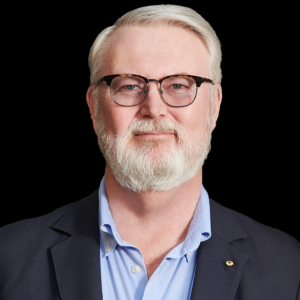
BY Simon Longstaff
Simon Longstaff began his working life on Groote Eylandt in the Northern Territory of Australia. He is proud of his kinship ties to the Anindilyakwa people. After a period studying law in Sydney and teaching in Tasmania, he pursued postgraduate studies as a Member of Magdalene College, Cambridge. In 1991, Simon commenced his work as the first Executive Director of The Ethics Centre. In 2013, he was made an officer of the Order of Australia (AO) for “distinguished service to the community through the promotion of ethical standards in governance and business, to improving corporate responsibility, and to philosophy.” Simon is an Adjunct Professor of the Australian Graduate School of Management at UNSW, a Fellow of CPA Australia, the Royal Society of NSW and the Australian Risk Policy Institute.
Ethics in your inbox.
Get the latest inspiration, intelligence, events & more.
By signing up you agree to our privacy policy