

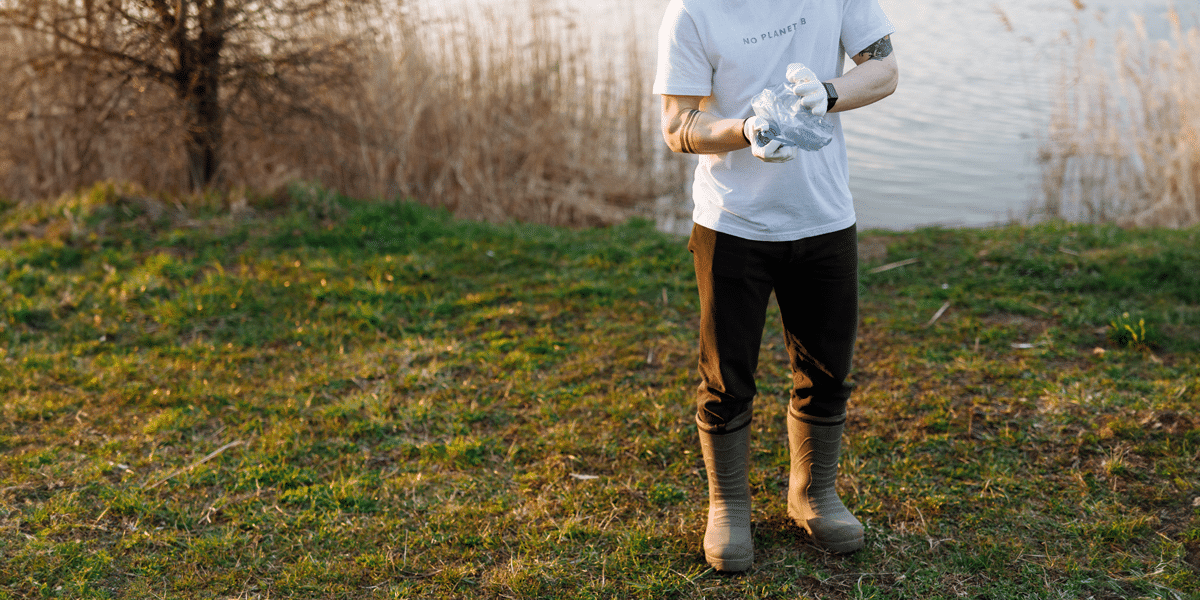
10 years ago, I didn’t pick up litter I saw on the beach. At most, I might bury it or throw it farther up onto the sand away from the water and dust my hands of responsibility.
Being good is both harder and, more importantly, easier than you think. You’ve probably heard the aphorism “Perfect is the enemy of the good” or something similar to it. In popular culture, there is a general idea that having lofty goals (“aiming for perfection”) is counterproductive because it dissuades people from making incremental positive change by casting aside anything but achieving The Ultimate Goal as “not good enough”.
This is demonstrated clearly in conversations about politics. For example, if the Greens have a goal, it’s likely that Labor’s bill will get about 50% of the way there. Sometimes, the Greens will block the bill by abstaining (preventing the government from obtaining a majority vote to pass) and use their vote to bargain for further changes. This is about the time when criticisms start being levelled, by citizens and politicians alike, that perfection is getting in the way of progress. Why impede something good getting done?
The reason lots of people fall into this simplification is because we are very practiced at doing it to ourselves. That is, when we subconsciously recognise that the most ethical option in any given situation is also a bit more effort or complicated than we’d like, this cognitive dissonance often results in a sort of “moral settling” where we convince ourselves that the next best option is good enough. This is, importantly, despite being capable of doing the best option.
I think, therefore I try
What does it mean to be capable of doing something? I mentioned that being good is both harder and easier than you think. It’s easier in the sense that most of our everyday moral choices are not difficult in practicality. For most people, it’s not physically demanding or complex to pick up litter, wear a mask, go to an op-shop, not yell at people, buy less meat, or even research the effects of your everyday choices.
However, it can be very psychologically demanding – at least in the short term. Reshaping mental and physical habits is difficult, especially when we are bombarded with messaging that makes incremental change feel like irredeemable failure.
Over time, I’ve slowly decided that something is better than nothing – that making small improvements is better than giving in to the hopelessness you might feel when you consider the gap between your current behaviour and what you think is most ethical.
Many years later, I’m now in the habit of leaving the beach with two fistfuls of rubbish.
The habit has also extended to other places, so I’ll often find myself picking up rubbish on the way to the station or on my lunch break in the park. I still give myself excuses – maybe there’s too much, or maybe it’s too far away from a bin – but to me the important thing is that I am slowly but surely changing my habits in a positive way.
Shoot for the moon and even if you miss, you’ll land among the stars
As far as aphorisms go, I like this one better. Especially in the personal realm, we should be aiming to be the best versions of ourselves and recognising that failure to meet high moral standards is only a problem if we let it lead us into apathy. We shouldn’t be aiming to be perfect, but we should be aiming for perfect.
Rather than thinking of perfection as some universally applicable state of being, we should instead think of our own personal conceptions of perfection as a compass.
What values and principles underlie the best version of yourself? If you can’t achieve them all in one go, how can you make changes in your behaviour and habits to encourage growth in that direction?
Incidentally, this is one of my favourite things about consequentialism (the category of ethical frameworks that prioritise outcomes): it allows for personal circumstances and psychological inability. Sometimes the best action to take in an objective view might be something that’s too difficult for a person in that moment. But it also demands that we consciously develop the moral motivation to change our habits and psychology such that we can eventually overcome those inabilities and make our future decisions better.
I’ll leave you with the words of Michael Schur from his book How to Be Perfect:
“To demand perfection, or to hold people to impossible standards, is to deny the simple and beautiful reality that nobody is perfect … there will be plenty of times when you do not flourish.
[But] if you’ve tried to do something good a thousand times and you’ve failed a thousand times, and the people around you are miserable, and you’re at the end of your rope, and you’re losing faith in yourselves, you know what we want you to do then?
Keep trying, keep trying, keep trying.”

BY Daniel Finlay
Daniel is a philosopher, writer and editor. He works at The Ethics Centre as Youth Engagement Coordinator, supporting and developing the futures of young Australians through exposure to ethics.
Ethics in your inbox.
Get the latest inspiration, intelligence, events & more.
By signing up you agree to our privacy policy


