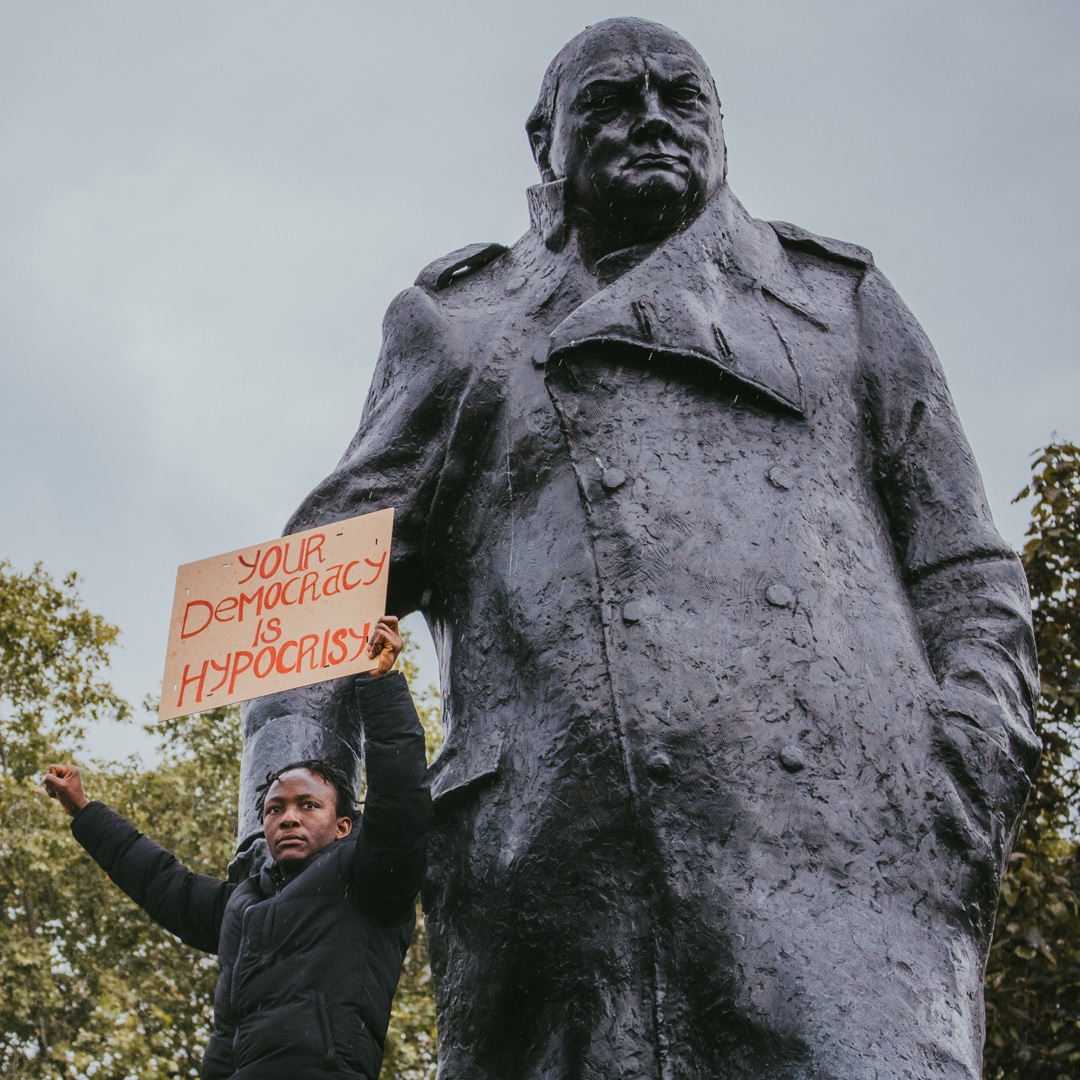



When we see public figures “held to account” without mercy and by force, we can forget there are other ways to be accountable – ways that we have reason to invite.
I heard a surprising story recently. Writer Amanda Litman was telling a podcast host about how she and her husband made a New Year’s resolution to host a meal at their home every week in 2025. The surprise? They kept it.
It was her husband’s idea, and he did the cooking. The couple made a list of virtually everyone they knew, then Litman started texting: “Hey! My husband has made a New Year’s resolution to host dinner at our home every weekend…”.
What interested me about the couple’s approach was the fact it involved telling almost everyone they knew what they were trying to achieve. Later, I asked Litman whether having so many people watching helped them persevere. She thought it did.
Their success got me thinking about how simply letting our friends know about a resolution we’ve made, and take an interest in the outcome, can help us to achieve it – not because they will punish us if we fail, but because they’ll want us to succeed. We might have an even greater chance of success if we ask them to hold us accountable: giving a particular person or people explicit permission to hold us to a particular goal.
The Merriam-Webster Dictionary defines accountability as, “an obligation or willingness to accept responsibility or to account for one’s actions”. We’re familiar with scenarios where the “obligation” is imposed; where a public figure is held to account for a failing, sometimes reasonably and constructively, but often in ways that leave them shamed, not forgiven, let alone restored and reinstated. We’re also familiar with scenarios where measures intended to ensure compliance involve so much bureaucracy they foster cynicism instead of diligence, and resentment instead of trust. We’re less familiar with scenarios where it’s invited and received with “willingness”, where it rights, even prevents, a wrong.
We are most aware of accountability when it fails, because a system that isn’t causing problems, and is preventing them, doesn’t tend to make the news.
If accountability makes an organisation or a sector or a person less effective, or is all about exposing just how wrong a person or group was, and is, and will remain, wanting to avoid it is understandable. But there are many ways to be held to account.
Harvard Medical School psychologist Stuart Ablon laments the kind of accountability that fixates on punishment. He says the idea that “just putting up with a consequence – suffering through it ‘constitutes taking responsibility for one’s actions is’ a really lame way” to hold people accountable; and suggests the “ultimate form of taking responsibility” is keeping someone “on the hook” for solving a problem so it doesn’t keep occurring. But he doesn’t expect them to solve it alone.
Ablon, who’s done a lot of work with misbehaving children, says it’s less a case of “people do well if they want to” than “people do well if they can” – he says the struggle often isn’t, as we presume, a lack of will, but a lack of skill.
Rather than simply expecting punishment to discourage bad behaviour, he encourages caregivers, educators and the like to seek to understand its cause.
Ablon’s approach involves listening and asking questions. When he does share his perspective with a patient, he uses an “and” not a “but” to add his view, instead of overriding theirs. This lays a foundation for “co-authoring” a solution together. Change that might be impossible to achieve alone, might become possible with help.
I can see how it might be easier to accept accountability, even invite it eagerly, when the one doing the “holding” is coming alongside you with understanding, versus policing or surveilling with suspicion. If my conscience is engaged, and I’m aiming to not only avoid negative consequences or meet minimum standards, but be the best employee, colleague, partner, parent – “moral agent” – I can be; if I feel safe as well as vulnerable, it could be more effective still.
I’m struck by the many forms accountability might take. The Litmans didn’t seek or sanction it per se, but their openness was a step towards it. Colleagues signing up for “Dry July” might step into it, resolving to help each other stay the course. In the case of addiction, a blend of the relational and institutional might be best: a sponsor who has been there themselves, and been trained to support others.
There’s a place for relational as well as institutional, invited as well as imposed, accountability.
A CEO might experience accountability via a board that acts on stakeholders’ behalf, and asks hard questions with good reason. Those questions might push admissions and course-corrections that keep the organisation – and the CEO – on track. That same CEO, knowing a tendency to prioritise their career destroyed a previous marriage, might seek personal accountability too. Upon entering a new relationship, they might authorise a friend to ask them the hard questions – even monitor their calendar – to reduce risk.
We can try to meet professional standards, break addiction and achieve personal goals on our own. We can avoid difficult, uncomfortable, confronting conversations in the process. But if we refuse to admit we’re fallible, if we refuse to admit we could use help, we deprive ourselves of valuable support. In doing so we make ourselves more vulnerable, not less.
Similarly, if we refuse to hold others accountable, to take some responsibility for keeping those we live with or work with on track, we might deprive them of guidance and support. That’s not to say there wouldn’t be some relationships where agreeing to hold a person accountable might not be wise or appropriate, but I think it’s safe to assume that for most of us, blanket avoidance is not the most caring default.
Philosopher C. Stephen Evans, who’s explored the history of accountability in multiple cultures and eras, says humans are social beings, and accountability is fundamentally a social notion. He says most people think of humans as being “morally accountable” on some level, and considers accountability a relational “virtue”.
Courting accountability strikes me as particularly virtuous when the desire reflects a recognition of what we owe each other; and the desire flows from wanting to be a better person – as opposed to, say, a hotter one.
Perhaps some who have faced a painful, public reckoning could have avoided it by authorising a partner, friend or colleague to hold them accountable to certain values or standards or goals. Perhaps they could have righted a troubling course of action before it led to an explosive transgression.
Of course, every form of accountability can be corrupted and derailed. The fact we see box-ticking hamstring good intentions, and people failing to speak up when they should because they’re too close to a person, or too afraid of them; doesn’t mean we’re better off without it. It only confirms how much we need it.
We can’t rely on personal accountability alone – sometimes those closest to a person or group are the last to call them out. But we can’t discount the benefits.
We humans are very good at making excuses for our failings; we’re not so good at taking responsibility for them. I know this from experience. But the path of least resistance is rarely the best one. I don’t know about you, but when it comes to living up to my values and ideals, when it comes to ditching bad habits, and sustaining good ones, I need all the help I can get.


BY Emma Wilkins
Emma Wilkins is a journalist and freelance writer with a particular interest in exploring meaning and value through the lenses of literature and life. You can find her at: https://emmahwilkins.com/
Ethics in your inbox.
Get the latest inspiration, intelligence, events & more.
By signing up you agree to our privacy policy