

In defence of platonic romance

When I was young and like many little girls, I was bewitched by all things magical and had a keen sense of romantic sensitivity.
I would regularly claim to spot mermaids in the froth of breaking waves and would meticulously construct fairy circles in my grandmother’s garden. These tendencies would lead me to weave fanciful and elaborate dreams about my future, mainly about love. In all the rituals, potions and stories I concocted as a young girl, there’s one that sticks out in my mind.
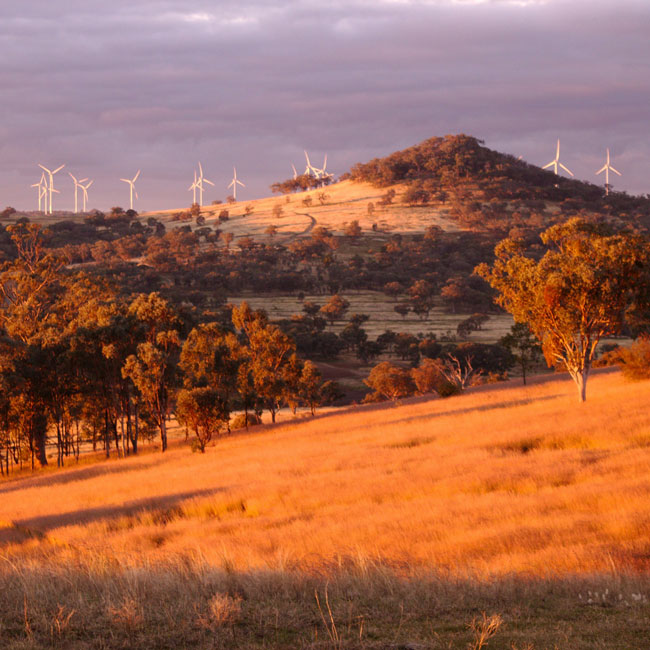
One particular holiday in the Blue Mountains, my cousin and I were around twelve – the age when many children start to fully understand what awaits them in teenagerhood – namely, romance. One night, under a full moon, I proposed a plan – we would cast a spell to summon our future partners and design our prince charmings. Petals were gathered from the flowering bushes that surrounded our accommodation and a large plastic salad bowl was stolen from the kitchenette and filled with water. With great reverence and solemnity, we sat on the deck and threw petals into the bowl. As each one hit the surface, we would say aloud a quality that we wanted in a future partner.
“Tall!”
“Nice!”
“Dark hair!”
When the ritual was over and the bushes were bare of their flowers, we threw the contents of the bowl out onto the lawn quite matter-of-factly. Completed with confidence, we did not doubt that what had transpired between us that night had set us up very nicely for when we were grown women. Now, as a young woman with aspirations for a career as a writer and a bachelor’s degree under my belt, I look back and question, with the opportunity of a full moon and a ritual, why did I only wish for a romantic relationship with a man?
In my developing mind, I had an understanding that women found their identity in being the object of romantic love. To be loved by a man was equated to being accomplished – one day when I was clever enough and pretty enough, I would be chosen. However, there’s little personal autonomy as an object.
Many pioneers of third-wave feminism have fought against the objectification of women and for their greater value in society. Much of their activism has focused on the role of women in social and political spaces. At twenty-two years old I’m still learning how to navigate my position in the world as a young woman. My sense of accomplishment with my career and my education has not always been constant. Upon reflection, there’s a source of value and abundance in my life that is disconnected from any metric measure of success – my friendships. Throughout the dawn of my adult years, my most impactful, and intimate relationships have been with my close female friends. If our platonic relationships were treated as reverently as our romantic ones, what would be possible?
Philosopher Simone de Beauvoir described the desire to love and be loved as part of the structure of human existence. Her 1949 work The Second Sex explores women as the ‘other’ in society and how men and women often develop asymmetrical expectations of love. De Beauvoir discusses heterosexual love as being either ‘authentic’ or ‘inauthentic’. Within her framework, to achieve authentic love, both lovers need to maintain their individuality. But in the context of heterosexual monogamy and the biological family unit, is this even possible for women?
Many women are often first and foremost identified as wives and mothers, essentially, they have relational autonomy. Relational autonomy proposes that as the ‘Self’ is related to those around us in various ways, the way we identify ourselves cannot be a practice that is achieved alone. While an explanation such as this may relate positively to ideas of community and comradery, many women experience a loss of self as wives and mothers.
Many women in heterosexual relationships must, to some degree, be experiencing inauthentic love – described by De Beauvoir as being based on inequality between the sexes:
“[Men] never abandon themselves completely […] they remain sovereign subjects; the woman they love is merely one value among others; they want to integrate her into their existence, not submerge their entire existence in her. By contrast, love for the woman is a total abdication for the benefit of a master.”
If our support systems and our identity are entangled with relationships that have an inherent power imbalance, is there space for authentic love? While De Beauvoir’s outlook may appear characteristically existential, there is a faint yet unmistakable silver lining. If heterosexual relationships leave women devoid of true identity and autonomy, what is left? Our female friendships.
Within my female friendships, I’ve rediscovered something from my childhood that’s been lacking in my romantic relationships with men – magic. There’s something about friendships between women that makes pagan behaviour seem reasonable. I can understand why medieval witches were often accused of dancing naked around bonfires; I would do that too for my best friends.
To be clear, I’m not saying that people don’t need romance or romantic relationships, nor am I saying that all heterosexual relationships cause harm to the women in them. Romantic relationships can be a source of unique joy and adventure. Where they become problematic is when they are the centre of our personal universes. As for romance, there’s space and, arguably, a necessity for it in our platonic relationships too. I implore you to buy a bouquet of flowers for your dearest female friend and see what good it does.
With platonic relationships at the centre of our worlds, there’s a web of support and intimacy without the power imbalance inherent in some heterosexual relationships.
By decentralising the role of romantic love in our lives and valuing other relationships just as equally, there’s an opportunity for community building, deep understanding, and cultivation of our own personal identity.
If, at twelve years old, under that Blue Mountains moon, I had wished for an ideal best friend – when, as an adult, my romantic relationships fell short of the mark again and again, it wouldn’t have felt like I had as far to fall. Rather than the sun dropping out of my personal solar system, I’d lose a moon or two. Still a knock to the system, just not an earth-shattering one. Perhaps, feminism and gender equality can be aided and progressed by revolutionary love for our friends.

Ethics in your inbox.
Get the latest inspiration, intelligence, events & more.
By signing up you agree to our privacy policy



BY Layla Zak-Volpato
Layla is a 22-year-old writer and poet living and working in and around Eora/Sydney. With an educational background in ecology and wildlife conservation, her work focuses heavily on the ethical and moral dilemmas of the anthropocene. Through a creative lens, Layla examines the intersections between gender, identity, philosophy and environmental issues. She aspires to use these themes as the backbone for a career as a scientific communicator who utilises both creative and informative literary forms.


Gen Z and eco-existentialism: A cigarette at the end of the world

“Where ignorance is bliss, tis folly to be wise.” – Thomas Grey
Gen Z live inside of an hourglass. The sand leaks steadily from underneath our feet at an imperceptible rate so that we don’t realise the ground is slipping away until we are plummeting toward the bottleneck. The 21st century has been characterised by the impending, seemingly unstoppable doom of climate change and ecosystem collapse. There is a rising epidemic amongst young people of feelings of anxiety and dread towards a future made uncertain by global warming. This sensation, the drop in the pit of our stomachs from a fall that doesn’t seem to be ending, has caused mixed reactions amongst Gen Z. While those who use sustainability as an antidote to their anxiety are praised, others who appear to act in complete denial of climate change are frequently vilified. Young people who smoke cigarettes and partake in fast fashion appear to show blatant disregard for the impact of their actions on the climate.
Unethical behaviours amongst young people are often attributed to delinquency and delayed cognitive development. While, in some cases, this may be true, the impact of climate change on moral decision-making in today’s youth is often overlooked. Gen Z hold the heavy responsibility of reversing the catastrophic impacts of climate change. As such, partaking in activities that cause both physical and environmental damage may stem from an attitude of wilful ignorance that allows young people to feel momentary freedom from this burden. With a reputation as one of the most climate-conscious generations,
Gen Z is often held to high moral standards regarding social and environmental issues. These standards make very little allowance for complex reactions to climate change that may appear to older generations as apathy. Subsequently, young people are owed a greater deal of compassion and understanding from older generations for their reactions to this unimaginable catastrophe.
Young people of the 21st century appear to be both driving and abating the effects of climate change. Some of the world’s most passionate and radical anti-climate change organisations have been spearheaded by Gen Z – reflecting their climate-consciousness. Yet, paradoxically, young people are the biggest users of disposable vapes and are frequent patrons of fast fashion giants. It’s an easy conclusion to draw that these behaviours (in a time of rampant climate change) seem to reflect opposing ideologies at best and a lack of general empathy at worst. In an article for the online publication Refinery29, ‘Gen Z & the fast fashion paradox’, Fedora Abu describes young people as “environmentally engaged yet seduced by what’s new and ‘now’”.
This attitude represents an oversimplification of the mental and ethical impacts of climate change on young people. Abu depicts Gen Z as a generation whose ethical and moral beliefs are easily corrupted by consumerism-driven desire. Many adults are quick to overlook the extreme mental load felt by Gen Z toward climate change and the emotional maturity that lends itself to this responsibility. Amongst young people, there has been a notable rise in feelings of eco-anxiety – described by the American Psychological Society as a “chronic fear of environmental doom”. Climate-related mental health issues manifest themselves through trauma, shock, substance abuse and depression.
In an online article published by the University of Melbourne about the rise of climate anxiety amongst young people, recommendations to relieve negative emotions include partaking in sustainable consumption (recycling, picking up rubbish etc.) and becoming involved in environmental campaigns. While there is no doubt that sustainable consumption and activism are positive, they may not adequately alleviate the anxiety felt by some young people. Those who structure their lives around sustainability and those who indulge in unsustainable practices may seem like opposing forces; they are, in fact, two sides of the same highly anxious, existential coin – both equally valid reactions to a sense of disillusionment with 21st-century adulthood.
Young people adopted their expectations of adulthood from the media they consumed as children. However, within a rapidly changing world, many feel a sense of disconnect with an experience of adulthood characterised by climate anxiety. Essentially, there’s a resounding sense that we haven’t gotten what was promised. As a child, my mother and I spent our bonding time in front of the TV – together she shared with me the television shows and movies that characterised her childhood and early adulthood. Before I was old enough to recognise it, the formulaic American sitcoms of the 90s and grand, romantic flicks of the 80s (often accompanied by a soundtrack of synth-heavy ballads) had begun to construct my worldview.
Watched in retrospect and with the use of a fully developed brain, however, one aspect is glaringly missing from the portrayal of adulthood presented by the media that raised us – the omnipresent threat of climate change. While only linear time is to blame for the fact that media from the past can’t represent our current reality, there is a sense of cognitive dissonance amongst young people between the future we were raised to expect, and the way adulthood has unfolded before us. For young people, the rampant, mindless consumerism of the 80’s and 90’s appears like a neon-lit mirage. The increased uptake of sustainable practices by large corporations is a movement of the 21st century. As such, many young people have rarely made a purchase without considering the environment.
For older generations, sustainability may provide feelings of empowerment and agency against the overwhelming monolith of climate change. However, sustainable living requires a significant amount of intentional thought against habitual, unsustainable habits built over generations. Within the domestic space, in particular, adopting sustainable approaches such as ‘zero waste’ living requires a significant mental load – the often invisible responsibilities of management and organisation. Whilst young people are rarely the organisers of large households, I believe a similar burden is felt towards sustainable consumerism.
Sustainable consumerism is often denoted as ‘morally good’. Thus, any action or purchase that results in waste or promotes unsustainable production carries negative moral connotations.
Climate-based moral decision-making is largely all that young people have known. In some form, choosing not to consider the planet in every choice can provide young people with a prized commodity – freedom from pressure to act with morality.
For young people, living in wilful ignorance of climate change and damaging the planet (and their bodies) in the process is a form of catharsis and escapism. Drinking from plastic water bottles, smoking chemical-filled cigarettes and purchasing clothes mass-produced in sweatshops allows Gen Z to experience a pantomime of the careless, invincible youth that was promised.
Viewed through a binary moral lens, older generations are quick to criticise young people as careless and apathetic. In reality, there’s an unshakable sense of dread amongst young people that a natural disaster will take our lives by the time we reach our parents’ age. In Thomas Grey’s poem ‘Ode on a distant prospect of Eton college’, he states “Where ignorance is bliss, tis folly to be wise”. In essence, if knowing something harmed you, would you be better off not knowing at all? If there’s one thing that Gen Z know, it’s that there is unavoidable harm in their future. If that is the case, and there’s nothing that can be done, may as well have a cigarette.
‘Gen Z and eco-existentialism: A cigarette at the end of the world‘ by Layla Zak-Volpato is one of the Highly Commended essays in our Young Writers’ Competition. Find out more about the competition here.
Ethics in your inbox.
Get the latest inspiration, intelligence, events & more.
By signing up you agree to our privacy policy