

Who’s to blame for overtourism?
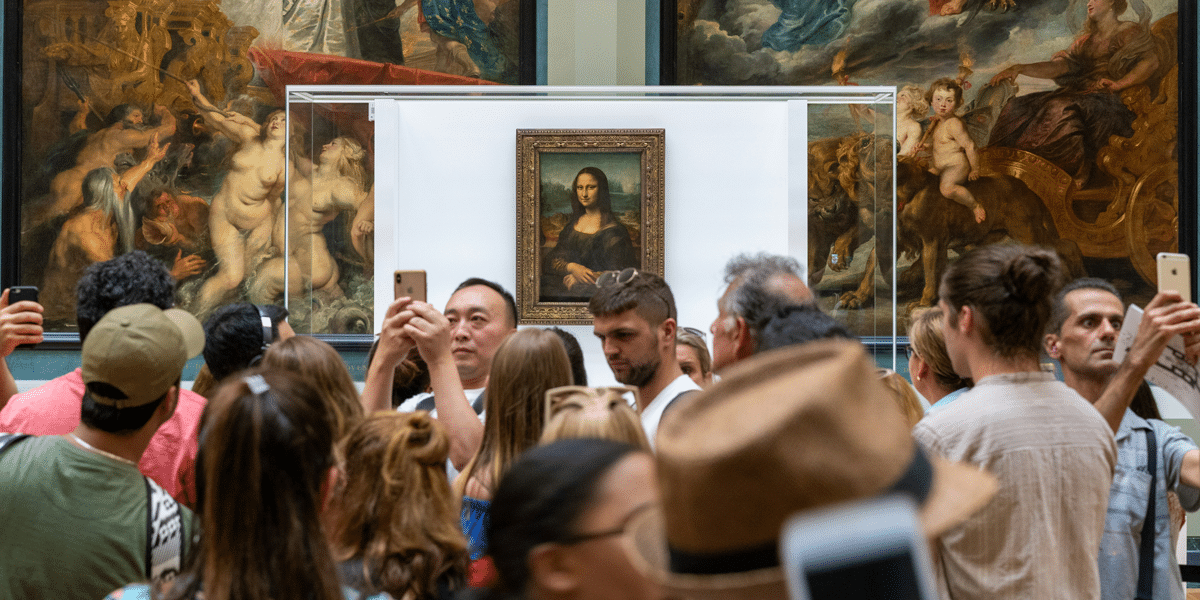
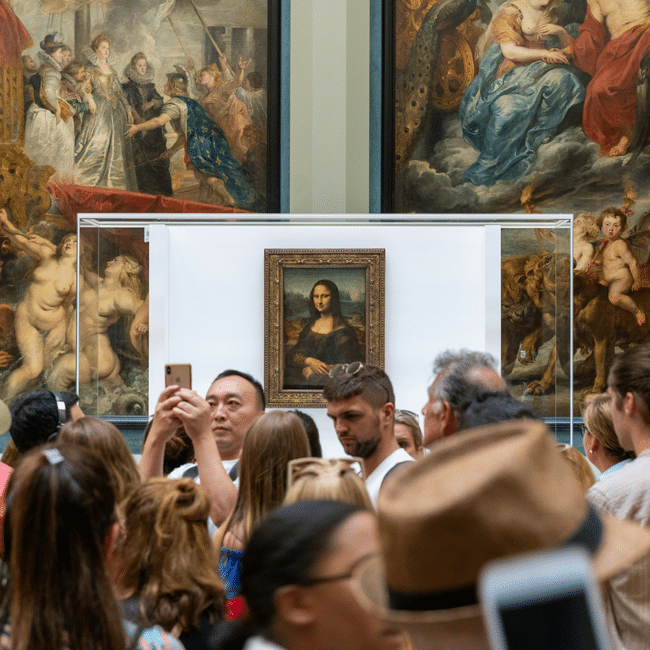
Anyone who’s been privileged enough to have a ‘Euro Summer’ recently would tell you that the hottest tourist spots are overcrowded. Really overcrowded. Think of the lines at popular attractions like Sagrada Familia and Eiffel Tower, or the hordes of travellers in historic cities like Venice and Dubrovnik.
Last summer, protests against overtourism in Barcelona, Spain, made international headlines when a small group of locals began spraying tourists sitting outside a café with water guns. While an isolated water gun incident may seem harmless, there is a deeper moral accusation being made here. Tourists are being blamed for overtourism.
Overtourism happens when the number of tourists in a location is greater than the amount that can comfortably be accommodated. For example, Barcelona has a population of 1.7 million people, but had 15.5 million travellers stay at least one night in 2024.
But can the causes of overtourism be boiled down solely to individual tourists?
It is difficult to impossible for individuals to solve overtourism because it would require significant coordination between hundreds of millions of individual tourists, and for them deprioritise self-interest, while still competing with the interests of businesses, residents, governments and other tourists – otherwise known as a collective action problem.
There are, however, ways that each of these groups can still make a difference.
Individual tourists
Imagine this: after spending months behind a desk daydreaming of the Trevi Fountain in Rome, you find yourself there – alongside thousands of other tourists. You would prefer there were fewer tourists, but you cannot control the actions of others. What individual tourists can control, however, is their behaviour and how they choose to spend their money.
One of the first things that reluctant Year-9 school campers learn in outdoor-ed is to leave no trace in the environment. When tourists leave behind even small amounts of rubbish in the places they travel, it adds up and contributes to environmental degradation. Mt Everest is littered with rubbish left behind by hikers who have ignored local regulations that require them to take 8kg of rubbish with them when they leave. Leaving no trace is a bare minimum for tourists.
Individual tourists can also make conscious decisions to spend their money wisely in a way that gives back to a country’s economy or its residents. Perhaps they can choose to stay at a hotel, rather than book an AirBnB or rental apartment that would have otherwise been available for locals to live in. Or they can spend their money at locally owned businesses rather than chain-restaurants like McDonalds. Given the influence of the user review economy, individuals can choose to leave reviews for businesses with strong ethical credentials, offering valuable support to a struggling tourism economy.
The tourism industry
The tourism industry is an essential part of many economies. In 2022, approximately 11% of Croatia’s GDP – a country home to Dubrovnik (famously, the real-life location of King’s Landing in Game of Thrones) came from tourism. All around the world, the tourism industry can be a vital source of income for locals.
However, the way income from tourism is distributed within a country matters. Bali, a perennial favourite of Aussie travellers, has seen an increased amount of foreign-owned businesses like villas and nightclubs in the past few years. While many employ local residents, foreign-owned businesses can shift income away from the locals. Where possible, tourists should try spending money at locally owned businesses that have a good reputation in the local community for sustainability and ethical practices.
The type of business also contributes to another problem with overtourism: Disneyfication. Strolling through central Amsterdam, you would think the locals spent their time buying souvenirs, eating at restaurants with menus in eight different languages, or smoking at ‘coffee shops’. In reality, most of these businesses are tailored squarely at tourists, turning the urban makeup of the city into a tourist theme-park or commodifying its culture through trinkets. As Barcelona-native Xavier Mas de Xaxàs writes, if overtourism continues, “destinations will continue to lose their real identities and with them an authentic tourist experience.”
One way to avoid having a ‘theme park’ experience is to ask locals what they would do if they were travelling there for the first time. This not only offers a sign of respect to locals, but creates richer and more authentic travel experiences.
Companies like Airbnb were originally designed to help facilitate this interaction, allowing tourists to stay in the homes with locals instead of hotels. They also provide a stream of revenue for local homeowners and significantly contribute to both local economies and the overall tourism sector.
However, in the past decade, short-term rentals like Airbnb have contributed to a growing housing crisis around the world. The problem is that offering short-term rentals for tourists is more lucrative to landlords and property developers than offering long-term leases, meaning apartments that would otherwise have been available for locals to live in are now being rented out to tourists. The greater the overtourism, the greater the effect on housing availability for locals.
Government
No single tourist wants to overcrowd an area but can’t coordinate with other tourists to prevent it from happening.
This is where governments come in. The heart of the problem of overtourism is that too many people end up in one location. Only governments can control how many tourist visas are given out and what percentage of housing can be used for tourist accommodation, and they have a responsibility to do so.
One possible solution is the introduction of a permit system similar to one used in Buddhist Kingdom of Bhutan. The country protects its environmental and cultural heritage from overtourism by charging a tourist tariff of $100 USD per adult per day. One downside, however, is the tariffs price out some potential travellers creating in an inequality in access to travel. Yet too low a price fails to lower entry numbers, demonstrated by the €10 day-entry fees introduced in Venice last year.
Perhaps the best permit system is one where prices are low and the number of permits are limited. In Barcelona’s famous Park Güell, overcrowding is prevented by limiting access to 1400 visitors per day through a low-cost permit system. Whether such a permit system can work at a country or city level remains to be seen, but provides a good model of how governments could regulate overtourism.
Overtourism is a complex problem that will not be solved overnight. It requires a cohesive and collective action from tourists, the industry, and government in a way that is fair to locals and respectful of local customs and laws. While I can’t guarantee that your Euro Summer will be free of surprise water gun attacks, you can sleep easier knowing that you’re being a responsible tourist.

BY William Salkeld
William Salkeld is a PhD candidate with the school of Politics and International Relations at the Australian National University, researching interspecies democratic theory. He is interested in animal and environmental ethics, political philosophy, animal minds and cognition, and moral philosophy.
Ethics in your inbox.
Get the latest inspiration, intelligence, events & more.
By signing up you agree to our privacy policy




The ethics of pets: Ownership, abolitionism and the free-roaming model

“If there are no dogs in heaven, I want to go where they go”, said the American performer, Will Rogers.
It is no secret that we are deeply connected to the animals we keep as pets. In Australia, most pet owners would like to think they treat their animals well. 52% of Australians consider their pets to be family members, and in 2021 Australians spent $30.7 billion on food, healthcare, and enrichment for their cats and dogs.
Studying animal ethics, I used to believe that pet ownership was a good thing. Following the arguments of moral philosopher Christine Korsgaard and many others, I saw it as a mutually beneficial situation. We provide our animals with the necessary conditions for a good life, such as food, shelter, healthcare, love and attention. In return, they provide us with companionship and countless other life-affirming benefits.
As long as we can provide our pets with the kind of life that is good for them, then having pets is a good thing, I reasoned. After all, how could I deny that my family’s Golden Retriever, Ruby, lived a charmed life full of play, food, and affection? As I would soon find out, the ethics of pet-keeping is far more complicated than ensuring our furry friends are ‘well taken care of’.
My view about pets was turned upside down after listening to a podcast with legal scholar and animal ethicist Gary Francione. Francione is an abolitionist, meaning that he believes that we should abolish all use and ownership of nonhuman animals, including pets. To understand this view, it is first important to understand the history of domesticated animals and pets.
Domesticated animals are those animals like dogs, cats, or sheep who have adapted or ‘tamed’ because of or by humans. While the jury is still out on how wolves initially interacted with humans to become dogs, humans have subsequently spent millennia forcibly breeding dogs to make them less aggressive, ‘cuter’, or specialised in some activity like cattle herding. Or, in the case of my family’s Golden Retriever, Ruby, it seems she has been bred to chew up sofas and love carrots (don’t ask).
As Francione puts it, we have domesticated dogs and cats into a state of perpetual childhood where they are dependent on us for basic care. Yet, unlike children, cats and dogs don’t grow up and become independent; they remain in a state of dependency for their entire lives.
The animals we keep as pets are a subset of domesticated animals. The concept of pet ownership in Western countries is surprisingly recent, beginning in the Victorian era. Our entitlement to owning pets has not existed throughout history, meaning we should be critical of current ethical attitudes towards pets.
For abolitionists like Francione, the problem of pet ownership is twofold. One, the state of dependency is problematic because we have bred animals to become dependent on us. Imagine if someone raised their child to be completely dependent on them and to never reach true adulthood; we would likely call it emotional abuse. Yet in the case of pets, it is considered ‘proper training’.
Second is the problem of ownership and possession. Animals (including pets) are treated as property in the law. It’s even in the name: ‘pet ownership’. Most of us know that animals are sentient, and perhaps even that they are individuals with rights. However, if this was truly the case, then it would be nonsensical that an animal could be ‘owned’ as property in the same way it is morally outrageous for a human to be owned.
For these two reasons, abolitionists like Francione think that if we could wave a magic wand, we should remove all domesticated animals like cats and dogs who depend on us from existence. While we should adopt and care for the current animals that are already alive, we should also aim to abolish the institution of owning pets.
The abolitionist position is confronting and uncomfortable. I love my dog Ruby, and I was initially defensive against Francione’s argument. Has my family really been doing something wrong by pouring hours of our lives and thousands of our (my parents’) dollars into caring for a dog who we treat as a member of a family? Even if we have not personally been doing anything wrong, the world without cats and dogs that Francione envisages seems like a slightly less happy world.
I was struggling with this dilemma when my partner and I met a cat at a guesthouse in Malaysia’s Cameron Highlands, curled up in a box in the corner of the reception. When we asked the guesthouse owners what his name was, they said that he didn’t have a name yet because he only arrived three weeks earlier.
He, the cat, had picked them. In return for his company, the guesthouse owners gave him as much kibble as he would like and took him to the vet. On the same trip, I also learned that in Türkiye, many people have a ‘tab’ at the vet they use for vagabond cats who choose to live with them. This framework of domesticated animals without ‘owners’ is what I call the ‘free roaming’ model, an idea tentatively welcomed by animal studies scholar Claudia Hirtenfelder that, as Eva Meijer argues, acknowledges the agency of nonhuman animals.
Perhaps a more familiar example of a free-roaming animal is the life of the eponymous dog from the beloved Australian film, Red Dog. In the film, Red Dog is no one’s pet. Rather, he is cared for by the employees of a mine in Western Australia’s Pilbara and eventually decides to live with an American man named John Grant. Red Dog has agency, and [spoiler alert] uses that agency to travel across Australia in search of John after his premature death.
The key difference between free-roaming domesticated animals and pets is that these animals are not owned. Yes, many free-roaming cats and dogs may still depend on some human care, but they have a choice in how and from whom they receive that care.
The free-roaming model is not perfect, however. According to the Humane Society, 25% of outdoor (commonly referred to as ‘feral’) kittens do not survive past 6 months. This is not the case for kittens bred in captivity. And while some cats are lucky, like the one we met in Malaysia, many endure lives of illness and famine. And, as Korsgaard points out, domesticated cats are a predatorial threat to native wildlife, which is why, for example, they are not allowed outside without a leash in the Australian Capital Territory.
For the free-roaming model of animal companionship to work, we would have to make our urban spaces more hospitable to other animals. There would have to be a significant attitude shift in our tolerance of animals in public spaces where we usually don’t see them.
Until that day, perhaps the best thing we can do is adopt pets from shelters like the RSPCA, rather than breeders who perpetuate the institution of animal dependency and pet ownership. However, the free-roaming model gives hope for a post-pet world. As Korsgaard puts it:
“There is something about the naked, unfiltered joy that animals take in little things—a food treat, an uninhibited romp, a patch of sunlight, a belly rub from a friendly human—that reawakens our sense of the all-important thing that we share with them: the sheer joy and terror of conscious existence.”
This article won the 2024 Young Writers’ Competition 18-29 category.
Ethics in your inbox.
Get the latest inspiration, intelligence, events & more.
By signing up you agree to our privacy policy