



In 1987 the US Army War College defined four elements that it believed best characterised the operating environment that was emerging following the end of the Cold War. Rather than the apparent victory of the ‘West’ leading to a period of relative stability, the US Army War College described the world as becoming increasingly: Volatile, Uncertain, Complex and Ambiguous (VUCA). In due course, this framework was ‘lifted’ from its military context and applied to the world of business.
The concepts of ‘volatility’, ‘uncertainty’, ‘complexity’ and ‘ambiguity’ are meant to be understood as conceptually distinct but related when it comes to decision making in our current operating environment. However, for now, I want to focus on just one of the four elements: ‘complexity’.
At a recent gathering, convened by UNSW’s Australian Graduate School of Management (AGSM), where I serve as an Adjunct Professor, I was initially asked to define what is meant by ‘complexity’. I suggested that there are two dimensions to complexity. First, there is the number of variables, second, is the speed at which those variables change. On further reflection, I should have added a third dimension being the relative ‘depth’ of impact of each variable. So, taken together, the number, speed and depth of variables define the degree of complexity encountered in any particular situation. For many of us, complexity is just part of the background to our lives. However, the challenges posed by increased complexity come into sharp focus whenever we have a decision to make. Thus, the interest in ‘complexity’ amongst those who manage and lead organisations – especially those sitting in board rooms and the ‘c suite’.
An obvious second question arising from this concerns how best to respond to complexity. At one level, ‘complexity’ would seem to be an objective ‘fact of life’ in any operating environment. That is, complexity exists whether we recognise it or not. So, a first step in responding to complexity involves developing the skill required to observe and evaluate the three dimensions, of complexity, listed above. However, while this is necessary, it is not sufficient. All too often, those who recognise complexity are overwhelmed by it.
The solution to this lies, at least in part, in having a solid basis for evaluating options that arise in response to the complexity we encounter. I would argue that the necessary ‘solid basis’ is ultimately grounded in ethics – specifically, the ability to apply a core set of values and principles (aligned to a defining purpose) as the principal ‘standard for judgement’.
That is, while all around you might be in flux, one’s core values and principles provide the stable foundation from which to view the world and ultimately, to act. This is true for organisations as much as it is for individuals.
Now, some might object that this introduces a degree of rigidity in one’s outlook that is unhelpful in a constantly changing world. That is certainly a risk – but one that is answered by the very definition of ethics itself. As distinct from ‘morality’ which can be practiced as a matter of habit, ‘ethics’ requires one to live an ‘examined life’. As such, one is constantly reflecting on one’s choices – including the validity of one’s values and principles. This is not to imply that core values and principles are forever changing. Rather, they are constantly refreshed so that they remain a vital basis for living an authentic life of one’s own making.
As noted above, this is applicable within the context of organisational life. Too often, one discovers that espoused values and principles are practically ‘dead’. Instead, decisions are shaped by a series of shadow values and principles that operate in the darkest recesses of unthinking custom and practice. In such circumstances, ‘complexity’ gets the upper hand and can overwhelm decision makers.
What is true of individuals and organisations is also true of nations and societies. We should recall that the concept of VUCA was developed to describe precisely the kind of international environment that now affects all of our lives. That is why a significant part of the programming for this year’s Festival of Dangerous Ideas is devoted to genuinely complex issues. For example, we have invited Malcolm Turnbull and Bob Carr to discuss how Australia should position itself in a world where the USA and China are rivals for dominance – especially in our region. Things are messy – with the US no longer being a completely reliable ally and China no longer being such an obvious or necessary foe. How should we respond to either country (or both) in ways that reflect not just distinctively Australian ‘interests’ but also a national ‘ethos’ (such as it is)?
And what of the apparently unsolvable problems facing the entire world – such as exemplified by conflicts across the Middle East? Are ‘ancient hatreds’ an enduring fact of life? Does the complex web of religions, cultures, histories, wars, massacres, acts of terror … make for conditions of overwhelming complexity? Well, not necessarily so. As historian, Usama Makdisi will argue, at the Festival, for long periods of history Muslims, Jews and Christians have lived in peace. History tells us that although peace in the Middle East is difficult, it is possible. This, too, is a ‘fact of life’.
What discussions like these should help us see is that a world defined by VUCA is not beyond our comprehension. Disciplines like history and philosophy can help us make sense of what we experience. They will not eliminate ‘complexity’ but they can help us to navigate the treacherous shoals we encounter at home and abroad.
In this day and age, these are ‘dangerous ideas’: that we might explore and ultimately find common ground, if only we care to look for it; that we might reject the false certainties of ‘us’ and ‘them’, that we have the power to choose and in doing so, to make a better world.
Festival of Dangerous Ideas returns 20-30 August 2026 across Sydney. Tickets on sale now.

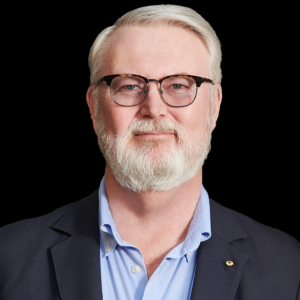
BY Simon Longstaff
Simon Longstaff began his working life on Groote Eylandt in the Northern Territory of Australia. He is proud of his kinship ties to the Anindilyakwa people. After a period studying law in Sydney and teaching in Tasmania, he pursued postgraduate studies as a Member of Magdalene College, Cambridge. In 1991, Simon commenced his work as the first Executive Director of The Ethics Centre. In 2013, he was made an officer of the Order of Australia (AO) for “distinguished service to the community through the promotion of ethical standards in governance and business, to improving corporate responsibility, and to philosophy.” Simon is an Adjunct Professor of the Australian Graduate School of Management at UNSW, a Fellow of CPA Australia, the Royal Society of NSW and the Australian Risk Policy Institute.
Ethics in your inbox.
Get the latest inspiration, intelligence, events & more.
By signing up you agree to our privacy policy