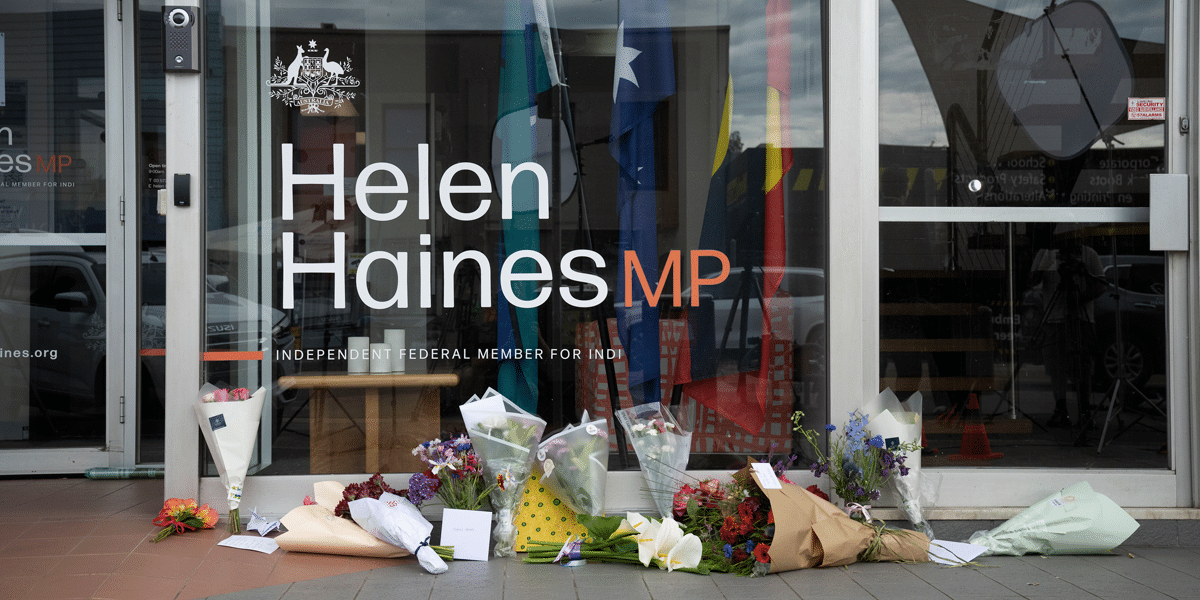
My association with the Federal Electorate of Indi and its independent representatives dates back to the early days when Cathy McGowan first emerged as a candidate being supported by grass roots community members.
My doctoral research, at Cambridge, had focused on core questions to do with the theory and practice of democracy. And it was to discuss those issues that I was first invited to speak at a series of public meetings – open to people of all political persuasions – that had grown out of the original set of kitchen table conversations that first animated the campaign for an independent, community representative to Canberra.
I have stayed in touch with Indi and its representatives ever since and was delighted to find in Helen Haines a person with a deep commitment to democracy – not just as a system of governance but more importantly as the political expression of fundamental ethical principles without which no democracy can flourish.
I want to stress this point. There are some politicians who are quite brilliant in their capacity to work the machinery of politics – without any real sense of the higher purpose that the machinery is supposed to serve. No doubt, they play their role. However, I have always reserved my admiration for those who understand politics to be about much more than the contest for power. For what use is power if you have no greater purpose than to hold and exercise it for its own sake.
Helen Haines has always understood that ethics and politics are two sides of the same coin. As Aristotle would have it, ethics requires us to consider what is the ‘good life’ for a person, while politics contemplates what makes for a ‘good life’ for a society. It is for this reason that Helen has always been at the forefront of campaigns to strengthen the ethical foundations of our society. I know from years of experience that this is not a popular cause. There are plenty of people who are happy enough to offer rhetorical support for ethics. Far fewer will make a tangible investment in the ethical infrastructure that holds our society together.
Helen always backs the tangible – lending her support wherever we can. Now she is the victim of a predictable unravelling of society when it loses the skill to disagree constructively, when values and principles are sacrificed for expediency, when the ‘end justifies the means’, when winning is pursued at any cost.
Many years ago, I wrote what I hoped might become something like a Hippocratic Oath for politicians. The language is a little old-fashioned… but the second paragraph of this preamble offers a tragic premonition of what has happened to Helen:
As originally conceived, the practice of politics is intended to be a noble calling; the arena within which a citizen might contribute to the establishment and maintenance of a good society
Yet, without voluntary, ethical restraint, the pursuit and exercise of power risks becoming personal, brutal and self-serving; coarsening the polity, bringing public institutions into disrepute and damaging the common good.
In every election where Helen Haines has stood as a candidate, she has made the Politicians’ Pledge to the people of Indi. She is one of very few who has done so. Why? Because Helen believes in the possibility of a nobility in politics. She knows the danger, facing to us all, when ethical restraint is abandoned.
No person should have to suffer the consequences of our failure, as a nation, to invest even a fraction of our resources in the ethical infrastructure upon which we all reply. No person… and especially not Helen Haines.
Image: James Ross, AAP Image

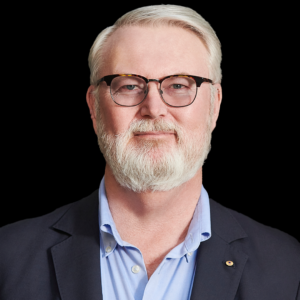
BY Simon Longstaff
Simon Longstaff began his working life on Groote Eylandt in the Northern Territory of Australia. He is proud of his kinship ties to the Anindilyakwa people. After a period studying law in Sydney and teaching in Tasmania, he pursued postgraduate studies as a Member of Magdalene College, Cambridge. In 1991, Simon commenced his work as the first Executive Director of The Ethics Centre. In 2013, he was made an officer of the Order of Australia (AO) for “distinguished service to the community through the promotion of ethical standards in governance and business, to improving corporate responsibility, and to philosophy.” Simon is an Adjunct Professor of the Australian Graduate School of Management at UNSW, a Fellow of CPA Australia, the Royal Society of NSW and the Australian Risk Policy Institute.
Ethics in your inbox.
Get the latest inspiration, intelligence, events & more.
By signing up you agree to our privacy policy