


Ethics Explainer: Peter Singer on charitable giving

Most people believe it is a good idea to help out others in need, if and when we can. If someone falls over in front of us, we usually stop to see if they need a hand or to check if they are OK.
Donating to charity is also considered to be helping others in need, but we may not always see the person we are helping in this case. Even so, charitable donations are viewed as praiseworthy in our society. We receive a sticker for placing spare change into a coin collection tin, and our donations are tax deductible.
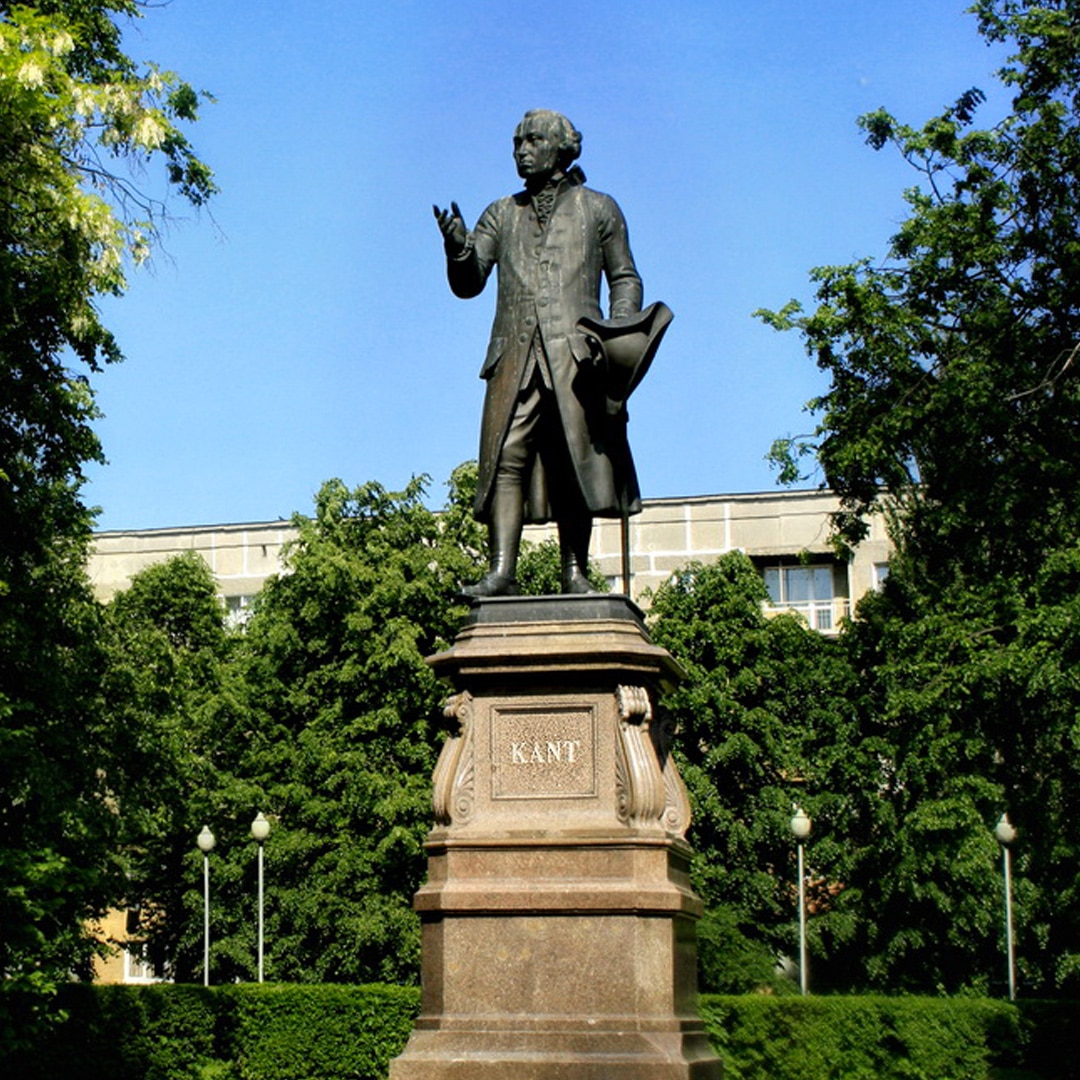
Yet most people see donating to charity as a ‘nice thing to do’, but perhaps not a ‘duty’, obligation or requirement. In Kantian terms, it is ‘supererogatory’, meaning that it is praiseworthy, but above and beyond the call of duty.
However, Peter Singer defends a stronger stance. He argues that we should help others – however we can. All of us. This may look different for different people. It could involve donating money, time, signing petitions, or passing along old clothes to those who need them, for example.
If we can help, then we should, Singer argues, because it results in the greatest overall good. The small efforts of those who can do something greatly reduce the pain and suffering of those who need welfare.
In order to illustrate this argument, Singer provides us with a compelling thought experiment.
The ‘drowning child’ thought experiment
From his 1972 article, ‘Famine, Affluence, and Morality’, Singer starts with a basic principle:
“if it is in our power to prevent something very bad from happening, without thereby sacrificing anything morally significant, we ought, morally, to do it.”
This seems reasonable. He backs this claim up with the following concrete example:
“An application of this principle would be as follows: if I am walking past a shallow pond and see a child drowning in it, I ought to wade in and pull the child out. This will mean getting my clothes muddy, but this is insignificant, while the death of the child would presumably be a very bad thing”.
Obviously, we agree, we should save the child from drowning, even if it comes with the inconvenience and cost of ruining some of our favourite, expensive clothes and shoes. The moral ‘weight’ of saving a life far outweighs the cost in this scenario.
Yet, Singer extends this claim even further.
He notes that if we agree with this principle, then what follows from it is quite radical. If we act on the idea that we should always prevent very bad things from happening, provided we are not sacrificing anything too costly to ourselves, this makes a moral demand upon us.
The biggest implication is that, for Singer, it does not matter whether the drowning child is right in front of us, or in another country on the other side of the world. The principle is one of impartiality, universalizability and equality.
I can easily donate the cost of a new pair of shoes to a respected charitable organisation and save a life with the funds from that donation. In the same way as a moral agent would wade into the pond to rescue the drowning child, we can make some relatively small effort that prevents a very bad thing from occurring.
The ‘very bad thing’ may be that a child in a developing country starves to death or dies because their family cannot afford the treatment for a simple disease.
The expanding moral circle
Now, even for those in favour of charitable giving, some may argue that our duty to help does not extend beyond national borders. It is easier to help the child ‘right in front of us’, they may say. Our moral circle of concern includes our family and friends, and perhaps our fellow Australians.
But I am convinced by Singer’s argument that we ought to expand our moral circle of consideration to those in other countries, to those who live on planet Earth with us. The moral obligation to alleviate suffering has no borders.
And we are now most certainly ‘global citizens’. Thanks to our technology and growing awareness of what occurs around the globe, we have outgrown a nationalistic model and clearly inhabit an international world.
Global Citizens
In his 2002 book, One World: the ethics of globalisation, Singer supports the notion of the global citizen which views all human beings as members of a single, global community. The global citizen is someone who recognises others as more similar to rather than different from oneself, even while taking seriously individual, social, cultural and political differences between people.
In a pragmatic sense, global citizens will support policies that extend aid beyond national borders and cultivate respectful and reciprocal relationships with others regardless of geographical distance or other differences (such as those related to race, religion, ethnicity, disability, sexuality, or gender identification).
For a long time now, Singer has also been pointing out that we are all responsible for important issues that are affecting each and every one of us. Back in 1972, he claimed, “unfortunately, most of the major evils – poverty, overpopulation, pollution – are problems in which everyone is almost equally involved.”
And, with our technology, media and the 24 hour news cycle, we are now confronted with the pain and suffering of those distant others in ways that ensure they are immediately present to us. We can no longer claim ignorance of the help required by others, as social media brings their images and pleas directly to our handheld devices.
So, do we have an obligation to alleviate suffering wherever it is found? Does this obligation extend beyond national borders? Should we do what we can to prevent very bad things from happening, provided in doing so we do not have to sacrifice anything too drastic or comparable? (for instance, we need not reduce ourselves to the levels of poverty of those we seek to assist in doing so).
If you answered yes, then you may already think of yourself as a global citizen.
Ethics in your inbox.
Get the latest inspiration, intelligence, events & more.
By signing up you agree to our privacy policy






BY Dr Laura D’Olimpio
Dr Laura D’Olimpio is senior lecturer in philosophy of education at the University of Birmingham, UK, and co-edits the Journal of Philosophy in Schools.

BY The Ethics Centre
The Ethics Centre is a not-for-profit organisation developing innovative programs, services and experiences, designed to bring ethics to the centre of professional and personal life.


Ethics Explainer: Agape

How many people do you think we can love? Can we love everyone? Can we love everyone equally? The answers to these questions obviously depend on what the nature of this kind of love is, and what it looks like or demands of us in practice.
“Love is all you need”
Agape is a form of love that is commonly referred to as ‘neighbourly love’, the love ethic, or sometimes ‘universal love’. It rests on the idea that all people are our ‘brothers and sisters’ who deserve our care and respect. Agape invites us to actively consider and act upon the interests of other people, in more-or-less the same proportion as you consider (and usually act upon) your own interests.
We can trace the concept back to Ancient Greece, a time in which they had more than one word to describe various kinds of love. Commonly, useful distinctions can be made between eros, philia, and agape.
Eros is the kind of love we most often associate with romantic partners, particularly in the early stages of a love affair. It’s the source of English words like ‘erotic’ and ‘erotica’.
Philia generally refers to the affection felt between friends or family members. It is non-sexual in nature and usually reciprocal. It is characterised by a mutual good will that manifests in friendship.
Although both eros and philia have others as their focus, they can both entail a kind of self-interest or self-gratification (after all, in an ideal world our friends and lovers both give us pleasure).
Agape is often contrasted to these kinds of love because it lacks self-interest, self-gratification or self-preservation. It is motivated by the interest and welfare of all others. It is global and compassionate, rather than focussed on a single individual or a few people.
Another significant difference between agape and other forms of love is that we choose and cultivate agape. It’s not something that ‘happens’ to us like becoming a friend or falling romantically in love, it’s something we work toward. It is often considered praiseworthy and holds the lover to a high moral standard.
Agape is a form of love that values each person regardless of their individual characteristics or behaviour. In this way it is usually contrasted to eros or philia, where we usually value and like a person because of their characteristics.
Agape in traditional texts
The concept of agape we now have has been strongly influenced by the Christian tradition. It symbolises the love God has for people, and the love we (should) have for God in return. By extension, if we love our ‘neighbours’ (others) as we do God, then we should also love everyone else in a universal and unconditional manner, simply because they are created in the likeness of God.
The Jesus narrative asks followers to act with love (agape) regardless of how they feel. This early Christian ethical tradition encourages us to “love thy neighbour as thyself”. In the Buddhist tradition K’ung Fu-tzu (Confucius) similarly says, “Work for the good of others as you would work for your own good.”
Another great exponent of this ethic of love is Mahatma Gandhi who lived, worked, and died to keep this transcendent idea of universal love alive. Gandhi was known for saying, “Hate the sin, love the sinner”.
Advocates for non-violent resistance and pacifism that include Gandhi, Martin Luther King, Jr., and John Lennon and Yoko Ono also refer to the power of love as a unifying force that can overcome hate and remind us of our common humanity, regardless of our individual differences.
Such ideology rests on principles that are resonant with agape, urging us to love all people and forgive them for whatever wrongs we believe they have committed. In this way, agape sets a very high moral standard for us to follow.
However, this idea of generalised, unconditional love leaves us with an important and challenging question: is it possible for human beings to achieve? And if so, how far may it extend? Can we really love the whole of humanity?
Ethics in your inbox.
Get the latest inspiration, intelligence, events & more.
By signing up you agree to our privacy policy




BY Dr Laura D’Olimpio
Dr Laura D’Olimpio is senior lecturer in philosophy of education at the University of Birmingham, UK, and co-edits the Journal of Philosophy in Schools.
BY The Ethics Centre
The Ethics Centre is a not-for-profit organisation developing innovative programs, services and experiences, designed to bring ethics to the centre of professional and personal life.

Big Thinker: John Locke
English Philosopher John Locke (1632—1704) is behind many of the ideas we now take for granted in a liberal democracy. Amongst them, his defence of life and liberty as natural and fundamental human rights.
He was especially known for his liberal, anti-authoritarian theory of the state, his empirical theory of knowledge and his advocacy of religious toleration. Much of Locke’s work is characterised by an opposition to authoritarianism, both at the level of the individual and within institutions such as the government and church.
Born in 1632, in his time he gained fame arguing that the divine right of kings is not supported by scripture. Instead, he defended a limited government whose duty is to protect the rights and liberty of its citizens. This idea is familiar to us now, yet at the time it was revolutionary, arguing against the monarchy as the source of society’s governance. A familiar idea in modern day, at the time it was revolutionary – an argument to depart from the monarchy as the source of society’s governance.
In defending his stance, Locke appealed to the notion of natural rights. He invited us to imagine an initial ‘state of nature’ with no government, police or private property. Locke argued that humans could discover, through careful reasoning, that there are natural laws which suggest that we have natural rights to our own persons and to our own labour.
Eventually we could reason that we should create a social contract with others. Out of this contract would emerge our political obligations and the institution of private property. In Locke’s version of the social contract, a human “divests himself of his natural liberty, and puts on the bonds of civil society…agreeing with other men to join and unite into a community” and by submitting to majority rule form a government designed to protect their rights.
The limits of power
Locke’s argument also places limits on the proper use of power by government authorities. While civil society, as viewed through Locke’s liberalism, sees that the individual must sacrifice – or at least compromise – his/her freedom in the name of the public good, the public good ought not to interfere with the individual’s freedom.
Due to this emphasis on liberty, Locke defended a distinction between a public and a private realm. The public realm is that of politics and the individual’s role in the community as a part of the state, which may include, for example, voting or fighting for one’s country. The private realm is that of domesticity where power is parental (traditionally, ‘paternal’).
For Locke, government should not interfere in the private realm. He held the argument that citizens were entitled to protest or revolt or disband a government when it failed to protect their collective interests. On this view it is crucial we distinguish the legitimate from the illegitimate functions of institutions.
Locke asked us to use reason in order to seek the truth, rather than simply accept the opinion of those in positions of power or be swayed by superstition. In this way, we see Locke as an Enlightenment thinker –our natural reason a light that shines, guiding our understanding in order to reveal knowledge.
Knowledge and personal identity
As an empiricist, Locke believed we gain our knowledge through experiences in the world. In contrast to the views of his rationalist predecessor Descartes, Locke argued that we are born as a blank slate or a tabula rasa. This means that at birth our mind has no innate ideas – it is blank. As our mind develops, sensations give rise to simple ideas, from which we form those more complex.
This theory of learning gives rise to another radical idea for his time. Locke asserted that in order to help children avoid developing bad thinking habits, they should be trained to base their beliefs on sound evidence. The strength of our belief should correlate to how strong or weak the evidence for it happens to be.
Furthermore, for Locke, our consciousness is what makes us ‘us’, constituting our personal identity.
Locke’s legacy
We see Locke’s legacy in the 1776 US Declaration of Independence, which was founded on his natural rights theory of government and proclaimed ‘we hold these truths to be self-evident, that all men are created equal, that they are endowed by their Creator with certain unalienable Rights, that among these are Life, Liberty and the pursuit of Happiness’.
Following on from his theory of human rights, we also see Locke’s legacy in the Universal Declaration of Human Rights, which was adopted by the United Nations General Assembly on 10 December 1948. Philosophers debate as to whether such rights are indeed ‘natural’, or whether they have been ‘constructed’ and agreed upon by society as useful rules to adopt and enforce.
Locke’s lasting legacy is the argument that society ought to be ruled democratically in such a way as to protect the liberty and rights of its citizens. And that the government should never over-step its boundaries and must always remember it is a glorified secretary of the people.
Ethics in your inbox.
Get the latest inspiration, intelligence, events & more.
By signing up you agree to our privacy policy




Join our newsletter
BY Dr Laura D’Olimpio
Dr Laura D’Olimpio is senior lecturer in philosophy of education at the University of Birmingham, UK, and co-edits the Journal of Philosophy in Schools.

Big Thinker: Jeremy Bentham
The consequences of our actions are important and we should weigh these up when we consider what we should do.
Some philosophers have taken this idea even further, claiming that outcomes are the only criteria by which the moral worth of an action should be judged.
Jeremy Bentham (1748—1832) was the father of utilitarianism, a moral theory that argues that actions should be judged right or wrong to the extent they increase or decrease human well-being or ‘utility’.
He advocated that if the consequences of an action are good, then the act is moral and if the consequences are bad, the act is immoral.
Central to his argument was a belief that it is human nature to desire that which is pleasurable, and to avoid that which is painful. As a self-proclaimed atheist, he wanted to place morality on a firm, secular foundation. At the beginning of his Introduction to the Principles of Morals and Legislation, Bentham wrote:
“Nature has placed mankind under the governance of two sovereign masters, pain and pleasure. It is for them alone to point out what we ought to do, as well as to determine what we shall do.”
It is because of this emphasis on pleasure that his theory is known as hedonic utilitarianism. But this doesn’t mean we can do whatever we like. Importantly, for Bentham, it is not just one’s own happiness or pleasure that matters.
He notes, “Ethics at large may be defined, the art of directing men’s actions to the production of the greatest possible quantity of happiness.” The moral agent will perform the action that maximises happiness or pleasure for everyone involved.
Can we measure happiness?
Bentham defended an objective form of morality that could be measured in a scientific way. As an empiricist, he came up with a way to ‘weigh’ or quantify pleasures and pains as the consequences of an action.
He called this set of metaphorical scales the ‘hedonic’ or ‘felicific calculus’, allowing a rational moral agent to think through, and then act on, the right – moral– thing to do.
The ‘hedonic calculus’ is used to measure how much pain or pleasure an action will cause. It takes into consideration how near or far away the consequence will be, how intense it will be and how long it will last, if it will lead on to further pleasures or pains, and how certain we are that this consequence will result from the action under consideration.
The moral decision maker is meant to act as an ‘impartial observer’ or ‘disinterested bystander’, to be as objective as they can be and choose the action that will produce the greatest amount of good.
Do the ends justify the means?
There are some practical applications of utilitarianism. For instance, if you’re a politician in charge of making decisions that effects a large group of people, you should act in a way that maximises happiness and minimises pain and suffering. In this way, the hedonic calculus supports a welfare system that reduces unfair outcomes by redistributing wealth and resources.
Yet there are tricky aspects to the theory that must also be considered. Contemplate the saying “the ends justify the means” – what immoral action may be justified by (predicted) good consequences?
This is where ethicists start to ask tricky questions like, ‘would you kill Hitler?’. And if you answer ‘um, sure, because that will prevent a LOT of deaths’, then they will ask, ‘would you kill baby Hitler?’. You can see how it starts to get complicated.
Bentham’s theory relies on accurately predicting outcomes, and as such holds the moral agent accountable for moral luck. One might intend to do a good deed, but if an unpredictable result occurs, leading to a negative outcome, then they are still to be held morally responsible.
Visit Bentham in London
His theories were popular at University College London (UCL), where Behtham’s followers called themselves ‘Benthamites’. Among these were James Mill and his son, John Stuart Mill. J. S. Mill (1806 –1873) worried that Bentham’s theory was too hedonistic as it did not prioritise the ‘higher’ pleasures of the intellect. He added the criteria of ‘quality’ to Bentham’s calculus in order to create ‘higher’ and ‘lower’ quality pleasures.
A final, fun fact: Bentham willed his body to be preserved and displayed at UCL after his death. A visit to the philosophy department will see him in a busy hallway, merrily seated in a glass fronted mahogany case.

Ethics in your inbox.
Get the latest inspiration, intelligence, events & more.
By signing up you agree to our privacy policy




BY Dr Laura D’Olimpio
Dr Laura D’Olimpio is senior lecturer in philosophy of education at the University of Birmingham, UK, and co-edits the Journal of Philosophy in Schools.

Ethics Explainer: Ethics of Care
Ethics of care is a feminist approach to ethics. It challenges traditional moral theories as male-centric and problematic to the extent they omit or downplay values and virtues usually culturally associated with women or with roles that are often cast as ‘feminine’.
The best example of this may be seen in how ethics of care differs from two dominant normative moral theories of the 18th and 19th century. The first is deontology, best associated with Immanuel Kant’s ethics. The second is consequentialism, best associated with Jeremy Bentham’s utilitarianism and improved upon by John Stuart Mill.
Each of these moral theories require or encourage the moral agent to be unemotional. Moral decision-making is expected to be rational and logical, with a focus on universal, objective rules. In contrast, ethics of care defends some emotions, such as care or compassion, as moral.
On this view, there isn’t a dichotomy between reason and the emotions, as some emotions can be reasonable, morally appropriate or even helpful in guiding good decisions or actions. Feminist ethics also recognises that rules must be applied in a context, and real life moral decision-making is influenced by the relationships we have with those around us.
Instead of asking the moral decision-maker to be unbiased, the caring moral agent will consider that one’s duty may be greater to those they have particular bonds with, or to others who are powerless rather than powerful.
In a Different Voice
Traditional proponents of feminist care ethics include 20th century theorists Carol Gilligan and Nel Noddings. Gilligan’s influential 1982 book, In a Different Voice, claimed that Sigmund Freud’s theory of psychoanalysis and Lawrence Kohlberg’s theory of moral development were biased and male-oriented.
On these dominant psychological accounts of human development, male development is taken as standard, and female development is often judged as inferior in various ways.
Gilligan argued if women are ‘more emotional’ than men, and pay more attention to relationships rather than rules, this is not a sign of them being less ethical, but, rather, of different values that are equally valuable. While Gilligan may have deemed these differences to be ‘natural’ and associated with sex rather than gender, these differences may well have been socially constructed and therefore the result of upbringing.
How might the ethics of care theorist resolve the classical ‘Heinz’ dilemma: Should a moral agent steal the required medicine he cannot afford to buy to give to his very sick wife, or stick to the rule ‘do not steal’, regardless of the circumstances? A tricky dilemma, to be sure, as there are competing duties here (namely, a positive duty to help those in need as well as a negative duty to avoid stealing).
Arguably, the caring person would place the relationship with one’s spouse above any relationship they may or may not have with the pharmacist, and care or compassion or love would outweigh a rule (or a law) in this case, leading to the conclusion that the right thing to do is to steal the medicine.
It’s worth noting that a utilitarian might also claim a moral agent should steal the medicine because saving the wife’s life is a better outcome than whatever negative consequences may result from stealing. However, the reasoning that leads to this conclusion is based on unemotional weighing of costs and benefits, rather than a consideration of the relationships involved and asking what love might demand.
Writing at the same time as Gilligan, Noddings also defended care as a particular form of moral relationship. She asserted that caring was “ethically basic” to humans and that it can be seen in children’s behaviour. While Noddings does not rule men out from being caring, it is usually women who feature in her examples of caregivers.
Noddings, like Gilligan, prioritises relationships that are between specific individuals in a particular context as the basis for ethical behaviour. This stands in contrast to the idea that morality involves following universal, abstract or purely logical moral rules.
Who cares?
Ethics of care has been influential in areas like education, counselling, nursing and medicine. Yet there have also been feminist criticisms. Some worry that it maintains a sexist stereotype and encourages or assumes women nurture others, even while society fails to value carers as they should.
Noddings and Gilligan both argue against this, saying that the capacity for care is a general human strength, and while it is empowering to acknowledge it as a positive capacity in women, it should be encouraged regardless of gender.
Join us for a timely conversation on the unseen perspectives, ethical dilemmas, and shifting cultural expectations around care – one of the most fundamental aspects of being human. The Ethics of Care is live and online on Thursday 28 August 2025 at 6:30pm. Tickets available here.
Ethics in your inbox.
Get the latest inspiration, intelligence, events & more.
By signing up you agree to our privacy policy



BY Dr Laura D’Olimpio
Dr Laura D’Olimpio is senior lecturer in philosophy of education at the University of Birmingham, UK, and co-edits the Journal of Philosophy in Schools.

What is it like to be a bat?

“What is it like to be a bat?” is the intriguing question philosopher Thomas Nagel asks in his 1974 article, first published in The Philosophical Review.
Nagel’s argument goes something like this:
“We can imagine what it might be like to be nocturnal, to have webbing on our arms, to be able to fly, to have poor vision and perceive the world through high frequency sound signals, and to spend our time hanging upside down.”
“But even if we can imagine all of these things, it only tells us what it is like for me to be a bat, or for me to behave as a bat behaves. It does not tell us what it is like for a bat to be a bat.”
More than meets the eye
Is Nagel correct?
Nagel is pointing out that there is a subjective character of conscious experience that is not captured by physical descriptions of the brain or observable behaviours. He is taking issue with the reductive materialist or physicalist account that denies the so called gap between ‘mind’ and brain in the mind-body problem.
The mind-body problem comes about because we often subjectively feel as though our mind, with which we often identify the most, is somehow so much more than just our physical brain. Our mind sometimes also feels separable (even if not detached) from our body!
For example, we may forget that we are sitting on a bus, riding to work, and instead be transported back to an earlier time through the use of our memory. There is also the sense that my experiences are truly unique to me, and no one else can understand them in quite the same way.
The materialist denies the gap between mind and brain by arguing that the mind and consciousness is explainable entirely by physical processes. This position they defend is known as monism, and stands in contrast to dualism.
Note that René Descartes was a Dualist, due to his account of mind and body as two different substances. He equated the mind with the soul – an immaterial substance.
Mind over matter?
While Nagel is not committed to dualism, he claims that physicalism, if it is to be convincing, needs to account for both objective and subjective experience. Both are required to understand the mind-body problem. He contends, “Without consciousness the mind-body problem would be much less interesting. With consciousness it seems hopeless’”!
Nagel doesn’t think we can easily explain consciousness by simply describing a person or animal’s experience or set of behaviours.
This raises the troubling question: if I cannot embody a particular perspective, for instance, I cannot actually be anyone other than myself, then how can I truly understand it?
How can I ever know what it is like to be a bat, a dog, a cat, a horse, or even another person? Can I only ever truly understand what it is like to be me?
Nagel highlights the fact that there’s something mysterious about consciousness that cannot simply be explained away.
Nagel’s argument has been met with criticism. Daniel Dennett is one such critic, even while acknowledging this paper as “The most widely cited and influential thought experiment about consciousness”.
Dennett denies Nagel’s claim that the bat’s consciousness is inaccessible. He says the most important features of a bat’s consciousness would be accessible in some way to third person (that is, ‘objective’ or empirical) observation. In this way, information about what it is like to be a bat could be gleaned using scientific experiments.
Does it feel the same to you?
Yet this thought experiment still captures the imagination and plays on our fears of existing in a solipsistic universe. With our desire to be understood, we want to know that others understand what it is like for us, and, similarly, we them.
Plus, we can go further. With the development of artificial intelligence (AI), how can we know when a computer becomes conscious? And if it is conscious, could we understand what that is like?
Isn’t this important if we develop conscious robots who could be harmed by what we require of them (for example, to fight in wars)?
More simply, if you have ever wondered whether the sky you see as blue is the same experience had by your friend (assuming they are not colour blind), or whether the sweet strawberry tastes the same to your partner, then you are playing with this idea of subjective conscious experience.
Can we ever truly know what it is like for someone or something else?
Ethics in your inbox.
Get the latest inspiration, intelligence, events & more.
By signing up you agree to our privacy policy
BY Dr Laura D’Olimpio
Dr Laura D’Olimpio is senior lecturer in philosophy of education at the University of Birmingham, UK, and co-edits the Journal of Philosophy in Schools.
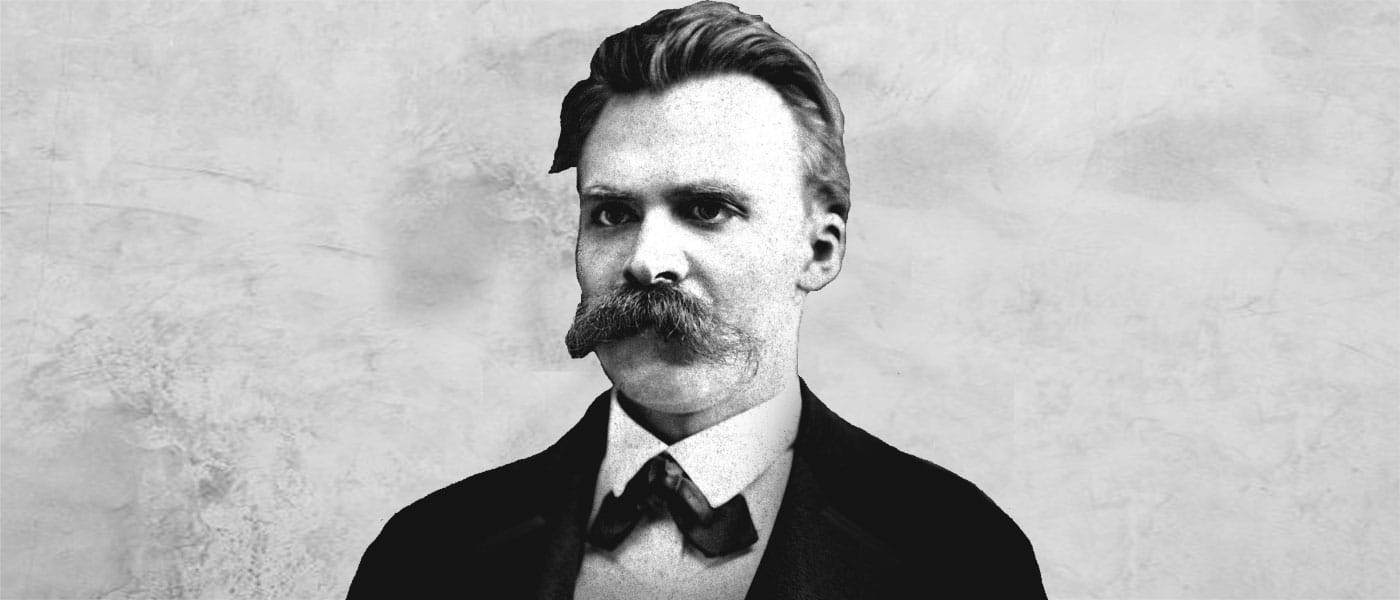
Big Thinker: Friedrich Nietzsche
Friedrich Nietzsche (1844—1900) is one of the most controversial figures in contemporary philosophy.
A German philosopher and cultural critic who is well known for his proclamations on God, truth, morality, power, aesthetics, the self and the meaning of existence, Nietzsche has had an enduring influence on Western philosophy.
Making use of a creative writing style, such as aphorisms and emotive essays, Nietzsche’s doctrines have been famously misappropriated by those seeking to further their own political ends (for example, Hitler and the alt-right). He was seen as an early existentialist because of his insistence on existence preceding essence, and the importance of looking to yourself – rather than God, society, family or friends – to identify what values you choose to live by.
Live your life like an artist
In Nietzsche’s first major work, The Birth of Tragedy (1872), the idea of living life creatively is embodied in his idea of living life as an artist. This involves combining two energies: the rational Apollonian and the passionate Dionysian. (In Greek mythology, Apollo is the god of logic and rational thinking, and Dionysus the god of instinct and emotion.)
Nietzsche worried the society of his time and classical thinkers like Socrates and Descartes– both Rationalists – only emphasised the Apollonian, neglecting the role of the Dionysian. Nietzsche thought it was important to balance our rationality with our sensual and passionate experience of life, and he saw this balance best depicted in ancient Greek tragedies.
Nietzsche insisted Greek tragedy achieves greatness through the inclusion of both Apollonian creative energy which is responsible for the dialogue, and Dionysian energy which inspires the music or chorus. In the plays, the two work together as the meaning of the words are enhanced by the accompanying melody. Using Greek dramatic artworks as an example, we can learn from great art to see the beauty in life.
“Without music, life would be a mistake.” – Nietzsche
The tragic spectator is united with others in the shared experience of being human. For Nietzsche, life without emotion, art and the creative energy of the Dionysian is bleak. A balance between Dionysus and Apollo allows for pluralistic and authentic modes of expression that are rational as well as creative. Aesthetic ideals also appear in his later writings, such as The Will to Power (1901), where Nietzsche writes, “Art as the redemptionof the man of action… Art as the redemption of the sufferer”.
Nietzsche advocated for a series of values or virtues we should adopt – namely, active, life affirming values, as opposed to the life denying or passive and ‘slave like’ values he detested. The latter he saw exemplified in the institutionalisation of Christianity, which, he believed, served to reinforce the power of the few at the expense of the many.
Believing the idea of a punitive God promoted by the church of his time to be a human invention, he famously declared:
“God is dead … And we have killed him.”
The Superman or Nietzsche’s Übermensch
Nietzsche emphasises an individualistic development and construction of self, summed up in the notion of the will to power. Claiming we ought to seek control over ourselves, Nietzsche holds up the Superman (yes, Nietzsche was misogynistic, but for our purposes we can extend this concept to include women), or Übermensch, as the pinnacle of human potentiality in terms of power and integrity in a broad sense of the word.
Nietzsche’s Übermensch is imagined as Zarathustra, a Christ-like figure who delivers an anti-sermon on the mount, a character with whom Nietzsche identifies. In The Gay Science (1882), it is the Superman who creates strengths out of his weaknesses and thus styles his character – a “great and rare art!”
This existentialist ideal – that each individual creates one’s self in a manner pleasing to them – threatens to collapse into extreme relativism or subjectivism. Yet, despite the fact the Superman goes “beyond good and evil”, Nietzsche is a moralist with definite views on what is condemnable.
“No one can construct for you the bridge upon which precisely you must cross the stream of life, no one but you yourself alone.” – Nietzsche
One way we are invited to test whether or not our chosen action is the right one is given to us in Nietzsche’s doctrine of eternal recurrence. “The Greatest Weight” in The Gay Science tells of a demon who confronts us, suggesting we must relive every single moment of our life, every choice and its consequences, eternally.
We are asked whether we would celebrate this as a gift or curse the unending misery it presents. The Superman would embrace the opportunity due to their authenticity and the fact they made each choice consciously, willing to accept full responsibility for their life.
Such a thought experiment offers an overly ambitious understanding of freedom and free will as a positive force. Yet it provides the reader with an interesting challenge when making decisions. Knowledge of an eternal recurrence would fundamentally change the way we lead our lives and inform the choices we make. If taken seriously, one could not help but try to act authentically – or, alternatively, not act at all.
Ever the rebellious teenager of philosophy, Nietzsche continues to give us pause for much thought, challenging us to live authentically and take unflinching responsibility for our lives.
Ethics in your inbox.
Get the latest inspiration, intelligence, events & more.
By signing up you agree to our privacy policy




BY Dr Laura D’Olimpio
Dr Laura D’Olimpio is senior lecturer in philosophy of education at the University of Birmingham, UK, and co-edits the Journal of Philosophy in Schools.
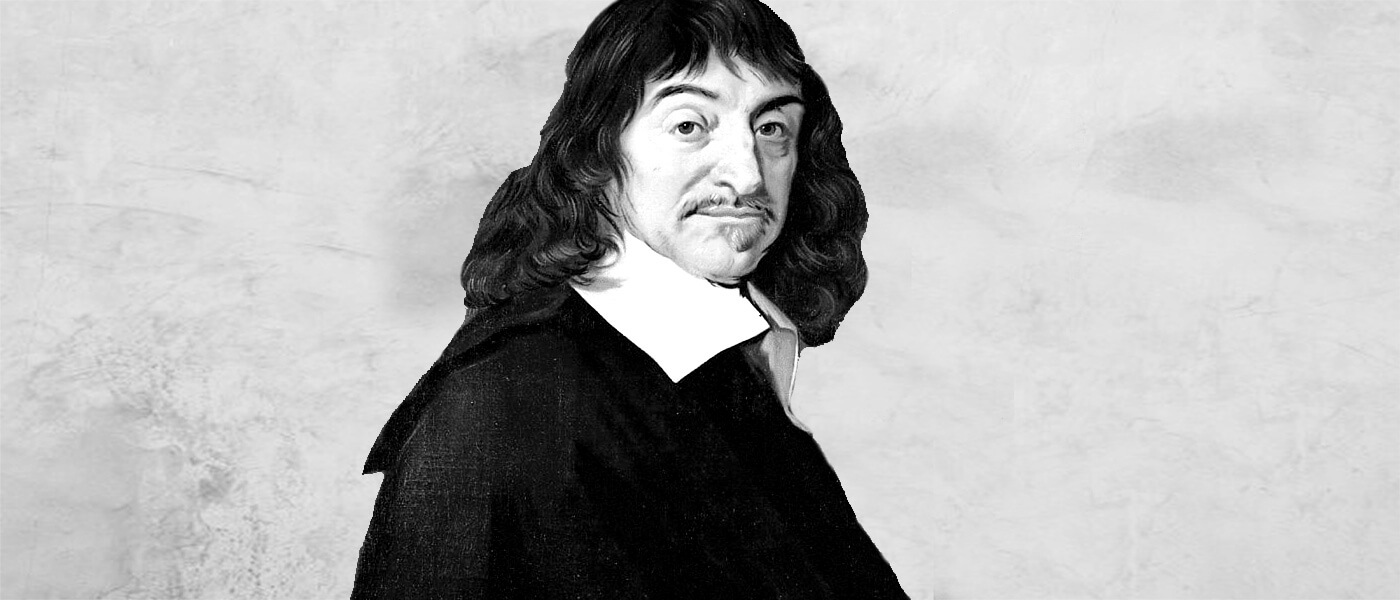
Big Thinker: René Descartes
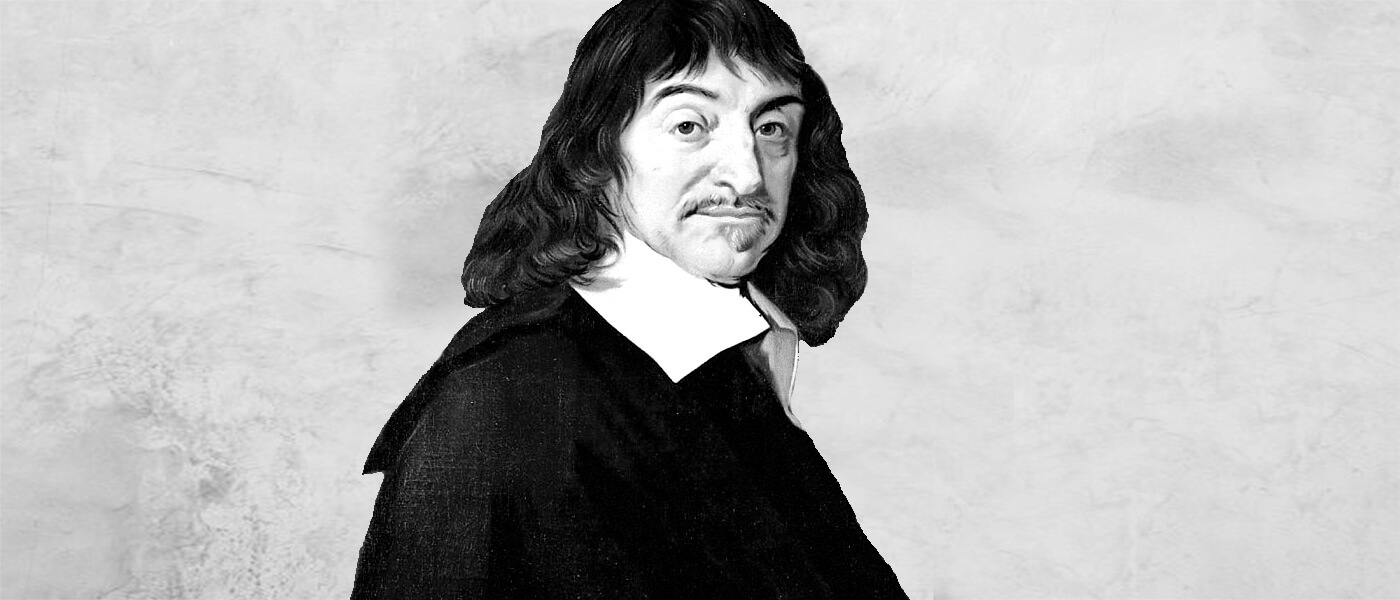
René Descartes (1596—1650) is famous for the phrase, “I think, therefore I am”. He was a Frenchman writing in the early 17th century and was preoccupied with the question: What can we know for certain?
Descartes details a method of doubt in his key text Meditations on First Philosophy, published in 1641. It becomes crucial for rationalists that seek infallible knowledge. Rationalists rest their epistemological claims on pure reason, without recourse to the senses or experience (unlike the empiricists). Epistemology is the philosophical study of knowledge.
At a time when scholars were writing in Latin, Descartes wrote in French so anyone who was literate in the common language of his place could read his work. His writing style is friendly and approachable, so it feels as though you are having a conversation with him. His sceptical inquiry into what we can know commences with the question:
Can my senses be trusted?
Descartes describes himself sitting in front of a log fire in his wood cabin, smoking a pipe and questioning whether or not he can be sure that he is awake and alert as opposed to asleep and dreaming. How can we know the difference, he asks, when sometimes, in our dream state, we feel as though we’re awake even though we’re not?
Using the first person point of view, Descartes ponders on the fact that he tends to use his senses to be sure he exists and that the world around him is real, but the senses can sometimes be deceived. Our eyes often play tricks on us – as proven by any optical illusion – so how can we trust something that tricks us even once?
Cartesian scepticism (Cartesian being the adjective to describe the school of Decartes’ thought) concludes ultimately all I can be truly sure of is that I am a thinking thing. Descartes’ famously declared:
“Cogito ergo sum: I think therefore I am.”
Descartes posits the only thing I can be sure of is that I exist because even when I doubt that, there is an “I” doing the doubting. The “I” that thinks or doubts, must surely exist, he claims.
For Descartes the mind is more knowable than the body, and he equates the human Soul with the mind. For him, the mind is the essence of a person.
As a mathematician and a ‘natural scientist’ Descartes sought to prove that truths of the world were as immutable as rational, logical mathematic proofs. After he has proven that “I think, therefore I am” is as secure a foundation for knowledge as “1 + 1 = 2” Descartes goes on to use a thought experiment in order to consider whether we can be sure God exists.
The Evil Genius thought experiment
Descartes’ thought experiment of the evil genius asks us to imagine there exists, instead of an entirely good and powerful God, an entirely powerful, all-knowing Malevolent Demon. The idea here is that this Demon could make us think we are experiencing the world as it truly is, but we aren’t really. We could be tricked by this Evil Genius, and we may not be able to trust any knowledge we receive about the world from our senses. Ultimately Descartes relies upon an Ontological or Rational Argument to prove that God exists and if God exists, then we can trust our senses as God would not fool us in such a way as the Evil Demon might.
The incredibly powerful questions Descartes asks still inform many of our science fiction fears as we wonder whether or not the world truly is as it appears to us. We can still see the power of doubting and if we take this worry too seriously, we can imagine being paralysed with fear, unable to do anything! Many of us accept that our senses can be tricked but we know that we just have to go on trusting them anyway and hope for the best.
This sceptical method Descartes outlines whereby we check what we believe to be true and question what we assume to be real is useful if we think of it in terms of seeking evidence for the beliefs we are taught and the assumptions we hold. Considered in this way, Descartes offers us a great tool for self-reflection. However, if we take this thought experiment seriously we may never be sure that even we ourselves exist!
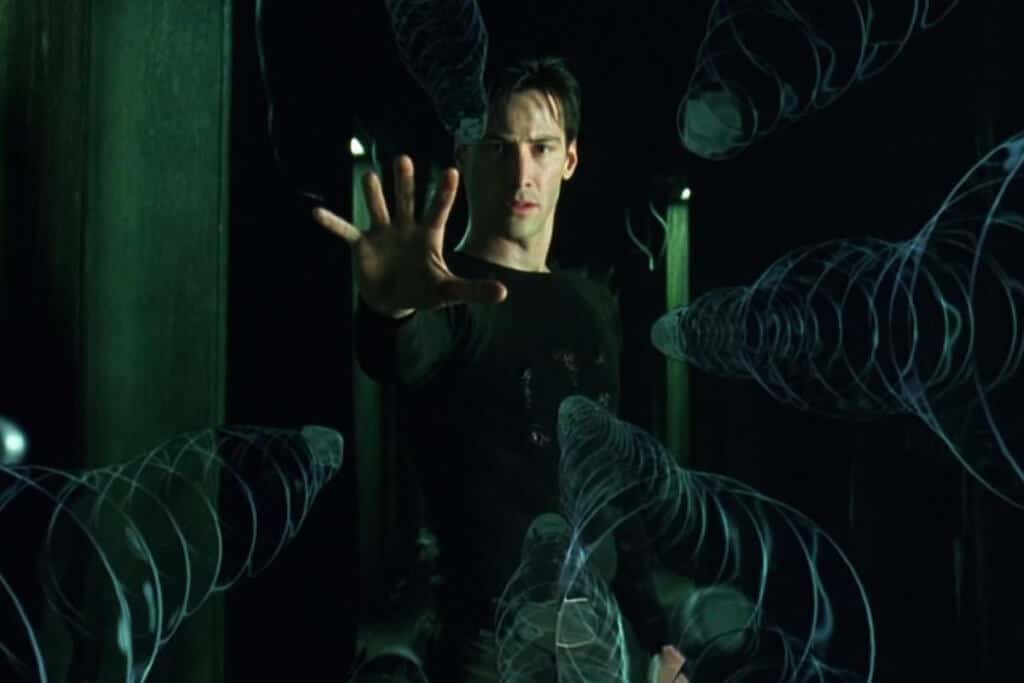
In the 18th century, David Hume suggested that even the assumption of an ‘I’ that doubts is an illusion. Hume says all we have to go on is a string of conscious experiences. Whether we are truly awake or dreaming right now is something we may not be able to answer with absolute accuracy, a doubt played out in famous films like The Matrix and Inception.
Ethics in your inbox.
Get the latest inspiration, intelligence, events & more.
By signing up you agree to our privacy policy



BY Dr Laura D’Olimpio
Dr Laura D’Olimpio is senior lecturer in philosophy of education at the University of Birmingham, UK, and co-edits the Journal of Philosophy in Schools.

Ethics Explainer: Plato's Cave
Plato’s allegory of the cave is a classical philosophical thought experiment designed to probe our intuitions about epistemology – the study of knowledge.
This story offers the reader an insight into one of Plato’s central concepts, namely, that eternal and unchanging ideas exist in an intellectual realm which we can only access through pure Reason.
Western philosophy may be traced back to Ancient Greece. We have a record of Socrates’ (469-399 BCE) oral teachings through the writings of his student, Plato (427-347 BCE). In these Socratic Dialogues, Socrates argues with his interlocutors in an effort to seek truth, meaning, and knowledge. Plato’s Republic is the best known of these and, in book VII, Socrates presents Glaucon (Plato’s older brother) with an unusual image:
Imagine a number of people living in an underground cave, which has an entrance that opens towards the daylight. The people have been in this dwelling since childhood, shackled by the legs and neck, such that they cannot move nor turn their heads to look around. There is a fire behind them, and between these prisoners and the fire, there is a low wall.
Rather like a shadow puppet play, objects are carried before the fire, from behind the low wall, casting shadows on the wall of the cave for the prisoners to see. Those carrying the objects may be talking, or making noises, or they may be silent. What might the prisoners make of these shadows, of the noises, when they can never turn their heads to see the objects or what is behind them?
Socrates and Glaucon agree that the prisoners would believe the shadows are making the sounds they hear. They imagine the prisoners playing games that include naming and identifying the shadows as objects – such as a book, for instance – when its corresponding shadow flickers against the cave wall. But the only experience of a ‘book’ that these people have is its shadow.
After suggesting that these prisoners are much like us – like all human beings – the narrative continues. Socrates tells of one prisoner being unshackled and released, turning to see the low wall, the objects that cast the shadows, the source of the noises as well as the fire.
While the prisoner’s eyes would take some time to adjust, it is imagined that they now feel they have a better understanding of what was causing the shadows, the noises, and they may feel superior to the other prisoners.
This first stage of freedom is further enhanced as the former prisoner leaves the cave (they must be forced, as they do not wish to leave that which they know), initially painfully blinded by the bright light of the sun.
The liberated one stumbles around, looking firstly only at reflections of things, such as in the water, then at the flowers and trees themselves, and, eventually, at the sun. They would feel as though they now have an even better understanding of the world.
Yet, if this same person returned to the dimly lit cave, they would struggle to see what they previously took for granted as all that existed. They may no longer be any good at the game of guessing what the shadows were – because they are only pale imitations of actual objects in the world.
The other prisoners may pity them, thinking they have lost rather than gained knowledge. If this free individual tried to tell the other prisoners of what they had seen, would they be believed? Could they ever return to be like the others?
The remaining prisoners certainly would not wish to be like the individual who returned, suddenly not knowing anything about the shadows on the cave wall!
Socrates concludes that the prisoners would surely try to kill one who tried to release them, forcing them into the painful, glaring sun, talking of such things that had never been seen or experienced by those in the cave.
Interpreting the Allegory of the Cave
There are multiple readings of this allegory. The text demonstrates that the Idea of the Good (Plato capitalises these concepts in order to elevate their significance and refer to the idea in itself rather than any one particular instantiation of that concept), which we are all seeking, is only grasped with much effort.
Our initial experience is only of the good as reflected in an earthly, embodied manner. It is only by reflecting on these instantiations of what we see to be good, that we can start to consider what may be good in itself. The closest we can come to truly understanding such Forms (the name he gives these concepts), is through our intellect.
Human beings are aiming at the Good, which Medieval philosophers and theologians equated with God, but working out what the good life consists of is not easy! Plato claims each Soul (or mind) chooses what is good, saying:
“But, whether true or false, my opinion is that in the world of knowledge the idea of good appears last of all, and is seen only with an effort.”
Ethics in your inbox.
Get the latest inspiration, intelligence, events & more.
By signing up you agree to our privacy policy



BY Dr Laura D’Olimpio
Dr Laura D’Olimpio is senior lecturer in philosophy of education at the University of Birmingham, UK, and co-edits the Journal of Philosophy in Schools.

Ethics Explainer: Aesthetics
Aesthetics is the philosophical study of art. If you think about what is enjoyable, or valuable about artworks, and why art is important, then you are considering issues to do with aesthetics.
The study of aesthetics is tricky because there are so many different kinds of artworks and it is difficult to think about what they have in common or how they should be categorised or judged. A seminal question in the field of aesthetics is ‘what is art?’ – how ought art be defined? And this question alone has various answers depending on which theory is being applied.
Art defined.
Art includes sculpture, painting, plays, films, novels, dance and music. And it isn’t always clear what the category of art excludes – in large part because artists are always pushing boundaries. The creative nature of art sees works or objects being considered as ‘Art’ that provoke shock, outrage, censorship or exclamations of ‘That’s not Art!’.
Just think about the first time Marcel Duchamp tried to display an artwork called ‘Fountain’ in 1917. The urinal, a ‘found object’ was signed by the artist ‘R. Mutt, 1917’, and caused a riot of disagreement as to whether art must be created or made with one’s own hands or whether it can be intentionally chosen and displayed.
Is it the creation or the reception of the artwork that matters the most?
Who decides whether something is a work of art? Is it ‘the artworld’ of experts and critics? Is it the artist? Or is it the viewer? Many viewers may not understand what they are seeing or may not truly appreciate the skill involved in creating a particular artwork.
For instance, the first time one looks at a Rothko painting, which may appear as a blank canvas painted with a couple of coloured squares, a viewer may think, ‘I could have painted that!’ It is only with an understanding of Rothko’s technique that one may start to appreciate the effort he put in to create it.
And even if we appreciate the skill and effort an artist exerts, we may or may not feel any particular ‘aesthetic experience’ when looking at a piece of abstract or contemporary art, while watching an opera, or while reading a novel by Dostoevsky.
An individual perspective
One’s experience of art is subjective as individual tastes differ. And yet, if we are to claim that some artworks are better than others, or explain why some artworks stand the test of time and are valued by generations, we need to refer to some standards by which to judge them. Are there any features artworks must have to be considered as art? Should artworks be beautiful? Do they need to be moral? And who decides whether or not they meet this criteria?
Despite the historical interference by political and religious leaders who worry about the influence art may have in a society, debates as to what constitutes good art, aesthetically and even morally, has been a matter for debate for aestheticians.
Sometimes it takes time for something to be considered art, let alone to be considered aesthetically valuable. Think about Banksy’s graffiti art. It has been the case that unsuspecting council workers have removed graffiti from the side of a building only to later discover they have inadvertently eliminated a valuable artwork. And yet, not all graffiti is considered art or deemed valuable.
In fact, the opposite is true!
What makes Banksy an exception?
Definitions of art have changed over time. Traditional views of art usually cited ‘beauty’ as an important feature of artworks, but that has since altered. Indeed, is one meant to find the displayed urinal ‘beautiful’? An artwork need not be beautiful to be skilfully executed, meaningful and valuable.
The value of art in society
The defenders of art and its unique role in society usually claim art should be valued for its own sake. Aesthetic value is not to be valued instrumentally, for its financial value or for its status, or even for what we can learn from it or because it is deemed morally ‘good’. It may do any and/or all of these things, or none! Art is valuable because it affords an aesthetic experience.
In its creation and reception, as a form of self expression, imaginative engagement, cognitive as well as affective experience, source of individual and social reflection and contemplation, art has always been central to human life. If it is true that the arts capture and express something unique, and aesthetic experience is intrinsically valuable, then we should consider the place for the arts in society and support and value artists for the important contribution they make.
Dr Laura D’Olimpio is a senior lecturer in philosophy of education at the University of Birmingham, UK.




BY Dr Laura D’Olimpio
Dr Laura D’Olimpio is senior lecturer in philosophy of education at the University of Birmingham, UK, and co-edits the Journal of Philosophy in Schools.

