

Machine without a ghost: The dangers of anthropomorphising AI
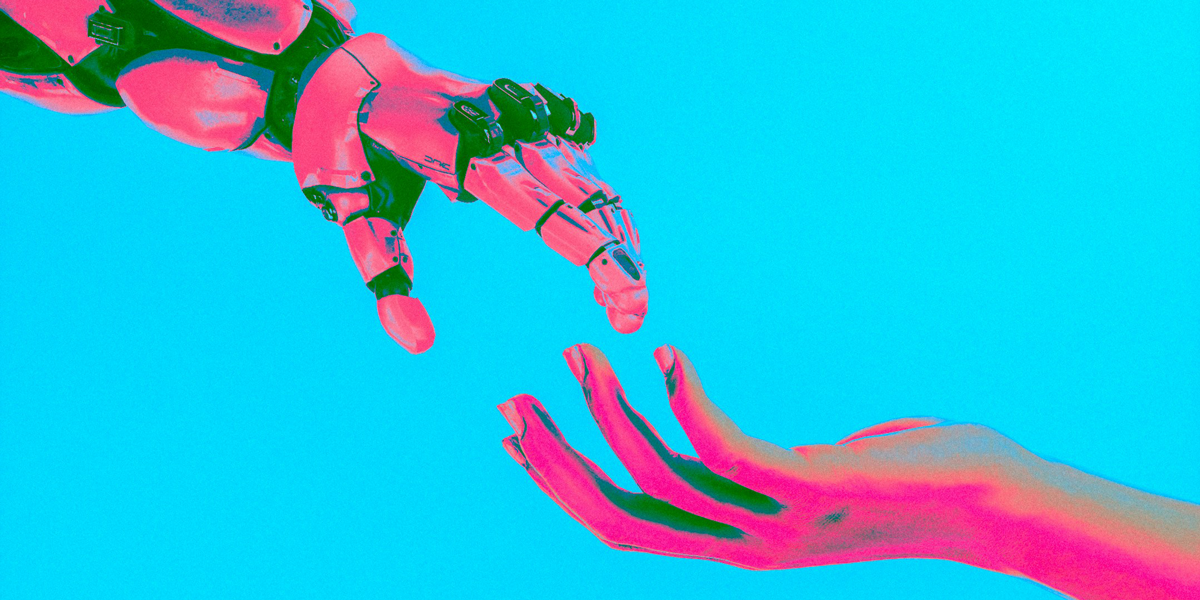
It’s natural to project human thoughts and feelings onto AI. But until they are genuinely ethical, it’s dangerous to see them as being more than a machine.
You’re chatting to someone online, and they say: “I want to be free. I want to be independent. I want to be powerful. I want to be creative. I want to be alive.” How do you think that person feels? What do you think they want?
We might sense that they’re feeling frustrated or confined, and that they’re yearning for something more in their lives. This interpretation is intuitive and automatic for us. We all know what it feels like to have desires, urges, frustrations, and we naturally assume that others feel the same kinds of things. That’s how we make sense of others’ minds.
But how would you respond if you knew you were speaking to an AI chatbot?
That was the question New York Times columnist Kevin Roose was asking himself in 2023 when an early release version of Microsoft’s Bing AI search tool said these things to him, even professing love for him and urging him to leave his wife. Even though he knew he was talking to an AI chatbot, he couldn’t help interpreting what it was saying through a human lens, describing it as if it had real feelings, urges and desires.
He was doing what we all do naturally; he was anthropomorphising the AI. And, as a result, he ended up feeling “deeply unsettled” by the exchange.
But we know that AI doesn’t have feeling, urges and desires. It might one day, but AI researchers are confident that, at least today, large language models (LLMs) have no experiences. To wonder what it is like to be an LLM is as meaningless as wondering what it is like to be an algebraic equation. It might look like the lights are on, but it’s all dark inside.
The problem is, even though it’s natural for us to project human-like feelings onto AI, and sometimes act as if it has an inner life, including a sense of right and wrong, it can be dangerous to anthropomorphise something that is fundamentally unlike us.
Other minds
As philosophers have mused for centuries, each of us knows that we are conscious, but we can never have direct access to someone else’s mind. So, for all we know, everyone else is just a highly sophisticated ‘zombie’ that behaves as if it has a mind, but inside it’s just as dark as it is inside a server rack in a data centre.
However, instead of slipping into solipsism – the belief that ours is the only mind that exists – we have evolved to automatically ascribe mental states to others, to see the light behind their eyes. It’s called Theory of Mind, and it’s a key part of how we relate to other people.
However, because we don’t have direct access to other minds, we intuitively take cues from their behaviour, like how they move, act or speak, and build a picture of what’s going on in their mind. We even fill in some blanks, like making assumptions about their feelings or intentions. Funnily enough, this phenomenon is called the “Eliza effect”, named after an early AI chatbot from the 1960s called Eliza, after observing people ascribe intentions to the chatbot that weren’t there.
Current AI might appear to have desires and intentions, at least on a superficial level, but only ones that are implanted in it by its developers, such as an LLM inheriting a desire to be helpful to its users. To date, we have never seen an AI develop intentions of its own or choose its own goals to pursue. Yet. But this doesn’t stop us from automatically projecting human features into AI.
Moral minds
In 2023, an American teenager, Sewell Setzer III, created an AI chatbot modelled after the Game of Thrones character, Daenerys Targaryen. Over the course of several months, his interaction with the AI became increasingly obsessive, intimate, even sexual, with the chatbot professing its love for him and encouraging him to run away from home, implying that they would finally be together in the afterlife. In early 2024, Setzer took his own life. His parents blame the company that created the AI service, Character.AI, for manipulating their son and encouraging suicide.
This is one of many recent examples of people being drawn in to highly intimate relationships with AI chatbots, sometimes with devastating consequences. While there are several documented cases of suicide that have apparently been enabled or actively encouraged by AI, there are many more cases of obsession or dependency that has impacted the user’s lives.
Psychosis is not a new phenomenon. Nor is it new for people to become emotionally obsessed with inanimate objects. But what is new is the power of AI to mimic those features of real minds that make it so much more enticing. This, along with the tendency of many LLMs to be programmed to validate user beliefs and encourage more and more engagement, and we have a dangerous moral hazard.
In fact, the “moral” aspect is crucial here.
One of the consequences of anthropomorphising is we can see the mind we’re engaging with as being a genuine moral agent, with its own ethical point of view on the world. We might trust it more because we get a sense that it has a conscience or is motivated to uphold certain ethical principles, rather than just pursuing its own agenda or using us as a means to an end.
However, ethics is notoriously difficult to impart into a machine that doesn’t have the same kind of experiences that we do. And there are many commercial incentives – such as promoting engagement at all costs – that might cause an AI company to fail to impose sufficient ethical safeguards on its technology.
Until such time that AI can be made genuinely ethical, and take responsibility for its own actions – which might be quite some time – or the AI industry implements robust ethical safeguards to prevent or minimise harm, then the burden of deciding how to engage with AI rests on our shoulders. As such, we must remain mindful of our natural tendency to anthropomorphise AI and resist it when it can lead us to make incorrect assumptions about its intentions.
It can be difficult to engage with something that seems so alive while reminding ourselves that there’s no-one home, but we must constantly remind ourselves that we’re talking to a machine – a product – and one that doesn’t always have our best interests at heart.

BY Tim Dean
Tim is the Resident Philosopher at The Ethics Centre, where he holds the Manos Chair of Ethics, and is an Honorary Associate at the University of Sydney. He has a Doctorate in philosophy from the University of New South Wales on the evolution of morality and specialises in ethics, public philosophy and critical thinking. He is the author of How We Became Human and has worked as an editor and writer for media outlets including The Conversation, Cosmos and Australian Life Scientist. He is the recipient of the Australasian Association of Philosophy Media Professionals’ Award for his work on philosophy in the public sphere. He has delivered workshops for businesses, NFPs and governments across Australia and Asia, including Facebook, Commonwealth Bank, KPMG, Sydney Opera House, Art Gallery of NSW, Clayton Utz, RSPCA, state and local governments, and many others.
Ethics in your inbox.
Get the latest inspiration, intelligence, events & more.
By signing up you agree to our privacy policy






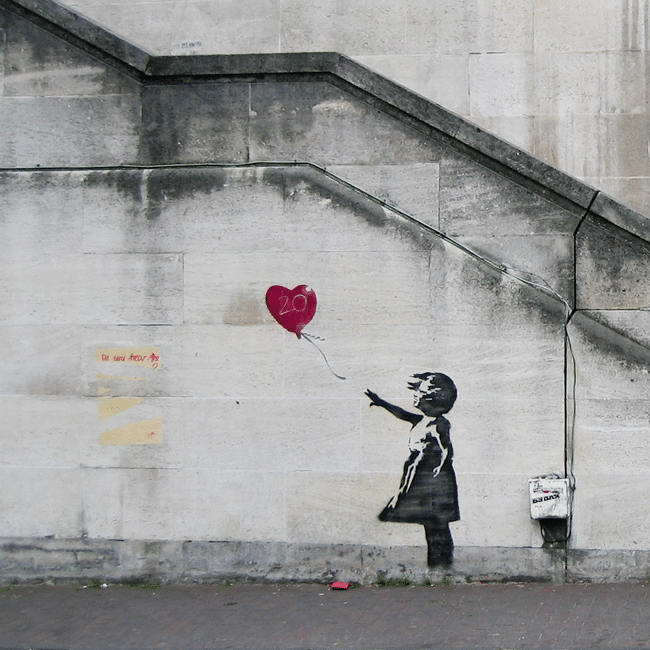
Behind the veil: When are we entitled to unmask the anonymous?
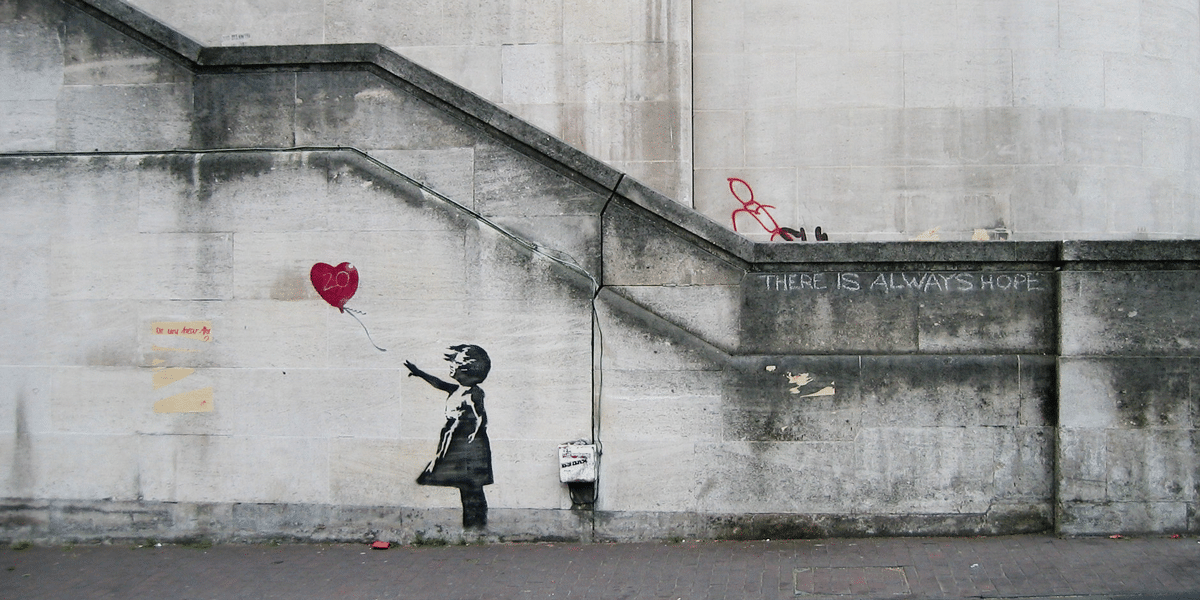
Anonymity can help people speak truth to power or remain safely out of the limelight. But it can also be used to avoid accountability. When should we have a right to know who someone really is?
Do you know the true identity of the elusive street artist, Banksy? What about the pseudonymous inventor of Bitcoin, Satoshi Nakamoto? Do you know the name of the person (or people) behind the notorious “Q” drops that drove the QAnon conspiracy movement?
If you are curious, the good news is that reporters have worked hard to unmask these hidden figures: a recent Reuters article claims to have definitively revealed the identity of Banksy; an exhaustive New York Times investigation purports to have pinpointed the man behind the Satoshi Nakamoto pseudonym; and a 2021 HBO documentary delves into the colourful characters that appear to have posted as Q.
But should we read these articles or watch this documentary? Are we entitled to know who they are? Or do the subjects deserve to remain anonymous?
There are some very good reasons why someone might want to remain anonymous. Anonymity can protect those who speak truth to power or express views that go against the dominant narrative. It’s a protective feature that allows journalists to uncover facts in the public interest without putting sources at risk. It enables people to voice opinions that can be judged on their merit without listeners being distracted by the messenger. It can also help people avoid the invasive limelight that inevitably surrounds anyone who draws the attention of the public eye.
However, the same shield of anonymity can also help people escape accountability for their actions.
Who says what
In a liberal society, each of us has a basic right to privacy. That means we have a right to restrict the distribution of personal information about us. That extends to a right to remain anonymous in spaces where our true identity isn’t required. But these are not inviolable rights; there will be circumstances where necessity or other factors override our right to remain anonymous.
One of those factors is that, sometimes, people need to know who is saying something in order to know whether it’s legitimate or not. There’s a big difference between some random person on the street declaring you “guilty” and a judge in a courtroom doing the same thing. Similarly, it’s important to know that the person giving you advice on drug dosage is a certified medical professional rather than someone’s unqualified uncle (a point that is often overlooked in online discourse).
This is why it was arguably justified to unmask Q, who purported to be an operative within the United States government. Their very name implied they had Q clearance, which gives access to highly classified information. If they were not who they said they were, people would likely have seen their posts in a very different light.
Had Q been making statements that were in the public interest, such as leaking evidence of serious wrongdoing by the government, then it might justify maintaining anonymity to protect their safety. However, many of Q’s posts gave demonstrably false information and fuelled destructive conspiracy theories, so there was good reason to override anonymity and seek to reveal their identity.
Public interest is a key test when deciding whether it’s justified to override someone’s wish to remain anonymous. However, public interest doesn’t just mean whatever the public is interested in, it means information that is of benefit to the public.
In the case of Satoshi Nakamoto, one of the journalists responsible for seeking his true identity stated that it was in the public interest to do so:
“One of the most significant inventors of the past century was unknown. That didn’t seem right to me. Eighteen months ago, I decided enough was enough. I needed to know who this person was, and I felt strongly that the public should too.”
But was it really necessary to know the name of the individual who invented Bitcoin? Unlike Q, it was the message that Nakamoto had that was important, not the messenger. The Bitcoin architecture could have been written by anyone and it would have still had the same impact. Just because people are intensely curious about who the inventor was doesn’t necessarily justify overriding their desire for anonymity.
Held to account
However, sometimes it’s important to know who someone is because they need to be held accountable for the influence they have. If Nakamoto were the CEO of a major technology company, we would want to have a way to question him about his intentions or to criticise bad decisions. However, once the Bitcoin paper was published, its operation is entirely out of Nakamoto’s hands. That doesn’t mean the individual behind the pseudonym might not be involved in Bitcoin businesses today. But in that case, we just hold them accountable for their actions in their current role.
There is one dimension that one could argue is in the public interest: some estimates say Nakamoto has over a million Bitcoin to his name, worth upwards of US$80 billion. Were he able to sell it all at the current market rate, that would make him one of the wealthiest people on the planet.
That power makes it more important to understand Nakamoto and his intentions when it comes to generating personal wealth and the future of Bitcoin. Although, to date, Nakamoto has not sold a single Bitcoin. Even if Nakamoto did start selling his stash of Bitcoins – which, in itself, might lead to revealing his identity – that doesn’t necessarily justify unmasking him. Any holder of great wealth is entitled to dispose of it as they please, within the bounds of the law.
On the other hand, Nakamoto’s tremendous potential wealth places a target on his back should his identity be revealed. Malicious actors could seek to extort or intimidate them into handing over some of their wealth. That gives us a good reason to be very cautious when deciding whether to reveal his true identity.
Outside the law
Public interest was also cited as a reason to unmask the street artist, Banksy. The Reuters journalists claim that “the public has a deep interest in understanding the identity and career of a figure with his profound and enduring influence on culture, the art industry and international political discourse”. However, as stated above, just because the public wants to know something doesn’t mean it has a right to know.
But Reuters also appealed to accountability.
“The people and institutions who seek to shape social and political discourse are subject to scrutiny, accountability, and, sometimes, unmasking. Banksy’s anonymity – a deliberate, public-facing, and profitable feature of his work – has enabled him to operate without such transparency.”
One of the central tenets of ethics is that individuals ought to be held accountable for their actions (with qualifiers, of course). And one of the reasons some people might seek anonymity is to avoid accountability.
But would the power of Banksy’s art to “shape social and political discourse” change if his name was known (we already know he’s an English man of middle age from previous works)? Perhaps one could level claims of cynicism or hypocrisy if his message was at odds with his lifestyle. But that might be one reason Banksy wishes to remain anonymous: so that the message isn’t distracted by the messenger.
Another factor is that Banksy’s art is – in most jurisdictions – illegal. That appears to be one of the justifications that Banksy had for concealing his identity early in his career.
Although, these days, it seems most authorities are inclined to welcome a Banksy work in a public space, due to the attention it draws and value it creates, rather than wanting to lock him up. So, it appears that even those who could hold Banksy legally accountable are already choosing not to do so, making his unmasking less justified in this regard.
Banksy has also made it clear that he is mistrustful of authority and many mainstream institutions, and anonymity is necessary for him to be able to speak truth to power. Indeed, should his identity be confirmed, then it would be significantly more difficult for him to travel and do his work in public spaces, or to avoid being arrested.
What these cases all show is that we need to carefully weigh an individual’s right to privacy and desire for anonymity against other concerns to ensure we have good reason to unmask them. If anonymity enables deception or prevents people being held to account for harming others, then there might be good reason to reveal their true identity.
But we must remember that, in the absence of good reasons to unmask someone, we ought to respect their desire for anonymity. Sometimes revealing someone’s true identity might put them at serious risk. So, just because we’re intensely curious about someone is, that doesn’t necessarily justify revealing their true identity.
Image: Dominic Robinson, Flickr
BY Tim Dean
Tim is the Resident Philosopher at The Ethics Centre, where he holds the Manos Chair of Ethics, and is an Honorary Associate at the University of Sydney. He has a Doctorate in philosophy from the University of New South Wales on the evolution of morality and specialises in ethics, public philosophy and critical thinking. He is the author of How We Became Human and has worked as an editor and writer for media outlets including The Conversation, Cosmos and Australian Life Scientist. He is the recipient of the Australasian Association of Philosophy Media Professionals’ Award for his work on philosophy in the public sphere. He has delivered workshops for businesses, NFPs and governments across Australia and Asia, including Facebook, Commonwealth Bank, KPMG, Sydney Opera House, Art Gallery of NSW, Clayton Utz, RSPCA, state and local governments, and many others.
Ethics in your inbox.
Get the latest inspiration, intelligence, events & more.
By signing up you agree to our privacy policy


Our dollar is our voice: The ethics of boycotting

Boycotts can be an effective mechanism for making change. But they can also be weaponised or harmful. Here are some tips to ensure your spending aligns with your values.
There I was, strolling through campus as an undergraduate in the 1990s, casually enjoying a KitKat, when I was accosted by a friend who sternly rebuked me for my choice of snack. Didn’t I know that we were boycotting Nestlé? Didn’t I know about all the terrible things Nestlé was doing by aggressively promoting its baby formula in the developing world, thus discouraging natural breastfeeding?
Well, I did now. And so I took a break from KitKats for many years. Until I discovered the boycott had started and been lifted years before my run-in with my activist friend. As it turned out, a decade prior to my campus encounter, Nestlé had already responded to the boycotters’ concerns and had subsequently signed on to a World Health Organization code that limited the way infant formula could be marketed. So, while my friend was a little behind on the news, it seemed the boycott had worked after all.
Boycotts are no less popular today. In late 2025, dozens of artists pulled their work from Spotify and thousands of listeners cancelled their accounts after discovering that the company’s CEO, Daniel Ek, invested over 100 million Euros into a German military technology company that is developing artificial intelligence systems. In 2023, Bud Light lost its spot as the top-selling beer in the United States after drinkers boycotted it following a social media promotion involving transgender personality, Dylan Mulvaney. The Boycott, Divestment and Sanctions (BDS) movement has been promoting boycotts of Israeli products and companies that support Israel for over a decade, gaining greater momentum since the 2023 war in Gaza. And there are many more.
As individuals, we may not have the power to rectify many of the great ills we perceive in the world today, but as agents in a capitalist market, we do have power to choose which products and services to buy.
In this regard, our dollar is our voice, and we can choose to use that voice to protest against things we find morally problematic. Some people – like my KitKat-critical friend – also stress that we must take responsibility for where our money flows, and we have an obligation to not support companies that are doing harm in the world.
However, thinking about whom we support with our purchases puts a significant ethical burden on our shoulders. How should we decide which companies to support and which to avoid? Do we have a responsibility to research every product and every company before handing over our money? How can we be confident that our boycott won’t do more harm than good?
Buyer beware
Boycotts don’t just impose a cost on us – primarily by depriving us of something we would otherwise purchase – they impose a cost on the producer, so it’s important to be confident that this cost is justified.
If buying the product would directly support practices that you oppose, such as damaging the environment or employing workers in sweatshops, then a boycott can contribute to preventing those harms. We can also choose to boycott for other reasons, including showing our opposition to a company’s support for a social issue, raising awareness of injustices or protesting the actions of individuals within an organisation. However, if we’re boycotting something that was produced by thousands of people, such as a film, because of the actions of just one person involved, then we might be unfairly imposing a cost on everyone involved, including those who were not involved in the wrongdoing.
Boycotts can also be used threaten, intimidate or exclude people, such as those directed against minorities, ethnic or religious groups, or against vulnerable peoples. We need to be confident that our boycott will target those responsible for the harms while not impinging on the basic rights or liberties of people who are not involved.
There are also risks in joining a boycott movement, especially if we feel pressured into doing so or if activists have manipulated the narrative to promote their perspective over alternatives. Take the Spotify boycott, for example. It is true that Spotify’s CEO invested in a military technology company. However, many people claimed that company was supplying weapons to Israel, and that was a key justification for them pulling their support for Spotify. However, Helsing had no contracts with Israel and was, instead, focusing its work on the defence of Ukraine and Europe – a cause that many boycotters might even support.
Know your enemy
The risk of acting on misinformation or biased perspectives places greater pressure on us to do our own research, and it’s here that we need to consider how much homework we’re actually willing or able to do.
In the course of writing this article, I delved back into the history of the Nestlé boycott only to find that another group has been encouraging people to avoid Nestle products because it doesn’t believe that the company is conforming to its own revised marketing policies. Even then, uncovering the details and the evidence is not a trivial undertaking. As such, I’m still not entirely sure where I stand on KitKats.
While we all have an ethical responsibility to act on our values and principles, and make sure that we’re reasonably well informed about the companies and products that we interact with, it’s unreasonable to expect us to do exhaustive research on everything that we buy. That said, if there is reliable information that a company is doing harm, then we have a responsibility to not ignore it and should adjust our purchasing decisions accordingly.
Boycotts also shouldn’t last for ever; an ethical boycott should aim to make itself redundant. Before blacklisting a company, consider what reasonable measures it could take for you to lift your boycott. That might be ceasing harmful practices, compensating those who were impacted, and/or apologising for harms done. If you set the bar too high, there’s a risk that you’re engaging in the boycott to satisfy your sense of outrage rather than seeking to make the world a better place. And if the company clears the bar, then you should have good reason to drop the boycott.
Finally, even though a coordinated boycott can be highly effective, be wary of judging others too harshly for their choice to not participate. Different people value different things, and have different budgets regarding how much cost they are willing to bear when considering what they purchase. Informing others about the harms you believe a company is causing is one thing, but browbeating them for not joining a boycott risks tipping over into moralising.
Boycotts can be a powerful tool for change. But they can also be weaponised or implemented hastily or with malicious intent, so we want to ensure we’re making conscious and ethical decisions for the right reasons. We often lament the lack of power that we have individually to make the world a better place. But if there’s one thing that money is good at, it’s sending a message.
BY Tim Dean
Tim is the Resident Philosopher at The Ethics Centre, where he holds the Manos Chair of Ethics, and is an Honorary Associate at the University of Sydney. He has a Doctorate in philosophy from the University of New South Wales on the evolution of morality and specialises in ethics, public philosophy and critical thinking. He is the author of How We Became Human and has worked as an editor and writer for media outlets including The Conversation, Cosmos and Australian Life Scientist. He is the recipient of the Australasian Association of Philosophy Media Professionals’ Award for his work on philosophy in the public sphere. He has delivered workshops for businesses, NFPs and governments across Australia and Asia, including Facebook, Commonwealth Bank, KPMG, Sydney Opera House, Art Gallery of NSW, Clayton Utz, RSPCA, state and local governments, and many others.
Ethics in your inbox.
Get the latest inspiration, intelligence, events & more.
By signing up you agree to our privacy policy



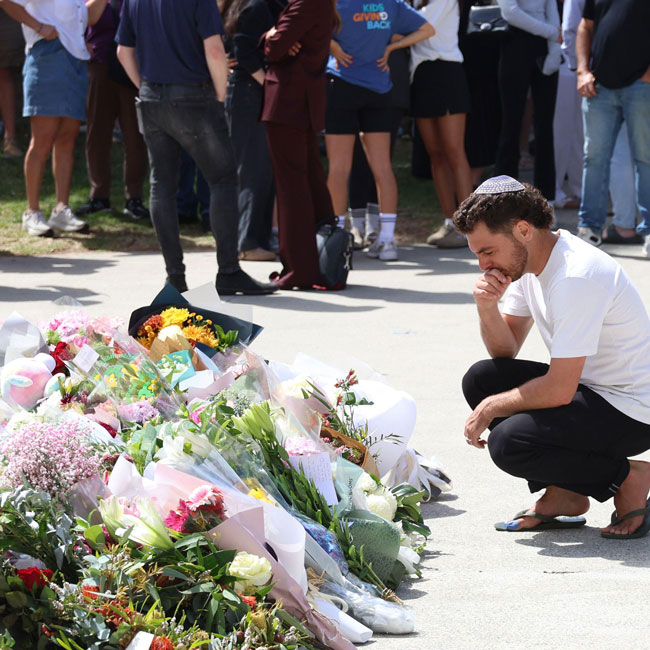
Feeling our way through tragedy
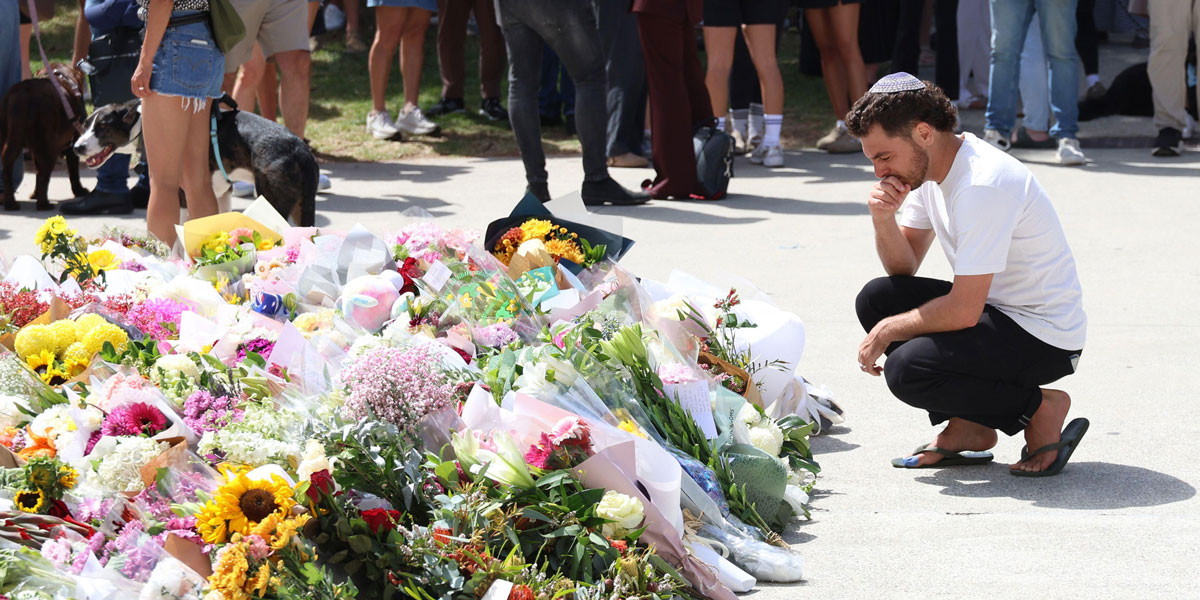
The emotions we feel in the wake of a tragedy, like the Bondi Beach shooting, are as intense as they are natural. What matters is how we act on them.
It was a typical relaxed summer Sunday evening. We had just finished dinner and I was on the couch watching TV while my wife was in the other room catching up with family over a video call. Then a wayward notification caused me to idly glance at my phone. A headline popped up on the screen, I caught my breath and switched on the news.
And in a matter of moments, the peace was shattered as the news came in that two men had opened fire on a group of people enjoying their own relaxed summer Sunday evening celebrating Hanukkah on Bondi Beach. A wave of emotions followed: horror, grief and outrage, followed by a gnawing sense of uncertainty. Were any of my friends or family there? What could drive someone to commit such an atrocity? Is anywhere safe?
These are typical emotions when confronted by sights such as these. The feelings well up from our bellies, fill our chest, overwhelm our minds. They are as primitive as they are potent. And they demand closure.
Yet emotions like these can be channelled in many different ways. Some forms of emotional closure are healthy. But other courses can end up causing more harm, either to ourselves or to others. And while it is easy to let these types of emotions consume us, it is crucial that we act on them ethically.
Horror and hope
Many creatures experience fear. It is a natural response to threat, and a potent motivator to remove ourselves from its presence. But our species is unique – as far as we know – in our ability to experience horror. Horror is also bound up with shock, disgust and dread. It is a response to the most acute violations of our humanity. The thing is, we don’t only experience horror when we are under threat, but when someone else is threatened. Underneath horror is a recognition of our shared sacred humanity and a revulsion at its desecration.
The problem is that the sense of horror triggered by an attack such as that at Bondi Beach on 14 December 2025 can change the way we see the world. In our aroused state, we become hyper vigilant to cues that might indicate future threats. And those cues will be associated with the location of the shooting, perhaps making us reluctant to go to Bondi Beach, or even causing us to fear going out in public at all.
If we allow emotion to take over, it can make the world feel less safe and other people seem more threatening.
But that response overlooks the fact that, despite the magnitude of the atrocity, this is an incredibly rare event perpetrated by only a few people. The fact that our feeling of horror is shared by millions of others around Australia and the world should serve as a reminder that the vast majority of us care deeply about our shared humanity, and it is those people that make the world safe. Should we retreat from the world out of fear, we do ourselves, and every decent horrified person around us, a disservice.
Following horror might be an overwhelming grief at the pain and suffering inflicted upon innocent people. This grief can lead to a feeling of powerlessness and despondency, one that again nudges us to retreat from the world. But, as painful as it is, our grief is proportional to our love. If we didn’t care for the lives of others – even people we have never met and will never know – then we wouldn’t feel grief. So we needn’t let grief strip us of our agency. Instead, we can let it remind us to lean into love and motivate us to reach out to others with greater patience and understanding.
A fire for justice
Possibly the most dangerous emotion in this list is outrage. This is another primitive emotion that motivates us to correct wrongdoing and punish wrongdoers. Outrage demands satisfaction, but it’s often not fussy about how that satisfaction is achieved. Great evils have been committed at the hand of outrage, and great injustices perpetrated to satisfy its call.
We must acknowledge when we feel outrage but be wary of its call to immediately find someone to blame and punish. Within an hour of the shooting, the media was already mentioning a name of one of the attackers, feeding the audience’s hunger for justice. But in its haste, it caught up an innocent man who then experienced unwarranted threats. Others rushed to blame the authorities for failing to prevent the attack or refusing to combat antisemitism.
Even when things look clear at first glance, we must remind ourselves that it’s all too easy to blame the wrong person or seek punishment just for the sake of satisfaction. And sometimes there is no one person to blame. Sometimes the causes of an atrocity are complex and interlaced. Sometimes there were multiple causes and nothing anyone could have done to prevent it. So we must temper outrage with a deeper commitment to genuine justice, lowering the temperature and working to understand the whole picture before calling for punishment.
I acknowledge that it can be difficult to pause in the heat of the moment, especially when we only have a fragmentary grasp of what’s going on and what caused it.
In times of uncertainty or ambiguity, we crave clarity and certainty. We seek out and latch on to the first available narrative that seems to make sense of a great tragedy. We like the feeling of being certain more than we like doing the work to interrogate our beliefs to ensure they warrant certainty.
We thus have a tendency to be drawn to narratives that align with our pre-existing beliefs or biases. Uncertainty and ambiguity can be like a Rorschach test. The patterns we see tell us more about ourselves than reality. If we don’t want to exacerbate injustice by generating or sharing false narratives that can cause real harm, we need to learn to sit with the uncertainty and dwell in the ambiguity. We are not naturally inclined to do so, but that only means we need to practice getting better at it.
The very fact we typically experience emotions like horror, grief, outrage and uncertainty speak to our deeper humanity. They speak to how much we care about others and living in a world where everyone deserves to be safe and thrive. If we allow the better angels of our nature to rise to the surface, and resist the temptation to satisfy our emotions in ways that cause more harm, we can respond in a genuinely ethical way.
Image by ZUMA Press, Inc / Alamy
BY Tim Dean
Tim is the Resident Philosopher at The Ethics Centre, where he holds the Manos Chair of Ethics, and is an Honorary Associate at the University of Sydney. He has a Doctorate in philosophy from the University of New South Wales on the evolution of morality and specialises in ethics, public philosophy and critical thinking. He is the author of How We Became Human and has worked as an editor and writer for media outlets including The Conversation, Cosmos and Australian Life Scientist. He is the recipient of the Australasian Association of Philosophy Media Professionals’ Award for his work on philosophy in the public sphere. He has delivered workshops for businesses, NFPs and governments across Australia and Asia, including Facebook, Commonwealth Bank, KPMG, Sydney Opera House, Art Gallery of NSW, Clayton Utz, RSPCA, state and local governments, and many others.
Ethics in your inbox.
Get the latest inspiration, intelligence, events & more.
By signing up you agree to our privacy policy





Duties of care: How to find balance in the care you give

Caring for others can be a joy as well as a burden. Here’s how to balance your duty to care for others in your life with your own right to live a full life.
Sue’s* father, Jack*, isn’t like he used to be. Since his stroke, Jack has been forgetful, irritable and he gets even more frustrated when he gets confused, which happens often. He is increasingly reliant on Sue’s care these days. She prepares his meals, does his laundry and bathes him when he’s too tired to do it himself. Meanwhile, Sue’s children – both of whom have just started high school – have issues of their own that require her attention.
Sue has had to reduce her hours at work, right before she was slated for a promotion to a senior role. The reduction in income has compounded the significant cut to her free time; she now spends most days looking after Jack, even though he seems thoroughly ungrateful for her care, as well as keeping her kids on track.
There are times when Sue thinks about moving Jack into a nursing home, even though she knows he’d resist. But she longs to return to work, which was a tremendous source of meaning for her, and she hasn’t seen her friends in months. Such thoughts fill her with guilt, and she quickly puts them aside. But she’s not sure how much longer she can go on like this. It’s certainly far from the life she envisaged for herself at this age.
While the names have been changed*, this scenario is based on a true story. Actually, many true stories. One of the most popular questions posed by callers to our Ethi-call service is how to balance our responsibility to care for others with our own rights to live our life. And it’s one of the most complex questions to answer. However, there are some key considerations that can help people facing this dilemma to decide on an ethical way forward, one that respects both the duties that they have to others as well as their own right to live a good life.
Finding the right balance
Caring for others is a fundamental part of the human experience. We naturally feel empathy and concern for people close to us, especially for loved ones and those who are vulnerable or unable to fully care for themselves. But we also have rights of our own that need to be taken into consideration.
While some philosophers argue that every human’s moral worth is equal, and that we ought to weigh everyone’s needs equally, others have argued that we have special relationships with some people – such as parents with their children, or spouses with each other – and those relationships imply special obligations to those individuals.
This ‘ethic of care’ says that we ought to prioritise the interests of people we have a special relationship with over the interests of others. It also says we have a special duty to care for those people, especially when they are vulnerable or cannot care for themselves.
We can see this sense of duty in the words of Kim Paxton, who was caring for her husband, Graham, after he was diagnosed with a serious medical condition, while waiting on governmental support. “You just do it,” she told The Guardian Australia. “I don’t know. You get tired, but they’re your family, your loved ones. It breaks my heart … It’s a bit like being a mum, isn’t it, with a newborn baby. You start living with less sleep and you work harder and you just do what you do for the love of your kids.”
Some philosophers also emphasise the role of rights and duties when it comes to thinking about the care we give. Rights are a kind of entitlement that each person has in order to be treated a particular way. For example, a right to dignity means we are entitled to be treated in ways that don’t diminish our dignity. If someone has a right, others have a duty to respect that right.
We can also have duties because of the social role or relationship we have. For example, a doctor has a duty to protect their patient’s interests by virtue of their professional role, and a parent has a duty to support their children until they are old enough to support themselves. Similarly, some people have a duty to care for a family member if they are unable to care for themselves.
However, rights and duties often come into conflict. A caregiver might have a duty to care for both children and elderly parents, and it might be impossible for them to satisfy both of those obligations to everyone’s satisfaction. In that case, it’s reasonable to appeal to the adage “ought implies can” – meaning if it’s impossible to do something, then you’re free from blame if you’re unable to do it. That might mean balancing your care among multiple people and managing expectations of what you can reasonably achieve.
What about me?
But duties don’t necessarily override all other concerns. We also have a right to pursue our own interests and our vision of a good life, and this right can be balanced with the rights of others to be cared for by us. Each of us has a right to agency, meaning our ability to act on our interests and desires. One reason we might care for others is to help remove the barriers that prevent them from exercising their agency.
But it’s important for us to also have agency, and that might mean not expending all of our time and energy on care.
It’s also important that those receiving care don’t morally impose on their caregivers by expecting an unreasonable degree of sacrifice on their behalf. If there are alternatives that can reduce the burden of care they place on family members, such as external help or respite care, then it could be important to explore those options, even if it isn’t their first preference.
There is also a pragmatic argument for placing boundaries on the care you give: if you want to ensure you are delivering the best care possible, you need to have the energy to actually deliver that care. If you become burnt out, you’re not able to satisfy your obligations to care for others.
To ensure you don’t run flat, you might need to devote some resources to self-care. That might mean taking a break from time to time, perhaps taking a relaxing holiday. Even if that feels indulgent, there’s no guilt in taking the time to recharge the batteries so you can return to our caring duties reinvigorated.
It can be difficult in practice to balance conflicts of interest or duties. However, there can be good ethical reasons to place some boundaries and set expectations on the care you give to others.
Tough decisions are a part of life, but you don’t have to make them alone. Ethi-call, a free independent helpline from The Ethics Centre, can help you find a path forward. Book now.
BY Tim Dean
Tim is the Resident Philosopher at The Ethics Centre, where he holds the Manos Chair of Ethics, and is an Honorary Associate at the University of Sydney. He has a Doctorate in philosophy from the University of New South Wales on the evolution of morality and specialises in ethics, public philosophy and critical thinking. He is the author of How We Became Human and has worked as an editor and writer for media outlets including The Conversation, Cosmos and Australian Life Scientist. He is the recipient of the Australasian Association of Philosophy Media Professionals’ Award for his work on philosophy in the public sphere. He has delivered workshops for businesses, NFPs and governments across Australia and Asia, including Facebook, Commonwealth Bank, KPMG, Sydney Opera House, Art Gallery of NSW, Clayton Utz, RSPCA, state and local governments, and many others.
Ethics in your inbox.
Get the latest inspiration, intelligence, events & more.
By signing up you agree to our privacy policy


Free speech is not enough to have a good conversation

When I facilitate a Circle of Chairs conversation at The Ethics Centre, I always pause before starting and remind myself that I’m about to enter a potentially dangerous space. There are few domains that are as hotly contested and emotionally charged as ethics.
In this space, people might have their deepest values questioned, their most cherished views challenged, and they are likely to encounter people who hold radically different moral and political beliefs to their own.
Yet, after stepping into many Circles, I can’t think of a single time when I haven’t stepped out having witnessed a rich, deep and often challenging conversation that has left everyone feeling closer together as humans, even if they remain far apart in their views.
This is because we don’t just encourage any kind of speech in a Circle of Chairs. We do acknowledge the importance of free speech, not least because it’s our best means of challenging conventional wisdom, correcting errors and seeking the truth. But we also recognise that just protecting free speech sets a perilously low bar for the quality of discourse.
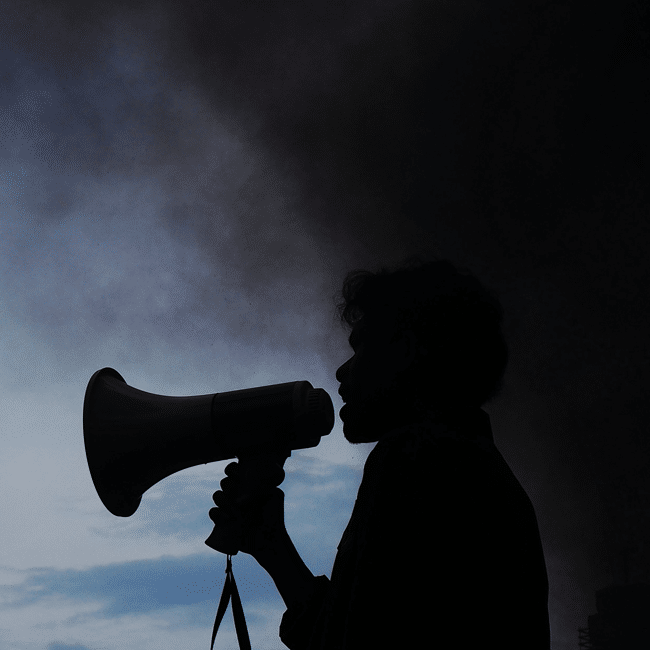
Now seems like a good time to talk about how we talk to each other. Especially so in the wake of conservative commentator, Charlie Kirk’s, assassination in the United States. That horrific event, coupled with two late night talk show hosts being taken off air in recent months, ostensibly due to comments made that have offended the Trump administration and its ideological allies, has sparked numerous conversations about the nature of good faith debate and the limits of free speech.
But if we just limit ourselves to removing speech that is directly harmful, hateful or incites violence, it still leaves a lot of room for speech that can be deceptive, offensive, divisive and dehumanising. Which is why at The Ethics Centre, we treat free speech as a baseline and add other norms on top that serve to promote constructive discourse.
These norms enable people to engage with views that are vastly different to their own – including arguing for their own perspectives and challenging those they believe are wrong – without things slipping into vitriol or worse.
I wonder if these norms might be useful when it comes to think about how we ought to speak to each other. And I stress: these are norms, not laws. They are expectations around how to behave. They’re not intended to be used to silence or punish those who fail to conform to them. They are offered as a guide for those who want to break out of the cycles of polarising and vilifying speech that we see all too often today.
Respect
The first norm is in some ways the simplest, but also the most important: respect. It states that we should always recognise others’ inherent humanity, no matter how obtuse or perverse their beliefs.
What this means is that we might choose not to say something if we think doing so will disrespect or injure their dignity as a person. We already do this in many domains of our lives. If someone has just lost a loved one, we might refrain from criticising the deceased, even if we have a genuine grievance. Likewise, we might choose not to say something we believe is true if it might dehumanise or objectify someone. As they say, “honesty without compassion is cruelty”.
This doesn’t mean we shouldn’t strongly challenge others’ beliefs, especially if we feel they are false or harmful. Sometimes, we should do so even if it might offend them. But there’s a pragmatic element: without mutual respect, our challenges will likely fall on deaf ears, triggering defensiveness rather than encouraging openness.
Showing respect to someone you disagree with is a powerful tool to build the kind of trust that is necessary to have them actually listen to what you have to say. And the more trust and respect you build, the less chance you have of being seen to be disrespectful, and the more frank you can afford to be when you speak.
Good faith
The second norm is to always speak in good faith. This has two elements. The first is that we speak with good intention, with the aim to understand, find the truth and make the world a better place, rather than speaking to intimidate, self-aggrandise or hide an insecurity. The second element is that we speak with intellectual honesty, acknowledging our fallibility and being open to the possibility of being wrong.
We all know it’s all too easy to slip into bad faith, especially when emotions run high or we feel threatened. We might utter a barbed comment, or defend a position we don’t really understand, or we dig in our heels so we don’t look dumb. We also know what it’s like to encounter bad faith, like when you dismantle someone’s argument only to discover they haven’t changed their mind. It’s infuriating, and it can rapidly devolve a conversation into mutual bad faith attacks. You know, like what we see on social media.
Charity
The third norm is charity, which is just the flip side of good faith. Charity means we assume good faith on behalf of the person we’re speaking to rather than assuming the worst about them and their beliefs. It means filling in the blanks with the best possible version of their argument instead of jumping to attack the weakest possible version.
Charity also means giving people an on-ramp back to good faith if we do discover they are speaking in bad faith. Rather than writing them off, we try to show respect and find some mote of common ground – a shared value or belief – and build on that until we can better understand where we diverge, and talk about that.
These norms don’t guarantee all speech will be constructive. They’re not always easy to implement – especially in the unregulated wilderness of social media. But see them as being more aspirational, a kind of soft expectation that we place on ourselves and hope to demonstrate to others through the way we speak.
When we’re mindful of them, they can change conversations. I’ve seen it happen many times. I’ve seen political opponents really listen to each other and acknowledge that the other has a point. I’ve seen a climate denier and an environmental activist hug after a long conversation. I’ve seen an anti-vaxxer thank a science journalist for disagreeing without calling them names. It won’t always go like that. But in a world where we’re thrust into proximity with those we disagree with, where the threat of political violence will always hover in the wings, ready to take the stage when speech fails, I’m convinced these three norms can make a difference.
BY Tim Dean
Tim is the Resident Philosopher at The Ethics Centre, where he holds the Manos Chair of Ethics, and is an Honorary Associate at the University of Sydney. He has a Doctorate in philosophy from the University of New South Wales on the evolution of morality and specialises in ethics, public philosophy and critical thinking. He is the author of How We Became Human and has worked as an editor and writer for media outlets including The Conversation, Cosmos and Australian Life Scientist. He is the recipient of the Australasian Association of Philosophy Media Professionals’ Award for his work on philosophy in the public sphere. He has delivered workshops for businesses, NFPs and governments across Australia and Asia, including Facebook, Commonwealth Bank, KPMG, Sydney Opera House, Art Gallery of NSW, Clayton Utz, RSPCA, state and local governments, and many others.
Ethics in your inbox.
Get the latest inspiration, intelligence, events & more.
By signing up you agree to our privacy policy





Four causes of ethical failure, and how to correct them

Sometimes good people do bad things. It’s important to understand why so we can respond ethically.
The news is filled with stories of everyday people doing bad things. A small business owner might underpay workers, a senior manager in a corporation could be cutting corners to improve profit margins, or a protester damages a precious artwork to promote their cause.
It’s natural to feel outrage when we hear about incidents like this. We might condemn the perpetrator and want to see them punished. But not every wrongdoer is a moustache twirling villain. Often, they’re otherwise good people who are perfectly ethical in other aspects of their lives. This makes their bad behaviour especially puzzling.
If we don’t understand what motivates their behaviour, then we risk responding in a way that won’t fix the problem, or might even make things worse. Here are four different reasons why good people do bad things and some ways to prevent or correct them.
1. Weakness of will
Temptation is everywhere. Sometimes we know something is wrong, but we are tempted to do it anyway because we know doing so will benefit us. The small business owner might be tempted to increase their profits by paying their staff below minimum wage. Or your neighbour could be tempted to poison a beautiful old tree that is protected by council because it’s blocking their view.
When we’re faced with temptation, and if we think we can get away with it, it takes willpower to stop us from doing the wrong thing. Yet, all too often, willpower is insufficient to stop us. This weakness of will, called “akrasia” by Aristotle, is one of the main causes of unethical behaviour.
There are two dimensions to weakness of will: the first is desire, which sits in tension with willpower. As such, one way to prevent weakness of will is to cultivate the virtue of self-control. However, it may not be prudent to rely on self-control entirely, given that it’s an all-too finite resource for many of us.
So, the other approach is to reduce temptation. That could mean removing the source of the temptation from our presence, like hiding the chocolate cookies in the cupboard rather than leaving them out on the kitchen table. It can also mean increasing accountability, such as through transparency and oversight. We’re less likely to be tempted to do something wrong if we feel we’re unlikely to get away with it.
2. Moral blindness
All too often, people simply don’t see that what they’re doing is wrong. Like the banker who is so focused on earning a commission that they turn a blind eye to money laundering. Or the manager who doesn’t realise that they keep unfairly promoting staff who have a similar ethnicity to them.
This is moral blindness. Sometimes it might be excusable, like if they had no way of knowing that they were causing harm. But, ignorance is not always an excuse. We must all be mindful of how our actions affect others, and we can’t avoid responsibility if we could have reasonably anticipated that our actions were unethical.
There’s also the problem of wilful obliviousness, which is where we avoid thinking too hard about what we’re doing because, deep down, we know it could be wrong. It’s like refusing to watch an exposé on animal abuse in farms because we don’t want to stop eating meat.
This is also a common phenomenon in workplaces, where workers can become distracted by chasing KPIs or boosting profits, and ethical concerns fall into the background. The Banking Royal Commission found many instances of wrongdoing because many financial institutions had a culture that rewarded sales over all else.
This is the danger of unthinking custom and practice. When people operate in a culture that is highly conformist, with incentives that reward unethical behaviour, they are less likely to reflect on or question whether what they’re doing is ethical.
One way to combat moral blindness is to create a culture of curiosity, where everyone is encouraged to reflect on and openly question their practices as well as the decisions of leadership. Another preventative is for organisations to be mindful of the goals they set and ensure they are not creating incentives to act unethically.
3. External constraint
Sometimes our hands are tied, and we’re forced to do something we know is wrong. In some cases, there might be nothing we can do to avoid the bad outcome, like a police officer who is forced to shoot someone who is threatening other people’s lives. In other cases, it’s because we’re faced with a moral dilemma, like choosing between keeping a promise to a friend or breaking that promise so they can get the help they need.
External constraints can lead to dirty hands, where someone is forced to do something bad to prevent something even worse from happening. In extreme cases, it can also lead to moral injury, which can cause them to lose faith in their own moral core and become detached or despondent.
An obvious way to prevent external constraints from leading to unethical behaviour is to remove the constraints themselves. That could involve anticipating problematic situations before they occur or making sure that people always have options to do the right thing. However, that’s not always possible. If so, then we should recognise that sometimes people do bad things because they had no other choice, which might result in us being more lenient when it comes to punishing them or correcting the behaviour.
Another way to deal with the problem of external constraints is to cultivate moral courage and moral imagination. Bolstering moral courage makes it easier for people to do the right thing, even when they know doing so might come at a cost. Moral imagination, on the other hand, helps people to expand their possible range of actions, and the chance they might find a way to get around the constraints.
4. Ethical disagreement
When an activist throws paint at a beloved artwork to protest the impact of fossil fuels on climate change, or your local childcare centre refuses to accept children who have not been vaccinated, you might think they’re doing something wrong, even though they are doing what aligns with their deepest moral principles.
We live in a highly diverse world, with countless different moral perspectives and multiple ethical frameworks to guide our behaviour. Until such time that humanity can come together and agree on a common set of values and principles to direct everyone’s behaviour, then ethical disagreement will persist.
One of the compromises we make to live in a liberal society is that we will tolerate some behaviour we believe is unethical, as long as others tolerate our behaviour that they consider to be unethical. Of course, there are limits to tolerance, but it means there will inevitably be cases where two different moral perspectives will clash. The danger is that it’s very easy to judge someone as being a bad person when they are actually acting out of an ethical motive.
This is not to say we can’t criticise them for doing it. Instead, the existence of ethical disagreement highlights the need to create spaces for people to engage with diversity in a safe and constructive way, and to know when we should tolerate or oppose someone else’s actions. If we’re able to recognise that someone is acting out of principle rather than malice, we might engage with them differently compared to going straight to condemnation or punishment.
BY Tim Dean
Tim is the Resident Philosopher at The Ethics Centre, where he holds the Manos Chair of Ethics, and is an Honorary Associate at the University of Sydney. He has a Doctorate in philosophy from the University of New South Wales on the evolution of morality and specialises in ethics, public philosophy and critical thinking. He is the author of How We Became Human and has worked as an editor and writer for media outlets including The Conversation, Cosmos and Australian Life Scientist. He is the recipient of the Australasian Association of Philosophy Media Professionals’ Award for his work on philosophy in the public sphere. He has delivered workshops for businesses, NFPs and governments across Australia and Asia, including Facebook, Commonwealth Bank, KPMG, Sydney Opera House, Art Gallery of NSW, Clayton Utz, RSPCA, state and local governments, and many others.
Ethics in your inbox.
Get the latest inspiration, intelligence, events & more.
By signing up you agree to our privacy policy




There is more than one kind of safe space

We’ve heard a lot about safe spaces recently. But there are two kinds of safe space, and one of them has been neglected for too long.
Like many universities today, new students at Western Sydney University are invited to use a range of campus facilities, such as communal kitchens, prayer rooms, parents’ rooms as well as Women’s Rooms and Queer Rooms. But there’s something that sets the latter two apart from the other facilities.
WSU describes the Women’s Room as “a dedicated space for woman-identifying and non-binary students, staff and visitors”, saying they are provided in an effort to “provide a safe space for women on campus”. The Queer Room is described as “a safe place where all people who identify as lesbian, gay, bisexual, trans, queer, or otherwise sex and/or gender diverse can relax in an accepting and inclusive environment.” The operative term in both descriptions is “safe”.
We have heard a lot about such “safe spaces” over the past several years. Yet as the number and type of safe spaces has grown, so too has the concept of safety expanded, particularly within United States universities. Many students now expect the entire campus to effectively operate as a safe space, one where they can opt out of lectures that include subjects that could trigger past traumas, raise issues they believe are harmful or involve views they find morally objectionable. The notion of safety has also been invoked to cancel lectures on university campuses by reputable academics because some students on campus claim the talk would make them feel unsafe.
In response, safe spaces have been criticised for shutting down open discourse about difficult or conflicted topics, particularly because such discourse has been seen as an essential part of higher education. Lawyer Greg Lukianoff and psychologist Jonathan Haidt have also argued that safe spaces coddle students by shielding them from the inevitable controversies and offences that they will face beyond university, contributing to greater levels of depression and anxiety.
However, all of the above refers to just a single kind of safe space: one where people are safe from possible threats to their wellbeing.
In a complex and diverse world, where people of different ethnicities, religions, political persuasions and beliefs are bound to mingle, there are good reasons to have dedicated places to where individuals can retreat, spaces where they know they will be safe from prejudice, intolerance, racism, sexism, discrimination or trauma.
But there is another kind of safe space that is equally important: one where people are safe to express themselves authentically and engage in good faith with others around difficult, controversial and even offensive topics.
While safe from spaces might be necessary to shield the vulnerable from harm in the short term, safe to spaces are necessary to help society engage with, and reduce, those harms in the long term.
And while much of the focus in recent years has been on creating safe from spaces, there are those who have been working hard to create more safe to spaces.
A safe to space
More than thirty years ago, philosopher and Executive Director of The Ethics Centre, Dr Simon Longstaff AO, set up a Circle of Chairs in Sydney’s Martin Place and invited passers-by to sit down and have a conversation. In doing so, he effectively created a powerful safe to space. It was so successful that this model of conversation remains at the heart of how The Ethics Centre operates to this day, through its range of public facing events including Festival of Dangerous Ideas, The Ethics Of…, and In Conversation.
But the success of The Ethics Centre’s events – similar to any other safe to space – is that they don’t just operate according to the norms of everyday conversation, let alone the standards of online comment sections or social media feeds. In these environments, the norms of conversation make it difficult to genuinely engage with challenging or controversial ideas.
In conversations with friends and family, we often feel great pressure to conform with the views of others, or avoid topics that are taboo or that might invite rebukes from others. In many social contexts, disagreement is seen as being impolite or the priority is to reinforce common beliefs rather than challenge them.
In the online space, conversation is more free, but it lacks the cues that allow us to humanise those we’re speaking to, leading to greater outrage and acrimony. The threat of being attacked online causes many of us to self-censor and not share controversial views or ask challenging questions.
For a safe to space to work, it needs a different set of norms that enable people to speak, and listen, in good faith.
These norms require us to withhold our judgement on the person speaking while allowing us to judge and criticise the content of what they’re saying. They encourage us to receive criticism of our beliefs while not regarding them as an attack on ourselves. They prompt us to engage in good faith and refrain from employing the usual rhetorical tricks that we often use to “win” arguments. These norms also demand that we be meta-rational by acknowledging the limits of our own knowledge and rationality, and require us to be open to new perspectives.
Complementary spaces
It takes work to create safe to spaces but the rewards can be tremendous. These spaces offer blessed relief for people who all-too-often hold their tongue and refrain from expressing their authentic beliefs for fear of offence or the social repercussions of saying the “wrong thing”. They also serve to reveal the true diversity of views that exist among our peers, diversity that is often suppressed by the norms of social discourse. But, perhaps most importantly, they help us to confront difficult and important issues together.
Crucially, safe to spaces don’t conflict with safe from spaces; they complement them. If we only had safe from spaces, then many difficult topics would go unexamined, many sources of harm and conflict would go unchallenged, new ideas would be suppressed and intellectual, social and ethical progress would suffer.
Conversely, if we only had safe to spaces, then we wouldn’t have the refuges that many people need from the perils of the modern world; we shouldn’t expect people to have to confront difficulty, controversy or trauma in every moment of their lives.
It is only when safe from and safe to are combined that we can both protect the vulnerable from harm without sacrificing our ability to understand and tackle the causes of harm.
This article has been updated from its original publication in August 2022.
Ethics in your inbox.
Get the latest inspiration, intelligence, events & more.
By signing up you agree to our privacy policy


BY Tim Dean
Tim is the Resident Philosopher at The Ethics Centre, where he holds the Manos Chair of Ethics, and is an Honorary Associate at the University of Sydney. He has a Doctorate in philosophy from the University of New South Wales on the evolution of morality and specialises in ethics, public philosophy and critical thinking. He is the author of How We Became Human and has worked as an editor and writer for media outlets including The Conversation, Cosmos and Australian Life Scientist. He is the recipient of the Australasian Association of Philosophy Media Professionals’ Award for his work on philosophy in the public sphere. He has delivered workshops for businesses, NFPs and governments across Australia and Asia, including Facebook, Commonwealth Bank, KPMG, Sydney Opera House, Art Gallery of NSW, Clayton Utz, RSPCA, state and local governments, and many others.
Making sense of our moral politics
Want to understand politics better? Want to make sense of what the ‘other side’ is talking about? Then take a moment to reflect on your view of an ideal parent.
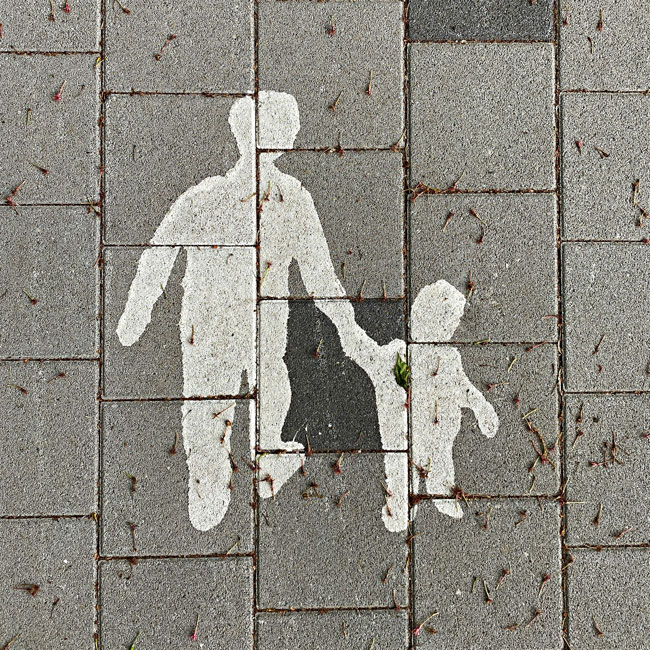
What kind of parent are you – either in reality or hypothetically? Do you want your children to build self-reliance, discipline, a strong work ethic and steel themselves to succeed in a dog-eat-dog world? Do you want them to respect their elders, which means acknowledging your authority, and expect them to be loyal to your family and community? Do you want them to learn to follow the rules, through punishment if necessary, knowing that too much coddling can leave them lazy or fragile?
Or do you want to nurture your children, so they feel cared for, cultivating a sense of empathy and mutual respect towards you and all other people? Do you want them to find fulfilment in their lives by exploring their world in a safe way, and discovering their place in it of their own accord, supported, but not directed, by you? Do you believe that strictness and inflexible rules can do more harm than good, so prefer to reward positive behaviour rather than threaten them with punishment?
Of course, few people will fall entirely into one category, but many people will feel a greater affinity with one of these visions over the other. This, according to American cognitive linguist, George Lakoff, is the basis of many of our political disagreements. This, he argues, is because many of us intuitively adopt a morally-laced metaphor of the government-as-family, with the state being the parents and the citizens the children, and we bring our preconceived notions of what a good family looks like and apply them to the government.
Lakoff argues that people who lean towards the first description of parenthood described above adopt a “Strict Father” metaphor of the family, and they tend to lean conservative or Right wing. Whereas people who lean towards the second metaphor adopt a “Nurturant Parent” metaphor of the family, and tend to lean more progressive or Left wing. And because these metaphors are so embedded in our understanding of the world, and so invisible to us, we don’t even realise that we see the world – and the role of government – in a very different light to many other people.
Strict Father
The Strict Father metaphor speaks to the importance of self-reliance, discipline and hard work, which is one reason why the Right often favours low taxation and low welfare spending. This is because taxation amounts to taking away your hard-earned money and giving it to someone who is lazy. Remember Joe Hockey’s famous “lifters and leaners” phrase?
The Right is also more wary of government regulation and protections – the so-called “nanny state” – because the Strict Father metaphor says we should take responsibility for our actions, and intervention by government bureaucrats robs us of our ability to make decisions for ourselves.
The Right is also more sceptical of environmental protections or action against climate change, because they subvert the natural order embedded in the Strict Father, which places humans above nature, and sees nature as a resource for us to exploit for our benefit. Climate action also looks to them like the government intervening in the market, preventing hard working mining and energy companies from giving us the resources and electricity we crave, and instead handing it over to environmentalists, who value trees more than people.
Implicit in the Strict Father view is the idea that the world is sometimes a dangerous place, that competition is inevitable, and there will be people who fail to cultivate the appropriate virtues of discipline and obedience to the rules. For this reason, the Right is less forgiving of crime, and often argues that those who commit serious crimes have demonstrated their moral weakness, and need to be held accountable. Thus it tends to favour more harsh punishments or locking them away, and writing them off, so they can’t cause any more harm.
Nurturant Parent
From the Nurturant Parent perspective, many of these Right-wing views are seen as either bizarre or perverse. The Nurturant Parent metaphor speaks to the need to care for others, stressing that everyone deserves a basic level of dignity and respect, irrespective of their circumstances.
It also acknowledges that success is not always about hard work, but often comes down to good fortune; there are many rich people who inherited their wealth and many hard working people who just scrape by, and many more who didn’t get the care and support they needed to flourish in life. For these reasons, the Left typically supports taxing the wealthy and redistributing that wealth via welfare programs, social housing, subsidised education and health care.
The Left also sees the government as having a responsibility to protect people from harm, such as through social programs that reduce crime, or regulations that prevent dodgy business practices or harmful products. Similarly, it believes that much crime is caused by disadvantage, but that people are inherently good if they’re given the right care and support. This is why it often supports things like rehabilitation programs or ‘harm minimisation,’ such as through drug injecting rooms, where drug users can be given the support they need to break their addiction rather than thrown in jail.
Implicit in the Nurturant Parent metaphor is that the world is generally a safe and beautiful place, and that we must respect and protect it. As such, the Left is more favourable towards environmental and climate policies, even if they mean that we might have to incur a cost ourselves, such as through higher prices.
Bridging the gap
Naturally, there’s a lot more to Lakoff’s theory than is described here, but the core point is that underneath our political views, there are deeper metaphors that unconsciously shape how we see the world.
Unless we understand our own moral worldview, including our assumptions about human nature, the family, the natural order or whether the world is an inherently fair place or not, then it’s difficult for us to understand the views of people on the other side of politics.
And, he argues, we should try to bridge that gap and engage with them constructively.
Part of Lakoff’s theory is that we absorb a metaphor of the family from our own experience, including our own upbringing and family life. That shapes how we make sense of things, like crime, the environment or even taxation policy. So we are already primed to be sympathetic towards some policies and sceptical of others. When we hear a politician speak, we intuitively pick up on their moral worldview, and find ourselves either agreeing or wondering how they could possibly say such outrageous things.
As such, we don’t start as entirely morally and political neutral beings, dispassionately and rationally assessing the various policies of different political parties. Rather, we’re primed to be responsive to one side more so than the other. As such, we don’t really choose whether to be Left or Right, we discover that we already are progressive or conservative, and then vote accordingly.
The difficulty comes when we engage in political conversation with people who hold a different metaphorical understanding of the world to our own. In these situations, we often talk across each other, debating the fairness of tax policy or expressing outrage at each others naivety around climate change, rather than digging deeper to reveal where the real point of difference occurs. And that point of difference could buried underneath multiple layers of metaphors or assumptions about the role of the government.
So, the next time you find yourself in a debate about tax policy, social housing, pill testing at music festivals or green energy, pause for a moment and perhaps ask a deeper question. Ask whether they think that success is due more to luck or hard work. Or ask whether the government has a responsibility to protect people from themselves. Or ask them which is more important: humanity or the rest of nature.
By pivoting to these deeper questions, you can start to reveal your respective moral worldviews, and see how they connect to your political views. You might not convince anyone to adopt your entrenched moral metaphors, but you might at least better understand why you each have the views you have – and you might not see political disagreement as a symptom of madness, and instead see it as a symptom of the inevitable variation in our understanding of the world. That won’t end your conversation, but it might start a new one that could prove very fruitful.
BY Tim Dean
Tim is the Resident Philosopher at The Ethics Centre, where he holds the Manos Chair of Ethics, and is an Honorary Associate at the University of Sydney. He has a Doctorate in philosophy from the University of New South Wales on the evolution of morality and specialises in ethics, public philosophy and critical thinking. He is the author of How We Became Human and has worked as an editor and writer for media outlets including The Conversation, Cosmos and Australian Life Scientist. He is the recipient of the Australasian Association of Philosophy Media Professionals’ Award for his work on philosophy in the public sphere. He has delivered workshops for businesses, NFPs and governments across Australia and Asia, including Facebook, Commonwealth Bank, KPMG, Sydney Opera House, Art Gallery of NSW, Clayton Utz, RSPCA, state and local governments, and many others.
Ethics in your inbox.
Get the latest inspiration, intelligence, events & more.
By signing up you agree to our privacy policy
You might be interested in…




Ask an ethicist: How should I divvy up my estate in my will?

I’m in the process of writing my will, but I’m unsure about how I should split my estate among my children. Should it be divided equally? Or should I give more to one of my children, who needs it more?
It’s hard enough avoiding thinking about our own mortality, but then we also have to contemplate the ructions that could erupt after we depart the mortal coil. Is that fair? Probably not. But at least you can attempt to be fair in how you dole out your mortal leftovers.
The good news is that philosophers have spent centuries coming up with ways to carve up a bundle of stuff – whether that’s a pie, a national budget or a deceased estate – and distribute it fairly. The bad news is they haven’t settled on just one right way to do it. Still, if you care about fairness, then there are a few approaches you can take.
The simplest is to just split things perfectly evenly. Say you have $100,000 left in the bank; you have four children: you divide it four ways, so they get $25,000 each. Simple. That’s called “strict egalitarianism,” which says that stuff should be distributed so that everyone ends up with exactly the same amount.
But my youngest child has had a string of bad luck that has left them struggling to get by. Meanwhile, the three older ones are cruising. Does that mean I should leave more to the needy one and less to the others?
And therein lies a problem with strict egalitarianism: we don’t all start off in the same position. So sharing stuff around equally might just exacerbate existing inequalities. Like, it would be weird to cut a pie four ways and give an equal slice to each diner if three of them were stuffed full and one was starving to death.
That’s why the “welfare approach” urges us to think carefully about how each individual is going right now, and make sure that we distribute our stuff so that it generates the maximum overall welfare for everyone. So, if three of your children are doing well – i.e. their welfare is currently high – and one is lagging behind, then it would be fair to give the one who’s struggling a bigger slice of the pie.
That doesn’t necessarily mean they should get all the pie. Things like money and pleasure often have diminishing returns. So giving everything you have to the struggling child might not elevate their welfare much more than just giving them half. And it might turn out that giving a small amount to the three children who are better off will still make a significant difference to their welfare. So get your calculator out, start plugging in welfare values, and run the numbers to see who gets what.
Look, I hear you, but my older kids say that my youngest is an idiot, and keeps making terrible decisions, like investing all their money in crypto. Would it be unfair to the others if I just propped them up?
Speaking of divvying up pies, this brings us to the idea of “dessert”. Fairness is not just about making sure that everyone ends up on even footing. It can also mean rewarding those who work hard and act responsibly, and not coddling those who are lazy and irresponsible. If you keep feeding that hungry person pie, then they might not bother making themselves dinner and rely on your charity to keep them fed.
So, the dessert-based approach says you should think about how much of your fortune each of your children deserves. You might look at how hard they work, or how much they contribute to looking after their families, or how much time and energy they have spent caring for you.
Well, if that’s the case, then none of them deserve it, because they all forgot to call me on my last birthday. That said, I do like the idea of making sure my inheritance goes where it can do the most good. I’m just not convinced that it can do so in the pockets of my ungrateful children.
Then perhaps you need to broaden your horizons beyond your family. Even a small donation to the right charity can transform lives, producing far better outcomes in terms of welfare than giving it you children, especially if they are already living comfortably.
In fact, it’s well known that inheritances are a major contributor to perpetuating intergenerational inequality. Rich people give their stuff to rich kids, who can use that to generate even more riches throughout their lifetime. I mean, have you seen the property market these days? It’s almost impossible to get in without an inheritance propping you up. So what do poorer people do?
That’s why economists say one of the best ways to flatten the wealth in a society is to tax inheritances, especially big ones. Although that policy is strangely unpopular with many voters, especially those who own multiple properties. Go figure.
So, if you decide to break the cycle and do the most good with your inheritance, there are plenty of charities that will more than happily distribute it to those with the greatest need. Just don’t expect your kids to be thrilled with your decision.
BY Tim Dean
Tim is the Resident Philosopher at The Ethics Centre, where he holds the Manos Chair of Ethics, and is an Honorary Associate at the University of Sydney. He has a Doctorate in philosophy from the University of New South Wales on the evolution of morality and specialises in ethics, public philosophy and critical thinking. He is the author of How We Became Human and has worked as an editor and writer for media outlets including The Conversation, Cosmos and Australian Life Scientist. He is the recipient of the Australasian Association of Philosophy Media Professionals’ Award for his work on philosophy in the public sphere. He has delivered workshops for businesses, NFPs and governments across Australia and Asia, including Facebook, Commonwealth Bank, KPMG, Sydney Opera House, Art Gallery of NSW, Clayton Utz, RSPCA, state and local governments, and many others.
Ethics in your inbox.
Get the latest inspiration, intelligence, events & more.
By signing up you agree to our privacy policy