


From NEG to Finkel and the Paris Accord – what’s what in the energy debate

We’ve got NEGs, NEMs, and Finkels a-plenty. Here is a cheat sheet for this whole energy debate that’s speeding along like a coal train and undermining Prime Minister Malcolm Turnbull’s authority. Let’s take it from the start…
UN Framework Convention on Climate Change – 1992
This Convention marked the first time combating climate change was seen as an international priority. It had near-universal membership, with countries including Australia all committed to curbing greenhouse gas emissions. The Kyoto Protocol was its operative arm (more on this below).
The Kyoto Protocol – December 1997
The Kyoto Protocol is an internationally binding agreement that sets emission reduction targets. It gets its name from the Japanese city it was ratified in and is linked to the aforementioned UN Framework Convention on Climate Change. The Protocol’s stance is that developed nations should shoulder the burden of reducing emissions because they have been creating the bulk of them for over 150 years of industrial activity. The US refused to sign the Protocol because the two largest CO2 emitters, China and India, were exempt for their “developing” status. When Canada withdrew in 2011, saving the country $14 billion in penalties, it became clear the Kyoto Protocol needed some rethinking.
Australia’s National Electricity Market (NEM) – 1998
Forget the fancy name. This is the grid. And Australia’s National Electricity Market is one of the world’s longest power grids. It connects suppliers and consumers down the entire east and south east coasts of the continent. It spans across six states and territories and hops over the Bass Strait connecting Tasmania. Western Australia and the Northern Territory aren’t connected to the NEM because of distance.
 Source: Australian Energy Market Operator
The NEM is made up of more than 300 organisations, including businesses and state government departments, that work to generate, transport and deliver electricity to Australian users. This is no mean feat. Before reliable batteries hit the market, which are still not widely rolled out, electricity has been difficult to store. We’ve needed to continuously generate it to meet our 24/7 demands. The NEM, formally established under the Keating Labor government, is an always operating complex grid.
The Paris Agreement aka the Paris Accord – November 2016
The Paris Agreement attempted to address the oversight of the Kyoto Protocol (that the largest emitters like China and India were exempt) with two fundamental differences – each country sets its own limits and developing countries be supported. The overarching aim of this agreement is to keep global temperatures “well below” an increase of two degrees and attempt to achieve a limit of one and a half degrees above pre-industrial levels (accounting for global population growth which drives demand for energy). Except Australia isn’t tracking well. We’ve already gone past the halfway mark and there’s more than a decade before the 2030 deadline. When US President Donald Trump denounced the Paris Agreement last year, there was concern this would influence other countries to pull out – including Australia. Former Prime Minister Tony Abbott suggested we signed up following the US’s lead. But Foreign Minister Julie Bishop rebutted this when she said: “When we signed up to the Paris Agreement it was in the full knowledge it would be an agreement Australia would be held to account for and it wasn’t an aspiration, it was a commitment … Australia plays by the rules — if we sign an agreement, we stick to the agreement.”
The Finkel Review – June 2017
Following the South Australian blackout of 2017 and rapidly increasing electricity costs, people began asking if our country’s entire energy system needs an overhaul. How do we get reliable, cheap energy to a growing population and reduce emissions? Dr Alan Finkel, Australia’s chief scientist, was commissioned by the federal government to review our energy market’s sustainability, environmental impact, and affordability. Here’s what the Review found:
Sustainability:
- A transition to low emission energy needs to be supported by a system-wide grid across the nation.
- Regular regional assessments will provide bespoke approaches to delivering energy to communities that have different needs to cities.
- Energy companies that want to close their power plants should give three years’ notice so other energy options can be built to service consumers.
Affordability:
- A new Energy Security Board (ESB) would deliver the Review’s recommendations, overseeing the monopolised energy market.
Environmental impact:
- Currently, our electricity is mostly generated by fossil fuels (87 percent), producing 35 percent of our total greenhouse gases.
- We’re can’t transition to renewables without a plan.
- A Clean Energy Target (CET), would force electricity companies to provide a set amount of power from “low emissions” generators, like wind and solar. This set amount would be determined by the government.
-
- The government rejected the CET on the basis that it would not do enough to reduce energy prices. This was one out of 50 recommendations posed in the Finkel Review.
ACCC Report – July 2018
The Australian Competition & Consumer Commission’s Retail Electricity Pricing Inquiry Report drove home the prices consumers and businesses were paying for electricity were unreasonably high. The market was too concentrated, its charges too confusing, and bad policy decisions by government have been adding significant costs to our electricity bills. The ACCC has backed the National Energy Guarantee, saying it should drive down prices but needs safeguards to ensure large incumbents do not gain more market control.
National Energy Guarantee (NEG)– present 20 August 2018
The NEG was the Turnbull government’s effort to make a national energy policy to deliver reliable, affordable energy and transition from fossil fuels to renewables. It aimed to ‘guarantee’ two obligations from energy retailers:
- To provide sufficient quantities of reliable energy to the market (so no more black outs).
- To meet the emissions reduction targets set by the Paris Agreement (so less coal powered electricity).
It was meant to lower energy prices and increase investment in clean energy generation, including wind, solar, batteries, and other renewables. The NEG is a big deal, not least because it has been threatening Malcolm Turnbull’s Prime Ministership. It is the latest in a long line of energy almost-policies. It attempted to do what the carbon tax, emissions intensity scheme, and clean energy target haven’t – integrate climate change targets, reduce energy prices, and improve energy reliability into a single policy with bipartisan support. Ambitious. And it seems to have been ditched by Turnbull because he has been pressured by his own party. Supporters of the NEG feel it is an overdue radical change to address the pressing issues of rising energy bills, unreliable power, and climate change. But its detractors on the left say the NEG is not ambitious enough, and on the right too cavalier because the complexity of the National Energy Market cannot be swiftly replaced.
Ethics in your inbox.
Get the latest inspiration, intelligence, events & more.
By signing up you agree to our privacy policy






BY The Ethics Centre
The Ethics Centre is a not-for-profit organisation developing innovative programs, services and experiences, designed to bring ethics to the centre of professional and personal life.


Big Thinker: Germaine Greer

Feminist firebrand or second wave scourge? When The Female Eunuch was published to international success, it was obvious Germaine Greer (1939—present) had hit a nerve – something she continues to do.
This article contains language and content that may be offensive to some readers.
Germaine Greer is an Australian writer and public intellectual who rose to international influence with her book published in 1970, The Female Eunuch. It was a watershed text in second wave feminism, a bestseller around the world, and it made Greer a household name.
Greer’s infamously bold voice and sense of humour permeates throughout the book. Her strong character and take no prisoners approach to public debate saw her regularly contribute to panels and broadcast media. Greer was launched into the public eye as a young, bolshie feminist star.
Since then, Greer has written many books spanning literature, feminism and the environment. She has become one of Australia’s most ‘no-platformed’ thinkers. Almost five decades on, we take a look at her contributions to feminist philosophy.
Human freedom is intrinsically tied to sexual freedom
Greer is a liberation, rather than equality feminist. She believed achieving true freedom for women meant asserting their uniquely female difference and “insisting on it as a condition of self-definition and self-determination”.
Greer wanted to be certain about this female difference, and for her, this certainty started with the body.
You can think of Greer’s claims like this:
- Women are sexually repressed.
- Men are not sexually repressed.
- The difference between men and women is their biological sex.
- Biological sex determines if you’re sexually repressed or not.
The second part of her argument is as follows:
- Women are expected to be ‘feminine’.
- Women are sexually repressed.
- The expectation to be ‘feminine’ is sexually repressive.
Greer is scathing in her portrayal of ‘femininity’. She claimed it kept women docile, repressed, and weak. It stifled women’s sexual agency, hence the ‘eunuch’, which was intrinsically tied to their humanity.
Only by liberating women sexually could they remove this imposed submissiveness and embrace the freedom to live the way they wanted.
“The freedom I pleaded for twenty years ago was freedom to be a person, with dignity, integrity, nobility, passion, pride that constitute personhood. Freedom to run, shout, talk loudly and sit with your knees apart.” – Germaine Greer (1993)
A feminist utopia is an anarchist utopia first
In the London Review of Books 1999, Linda Colley wrote, “Properly and historically understood, Greer is not primarily a feminist. More than anything else, she should be viewed as a utopian.”
For Greer, the greatest danger of the widespread female eunuch is not an unfulfilling sex life. It is in her being so concerned with femininity that she is incapable of political action. Greer believed this social conditioning was dire and its enforcers so embedded that revolution rather than reform was required.
Greer called for this revolution to start in the home. She spoke openly about topics that at the time were taboo: menstruation, hormonal changes, pregnancy, menopause, sexual arousal and orgasm. She decried the agents of femininity that she felt kept women trapped: makeup, constricting clothing, feminine hygiene products, stifling marriages, misogynistic literature and female sexual competitiveness. She reserved her greatest fury for widespread consumerism, which she believed kept women dependent on the systems that forged their own oppression.
Like Mary Wollstonecraft before her, Greer argued neither men nor women benefited from this. She called upon women to rebel again these “dogmatists” and create a world of their own. But the solution she presents is exploratory instead of pragmatic. Perhaps women could live and raise their children together, making their own goods and growing their own food. It would be somewhere pleasant like the rolling landscapes of Italy, with local people to tend house and garden. (It’s unclear whether these local people would be liberated too.)
Intellectual criticisms
Greer’s celebration of non-monogamous sex in The Female Eunuch and her derision of Western society’s obsession with sex in Sex and Destiny led critics to label her ideas slipshod and too inconsistent for a public intellectual.
The root of most criticisms and controversies surrounding Greer, tend to stem from her view of the sexes. Like other second wave feminists, she suggested biological sex determined women’s oppression. This stands in stark contrast to the perspectives of third wave feminists and queer theorists, such as Judith Butler, for whom gender’s learned behaviours play the crucial role.
Greer and her contemporaries are often criticised by third and fourth wave feminists for predicating their philosophies on a male/female binary. A binary that does not account for the broad chromosomal spectrums found among intersex people or the many ways in which individuals feel and express their gender.
Infamous commentary
Greer is not the docile feminine woman she warned of in The Female Eunuch. She has long been celebrated for bucking trends and being refreshingly bold and frank. She is also heavily criticised for being rude, offensive and out of touch. She has been described as having “the self-awareness of a sweet potato”, a “misogynist”, and “a clever fool”.
After she extolled the work of Australia’s first female Prime Minister Julia Gillard on an episode of ABC’s Q&A, she was slammed for criticising Gillard’s body and clothing:
“What I want her to do is get rid of those bloody jackets … They don’t fit. Every time she turns around you’ve got that strange horizontal crease which means they cut too narrow in the hips. You’ve got a big arse Julia…”
Social media lit up with calls for Greer to “shut up” after she linked rape and bad sex in the age of #MeToo:
“Instead of thinking of rape as a spectacularly violent crime – and some rapes are – think about it as non-consensual, that is, bad sex. Sex where there is no communication, no tenderness, no mention of love. We used to talk about lovemaking.”
It is probably Greer’s public statements around transgender women that have attracted the most protest. In an interview after an intense no-platforming campaign to cancel a lecture Greer was scheduled to give at Cardiff University on women and power in the 20th century, she said, “Just because you lop off your penis and then wear a dress doesn’t make you a fucking woman”.
This sentiment probably links with Greer’s ideas on sexed bodies. A sympathetic reading of the comment might see it as one about being born into oppression – a rather second wave feminist sentiment that echoes the racial and queer politics of the same era. An idea that’s sometimes cited as analogous to Greer’s controversial comment is that you cannot understand what it is to be black, unless you were born black and experienced discriminations since the day of your birth. Perhaps she was suggesting we cannot understand the oppression experienced by women and girls unless we are born into a female body. Perhaps not. Either way, the comment was received as incredibly offensive and naive to transgender women’s experiences.
“People are hurtful to me all the time. Try being an old woman. I mean for goodness sake! People get hurt all the time. I’m not about to walk on eggshells.” – Germaine Greer, 2015
Greer and second wave feminists generally are at odds with intersectional feminism which is prominent today. Intersectional feminism holds that many factors beyond sex marginalise people – age, race, nationality, disability, class, faith, sexual orientation, gender identity… Different women will be oppressed to varying degrees.
Whether Greer is a trailblazer or tactless provocateur, it is doubtless her ideas have influenced the political and personal and landscapes of gender relations and feminist thinking.
Ethics in your inbox.
Get the latest inspiration, intelligence, events & more.
By signing up you agree to our privacy policy


BY The Ethics Centre
The Ethics Centre is a not-for-profit organisation developing innovative programs, services and experiences, designed to bring ethics to the centre of professional and personal life.

BY Kym Middleton
Former Head of Editorial & Events at TEC, Kym Middleton is a freelance writer, artistic producer, and multi award winning journalist with a background in long form TV, breaking news and digital documentary. Twitter @kymmidd

BY Aisyah Shah Idil
Aisyah Shah Idil is a writer with a background in experimental poetry. After completing an undergraduate degree in cultural studies, she travelled overseas to study human rights and theology. A former producer at The Ethics Centre, Aisyah is currently a digital content producer with the LMA.

Ethics Explainer: Authenticity

Is the universe friendly? Is it fundamentally good? Peaceful? Created with a purpose in mind?
Or is it distant and impersonal? Indifferent to what you want? A never ending meaningless space? We all have ideas of how the world truly is. Maybe that’s been influenced by your religion, your school, your government, or even the video games you played as a kid.
Whatever the case is, how we think about ourselves and what we consider a life well spent, has a lot to do with the relationship we have with the world. And that brings us to this month’s Ethics Explainer.
Authenticity
To behave authentically means to behave in a way that responds to the world as it truly is, and not how we’d like it to be. What does this mean?
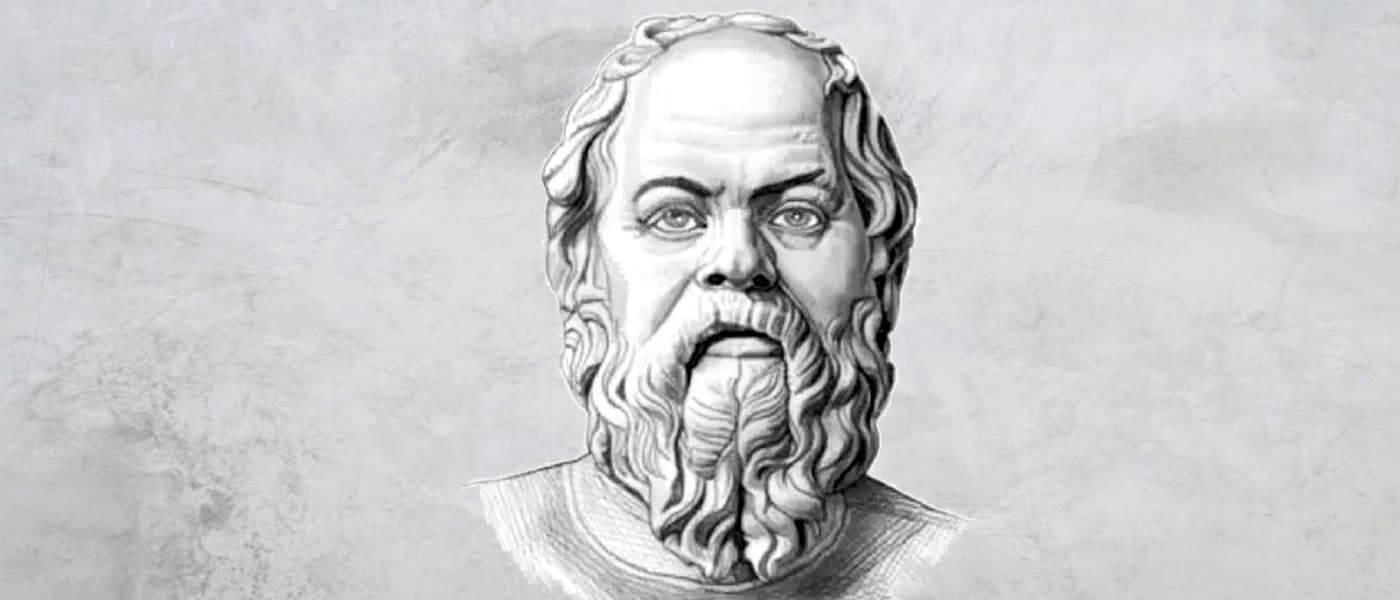
Well, this question takes us to two different schools of thought in philosophy, with two very different ideas of the nature of the world we live in. The first one is essentialism. Now, essentialism is a belief that find its roots in Ancient Greece, and in the writings of Socrates and Plato.
They took it as a given that everything that exists has its own essence. That is, a certain set of core properties that are necessary, or essential, for it to be what it is. Take a knife. It doesn’t matter if it has a wooden handle or a metal one. But once you take the blade away, it becomes not-a-knife. The blade is its essential property because it gives the knife its defining function.
Plato and Aristotle believed that people had essences as well, and that these existed before they did. This essence, or telos, was only acquired and expressed properly through virtuous action, a process that formed the ideal human. According to the Greeks, to be authentic was to live according to your essence. And you did that by living ethically in the choices you make and the character you express.
By developing intellectual virtues like curiosity or critical thinking, and character virtues like courage, wisdom, and patience, it’d get easier to tell what you should or shouldn’t do. This was the standard view of the world until the early 19th century, and is still the case for many people today.
The rise of existentialism
But some thinkers began to wonder, what if that wasn’t true? What if the universe has no inherent purpose? What if we don’t have one either? What if we exist first, then create our own purpose?
This belief was called existentialism. Existentialists believe that neither us nor the universe has an actual, predetermined purpose. We need to create it for ourselves. Because of this, nothing we do or are is actually inherently meaningful. We were free to do whatever we wanted – a fate Jean Paul-Sartre, French existential philosopher, found quite awful.
Being authentic meant facing the full weight of this shocking freedom, and staying strong. To simply follow what your religious leader, parent, school, or boss told you to do would be to act in “bad faith”. It’s like burying your head in the sand and pretending that something out there has meaning. Meaning that doesn’t exist.
By accepting that any meaning in life has to be given by you, and that ‘right’ and ‘wrong’ are just a matter of perspective, your choices become all you have. And ensuring that they are chosen by the values you accept to live by, instead of any predetermined ones etched in stone, makes them authentic.
This extends beyond the individual. If the world is going to have any of the things most of us value, like justice and order, we’re going to have to put it there ourselves.
Otherwise, they won’t exist.
Ethics in your inbox.
Get the latest inspiration, intelligence, events & more.
By signing up you agree to our privacy policy

BY The Ethics Centre
The Ethics Centre is a not-for-profit organisation developing innovative programs, services and experiences, designed to bring ethics to the centre of professional and personal life.

How to break up with a friend
If your friendship is a battlefield, you’ve got to know when to wave the white flag. How do you break up with a friend – ethically?
It might’ve been a slow fade after leaving high school. A messy split over unpaid bills. Maybe it was an awkward part at the airport, or a text silence that lasted a few months longer than usual.
Though not as lamented as ending a romance, ending a friendship can be just as painful. Maybe even more. While some of that is because of the hurt and disappointment of any unfulfilling relationship, another part can be attributed to its ambiguity.
The due process owed to an ex (counselling, teary conversations, logical explanations to well-meaning buddies and family) doesn’t exist for the friendships in our lives. If we want to break up with a friend, how do we do it ethically?
If you’re keen to rip off the friendship band-aid, keep reading. Here are some questions our Ethi-call counsellors would ask to help you act in line with your morals and values.
1. What is the purpose of friendship?
Let’s get back to basics. Asking yourself what a good friendship looks like can help you see if there’s a disconnect between what you’d like it to be and what it really is.
A good friendship could be one where you:
- Love and accept each other
- Are role models for each other’s children
- Feel safe expressing your honest thoughts
- Feel grateful that you share each other’s lives
If any of these questions cause discomfort, maybe your friendship has crossed a line it shouldn’t have. What is your duty to yourself? Is it fair to expect these things?
2. How could you create the least harm and most benefit?
Owning that your needs aren’t being met is important. But equally as important are the needs your friend is owed in a reciprocal relationship.
- What are your obligations to your friend?
- Have you any part to play in this?
- What would a wise person suggest?
Every relationship takes effort. Part of loving someone, warts and all, is acknowledging the effort is worth it. But when that isn’t true, a breakup may not be the only way to deal with it. Consider if your actions are going to cause more benefit than harm – to all the people involved.
- What are the consequences (of a friendship breakup)?
- Is doing nothing an option? If so, what would be your tipping point?
- What will the lasting impact be?
A breakup isn’t the end of anyone’s story. People carry these formative experiences with them and may do so for the rest of their lives.
3. How can you preserve and prioritise dignity?
If you’ve considered all this and still think you need to end the friendship, remember to be kind. Considering why you were friends in the first place means this transition isn’t about kicking anyone when they’re down.
How will you break up? Does your friendship lend itself to a face-to-face conversation or is it better through email? Is one session or message enough or are more required?
Your friend might not agree with what you consider to be good and right, but handling such a delicate situation in a way that is in line with your moral character might be one of your greatest accomplishments.
Some positive outcomes might even eventuate, such as:
- Renewal of your friendship and commitment to each other
- Knowing that you both did your best
- Revelation in self-knowledge and commitment to personal growth
- Speaking well of each other to mutual friends (and meaning it)
- Shared sense of closure and grief
Friendships and relationships don’t exist in vacuums. Whether good or bad, a history of contact with each other comes with its own particular language, traditions and memories. None of us are the centre of the universe, and believing so runs counter to the reality of multiple subjective experiences. Continuing on that path can not only make it harder for you to be a friend, but for you to be fully human.
Even if it wasn’t love, you shared each other’s lives. And that’s always worth respecting.
If you or someone you know is at risk of harm or feeling suicidal, get help immediately. Call Lifeline 13 11 14 or 000 if life is in danger.
Ethics in your inbox.
Get the latest inspiration, intelligence, events & more.
By signing up you agree to our privacy policy




BY Aisyah Shah Idil
Aisyah Shah Idil is a writer with a background in experimental poetry. After completing an undergraduate degree in cultural studies, she travelled overseas to study human rights and theology. A former producer at The Ethics Centre, Aisyah is currently a digital content producer with the LMA.
BY The Ethics Centre
The Ethics Centre is a not-for-profit organisation developing innovative programs, services and experiences, designed to bring ethics to the centre of professional and personal life.

Why your new year's resolution needs military ethics
Weight loss goals and the laws of armed conflict seem pretty far removed. But stick with us! Military ethics provide useful principles to test the worth of our new year’s resolutions.
The ethics of war are based on making sure the inevitable harm, pain and suffering caused by violence is minimised as much as possible. Most resolutions also involve some pain and suffering. After all, we don’t need resolve to do what’s easy! So let’s apply these principles of warfare to the hardships of our resolutions and check if they’re are morally justified.
Just war theory, the most common approach to the ethics of war, says war is justified only if it satisfies a set of conditions. These include:
Just cause
War is only just when it is fought in response to a serious violation of state or human rights (basically, because war causes death and destruction it has to be responding to a grievous offence).
Right intention
The declaration of war is not motivated by private, self-interested or vicious intentions but out of a desire to bring about a just outcome.
Legitimate authority
Only the leader or leaders of a political community have the right to declare war.
(Macro) proportionality
The peace the war aims to create has to be preferable to the way the world would be if no war was fought (a nuclear war will almost always be disproportionate).
Last resort
Are there less harmful measures than war which might bring about peace?
Probability of success
Do not undertake the pain and suffering of war if there is no chance of winning, otherwise lives are wasted in vain.
(Micro) proportionality
The benefits gained from a military operation must outweigh the harms it inflicts.
Discrimination
Only combatants may be targeted by military attacks. Civilians are off limits.
Good goal
An ethical resolution will aim to achieve something good (health, travel, education). Don’t aim to do something you know to be bad (“This year I resolve to make profits at any cost”).
Right intention
Is your resolution motivated by a genuine desire for self-improvement? Or is it motivated by shame, peer pressure, greed, vanity or fear? If the latter is true, it might be worth considering whether it’s really a resolution worth making.
Is your resolution motivated by a genuine desire for self-improvement? Or is it motivated by shame, peer pressure, greed, vanity or fear?
Accept your limits
You only have the ‘authority’ to make resolutions for things within your control. Don’t resolve to get a promotion at work. Instead, resolve to reinvigorate your attitude at work so your application for promotion has the best chance of success. But remember, getting the promotion is outside your control.
Holistic improvement
Make sure you will be a better person overall after succeeding in your resolution. You might be able to run a marathon, but make sure it isn’t so detrimental to your health, relationships, work or other interests that you’re worse-off overall.
Avoid drastic measures
Have you tried less intense measures to achieve your goals? Maybe before you sign up for a 10 day silent yoga retreat you could try signing up for a weekly class and see if it helps.
Probability of success
Set realistic goals you can actually achieve. If you and your partner aim to spend more time together after three date nights in the last year, resolving to have a weekend away once a fortnight might be a bit extreme. Be honest to avoid setting yourself up for failure and making the effort and sacrifices you make futile.
Cost/benefit analysis
Is the inconvenience, expense or pain of your resolution worth it for the goal you are trying to achieve? Trying to have a body like Chris Hemsworth might be more trouble than it’s worth.
Own your resolution
Your resolution is your resolution – everyone except you is an innocent bystander! If you’ve decided to go vegetarian, that’s fine. Insisting everyone in your share house skips on meat to suit your new diet isn’t.
So there you have it – your guide to an ethical new year’s resolution with help from military ethics. These steps won’t guarantee your resolution is successful but they will guarantee it’s a resolution worth making. For tips on how to form the resolve, perseverance and courage it takes to stick to your new commitment, you might want to talk to a soldier.
Ethics in your inbox.
Get the latest inspiration, intelligence, events & more.
By signing up you agree to our privacy policy



BY The Ethics Centre
The Ethics Centre is a not-for-profit organisation developing innovative programs, services and experiences, designed to bring ethics to the centre of professional and personal life.

Free markets must beware creeping breakdown in legitimacy

This article was written for, and first published on the Australian Financial Review.
This much we know: a blistering series of scandals has led to a profound loss of trust – not just in Australia but across the developed world. Consequently, the issue of trust has become a hot topic – a new staple item on meeting agendas of cabinets, boards, conferences, etc.
However, what if the spotlight being shone on the topic of trust is blinding us so that we fail to see a far greater risk lurking in the shadows – the potential loss of legitimacy?
Creating Transparency
The Ethics Centre has just published a paper that raises this possibility and sounds a warning that should be heeded by those of us who believe in the virtues of the market economy. We do not argue that trust is unimportant. Instead, we make the case that while individuals and institutions can (and do) survive a loss of trust, they rarely (if ever) survive a loss of legitimacy.
“We do not argue that trust is unimportant. Instead, we make the case that while individuals and institutions can (and do) survive a loss of trust, they rarely (if ever) survive a loss of legitimacy.”
At the core of our argument is a simple truth of economics. A reduction in trust can be compensated for by an increase in the “deadweight” costs of surveillance and enforcement. The classic case is the making of agreements. A high trust context can see agreements made on the basis of a low-cost handshake (or its equivalent). Low trust contexts are burdened with the high costs of detailed contracts, enforcement provisions, litigation, etc.
The Definition
Bearing this in mind, we distinguish between the concepts of trust and legitimacy according to the following definitions:
Legitimacy is a recognised and well-founded right to claim a certain status, role or function.
Trust is a belief that a person or institution will perform their role or function in accordance with its obligations or where not bound by duty, in a predictable manner – often in accordance with its interests.
The less formal distinction is as follows: where low trust can be compensated for by a higher degree of checks and balances (deadweight costs), a loss of legitimacy cannot be compensated for at any cost.
Making The Case
Now, if you accept our argument that there is a difference between trust and legitimacy and that a loss of the latter is usually fatal, it soon becomes clear that some of our institutions are at grave risk. We see the early signs in a number of areas. In politics, it is not only political parties and politicians that risk losing legitimacy – it is the system of representative liberal democracy that is being called into question.
As the Lowy Institute has reported, a growing number of younger Australians doubt the capacity of democracy to respond to the challenges of modern life. In economics, there is growing scepticism about the legitimacy of an international economic order. Especially when the focus shifts to free trade and the operation of free markets. We see both trends converging in movements (sometimes dismissed and derided as mere populism) that are reshaping the political and economic landscapes in Europe, North America, Central America and at home.
The great risk in this is that each and every part of the political and economic ecosystem becomes tarred by the same brush – with the spiral of decline sucking in all…the good, the bad and the indifferent…without distinction.
Our Role
For its part, The Ethics Centre has a long history of calling attention to the ethical underpinnings of the free market…recalling that Adam Smith championed markets as the means by which to bring prosperity to all (and not just a few). We (again) make the case for free markets in this latest paper – but go one step further by outlining some core principles that we think should be adopted by corporations if they are to help maintain the legitimacy of the system upon which they ultimately depend.
At one level, the headline principles are deceptively simple: respect people, do no harm, be responsible and be transparent and honest. However, rather than simply state self-evident pieties, we have tied these principles back to the underlying concept of free markets as tools for increasing the stock of common good. These tools and mechanisms can only function, as intended, if participants do not lie, cheat or use their power oppressively.
“Businesses are struggling to develop enabling connections with communities. Their efforts are embedded in conversations about trust, social licence, shared value and so on.”
Businesses are struggling to develop enabling connections with communities. Their efforts are embedded in conversations about trust, social licence, shared value and so on. There are major programs to increase transparency – often as an alternative to trust (which makes transparency unnecessary). We argue that the problem with all of these efforts is that they fail to address the larger problem of a system whose parts are progressively undermining the legitimacy of the whole.
The good news is that the unravelling is reversible and that some fairly straightforward measures can be applied, but only if we rediscover the purpose of the free market and the economic actors that it sustains – for the good of all.
Visit https://ethics.org.au/trust-and-legitimacy/ to download a copy of the Trust, Legitimacy and the Ethical Foundations of the Market Economy report.
Ethics in your inbox.
Get the latest inspiration, intelligence, events & more.
By signing up you agree to our privacy policy




BY Simon Longstaff
Simon Longstaff began his working life on Groote Eylandt in the Northern Territory of Australia. He is proud of his kinship ties to the Anindilyakwa people. After a period studying law in Sydney and teaching in Tasmania, he pursued postgraduate studies as a Member of Magdalene College, Cambridge. In 1991, Simon commenced his work as the first Executive Director of The Ethics Centre. In 2013, he was made an officer of the Order of Australia (AO) for “distinguished service to the community through the promotion of ethical standards in governance and business, to improving corporate responsibility, and to philosophy.” Simon is an Adjunct Professor of the Australian Graduate School of Management at UNSW, a Fellow of CPA Australia, the Royal Society of NSW and the Australian Risk Policy Institute.

How to help your kid flex their ethical muscle
Kids can be cruel. When they are arbitrarily mean to their own friends, ethical reflection can help. Victoria Whitaker talks us through building your child’s ethical muscle in testing times.
My daughter came home to me in tears last night. She shuddered, eyes wet, and a waterfall connected her nose to her mouth as she explained to me that her best friend had decided she didn’t like her anymore and she was no longer allowed to play in their small group of friends.
“Mummy, I am so sad. Who am I going to play with? Why doesn’t she like me?”
It’s cruelty at its peak. Of course, there is no reason. It’s a power play that seems to happen far too early.
“I know”, she said. “Can I invite her over to play? Then she will like me again”.
What do I do? Maybe having her over will help. But who wants friends like that?
I want my daughter to know her worth. I wanted her to consider this dilemma through the different ethical lenses. We talked.
I asked her to think about the consequences of having who she considered her best friend over. Yes, you might reconnect. But she might also find out how to push you around. And is this how you want your friends to treat you? Will you let all your friends do this? These questions relate to consequentialism, a mode of ethical thought that considers outcomes and consequences.
I also asked her what rights she had in this friendship. What things could she expect in friendship? And what duties do we have to our friends – in all friendships, not just this one? These questions relate to deontology, an ethical theory that prioritises our promises, as well as codes and rules over considering outcomes.
I asked her about the types of relationships she wants. Which relationships were most important to her and why? These questions relate to an ethics of care.
I asked her what sort of friend she would like to be. She told me she liked to have fun, to explore and play together, and valued being kind and caring. This question relates to virtue ethics, a type of thinking that values character and the type of person we aspire to be.
I asked her about the purpose of friendship and why it existed. What things were important about friendship to her? These questions relate to teleology, an ethical theory that considers the purpose of things.
And then we discussed in reflection of all these questions, if her friend was actually the friend she wanted. We talked about whether this little girl had the qualities she wanted from friendship. And we talked about her other friends and which ones did have those qualities she wanted. We also discussed what type of friend my daughter wanted to be… what sort of person she wanted to be. You don’t need a degree in ethics to have to have these conversations with your kids. We are all more expert in this stuff than we give ourselves credit for – our children too.
Ethics isn’t just thinking and talking. It requires action. My daughter and I discussed what steps she could take next. She was still keen to be friends, but her view of the friendship had changed. Her view of herself had changed too. And as such the friendship would change – and we discussed how that was okay.
This morning as we packed her bag and got her ready for the walk to school, the world didn’t seem as heavy as it was last night. And she seemed to carry herself just a little bit taller.
Ethics in your inbox.
Get the latest inspiration, intelligence, events & more.
By signing up you agree to our privacy policy





BY Victoria Whitaker
Victoria has oversight of strategy, operations and business development for The Ethics Centre’s consulting and education services. She joined The Ethics Centre in 2010 and has a background in corporate responsibility and sustainability, working in Australia and the UK in the areas of strategy, governance, policy, research, education, monitoring and reporting.
BY The Ethics Centre
The Ethics Centre is a not-for-profit organisation developing innovative programs, services and experiences, designed to bring ethics to the centre of professional and personal life.

Calling out for justice
It’s probably the biggest phenomenon of calling out we’ve ever seen. On 15 October last year, in the wake of Harvey Weinstein being accused of sexual harassment and rape, actress Alyssa Milano tweeted:
“If all the women who have been sexually harassed or assaulted wrote ‘Me too.’ as a status, we might give people a sense of the magnitude of the problem.”
The phrase and hashtag ‘Me too’ powerfully resonated with women across the globe and became one of the most viral occurrences in social media history. Not only did the campaign become a vehicle for women to share their stories of sexual abuse and harassment, it had real world consequences, leading to the firing and public humiliation of many prominent men.
One of the fall outs of the #MeToo movement has been a debate about “call out culture”, a phrase that refers to the practice of condemning sexist, racist, or otherwise problematic behaviour, particularly online.
While calling out has been praised by some as a mechanism to achieve social justice when traditional institutions fail to deliver it, others have criticised call outs as a form of digital mob rule, often meting out disproportionate and unregulated punishment.
Institutional justice or social justice
The debate around call out culture raises a question that goes to the core of how we think justice should be achieved. Is pursuing justice the role of institutions or is it the responsibility of individuals?
The notion that justice should be administered through institutions of power, particularly legal institutions, is an ancient one. In the Institutes of Justinian, a codification of Roman Law from the sixth century AD, justice was defined as the impartial and consistent application of the rule of law by the judiciary.
A modern articulation of institutional justice comes from John Rawls, who in his 1971 treatise, A Theory of Justice, argues that for justice to be achieved within a large group of people like a nation state, there has to be well founded political, legal and economic institutions, and a collective agreement to cooperate within the limitations of those institutions.
Slightly diverging from this conception of institutional justice is the concept of social justice, which upholds equality – or the equitable distribution of power and privilege to all people – as a necessary pre-condition.
Institutional and social justice come into conflict when institutions do not uphold the ideal of equality. For instance, under the Institutes of Justinian, legal recourse was only available to male citizens of Rome, leaving out women, children, and slaves. Proponents of social justice would hold that these edicts, although bolstered by strong institutions, were inherently unjust, built on a platform of inequality.
Although, as Rawls argues, in an ideal society institutions of justice help ensure equality among its members, in reality social justice often comes into conflict with institutional power. This means that social justice has to sometimes be pursued by individuals outside of, or even directly in opposition to, institutions like the criminal justice system.
For this reason, social justice causes have often been associated with activism. Dr Martin Luther King Jr’s march in Montgomery, Alabama to protest unfair treatment of African American people in the courts was an example of a group of individuals calling out an unjust system, demanding justice when institutional avenues had failed them.
Calling out
The tension between institutional and social justice has been highlighted in debates about “call out culture”.
For many, calling out offends the principles of institutional justice as it aims to achieve justice at a direct and individual level without systematic regulation and procedure. As such, some have compared calling out campaigns like #MeToo to a type of “mob justice”. Giles Coren, a columnist for The Times of London, argues the accusations of harassment should be handled only by the criminal justice system and that “Without any cross-examination of the stories, the man is finished. No trials or second chances.”
But others see calling out sexist and racist behaviour online as a powerful instrument of social justice activism, giving disempowered individuals the capacity to be heard when institutions of power are otherwise deaf to their complaints. As Olivia Goldhill wrote in relation to #MeToo for Quartz:
“Where inept courts and HR departments have failed, a new tactic has succeeded: women talking publicly about harassment on social media, fuelling the public condemnation that’s forced men from their jobs and destroyed their reputations.”
Hearing voices
In his 2009 book, The Idea of Justice, economist Amartya Sen argues a just society is judged not just by the institutions that formally exist within it, but by the “extent to which different voices from diverse sections of the people can actually be heard”.
Activist movements like #MeToo use calling out as a mechanism for wronged individuals to be heard. Writer Shaun Scott argues that beyond the #MeToo movement, calling out has become an avenue for minority groups to speak out against centuries of oppression, adding the backlash against “call out” culture is a mechanism to stop social change in its tracks. “Oppressed groups once lived with the destruction of keeping quiet”, he writes. “We’ve decided that the collateral damage of speaking up – and calling out – is more than worth it.”
While there may be instances of collateral damage, even people innocently accused, a more pressing problem to address is how and why institutions we are supposed to trust are deaf to many of the problems facing women and minority groups.
Dr Oscar Schwartz is an Australian writer and researcher based in New York with expertise in tech, philosophy, and literature. Follow him on Twitter: @scarschwartz
Ethics in your inbox.
Get the latest inspiration, intelligence, events & more.
By signing up you agree to our privacy policy




BY Oscar Schwartz
Oscar Schwartz is a freelance writer and researcher based in New York. He is interested in how technology interacts with identity formation. Previously, he was a doctoral researcher at Monash University, where he earned a PhD for a thesis about the history of machines that write literature.
BY The Ethics Centre
The Ethics Centre is a not-for-profit organisation developing innovative programs, services and experiences, designed to bring ethics to the centre of professional and personal life.

Big Thinker: Shulamith Firestone
Women’s oppression comes down to biological differences – so get rid of them. If you can put a man on the moon, you make a mechanical womb and gestate a baby without a woman.
These were the arguments of Shulamith Firestone (1945—2012), writer, artist and feminist, whose book, The Dialectic of Sex, argued the structure of the biological family was primarily to blame for the oppression of women.
With a radical and uncompromising vision, she advocated for the development of reproductive technologies that would free women from the responsibilities of childrearing, dismantle the hierarchy of family life, and set the foundations for a truly egalitarian society.
The girlhood of a radical thinker
Firestone was born to an Orthodox Jewish family in Ottawa, Canada in 1945. Her mother was a Holocaust survivor that came from a lineage of rabbis and scholars, and her father was a travelling salesmen.
Firestone possessed a fierce intelligence and strong will from a young age and regularly came into conflict with the stringent gender norms that her religious father imposed. When she questioned why she had to make her brother’s bed in the morning, her father replied, “because you’re a girl.”
In the late 1960s, Firestone left home to study art in Chicago and then New York, where she joined left wing political movements and came of age intellectually. While she was free from her father’ tyranny, she saw the same sexism that had controlled her life at home across all areas of society. It was a time when women held almost no major elected positions, abortion was illegal, rape a stigma to be borne alone, and home making seen as a woman’s highest calling.
As a response to this, Firestone began studying history and feminist literature, hoping to understand the root cause of women’s oppression, which resulted in the publication of The Dialectic of Sex in 1970.
The Dialectic of Sex
While other feminist writers and philosophers proposed that the cause of women’s oppression was, at root, political and cultural, Firestone made a radical departure, positing that the inequality between men and women stemmed from fundamental biological differences – most notably that women had to carry, give birth to, and nurse babies.
This biological reality, Firestone argued, created an “unequal power distribution” within families. Because women were responsible for a child’s care, they became dependant on men to provide for them while they were unable to leave the home. This in turn gave rise to a hierarchy within the family in which babies were dependant on mothers, mothers on their husbands, and husbands on no one.
Firestone argued that over the course of human history, society itself had come to mirror the structure of the biological family and was the source from which all other inequalities developed.
Women were expected to stay at home and care for children, which held them back from becoming financially independent and achieving political agency.
If the feminist movement was to overcome male domination, it had to reckon with the fundamental biological reality that underpinned it.
“The end goal of feminist revolution must be… not just the elimination of male privilege, but of the sex distinction itself.”
While questioning the fundamental biological conditions was not conceivable in previous centuries, Firestone said the great advancements that had accrued in science and technology in the 20th century made it possible to imagine a future in which the reproductive role of women was outsourced to “cybernetic machines”. She believed if the same energy and resources were put into developing reproductive technologies as had been put into other projects, like sending a human to the moon, then it could be achieved in decades.
What held this research back, Firestone suggested, was institutional resistance from men in positions of power who did not want to disrupt the existing hierarchy.
“The problem becomes political … when one realises that, though man is increasingly capable of freeing himself from the biological conditions that created his tyranny over women and children, he has little reason to want to give this tyranny up.”
The true feminist cause, then, was to demand reproductive technology that could free women from what had previously been a biological destiny. Firestone believed if this was achieved, and reproduction was no longer the sole responsibility of women and their bodies, the family would undergo a radical restructuring, a flattening of the patriarchal hierarchy, which would then be mirrored in a more egalitarian society itself.
Brilliant and preposterous
The Dialectic of Sex caused a stir from the moment it was published. It was hard for critics to deny Firestone’s prodigious intellect, but they wrote off her ideas as too radical, too utopian, and too ridiculous to warrant serious engagement. Her theory of gender inequality was called “brilliant” and “preposterous” in the same review by one New York Times critic.
The book’s publication caused a greater rift between Firestone and her family, and her staunch line on biological inequality alienated her from some feminist groups. By the 1980s, when the backlash against radical feminism had taken hold of mainstream American culture, Firestone retreated to a small apartment in Manhattan where she spent her days painting in isolation. She was found dead in August 2012 at the age of 67.
In the 50+ years since Firestone published The Dialectic of Sex, we have seen enormous and rapid technological developments in many areas, and yet reproductive technologies like artificial wombs are still seen as an unlikely and unwanted science from a dystopian sci-fi future. Our culture, for the most part, still associates artificial wombs with the 1932 novel Brave New World, in which Aldous Huxley imagined a future where foetuses are grown in “bottles” in vast state incubators. For Huxley, the idea of severing the biological tie between mother and child was the centrepiece of his dystopian vision, the essential metaphor of a society that had become ethically set adrift.
Reading Firestone’s The Dialectic of Sex – a brilliant, passionate and uncompromising book – forces us to confront that the way technology progresses is informed by political motivations, and that science is not neutral, but can be used to reinforce and perpetuate unequal distributions of power.
Ethics in your inbox.
Get the latest inspiration, intelligence, events & more.
By signing up you agree to our privacy policy



BY The Ethics Centre
The Ethics Centre is a not-for-profit organisation developing innovative programs, services and experiences, designed to bring ethics to the centre of professional and personal life.

How to pick a good friend
Fed up with fair weather friends? A bit of ethical reflection will help you figure out which friends to pick – and keep.
It takes very little to make a “friend”.
A bit of spark, some solid banter. A vulnerable confession or two. Sharing the same floor, class, or gym helps lower the stakes even more. This happy conversation: “You’re getting a coffee now? Me too!” Spells the chorus cheer of a budding friendship. Any more than that and phew – let’s not force something that’s meant to be easy!
But is that true? Is effort really the death knell? Stick around in any friendship, and you will find the coveted ease ebbing away. Illness, death, divorce, bankruptcy… Mother Time has a funny way of revealing the friends who will stick by you no matter what, and the friends who will leave at first pinch.
In a 2016 survey conducted by Lifeline with over 3100 respondents, 60 percent of Australians confessed to feeling lonely on a regular basis. A large portion of these people live with a spouse or partner. The stats show its quality we need, not quantity.
Shasta Nelson, author of Frientimacy, argues the loneliness many of us feel isn’t because we don’t know enough people. Instead, it’s because we don’t feel known, supported, and loved by the right few.
How do we find this right few? Ethical reflection can help.
Friendship values
When do you feel loved? And how do you show love?
These questions can help reveal our friendship ‘values’. Knowing which of these we prioritise is key to discerning which of our friendships are valuable and worth investing effort in. Do you feel most loved when you’re accepted unconditionally? When you’re having a good laugh? What about when your achievements are celebrated and encouraged? Or when your ideas are challenged in a lively debate? None of these are mutually exclusive but being clear about what you value makes it easier to decide if this friendship is one to prioritise.
You may think the second question redundant but knowing how we express love can help bring out the subconscious values that drive our behaviour. We each have patterns of love or dependency that are formed in childhood. Knowing what they are helps you be more aware of the ones you naturally tend to lean into, and if those are ones you want to cultivate. As much as we like to believe we naturally gravitate to what’s good for us, we might be more likely to gravitate to what’s familiar.
You might show love by being financially generous, hospitable, or a shoulder for someone to cry on. You might value having shared interests and vibrant conversations or being their emergency contact in a crisis. Maybe you show your love and comfort around someone by letting your hair down and complaining a lot. Hey, it happens.
How to create deeper friendships
Choosing the right types of people as friends can help us cultivate relationships based on shared values and character, not circumstance. And when we have them, let’s treat them well. Nelson’s three principles for deepening an already existing friendship are:
- Positivity: helping each other feel good. Think smiles, laughter, empathy, and validation.
- Consistency: a bank of expected behaviour that builds trust; the opposite of walking on eggshells around someone.
- Vulnerability: sharing the bad and the good.
A friend is one with whom we are willing to share, without fear of judgement, our truest self. It’s worth being picky about.
Next month, we’ll be talking about how to end a friendship – ethically. If you can’t wait that long, Ethi-call can help, our free helpline for life’s ethical struggles. Book your appointment here.
Ethics in your inbox.
Get the latest inspiration, intelligence, events & more.
By signing up you agree to our privacy policy




BY Aisyah Shah Idil
Aisyah Shah Idil is a writer with a background in experimental poetry. After completing an undergraduate degree in cultural studies, she travelled overseas to study human rights and theology. A former producer at The Ethics Centre, Aisyah is currently a digital content producer with the LMA.