

Beyond the shadows: ethics and resilience in the post-pandemic environment

Having navigated the first phase of the COVID-19 pandemic with a relatively low loss of life, Australians are hoping to return to a more familiar pattern of living.
For many of those Australians, they seek an illusion. The world to which they return will have been fundamentally altered – not by the virus – but by the decisions we have taken in response to its emergence.
At one point, we feared those decisions would be especially difficult for those working in a health system overwhelmed by infected patients. We imagined health care professionals confronted by the terrible dilemma of having to ration medical resources, deciding who should live or die. Fortunately we have largely been spared from that horror we imagined.
However, it would be a mistake to think that the worst of the ethical dilemmas associated with COVID-19 have been avoided. Rather, they have merely been displaced to another arena – the economy, and the world of work, in particular.
The devastation of the Australian economy has already claimed many victims – not least the hundreds of thousands of people who have lost (or are about to lose) their jobs once the JobKeeper ‘safety net’ is removed.
Those who join the unemployment queues or whose business collapse or whose opportunities dry up will pay the highest price for the choices we have made, so far.
However, there will also be a considerable burden borne by those who must make the terrible decisions about who keeps, or loses, their job during an extended recession – and by those who appear to have survived the crisis, seemingly unscathed.
Every organisation in Australia will be affected by COVID-19. A few will have prospered. However, most will be re-evaluating every aspect of their operations. It is our contention that those with the strongest ethical foundations are most likely not only survive the immediate crisis – but will emerge stronger.
This is not to suggest that the process of change will be easy … in fact, it will be incredibly difficult. However, there are three key insights that we believe will not only ‘limit the damage’ but actually set up organisations for a better future.
-
Crises usually bring to light the ‘shadow values’ at work within an organisation: the fewer the better.
Values and principles inescapably shape our choices – and therefore the world they produce. Many organisations enter a situation of crisis with an established set of stated values and principles. However, a crisis can bring into the light an operative set of values and principles that may otherwise dwell in the ‘shadows’.
These ‘shadow’ values and principles often arise as a ‘mutation’ of the stated set. For the most part, the process of mutation is subtle – beginning with an initial act that is at first tolerated (often because it delivers a profitable outcome) and then accepted as ‘normal’. The process of drift is known as the ‘normalisation of deviance’ – and often proceeds without being observed for what it is: a corruption of the norms of the organisation. Occurring in the ‘shadows’ of an organisation’s culture, the mutations are genuinely ‘unseen’ and therefore resistant to correction.
The most common reason for shadow values and principles gaining a foothold during a crisis is that they are ready-made to fill the vacuum caused whenever ethics is reduced to being an ‘optional extra’, or regarded as a luxury that can only be afforded during easier times.
This weakening of commitment to an organisation’s espoused values and principles allows the shadow set to grow in strength.
One of the best examples is that of the German automaker, Volkswagen, where their stated value of ‘excellence’, was mutated into a shadow value of ‘technical excellence’. The resulting decisions led to an emissions scandal that has cost the company a small fortune in fines and severe reputational damage.
Identifying the risk of mutation of the ethical ‘DNA” of an organisation before it occurs, or if this is not possible, having the tools needed to recognise and correct shadow values and principles when they arise will be critical for organisations moving through this next period.
-
Those who ‘survive’ a crisis may suffer the effects of ‘moral injury’ – leading to sub-optimal results for them personally (and their organisation) if the injury is not addressed.
Many people working in business and the professions have already been confronted by the need to make some distressing decisions – not least of which has been to weigh in the balance the good of the organisation versus the livelihood and well-being of employees.
In many cases, the people who lose their jobs will have been loyal and diligent employees who have performed their roles with distinction; roles that are either unaffordable during a recession or that no longer make sense in the emerging strategic environment where the risks posed by the virus are controlled but not eliminated.
Those who make necessary – but unfair – decisions will suffer a certain amount of personal harm from doing so. However, exposure to the risks of such decision making is generally understood to be part of the job. The greater risk is to those people who play no direct part in the decision making but who also feel that they are the inadvertent ‘beneficiaries’ of the sacrifices made by others.
There is much to be learned about this phenomenon by considering the experience of those who survive disasters like shipwreck. The first phase of the disaster will see strangers (and even rivals) driven to work together by the indiscriminate ‘lash of necessity’. People will bend themselves to the task of rowing towards safety – hopeful that a rescuer might be close at hand.
The second phase arises when the situation becomes more desperate … when rations are depleted, when the water is rising toward the gunwales of an overloaded lifeboat. It is then that some place their personal interests before those of all others – throwing overboard any sense of fellow-feeling. Yet, there will be others who decide that they will make the ultimate sacrifice – quietly slipping below the waves so that others survive.
Finally, the moment of rescue comes and the lash is withdrawn. It should be a time of celebration and euphoria. However, it is common for those who survive enter a stage of grief – because they have survived when others, each equally deserving, have not.
‘Moral injury’ is not only experienced by those who made the decision to sacrifice others, or who hoarded goods that could have helped others. The same injury is caused by those who remain without any reason to explain (or justify) their relative good fortune.
Telling any of these people that they should count themselves ‘lucky to have survived’ is worse than useless. Mere survival, as experienced by such people may be a welcome reality – but it is also an ‘empty achievement’ – and does nothing to protect against the consequences of untreated moral injury; which include depression, post-traumatic stress disorder and in the most severe of cases, suicide.
-
The best response to moral injury is to offer the opportunity to find meaning in adversity – a positive reason that justifies continuing effort.
There are only two ways to prevent moral injury. First, one can seek support when making the initial decisions so that, no matter how tough, they do not give rise to a form of regret and self-blame linked to a series of ‘if only’ statements (‘if only I had considered that perspective’, ‘if only I had thought of that option’, ‘if only I had asked one more question’ …).
Second, one can offer a purpose that transcends mere survival. It is only then that the sacrifice of others can be a source of positive motivation. Instead of individuals being beneficiaries, they become ‘stewards’ of a purpose that, if realised, will justify the sacrifices made by others.
Of course, the saving purpose must be something of real substance – not just a few words that make people feel good about themselves. The purpose must be non-trivial, enduring and deep, the kind that people can truly believe in.
However, there is a temporal ‘twist’ at this point. There’s not much point in having a purpose that will rescue an organisation from crisis if decisions made during the crisis render the purpose invalid or unbelievable.
The last thing you want is for those who survive to look back on their experience of crisis and conclude that all that went before makes the purpose seem to be a ‘hoax and the organisation’s leadership a group of hypocrites. That is why it is essential that organisations identify and manage any shadow values or principles that might undermine the better future it must create in the aftermath of the crisis.
In these circumstances, ethics is neither an ‘optional extra’ nor a ‘luxury’. It is a necessity!
The lesson in all of this is relatively simple
Those who wish to prosper in the aftermath of a crisis need to project themselves into the future and identify an underlying purpose that guides their decision making in the present.
Of course, it will be impossible to predict all of the details that define the strategic and tactical environment in which the organisation will need to operate. However, an organisation’s Purpose, Values and Principles (the three principal components of an Ethics Framework) should provide an enduring platform that is serviceable in all environments but one … where there is no genuinely useful role left for the organisation to perform.
Unless that exception exists, organisations and their leaders have an obligation not merely to persist, but to flourish for the sake of all those that made their continued survival possible.
The Ethics Centre is a world leader in assessing cultural health and building the leadership capability to make good ethical decisions in complexity. To arrange a confidential conversation contact the team at consulting@ethics.org.au. Visit our consulting page to learn more.
Ethics in your inbox.
Get the latest inspiration, intelligence, events & more.
By signing up you agree to our privacy policy



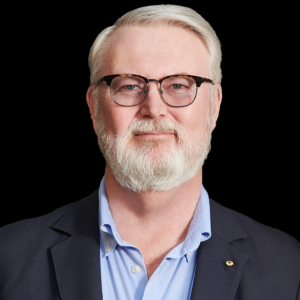
BY Simon Longstaff
Simon Longstaff began his working life on Groote Eylandt in the Northern Territory of Australia. He is proud of his kinship ties to the Anindilyakwa people. After a period studying law in Sydney and teaching in Tasmania, he pursued postgraduate studies as a Member of Magdalene College, Cambridge. In 1991, Simon commenced his work as the first Executive Director of The Ethics Centre. In 2013, he was made an officer of the Order of Australia (AO) for “distinguished service to the community through the promotion of ethical standards in governance and business, to improving corporate responsibility, and to philosophy.” Simon is an Adjunct Professor of the Australian Graduate School of Management at UNSW, a Fellow of CPA Australia, the Royal Society of NSW and the Australian Risk Policy Institute.

BY The Ethics Centre
The Ethics Centre is a not-for-profit organisation developing innovative programs, services and experiences, designed to bring ethics to the centre of professional and personal life.


Ask the ethicist: If Google paid more tax, would it have more media mates?

If multinational tech platforms paid more tax on the revenues they made in Australia, would they be in a better moral position to resist government attempts to force them to pay a ‘license fee’ to news media?
This article was first published by Crikey, in their weekly Ask the Ethicist column featuring Dr Simon Longstaff.
There are a couple of ways to look at this question – one as a matter of principle, the other through the lens of prudence. In terms of principle, I think that we should treat separately the issues of tax and the proposed ‘licence fee’. This is because each issue rests on its own distinct ethical foundations.
In the case of tax, all citizens (including corporate citizens) have an obligation to contribute to the cost of funding the public goods provided by the state. For example, a company like Google shares in the benefits of a society that is healthy, well educated, peaceful and effectively governed under the rule of law. All who draw on and benefit from such public goods should contribute to the cost of their generation and maintenance.
Instinctively, most citizens believe that we should each pay our ‘fair share’ of tax. However, that belief is at odds with the fact that our formal obligation is not to pay a fair amount of tax but, instead, to pay only the amount of tax due to be paid as defined by law. Most of us don’t have much choice about how we discharge this formal obligation – as our taxes are automatically remitted to the Australian taxation Office (ATO) by our employers.
However, most corporations, including Google, have considerable latitude when calculating the tax they think due. For example, corporations have a clear choice about the extent to which they move right to the edge of what the law allows: ‘avoiding’ (which is legal) but not ‘evading’ (which is illegal) tax obligations that, to an ordinary person, might seem to be due.
It is this approach to ‘tax planning’ that allows Google to earn revenue, in Australia, of $4.3B yet only pay tax of $100M. Google has a perfectly rational argument about how this can the case – and relies on the fact that it should only pay tax that is legally due.
However, as is the case with other multinational corporations who make similar calculations, Google’s position fails the ‘pub test’ in that it seems to be unfair? Why? Because it seems inherently improbable (and improper) that such massive local revenue should flow offshore to benefit people who contribute nothing to maintain the society that has made possible such a financial windfall.
The issue of Google paying a ‘licence fee’ to the creators of news content is somewhat different. In general, you’d think it a reasonable expectation that a company pay for the inputs it draws on to make a profit. After all, businesses pay for labour inputs (wages), for financial inputs (interest and dividends), for material inputs (cash outlays), etc. So, why not pay for content that is derived from other sources?
Of course, what’s good for the ‘goose’ should be good for the ‘gander’. Companies like News Corporation and Nine should also be asked if they pay for all of the inputs that they draw on to make a profit? For example, do they pay for all published opinion pieces, or for the interviews they conduct, etc.? However, in general, it seems reasonable to expect that Google (and other companies) should pay for what they derive from others.
Of course, Google does not agree – and is especially opposed to Australian proposals because, if adopted, they will set a precedent that other countries are likely to follow. It is this consideration that leads us to look at the issue through the lens of prudence.
Governments (of all political hues) are especially attentive to the demands of the media. What NewsCorp and Co. want, they usually get … unless opposed by the one force that wields even greater influence over the judgement of politicians – the force of public opinion. So, if Google wishes to prevent or limit the levying of a ‘licence fee’, its most potent ally might have been the Australian public.
However, the electorate is unlikely to back the interests of a company that is perceived not to back the interests of the people whose taxes provide the infrastructure on which Google depends for the enrichment of its overseas owners.
This is where principle and prudence align. Google (and other multinational corporations) should pay taxes that amount to a fair contribution to the maintenance of public goods. Had it done so, then Google might have many more friends who might stand beside it in its battle with other powerful corporations like NewsCorp and Nine.
I am not sure if arguments from principle or prudence will really carry much weight. Perhaps the situation needs to be expressed in the language of financial self-interest. Compared to a licence fee (which might be as high as $1B per annum), would a less aggressive approach tax planning have have been a good investment?
You can contact The Ethics Centre about any of the issues discussed in this article. We offer free counselling for individuals via Ethi-call; professional fee-for-service consulting, leadership and development services; and as a non-profit charity we rely heavily on donations to continue our work, which can be made via our website. Thank you.
Ethics in your inbox.
Get the latest inspiration, intelligence, events & more.
By signing up you agree to our privacy policy




BY Simon Longstaff
Simon Longstaff began his working life on Groote Eylandt in the Northern Territory of Australia. He is proud of his kinship ties to the Anindilyakwa people. After a period studying law in Sydney and teaching in Tasmania, he pursued postgraduate studies as a Member of Magdalene College, Cambridge. In 1991, Simon commenced his work as the first Executive Director of The Ethics Centre. In 2013, he was made an officer of the Order of Australia (AO) for “distinguished service to the community through the promotion of ethical standards in governance and business, to improving corporate responsibility, and to philosophy.” Simon is an Adjunct Professor of the Australian Graduate School of Management at UNSW, a Fellow of CPA Australia, the Royal Society of NSW and the Australian Risk Policy Institute.
BY The Ethics Centre
The Ethics Centre is a not-for-profit organisation developing innovative programs, services and experiences, designed to bring ethics to the centre of professional and personal life.

Are we ready for the world to come?

We are on the cusp of civilisational change driven by powerful new technologies – most notably in the areas of biotech, robotics and expert AI. The days of mass employment are soon to be over.
While there will always be work for some – and that work is likely to be extremely satisfying – there are whole swathes of the current economy where it will make increasingly little sense to employ humans. Those affected range from miners to pathologists: a cross-section of ‘blue collar’ and ‘white collar’ workers, alike in their experience of displacement.
Some people think this is a far too pessimistic view of the future. They point to a long history of technological innovation that has always led to the creation of new and better jobs – albeit after a period of adjustment.
This time, I believe, will be different. In the past, machines only ever improved as a consequence of human innovation. Not so today. Machines are now able to acquire new skills at a rate that is far faster than any human being. They are developing the capacity for self-monitoring, self-repair and self-improvement. As such, they have a latent ability to expand their reach into new niches.
This doesn’t have to be a bad thing. Working twenty-four hours a day, seven days a week in environments that no human being could tolerate, machines may liberate the latent dreams of humanity to be free from drudgery, exploitation and danger.
However, society’s ability to harvest the benefits of these new technologies crucially depends on planning and managing a just and orderly transition. In particular, we need to ensure that the benefits and burdens of innovation are equitably distributed. Otherwise, all of the benefits of technological innovation could be lost to the complaints of those who feel marginalised or abandoned. On that, history offers some chilling lessons for those willing to learn – especially when those displaced include representatives of the middle class.
COVID-19 has given us a taste of what an unjust and disorderly transition could look like. In the earliest days of the ‘lockdown’ – before governments began to put in place stabilising policy settings such as the JobKeeper payment – we all witnessed the burgeoning lines of the unemployed and wondered if we might be next.
As the immediate crisis begins to ease, Australian governments have begun to think about how to get things back to normal. Their rhetoric focuses on a ‘business-led’ return to prosperity in which everyone returns to work and economic growth funds the repayment of debts accumulated during the the pandemic.
Attempting to recreate the past is a missed opportunity at best, and an act of folly at worst. After all, why recreate the settings of the past if a radically different future is just a few years away?
In these circumstances, let’s use the disruption caused by COVID-19 to spur deeper reflection, to reorganise our society for a future very different from the pre-pandemic past. Let’s learn from earlier societies in which meaning and identity were not linked to having a job.
What kind of social, political and economic arrangements will we need to manage in a world where basic goods and services are provided by machines? Is it time to consider introducing a Universal Basic Income (UBI) for all citizens? If so, how would this be paid for?
If taxes cannot be derived from the wages of employees, where will they be found? Should governments tax the means of production? Should they require business to pay for its use of the social and natural capital (the commons) that they consume in generating private profits?
These are just a few of the most obvious questions we need to explore. I do not propose to try to answer them here, but rather, prompt a deeper and wider debate than might otherwise occur.
Old certainties are being replaced with new possibilities. This is to be welcomed. However, I think that we are only contemplating the ‘tip’ of the policy iceberg when it comes to our future. COVID-19 has given us a glimpse of the world to come. Let’s not look away.
The Ethics Centre is a world leader in assessing cultural health and building the leadership capability to make good ethical decisions in complexity. To arrange a confidential conversation contact the team at consulting@ethics.org.au. Visit our consulting page to learn more.
Ethics in your inbox.
Get the latest inspiration, intelligence, events & more.
By signing up you agree to our privacy policy




BY Simon Longstaff
Simon Longstaff began his working life on Groote Eylandt in the Northern Territory of Australia. He is proud of his kinship ties to the Anindilyakwa people. After a period studying law in Sydney and teaching in Tasmania, he pursued postgraduate studies as a Member of Magdalene College, Cambridge. In 1991, Simon commenced his work as the first Executive Director of The Ethics Centre. In 2013, he was made an officer of the Order of Australia (AO) for “distinguished service to the community through the promotion of ethical standards in governance and business, to improving corporate responsibility, and to philosophy.” Simon is an Adjunct Professor of the Australian Graduate School of Management at UNSW, a Fellow of CPA Australia, the Royal Society of NSW and the Australian Risk Policy Institute.
BY The Ethics Centre
The Ethics Centre is a not-for-profit organisation developing innovative programs, services and experiences, designed to bring ethics to the centre of professional and personal life.

Ask the ethicist: Is it ok to tell a lie if the recipient is complicit?

My employer sent me a questionnaire designed to test if my home working environment meets basic standards. If I’d answered truthfully I would have ‘failed the test’. But what’s the point in telling the truth when I have to work at home in any case? Was it wrong to lie on the form?
This article was first published by Crikey, in their weekly Ask the Ethicist column featuring Dr Simon Longstaff.
Although this ethical issue seems to fall on you – as the person receiving the survey – it actually starts with your employer’s decision to request this information in the first place. I assume they did so in order to meet their legal obligations … and perhaps conditions set by their insurer, etc.
However, the process they activated was not designed to cope with circumstances like the COVID-19 pandemic. Instead, the occupational health and safety checks they are trying to use were developed for a time when working from home was the exception – rather than the rule.
Back then, it made excellent sense to check that those opting to work from home could do so with good lighting, an ergonomic chair … and all the other requirements one would reasonably expect to find in a safe, modern office environment.
However, for the time being, millions of people have no choice but to plonk themselves down a couch or at a kitchen table or … wherever … to work as best they can.
So, let’s imagine that your home environment is not especially suited for work? Suppose you pass on this information to your employer. Do we really think that they would rush over with a well-designed desk, chair, light, etc.?
Perhaps some might do so … but in the current circumstances I doubt that this would be the response. Even if one sets aside questions of cost – are there enough new chairs, desks, computers, etc. to make good the likely deficiencies in the working arrangements of a large percentage of the active workforce? I suspect not.
Given this, I imagine that many people have decided to collude (with their employer) in a ‘white lie’. Both sides know (but will not say) that to offer an honest response would probably be an exercise in futility.
With this in mind, ‘form’ triumphs over ‘substance’ – with employees signing off on a declaration that they know not to be strictly true – but that is practically required all the same.
Now, I know that thus might seem to be a fairly minor form of deception – something to be excused because deemed to be ‘necessary’. However, I reckon that it is never a good thing to lie – and that those who plead ‘necessity’ must first do everything they can to prevent this kind of dilemma from arising in the first place.
This is because even occasional acts of dishonesty can start to warp a culture because they suggest that core values and principles can be abandoned whenever the going gets tough.
In summary: I think it was wrong to lie on the form (even if understandable). However, it would have been far better – for all – if your employer had not put you in this invidious position in the first place.
You can contact The Ethics Centre about any of the issues discussed in this article. We offer free counselling for individuals via Ethi-call; professional fee-for-service consulting, leadership and development services; and as a non-profit charity we rely heavily on donations to continue our work, which can be made via our website. Thank you.
Ethics in your inbox.
Get the latest inspiration, intelligence, events & more.
By signing up you agree to our privacy policy


BY Simon Longstaff
Simon Longstaff began his working life on Groote Eylandt in the Northern Territory of Australia. He is proud of his kinship ties to the Anindilyakwa people. After a period studying law in Sydney and teaching in Tasmania, he pursued postgraduate studies as a Member of Magdalene College, Cambridge. In 1991, Simon commenced his work as the first Executive Director of The Ethics Centre. In 2013, he was made an officer of the Order of Australia (AO) for “distinguished service to the community through the promotion of ethical standards in governance and business, to improving corporate responsibility, and to philosophy.” Simon is an Adjunct Professor of the Australian Graduate School of Management at UNSW, a Fellow of CPA Australia, the Royal Society of NSW and the Australian Risk Policy Institute.
BY The Ethics Centre
The Ethics Centre is a not-for-profit organisation developing innovative programs, services and experiences, designed to bring ethics to the centre of professional and personal life.

Leading ethically in a crisis

It is difficult to excel in the art of leadership at any time – let alone in the midst of a crisis. Yet, this is precisely when good leadership is at a premium.
Right now, we must ask: what is ‘good’ leadership and how should leaders respond to the demands placed upon them during periods of extraordinary ethical complexity?
In attempting to answer these questions, I am thrown back on my own experience of leadership – including at present. In that sense, this not a detached, objective account. Rather, it is a reflection on (and of) lived experience.
The first obligation of a leader is to see, and sense, the whole picture. This means being alive to the undercurrents of feeling and emotion flowing through the organisation, while simultaneously keeping a clear view of the evolving strategic landscape and being ‘present’ in the moment.
The good leader needs to ensure that no one affected by the crisis is either overlooked or marginalised. This is harder than it seems. When driven by the ‘lash of necessity’, it’s all too easy to favour some people because of their utility, while dismissing others as ‘dead weight’.
I have been struck by the number of times that people have said the current emergency requires them, albeit reluctantly, to be cold-hearted, brutal or even cruel. I realise that such comments do not reflect their personal inclination – but instead reflect their response to evident necessity. However, I think that ethical leaders have an obligation to challenge that tendency – not least by naming it for what it is.
This is not to say that issues of relative utility are unimportant. Nor is it the case that one should avoid difficult decisions – such as those that might lead to job losses. Rather, the leader’s job is to ensure that such decisions are not made on the basis of cold, dispassionate calculation. Instead, the leader has an obligation to ensure that the ethical weight of each decision is felt and the heft of the burden that falls from each decision is known.
The second requirement of ethical leaders is that they resist demands for a certainty they cannot or should not provide. This is easier said than done. There are some contexts in which the suspense of ‘not knowing’ can be thrilling; however, for most people operating under stress, confronting ‘the unknown’ reinforces a sense of powerlessness and is deeply unsettling.
Even so, ethical leaders should resist the temptation to offer people false certainty, no matter how much that might be desired. Instead, a good leader should be resolutely trustworthy by only claiming as ‘certain knowledge’ what is genuinely known. Otherwise, a leader’s integrity can be undermined by something as simple as a gap between what was asserted as fact and what is subsequently revealed to be true.
None of this is to suggest that people be denied glimmers of hope based on one’s best estimate. It is merely to counsel caution – especially when a delay can open up new possibilities. The recent and unexpected emergence of the Federal Government’s JobKeeper scheme is a good example.
Leading during a crisis requires an ability to foresee a future, preferred state and then ‘backcast’ to the present when making decisions. As noted above, in the course of a crisis, many decisions will be made under the ‘lash of necessity’.
In these circumstances, people will be driven to accept the harshest treatment as a ‘necessary evil’. However, a time will come when the crisis is relegated to the past and those who remain in an organisation will want to know what justified the sacrifice – especially that made by those who fell along the way.
Telling people that it was ‘necessary’ will not be enough. Instead, those who remain will require a positive justification that goes beyond ‘mere survival’. It is in the light of that positive justification that all of the preceding decisions need to be evaluated. So, leaders need to ask themselves, ‘is today’s decision going to foreclose on the future we hope to create’. In particular, will my present choice make my preferred future impossible? Will it delegitimise my future leadership?
Finally, leaders need to release themselves from the unrealistic expectation of ‘ethical perfection’. This is not to say that one should be careless in decision making. Rather, it is to recognise a fundamental truth of philosophy: that some ethical dilemmas are so perfectly balanced as to be, in principle, undecidable.
Yet, we must decide. The only reasonable standard to apply in such cases is that we are sincere in our judgement and competent in our capacity to make ethical decisions – a skill that can be learned and supported.
There are particular ethical challenges to be faced by leaders during times such as these. Critical decisions may have to be made alone. Not everything that could be said should be said. There are some options that need to be considered but not voiced – as they would cause unnecessary worry – only to remain dormant.
There are ‘gordian knots’ that may need to be cut rather than carefully unravelled over a period of time that is simply not available. There is the fact that the weaknesses in oneself (and others) will be revealed under pressure – and that unpleasant truths will need to be acknowledged and endured.
At times such as these, the things that sustain good leaders are an unshakeable sense of purpose and a solid core of personal integrity. One might protect others from the harshest of possibilities for as long as possible – but never oneself.
The Ethics Centre is a world leader in assessing cultural health and building the leadership capability to make good ethical decisions in complexity. To arrange a confidential conversation contact the team at consulting@ethics.org.au. Visit our consulting page to learn more.
Ethics in your inbox.
Get the latest inspiration, intelligence, events & more.
By signing up you agree to our privacy policy




BY Simon Longstaff
Simon Longstaff began his working life on Groote Eylandt in the Northern Territory of Australia. He is proud of his kinship ties to the Anindilyakwa people. After a period studying law in Sydney and teaching in Tasmania, he pursued postgraduate studies as a Member of Magdalene College, Cambridge. In 1991, Simon commenced his work as the first Executive Director of The Ethics Centre. In 2013, he was made an officer of the Order of Australia (AO) for “distinguished service to the community through the promotion of ethical standards in governance and business, to improving corporate responsibility, and to philosophy.” Simon is an Adjunct Professor of the Australian Graduate School of Management at UNSW, a Fellow of CPA Australia, the Royal Society of NSW and the Australian Risk Policy Institute.
BY The Ethics Centre
The Ethics Centre is a not-for-profit organisation developing innovative programs, services and experiences, designed to bring ethics to the centre of professional and personal life.

Ask an ethicist: do teachers have the right to object to returning to school?

In recent weeks, there has been a particularly intense debate about whether or not students should return to the classroom.
This article was first published by Crikey, in their weekly Ask the Ethicist column featuring Dr Simon Longstaff.
Much of that debate has focused on the interests of the children and their families. However, there is a third stakeholder group – the nation’s teachers – who need to be considered. Part ‘essential worker’, part ‘political football’, they have been celebrated on one hand and condemned on the other. So, what are the ethical obligations of those who teach our children during COVID-19.
As a starting point, let’s agree that education is a significant ‘good’ and that children should not be deprived of its benefits unless there are compelling reasons for doing so. Compelling reasons would include the potential risk of infection due to school attendance.
At present, the balance of evidence is that the risk of children becoming infected is low and that they are unlikely to be transmitters of the disease to adults – especially in well-controlled environments. However, why take any risk – if viable alternatives are available?
Here, we should note that the education of children has not been suspended during the crisis. Instead, it has continued by other – ‘online’ – means. This has required a massive effort by the teaching profession to ‘recalibrate’ the learning environment to support distance learning.
We should also note that the ability to provide distance education distinguishes teachers from other essential workers who, of necessity, must provide a face-to-face service. For example, while some doctors can consult with patients using ‘telemedicine’, most health care workers need to be physically present (e.g. when administering a flu injection, or caring for a bed-ridden patient, etc.).
So, if distance learning achieves the same educational outcomes as classroom teaching, teachers would not seem to be under any moral obligation to return to the classroom. However, the Federal Government has recently cited reports suggesting that online learning produces ‘sub-optimal’ outcomes for students (unwelcome news for children living in remote communities and educated by the ‘school of the air’).
If this is true, then it would suggest two things. First that the government should be massively increasing its investment in education for children who have no option but to engage in distance education. Second, that teachers should be heading back into the classroom.
However, what of the teacher who lives with people for whom COVID-19 is a particular threat … the aged and infirm? In those cases, the choice is not just a matter of balancing a public duty as an educator against a preference for personal safety. Rather, the teacher is caught in an ethical dilemma of competing duties.
In such a case, I think it would be reasonable for a teacher to claim they have a conscientious objection to returning to the classroom – grounded in a refusal to be the potential cause of harm to a loved one – especially when the only certain protection for the loved one is that the teacher remain isolated.
You can contact The Ethics Centre about any of the issues discussed in this article. We offer free counselling for individuals via Ethi-call; professional fee-for-service consulting, leadership and development services; and as a non-profit charity we rely heavily on donations to continue our work, which can be made via our website. Thank you.
Ethics in your inbox.
Get the latest inspiration, intelligence, events & more.
By signing up you agree to our privacy policy



BY Simon Longstaff
Simon Longstaff began his working life on Groote Eylandt in the Northern Territory of Australia. He is proud of his kinship ties to the Anindilyakwa people. After a period studying law in Sydney and teaching in Tasmania, he pursued postgraduate studies as a Member of Magdalene College, Cambridge. In 1991, Simon commenced his work as the first Executive Director of The Ethics Centre. In 2013, he was made an officer of the Order of Australia (AO) for “distinguished service to the community through the promotion of ethical standards in governance and business, to improving corporate responsibility, and to philosophy.” Simon is an Adjunct Professor of the Australian Graduate School of Management at UNSW, a Fellow of CPA Australia, the Royal Society of NSW and the Australian Risk Policy Institute.
BY The Ethics Centre
The Ethics Centre is a not-for-profit organisation developing innovative programs, services and experiences, designed to bring ethics to the centre of professional and personal life.

The value of a human life

One of the most enduring points of tension during the COVID-19 pandemic has concerned whether the national ‘lockdown’ has done more harm than good.
This issue was squarely on the agenda during a recent edition of ABC TV’s Q+A. The most significant point of contention arose out of comments made by UNSW economist, Associate Professor Gigi Foster. Much of the public response was critical of Dr. Foster’s position – in part because people mistakenly concluded she was arguing that ‘economics’ should trump ‘compassion’.
That is not what Gigi Foster was arguing. Instead, she was trying to draw attention to the fact that the ‘lockdown’ was at risk of causing as much harm to people (including being a threat to their lives) as was the disease, COVID-19, itself.
In making her case, Dr. Foster invoked the idea of Quality Adjusted Life Years (QALYs). As she pointed out, this concept has been employed by health economists for many decades – most often in trying to decide what is the most efficient and effective allocation of limited funds for healthcare. In essence, the perceived benefit of a QALY is that it allows options to be assessed on a comparable basis – as all human life is made measurable against a common scale.
In essence, the perceived benefit of a QALY is that it allows options to be assessed on a comparable basis – as all human life is made measurable against a common scale.
So, Gigi Foster was not lacking in compassion. Rather, I think she wanted to promote a debate based on the rational assessment of options based on calculation, rather than evaluation. In doing so, she drew attention to the costs (including significant mental health burdens) being borne by sections of the community who are less visible than the aged or infirm (those at highest risk of dying if infected by this coronavirus).
I would argue that there are two major problems with Gigi Foster’s argument. First, I think it is based on an understandable – but questionable – assumption that her way of thinking about such problems is either the only or the best approach. Second, I think that she has failed to spot a basic asymmetry in the two options she was wanting to weigh in the balance. I will outline both objections below.
In invoking the idea of QALYs, Foster’s argument begins with the proposition that, for the purpose of making policy decisions, human lives can be stripped of their individuality and instead, be defined in terms of standard units. In turn, this allows those units to be the objects of calculation. Although Gigi Foster did not explicitly say so, I am fairly certain that she starts from a position that ethical questions should be decided according to outcomes and that the best (most ethical) outcome is that which produces the greatest good (QALYs) for the greatest number.
Many people will agree with this approach – which is a limited example of the kind of Utilitarianism promoted by Bentham, the Mills, Peter Singer, etc. However, there will have been large sections of the Q+A audience who think this approach to be deeply unethical – on a number of levels. First, they would reject the idea that their aged or frail mother, father, etc. be treated as an expression of an undifferentiated unit of life. Second, they would have been unnerved by the idea that any human being should be reduced to a unit of calculation.
…they would have been unnerved by the idea that any human being should be reduced to a unit of calculation.
To do so, they might think, is to violate the ethical precept that every human being possesses an intrinsic dignity. Gigi Foster’s argument sits squarely in a tradition of thinking (calculative rationality) that stems from developments in philosophy in the late 16th and 17th Centuries. It is a form of thinking that is firmly attached to Enlightenment attempts to make sense of existence through the lens of reason – and which sought to end uncertainty through the understanding and control of all variables. It is this tendency that can be found echoing in terms like ‘human resources’.
Although few might express a concern about this in explicit terms, there is a growing rejection of the core idea – especially as its underlying logic is so closely linked to the development of machines (and other systems) that people fear will subordinate rather than serve humanity. This is an issue that Dr Matthew Beard and I have addressed in the broader arena of technological design in our publication, Ethical By Design: Principles for Good Technology.
The second problem with Dr. Foster’s position is that it failed to recognise a fundamental asymmetry between the risks, to life, posed by COVID-19 and the risks posed by the ‘lockdown’. In the case of the former: there is no cure, there is no vaccine, we do not even know if there is lasting immunity for those who survive infection.
We do not yet know why the disease kills more men than women, we do not know its rate of mutation – or its capacity to jump species, etc. In other words, there is only one way to preserve life and to prevent the health system from being overwhelmed by cases of infection leading to otherwise avoidable deaths – and that is to ‘lockdown’.
…there is only one way to preserve life and to prevent the health system from being overwhelmed by cases of infection leading to otherwise avoidable deaths – and that is to ‘lockdown’.
On the other hand, we have available to us a significant number of options for preventing or minimising the harms caused by the lockdown. For example, in advance of implementing the ‘lockdown’, governments could have anticipated the increased risks to mental health leading to a massive investment in its prevention and treatment.
Governments have the policy tools to ensure that there is intergenerational equity and that the burdens of the ‘lockdown’ do not fall disproportionately on the young while the benefits were enjoyed disproportionately by the elderly.
Governments could have ensured that every person in Australia received basic income support – if only in recognition of the fact that every person in Australia has had to play a role in bringing the disease under control. Is it just that all should bear the burden and only some receive relief – even when their needs are as great as others?
Whether or not governments will take up the options that address these issues is, of course, a different question. The point here is that the options are available – in a way that other options for controlling COVID-19 are not. That is the fundamental asymmetry mentioned above.
I think that Gigi Foster was correct to draw attention to the potential harm to life, etc. caused by the ‘lockdown’. However, she was mistaken not to explore the many options that could be taken up to prevent the harm she and many others foresee. Instead, she went straight to her argument about QALYs and allowed the impression to form that the old and the frail might be ‘sacrificed’ for the greater good.
You can contact The Ethics Centre about any of the issues discussed in this article. We offer free counselling for individuals via Ethi-call; professional fee-for-service consulting, leadership and development services; and as a non-profit charity we rely heavily on donations to continue our work, which can be made via our website. Thank you.
Ethics in your inbox.
Get the latest inspiration, intelligence, events & more.
By signing up you agree to our privacy policy



BY Simon Longstaff
Simon Longstaff began his working life on Groote Eylandt in the Northern Territory of Australia. He is proud of his kinship ties to the Anindilyakwa people. After a period studying law in Sydney and teaching in Tasmania, he pursued postgraduate studies as a Member of Magdalene College, Cambridge. In 1991, Simon commenced his work as the first Executive Director of The Ethics Centre. In 2013, he was made an officer of the Order of Australia (AO) for “distinguished service to the community through the promotion of ethical standards in governance and business, to improving corporate responsibility, and to philosophy.” Simon is an Adjunct Professor of the Australian Graduate School of Management at UNSW, a Fellow of CPA Australia, the Royal Society of NSW and the Australian Risk Policy Institute.
BY The Ethics Centre
The Ethics Centre is a not-for-profit organisation developing innovative programs, services and experiences, designed to bring ethics to the centre of professional and personal life.

Could a virus cure our politics?

The COVID-19 pandemic of 2020 will no doubt be remembered for many things.
I wonder if one of the more surprising outcomes will be that our political leaders collectively managed to win back the trust and legitimacy they squandered over the past couple of decades. I hope so – because as we are now seeing in this time of crisis, it really matters.
The past few days have seen Prime Minister Scott Morrison describe panic-shoppers as engaging in behaviour that is “ridiculous” and “un-Australian”. He has had a crack at people who flocked to Bondi Beach in the recent warm weather for not taking seriously the requirements for physical distancing. He is right on both counts. However, his message is blunted by the lack of authority attached to his office. This is part of a larger problem.
The government’s meta-narrative is now one in which responsibility for the nation’s fate is tied to the behaviour of its citizens. The message from our political leaders is clear: ‘You – all of you (the people) – must take responsibility for your choices’.
Again, they are right. It’s just a terrible pity that the potency of the message is undermined by the hypocrisy of the messengers – a group that has refused to take responsibility for pretty much anything – in recent years.
Consider the most recent case of the infamous Sports Rort – in which Government Ministers (including the Prime Minister) offered the ‘Bridget McKenzie’ defence that ‘no laws were broken’. They wriggled and squirmed even further – in an attempt to deflect any and all criticism. Of course, ordinary Australians saw through the evasions and put it all down to political ‘business as usual’.
I recognise that it is unfair to focus on a single incident as indicative of all that has happened to erode trust and legitimacy. McKenzie and Co’s behaviour is just the most recent example of a longer, larger trend. A more equitable reckoning would say to the whole of the political class that we are sick of your blame-shifting, your evasiveness, your self-serving hair-splitting, your back-stabbing, your blatant lies (large and small), your reckless (no, gutless) refusal to accept responsibility for your errors and wrong-doing … your loyalty to the machine rather than to the people whom you are supposed to serve.
The split between ethics and politics was not always so evident. For Ancient Greeks, like Aristotle, each was a different side of a single coin. Ethics dealt with questions about the good life for an individual. Politics considered the good for the life of the community (the polis). The connections were not accidental – they were intrinsic to the understanding of the relationship between people and the communities of which they formed a part. As Umberto Eco once observed, the ancient world was a place of depth populated by heroes. In contrast, we moderns are fascinated by glittering surfaces and find satisfaction in celebrities.
The shallowness of much of modern life has fed into our politics – an arena within which marketing spin too often takes precedence over substance. Some seek to excuse this tendency by saying that our politicians merely reflect the society they represent. It is said that we should demand nothing more of political leaders than what we expect of ourselves. Really? Is that really good enough?
So, how should we respond to this?
Let’s write to our politicians, phone their offices … bombard them with messages of encouragement. Let’s ask them to rise to the occasion – to prove to us (and perhaps to themselves) what they could be.
Let’s appeal to the neglected idealist living buried beneath the callouses. Let’s tell them that they are needed; that they have a noble calling. Let’s enrol them in our dream of a better democracy – one that truly serves the interests of its citizens. Let them be our champions – let them drive out of their ranks anyone who refuses to be and do better.
Let’s imagine what it would be like if, at the end of this year, we were proud of our politicians and the quality of government that they had offered us at a time of crisis.
You can contact The Ethics Centre about any of the issues discussed in this article. We offer free counselling for individuals via Ethi-call; professional fee-for-service consulting, leadership and development services; and as a non-profit charity we rely heavily on donations to continue our work, which can be made via our website. Thank you.
Ethics in your inbox.
Get the latest inspiration, intelligence, events & more.
By signing up you agree to our privacy policy


BY Simon Longstaff
Simon Longstaff began his working life on Groote Eylandt in the Northern Territory of Australia. He is proud of his kinship ties to the Anindilyakwa people. After a period studying law in Sydney and teaching in Tasmania, he pursued postgraduate studies as a Member of Magdalene College, Cambridge. In 1991, Simon commenced his work as the first Executive Director of The Ethics Centre. In 2013, he was made an officer of the Order of Australia (AO) for “distinguished service to the community through the promotion of ethical standards in governance and business, to improving corporate responsibility, and to philosophy.” Simon is an Adjunct Professor of the Australian Graduate School of Management at UNSW, a Fellow of CPA Australia, the Royal Society of NSW and the Australian Risk Policy Institute.
BY The Ethics Centre
The Ethics Centre is a not-for-profit organisation developing innovative programs, services and experiences, designed to bring ethics to the centre of professional and personal life.
Rationing life: COVID-19 triage and end of life care

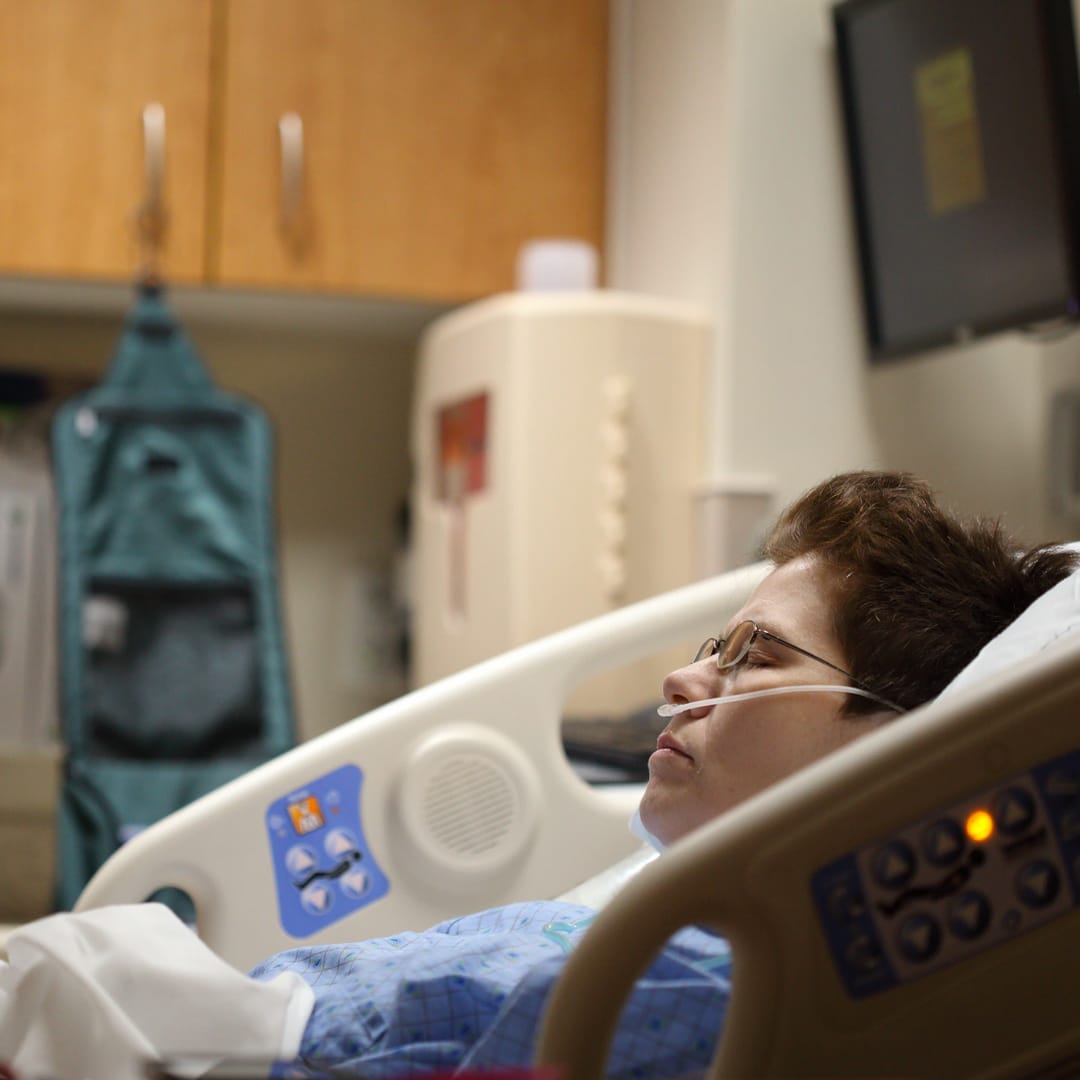
Many Australians are encountering the phenomenon of rationing for the first time in their lives. For the moment, rationing is sporadic and confined to items like toilet paper and beans. However, how will we respond when rationing moves from consumables to life itself?
Given the finite number of beds in intensive care units, respirators, etc. in Australia, the harsh truth is that if there is mass contagion, giving rise to critical illness on a broad scale, there will not be enough medical resources to sustain the lives of all who need care.
In those circumstances, medical staff and families will need to exercise triage – put simply, the practice of prioritising access to scarce medical resources. Not everyone will be chosen. Some of those at the end of the line will die.
This is the harsh reality behind abstract talk of ‘flattening the curve’. Governments and their advisers are now working to reduce the number of COVID-19 infections in the hope that they can prevent the overloading of our limited resources. In doing so, they recognise that the risks cannot be overcome by throwing money at the problem.
There is an upper limit in terms of equipment and trained personnel – there is just not an endless supply of either and no amount of money can solve that problem once the number of people seeking care exceeds the effective places available.
That is why every person must now do what they can to minimise the risk of mass infection. Doing so may not confer an individual benefit. However, the decision to wash one’s hands regularly and practice prudent forms of social distancing may make all the difference when it comes to avoiding the tipping point between a medical system that can cope and one that is forced to engage in triage.
So, how will clinicians choose if the worst fears are realised? In medical ethics, the general approach to triage is to prioritise according to two dimensions. First, a patient will be assessed in terms of their physical capacity to respond to the treatment that is available. Put simply, the less likely a person is to respond to medical care, the lower they will be ranked on the list. In a time of scarcity, there is little justification for devoting precious resources to cases that are judged to be futile.
Second, a patient will be assessed in terms of their relative circumstances – including age, stage of life, etc. For example, a forty year old parent of three children will rank higher than a seventy year old with no dependents. Both principal factors intersect – and will be qualified (to some degree) by secondary concerns – such as the relative burden of any proposed treatment on the patient.
If the worst predictions come true, such choices may need to be made on a daily basis. It will not only be the doctors who have to decide. Families will also be drawn into the decision making process. Should that time arise, it will be essential that we all embrace some fundamental distinctions. For example, there is a profound difference between preserving life on the one hand and merely extending the process of dying, on the other.
The medical technology used in both cases is the same. It is the ethical discernment that makes the difference. If pressure mounts on intensive care units, then we can expect more families and loved ones to be asked if continuing treatment is not only futile but also denying another person a chance of life. Who of us is prepared for such a conversation?
None of this is meant to suggest that some lives are intrinsically more valuable than others. They are not – we are all equal in our possession of fundamental dignity. Nor does resort to triage imply indifference to the wellbeing of those who cannot receive life saving care. Those who miss out will be given the most compassionate care available as they die. Nobody need suffer.
Finally, we should spare a thought for those who may be called to make these difficult decisions. The physical, emotional and spiritual toll will be immense.
No amount of reason or decision making aids can prevent the abrasive effects on the human psyche of triage. Medical professionals, families, members of the wider community … we will all need support.
I hope that we can avoid arriving at a point where such decisions have to be made. It is the job of government to ensure that we are protected from such times. Whether they have done enough, early enough is yet to be decided.
In the meantime, if ever you wondered about the relevance of ethics to everyday life – just look around you.
You can contact The Ethics Centre about any of the issues discussed in this article. We offer free counselling for individuals via Ethi-call; professional fee-for-service consulting, leadership and development services; and as a non-profit charity we rely heavily on donations to continue our work, which can be made via our website. Thank you.
Ethics in your inbox.
Get the latest inspiration, intelligence, events & more.
By signing up you agree to our privacy policy



BY Simon Longstaff
Simon Longstaff began his working life on Groote Eylandt in the Northern Territory of Australia. He is proud of his kinship ties to the Anindilyakwa people. After a period studying law in Sydney and teaching in Tasmania, he pursued postgraduate studies as a Member of Magdalene College, Cambridge. In 1991, Simon commenced his work as the first Executive Director of The Ethics Centre. In 2013, he was made an officer of the Order of Australia (AO) for “distinguished service to the community through the promotion of ethical standards in governance and business, to improving corporate responsibility, and to philosophy.” Simon is an Adjunct Professor of the Australian Graduate School of Management at UNSW, a Fellow of CPA Australia, the Royal Society of NSW and the Australian Risk Policy Institute.
BY The Ethics Centre
The Ethics Centre is a not-for-profit organisation developing innovative programs, services and experiences, designed to bring ethics to the centre of professional and personal life.

The Festival of Dangerous Ideas has been regrettably cancelled

It was at the last Festival of Dangerous Ideas in November 2018, that our keynote speaker – celebrated writer, actor and bon vivant Stephen Fry – made the prophetic statement, “It’s not dangerous ideas that should concern us, it’s dangerous realities.”
We liked the line so much we used it as the theme for our tenth festival, scheduled to take place at Sydney Town Hall on 3-5 April. But as of today, we’re devastated to advise that the Festival won’t be happening. Like thousands of other events, ours may no longer proceed following the NSW Government’s (Minister of Health) ban of non-essential gatherings of 500 people or more.
Faced with the rapidly evolving situation around COVID-19 and relying on the best available medical advice, this is a possibility we’ve been grappling with, and agonising over, for the last two weeks – until the point where the choice was taken from our hands.
Although this decision is an incredible blow, the health of our audience, staff, speakers, artists and the wider public, is what matters most.
For some ticket holders, this cancellation will probably come as a relief. There’s already a high level of anxiety in the community about attending events of any kind. In the greater scheme of things, missing a couple of festival sessions – or a night at the theatre – is no more than a minor inconvenience. It might also be experienced as a reprieve for the speakers who were booked to travel halfway around the world to attend the Festival; navigating travel bans and the risk of illness, flight delays or mandatory quarantine periods to do so.
FODI takes many months – and thousands of hours – of creativity and painstaking human effort to become reality. If you had attended the festival, you would have heard from over 50 speakers, including exiled activist Edward Snowden (no stranger to self-isolation), climate change journalist, David Wallace-Wells, the celebrated Harvard professor, Michael Sandel, and technology critic, Evgeny Morozov. You would have heard Lindy Chamberlain-Creighton was to talk about her experience in one of the greatest miscarriages of justice in Australian history. And you would have encountered the extraordinary contrarian, Roxane Gay.
Beyond talks – and in the realm of the arts – you could have engaged with a remarkable new work called Unforgivable, featuring youth activists and a young 18-person strong indigenous choir. There was also going to be an opportunity for anyone to interact with PIG – a giant transparent piggybank into which people could donate (or withdraw) money in the full glare of public scrutiny. PIG was to have sat outside the QVB in the heart of Sydney for an entire week, prompting conversation about generosity and the hierarchy of human needs. It’s a conversation that has taken on a new relevance, today.
Major events like ours operate on a financial knife-edge. Just breaking even is a challenge in the best of times. So, the cancellation of FODI is not only heart-breaking. It also risks being financially crippling. Given this, we are asking our supporters, sponsors and ticket holders to consider donating their contributions to The Ethics Centre. Every cent will help us survive this financial upheaval and carry on our work.
If you would like to support The Ethics Centre, you can do so here.
Personally, our team is dealing with a deep sense of disappointment – that something we’ve been working towards for a long time, is now never going to happen.
That said, although we are down, we are definitely not out! FODI will be back – its tenth anniversary merely postponed until better times. It’s the original festival for stroppy people who want to push the boundaries. And it remains the best!
We thank all of our speakers, staff, supporters and ticket holders for their patience and understanding.
This dangerous reality arrived ahead of schedule.
Ethics in your inbox.
Get the latest inspiration, intelligence, events & more.
By signing up you agree to our privacy policy