

Why I had a vasectomy at 30
At the end of a recent family visit, while trying to wrangle my crying niece and nephew out the door, my cousin’s husband joked, “Daniel’s gonna go home and get the snip after this!” All I could do was laugh and say, “Actually, I am.”
I’ve known for as long as I can remember that I don’t want to have children. Obviously, as a teenager, this kind of sentiment is barely acknowledged, let alone taken seriously. On the rare occasions that it came up, I was told over and over again that I’d feel differently when I was older, that I didn’t understand the magical feeling that ostensibly had most adults in a chokehold. I simply couldn’t understand the gravity of making such a claim, but I’d surely come round to it when I grew up.
However, those years came and went, and my feelings and the resulting comments remained. Even now, at 30, people still seem to think that if I just grow up a little bit more, I might feel different.
And they’re right – I might have a life-altering experience that changes my perspective at some point. I might also decide tomorrow that I should dress like a clown for the rest of my life. I might even get out of bed next week and walk in front of a car, rendering all my previous choices meaningless.
My point here is that I’m not in the habit of basing life choices on increasingly improbable outcomes that have little to no bearing on my previous experiences or motivations.
That is why I decided to have a vasectomy.
Surgical intervention
A vasectomy is a minor surgical procedure where the tubes that carry sperm are cut, preventing sperm from reaching the semen. It’s currently the only available long-term male contraceptive – the only other being short-term, in the form of condoms.
The decision to undergo surgery hasn’t been a light one. I’ve been contemplating a vasectomy for the better half of a decade, but to me it seems entirely reasonable. At some point, a more permanent and effective kind of contraception was always going to be the logical and preferred next step.
Women consistently take on the risk, expense and discomfort in the name of contraception. Comparatively, men rarely need to consider it, and equivalent male contraceptives have been “just a few years away” for decades – constantly shut down over side effects that pale in comparison to those of female contraception. I can advocate for male contraception research as much as I like, but that isn’t going to change the options I have in the next 10 years.
So, for now, we’re left with vasectomies, which are less expensive (around $500 out-of-pocket), permanent, more effective (99.95%), and have no common side effects. So, if I can relieve even just one of my future romantic and sexual partners of the burden of unwanted pregnancy or abortion, while also alleviating some of my own psychological stress about those things, why would I not?
The answer is, of course, “because you might change your mind!”
The social paternalism of parenthood
The worry that I’m unsure about my decision, or that I’m sure now but could change my mind in a few more years, seems kind on the surface. I do think, for example, that my mum is genuinely concerned about my wellbeing and that her anxiety is warranted (to a degree) as someone who has cared for me my whole life.
However, in many cases (sorry, mum, this includes you), I think this concern belies paternalism and a double standard between those with and without children.
It’s been common over the last few years, especially by well-meaning middle-aged people, for me to be met with a look of horror, disappointment, confusion or disbelief at the mention of my intentions.
Even after multiple conversations over long periods of time, many people seem unable to accept that it’s possible for a vasectomy to be a rational decision for anyone other than a 50-year-old with three kids.
This response seems mostly due to social conditioning. Children, pregnancy and parenting are, in general, viewed as positive, life-affirming, and mostly inevitable. To stray from this norm is to invite interrogation, disdain, pity, and sometimes, I suspect, envy. So, while parenthood remains a mostly unquestioned certainty, the childfree choice is a spectacle.
Let me demonstrate with a scenario: A friend has just confided in you and a few others that they’re aiming to have a child in the next year or two. There are some gasps and some squeals, some smiles and excited nods, and then someone says, “Woah. Are you sure? What if you regret it? Kids are a lot of work… They’ll flip your life upside down – you won’t know sleep for the next decade. My friend had a kid and she regretted it. Why don’t you just get a dog?”
This would undoubtedly cause a lot of discomfort for everyone present. You would probably, and rightly, be pulled up for being so blunt and rude. But that courtesy is often completely overlooked when you are childfree – variations of each of these questions are a common response to anyone deciding to remain without children, especially when more permanent things like vasectomy are mentioned.
But there are plenty of valid reasons a person may choose against bringing a child into the world – and the very simple justification of ‘I don’t want to’ should be enough. Though for me, there was more to it.
A definitive list of why I don’t want kids
1. I just don’t!
I am, first and foremost, a consequentialist. I care about doing things within my psychological and physical ability to reduce suffering. Pretty much all my thinking stems from this general framework.
The first of these is that I simply don’t want to change my life in the ways it needs to change to have children. Parenting is difficult. I’ve known this for a long time, and having friends and family with children has only cemented this knowledge. I have no desire to revolve my life around another person and their needs, deal with years of excruciatingly little sleep, or sacrifice my admittedly few resources, motivations and plans.
I am a firm believer that if you aren’t aching to have a child, you probably shouldn’t. You might be overcome with a love that completely overpowers everything if you do. But you might not! And to me, gambling with ambivalence or apathy when it concerns the life of another being is not ethical. You need much more than that to raise someone in a loving, supportive home.
The caveat to this is that, of course, some parents do provide loving homes while regretting their decision. This still seems to me to be a net negative outcome, as the child would not have suffered for never having been born, while the parent/s have suffered potentially decades of otherwise avoidable harm.
And I truly do mean harm. Even the most loving, kind, supportive, enthusiastic parents I know have struggled through pregnancy and early childhood. And I respect them for it, but it’s not for me.
2. Vasectomies are reversible – children are not
When it comes to regretting decisions, things that affect others will always be worse.
I don’t deny that I might change my mind about the vasectomy in 5 years – that is technically a possibility. But even at that point, I will still have options. Vasectomies have a very high reversal success rate, and in the scenario where the procedure doesn’t work, I can try IVF instead. While both these procedures are expensive, I would argue that if I cannot afford them, then I also cannot comfortably afford to raise a child.
The statistics also don’t bear out the disproportionate amount of concern about vasectomy regret. Even in studies that isolate men without children, less than 7% experienced regret five years post-surgery, with 3-6% opting to reverse the procedure. The rates are higher for under-30s, but so are the safeguards (mandatory evaluations prior to surgery, with most clinics refusing people under 25).
Comparatively, parents have consistently similar or higher rates of regret. In the UK, approximately 8% of parents regret having children – this increases to 13% if you isolate for 25–34-year-old parents. In the US, about 7% of parents said they’d have none if they could do it all over again. A Polish study showed up to 13% regret, and in Germany, a large 2016 survey showed as high as 20%. Yet having a child in your late 20s is still a highly encouraged, celebrated and common practice.
I see this as a much more serious concern. As the Polish study put it:
“Among the difficulties that can be experienced by a person who has decided to have a child, one of the most serious is to arrive at the conclusion that it was a bad decision because one cannot withdraw from parenthood at one’s own request, and because regretting parenthood can lead to mental problems and negative attitudes towards children.”
If you have a child, and come to regret your choice, there is little that can be done to change your situation. You cannot wish away a human being, and the decision will impact you for your entire life. Even in cases where children are put into the foster system or adopted by extended family, the fallout is still painful for everyone involved.
On the other hand, sterilised people have options available if they change their mind.
3. I would rather foster existing children
One of the options that sterilised people have is to foster children who require out-of-home care. This is one of the major principled stances I have that informed my decision to get a permanent contraception solution. Especially now, as the number of available out-of-home care facilities are decreasing significantly. My logic is as follows:
- There are many, many children in Australia who cannot live with their birth parents for various reasons and need care into adulthood.
- It is prima facie more ethical to provide care for someone currently suffering than to create a new person to provide care for.
- Especially for white, upper-middle class people, having biological children is mostly a selfish choice, as this demographic has the least social and financial barriers to fostering children.
- If I were to eventually form the desire to support and raise another person, I feel compelled to make the most difference I can.
- Having biological children would preclude me improving the lives of children who I could otherwise foster.
Therefore, I am ethically motivated to foster children instead of having biological children. There are plenty of reasons why fostering is inaccessible or improbable for lots of prospective parents. But if you reasonably can, then I think you should.
3. (b) I also don’t find the common arguments to have children morally compelling
To be clear, having a selfish motivation doesn’t inherently make someone a bad person. This is not necessarily a value judgement – but selfish motivations cannot be their only or main motivations, and yet they seem to be the first things people reach for when questioning vasectomy, or indeed anyone’s choice not to have children.
“Who will look after you when you’re old?”
“How else will you find purpose in life?”
“But they’ll make you so happy!”
“Don’t you want a little mini-me?”.
All of these reasons put an inordinate amount of pressure on children to fulfil something in their parents’ lives that they never signed up for and may not be in their best interests. If you have a child, they should not ever feel like they owe you something simply for existing. The main priority, the foundation of all of these wishes, should simply be to provide them with emotional and financial resources to live happily and healthily. If those are not underlying priorities, then we have an ethical problem.
4. It’s tough out there
Living involves suffering – especially in the current political and future literal climate. One of my guiding principles in life is to reduce suffering. Therefore, if I do ever want to raise a child, I’d try to help someone who is already suffering, rather than bring someone new into the world.
This could mean fostering, but it could also look like community. One huge consequence of not raising children is having the time and resources to be present with and support friends and family who do have children. This can be an enriching experience for everyone involved, meaning more freedom for parents, deeper friendships, and broader socialisation and bonding for kids.
Hopefully by this point it’s clear that I’m not a complete hater. Children are a headache – they can be loud, annoying, dirty and stupid; they can ruin a flight or a friendship; put strain on a marriage or make you rethink your life at 2am. But I also think they deserve the best. They deserve every ounce of support, love, friendship and encouragement that their parents and guardians are capable of giving them.
This article was originally published by Cheek Media Co.

BY Daniel Finlay
Daniel is a philosopher, writer and editor. He works at The Ethics Centre as Youth Engagement Coordinator, supporting and developing the futures of young Australians through exposure to ethics.
Ethics in your inbox.
Get the latest inspiration, intelligence, events & more.
By signing up you agree to our privacy policy







Why you should change your habits for animals this year

As a 16-year-old, I argued with my vegan friend about the various faults in his logic: how he couldn’t possibly be healthy, how we were meant to eat animals, and all the rest. I never could have imagined how embarrassed it would make me many years later.
I wasn’t particularly familiar with veganism as a teenager, but I have always loved animals. While the fervour to prove it wrong dissipated, my knowledge and exposure to it remained very minimal, like most people’s. A little later, I briefly dated someone who was vegetarian, who inevitably but mostly passively increased my exposure and knowledge. I decided to start looking into the validity of my confident preconceptions and realised that they were either completely unfounded or just exaggerated. It wasn’t many years later when I woke up in the middle of the night and decided that I needed to change my actions.
Veganuary
Coincidentally, 2014 was the year that I began changing my lifestyle to better reflect my values – the same year that a British nonprofit began an annual challenge called Veganuary: a call for people to try eating as if they were vegan for the first month of the year. You sign up for free and are provided with daily emails for a month that include information like recipes, cookbook pages, meal plans and general advice for how to navigate the change in habits.
All of this is well and good if you’re already curious about the idea of reducing your animal consumption, but what if you’re not? Let me try and pique your curiosity.
Why you should care
You might already consider yourself someone who cares. Most people do love animals in theory. If you see an injured bird, a run-over kangaroo, or an abused dog, you’re likely to have a compassionate response. But decades of socialisation, billions of dollars in misrepresentative marketing, and the ever-increasing distance between consumers and production means it’s easier than ever to ignore how our values contradict our everyday actions.
So please indulge me by considering the following responses to common arguments for eating animals.
To begin, let’s get the practical stuff out of the way:
Where will I get my protein? We need meat/dairy/eggs to give us all the nutrients we need.
This argument is as unfounded as it is ubiquitous, and one I wasn’t immune to earlier in my life either. Unfortunately, agricultural lobbying groups are much better at getting into the minds of average consumers, otherwise it would be common knowledge that all major dietetic associations agree on the safety (and benefits) of balanced vegan diets (and all types of vegetarian diets). That’s not to demonise the health of any other kind of balanced diet – you can be perfectly healthy on a regular omnivorous diet – but the ethical argument for showing compassion to animals doesn’t require it to be healthier than eating animals, only that it’s not bad for us. The overwhelming evidence shows that it is not.
The question is not “can I?” but “how would I like to?” That’s why something like Veganuary is such a good introduction, because having the initial support to change your shopping and eating habits makes the transition much easier.
It’s too hard.
Maintaining a balanced omnivorous diet is also too hard for most Australians – doesn’t mean you shouldn’t try! Sometimes we have to do difficult things for our own good or the good of others. You will likely find though, as I did, that the hardest part of changing your lifestyle is the social aspect. People can be judgemental, defensive, aggressive, and downright cruel despite your best attempts to minimise the impact that your choices have on others. Contrastingly, changing habits can be difficult in the short term but they soon become second nature. Staple recipes are easily replaced and substituted with similar-tasting alternatives.
Okay so maybe it won’t make my life worse personally, but it’s so bad for the environment. All those almond trees and soy crops use so much water and cause deforestation. We need animals to feed everyone.
Almond water usage obsession arose initially during the early-mid 2010s Californian droughts, where the majority of the world’s almonds are grown, at a time when almond consumption was skyrocketing. I’m not going to rush to almond’s defense, as we should definitely be prioritising mass consumption of soy and oat milk instead, but if we do want to compare it to the animal-derived alternative then almond is still better, using almost half the amount of water and causing almost five times less CO2 emissions.
The idea that the soy used for soy milk, tofu, tempeh, etc is driving deforestation is another common myth:
“In fact, more than three-quarters (77%) of global soy is fed to livestock for meat and dairy production. Most of the rest is used for biofuels, industry, or vegetable oils. Just 7% of soy is used directly for human food products such as tofu, soy milk, edamame beans, and tempeh.”
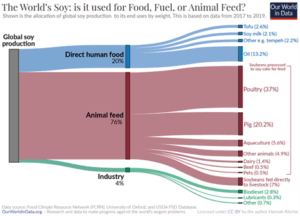
Even further than this, the amount of land cleared for cow pastures is over 7 times that for total soy production. If you’re worried about the environment, reducing or eliminating your animal consumption is the best place to start.
I’ve heard that farming vegetables kills more animals (mice, insects, etc) than eating meat, so if we care about animals, we should really keep eating them.
As we’ve seen, most of these crops go to feeding farmed animals, which means that it is still much preferable to consume these crops ourselves, rather than producing magnitudes more to feed other animals to be killed. The same logic applies if you’re someone who would like to argue that plants have feelings, too.
If you’d like to read more about the arguments against veganism, please see here.
Starting the year right
The overarching consideration here from an ethical standpoint is to reduce unnecessary suffering. For me, this comes mainly from a consequentialist perspective. Suffering is bad, we want to see and contribute to less of it. Eating meat, dairy and eggs necessitates immense amounts of unnecessary suffering and death (even if you think killing an animal that lived a good life is okay, we cannot feed the world with that kind of production – factory farms exist to fill the demand). Therefore, we should stop contributing to that demand.
My suggestion isn’t to make a permanent change overnight, but simply to try something new. You can join millions of other people around the world who are trying out a month of reduced animal harm through Veganuary. Or maybe you’re someone who says things like “I could go vegan except I love cheese too much”. Well, use the start of this year to try being vegan except for cheese. You’ll probably find that the hardest part of doing good is taking the first uncomfortable step.
BY Daniel Finlay
Daniel is a philosopher, writer and editor. He works at The Ethics Centre as Youth Engagement Coordinator, supporting and developing the futures of young Australians through exposure to ethics.
Ethics in your inbox.
Get the latest inspiration, intelligence, events & more.
By signing up you agree to our privacy policy




Ask an ethicist: How much should politics influence my dating decisions?

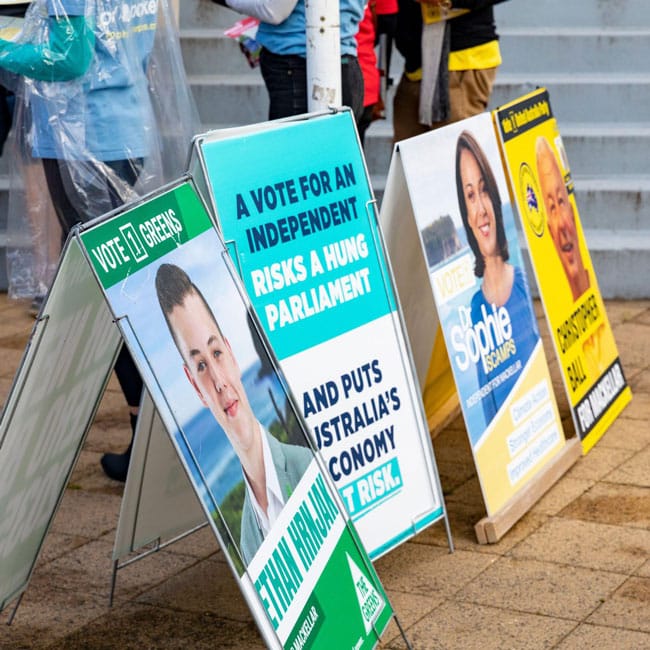
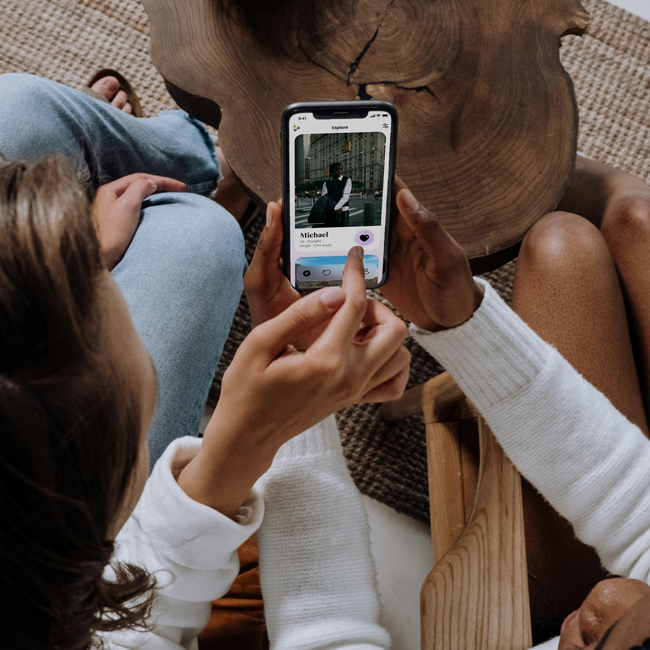
I’ve noticed on dating apps now that many people are displaying their political views on their profile. Is this something I should take into account when talking to someone? How picky should I be about politics when it comes to dating?
Dating is hard even under the best circumstances. Finding the balance between bearing your soul and maintaining a semblance of mysterious allure already feels like a circus feat – before we add in the complexity of having several of these conversations at once on our phones with people we’ve never met before.
If you do manage to wade through that surface mire of app dating, you’ll still be left with some of the harder decisions. A common focus is how we present ourselves. And that’s important – we understandably want to feel like we’re showing an accurate snippet of our identity.
But something to consider is the way that we often consciously or unconsciously judge, categorise, make assumptions about or dismiss people based on small aspects of their presentations of themselves.
Political ideologies, as indicated on dating profiles, usually reflect at least some of our deeply held beliefs. It’s tempting, then, at least for those of us who feel strongly, to use these little markers as a litmus test for our attention. In the age of online dating, we don’t want to waste our time vaguely flirting with someone who actually hates everything we stand for.
But…
Some open-mindedness, perspective-taking and empathy go a long way to breaking down the social barriers that encourage us into echo chambers.
I noticed this firsthand recently when talking to my friends about dating. I told them I had changed my profile to more explicitly reflect some of my political values. We mostly agreed that while it might drive some people away, it was likely to be people I’d be uninterested in regardless.
Then I told them that I often find myself having an adverse reaction to profiles that indicate someone is “Apolitical” or “Not Political” because I see this as apathetic and conflicting with my own strongly held beliefs. Instead of agreeing, they responded to this with variations of “But I’m not political!”.
This didn’t garner the response that I expected because I didn’t realise the way that my close friends thought about and categorised themselves. It turns out they too identified with those labels, not because they don’t have any political opinions, but because they don’t regard them as political. I hadn’t ever asked for their self-reflection before, and so I assumed that I knew how they thought about themselves.
Reframing
For lots of people, “politics” feels far away and unreachable: in rooms with suits, on tv or across the world, seats and benches in inaccessible buildings, smiles and virtue signals with little positive tangible effect.
But this doesn’t mean that someone who actively engages in the broader aspects of politics doesn’t have anything in common with the self-described “apolitical”. Neither does it mean that people on opposing sides of the spectrum have nothing in common.
Recognising this takes reflection on our own ability to remain open-minded, intellectually charitable, and curious.
We have to ask ourselves: is it short-sighted to dismiss people based off a single word? Are we indulging in an echo chamber by looking for people who present exactly like us?
The answer to these questions is both simpler and more complicated than might appear: It’s short-sighted and completely understandable.
As in my situation, you’re incredibly likely to be surrounded by some people who are indifferent to what they consider politics. This doesn’t necessarily make them bad people. What is foundationally important to these relationships are their underlying values and principles. Someone might not be able to identify with a particular movement or phrase or title, but do they care about the same things you do? Do they value the same things you do, for the same reasons?
Granted, dating apps don’t lend themselves to the conversation needed to get to these underlying questions. Organic friendships or even romantic relationships allow more time and space for getting to know what someone values and the principles they stick to in a wider context. Conversely, modern dating often encourages a sense of speed and abundance at odds with this sense of intellectual charity – which brings us to the more complicated answer.
Be discerning, not cynical
As much as we love our friends, we’ll inevitably hold a slightly higher bar for intimate relationships. Those extra levels of intimacy – the extra reliance, co-habitation, psychological, physical and financial vulnerability, etc – all apply a pressure that means a solid foundation of mutual values and principles is even more important for the relationship to be long-lasting (or even to get on the first date).
Political labels are one of many ways we can signal and filter all of these possibilities, and while they’re useful, taking a page out of Aristotle’s book can help prevent us from falling into an echo chamber.
Aristotle spoke of virtues, and specifically about finding the golden mean between two extremes. In the case of dating, we’re trying to avoid the extremes of cynicism and naïvety. Being cynical means a lack of open-mindedness and intellectual charity – it’s assuming the worst of someone based on little evidence, and this can happen a lot when we rely on small markers on profiles to tell us the whole story of a person. We see an identifier that’s usually at odds with our own, and we dismiss them.
Naivety, conversely, is an overabundance of optimism and lack of critical thinking, often resulting in a complete misunderstanding of someone’s character and motivations and leading to disappointment or apparent betrayal.
Being discerning, a comfortable middle ground, is the virtuous person’s dating goal. We want to be able to make quick and accurate judgements based on limited information. In doing so, the aim is to filter out likely harm while remaining open to meeting people a bit different from ourselves.
BY Daniel Finlay
Daniel is a philosopher, writer and editor. He works at The Ethics Centre as Youth Engagement Coordinator, supporting and developing the futures of young Australians through exposure to ethics.
Ethics in your inbox.
Get the latest inspiration, intelligence, events & more.
By signing up you agree to our privacy policy



Ask an ethicist: Should I use AI for work?

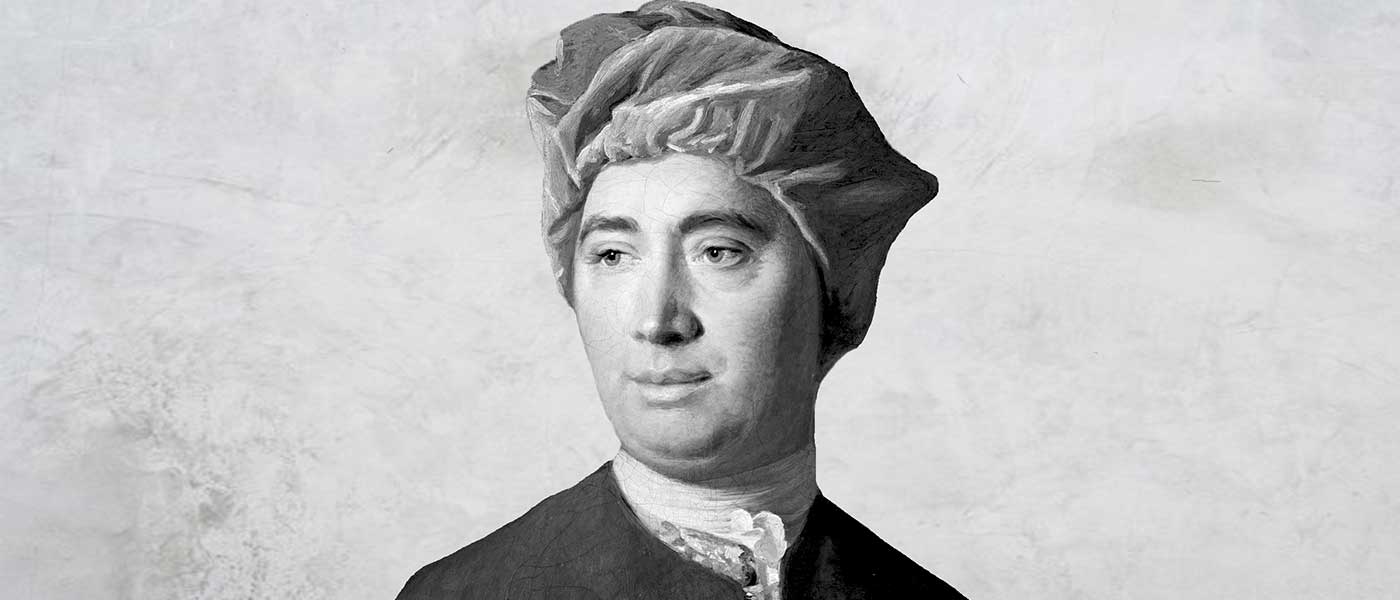
My workplace is starting to implement AI usage in a lot of ways. I’ve heard so many mixed messages about how good or bad it is. I don’t know whether I should use it, or to what extent. What should I do?
Artificial intelligence (AI) is quickly becoming unavoidable in our daily lives. Google something, and you’ll be met with an “AI overview” before you’re able to read the first result. Open up almost any social media platform and you’ll be met with an AI chat bot or prompted to use their proprietary AI to help you write your message or create an image.
Unsurprisingly, this ubiquity has rapidly extended to the workplace. So, what do you do if AI tools are becoming the norm but you’re not sure how you feel about it? Maybe you’re part of the 36% of Australians who aren’t sure if the benefits of AI outweigh the harms. Luckily, there’s a few ethical frameworks to help guide your reasoning.
Outcomes
A lot of people care about what AI is going to do for them, or conversely how it will harm them or those they care about. Consequentialism is a framework that tells us to think about ethics in terms of outcomes – often the outcomes of our actions, but really there are lots of types of consequentialism.
Some tell us to care about the outcomes of rules we make, beliefs or attitudes we hold, habits we develop or preferences we have (or all of the above!). The common thread is the idea that we should base our ethics around trying to make good things happen.
This might seem simple enough, but ethics is rarely simple.
AI usage is having and is likely to have many different competing consequences, short and long-term, direct and indirect.
Say your workplace is starting to use AI tools. Maybe they’re using email and document summaries, or using AI to create images, or using ChatGPT like they would use Google. Should you follow suit?
If you look at the direct consequences, you might decide yes. Plenty of AI tools give you an edge in the workplace or give businesses a leg up over others. Being able to analyse data more quickly, get assistance writing a document or generate images out of thin air has a pretty big impact on our quality of life at work.
On the other hand, there are some potentially serious direct consequences of relying on AI too. Most public large language model (LLM) chatbots have had countless issues with hallucinations. This is the phenomenon where AI perceives patterns that cause it to confidently produce false or inaccurate information. Given how anthropomorphised chatbots are, which lends them an even higher degree of our confidence and trust, these hallucinations can be very damaging to people on both a personal and business level.
Indirect consequences need to be considered too. The exponential increase in AI use, particularly LLM generative AI like ChatGPT, threatens to undo the work of climate change solutions by more than doubling our electricity needs, increasing our water footprint, greenhouse gas emissions and putting unneeded pressure on the transition to renewable energy. This energy usage is predicted to double or triple again over the next few years.
How would you weigh up those consequences against the personal consequences for yourself or your work?
Rights and responsibilities
A different way of looking at things, that can often help us bridge the gap between comparing different sets of consequences, is deontology. This is an ethical framework that focuses on rights (ways we should be treated) and duties (ways we should treat others).
One of the major challenges that generative AI has brought to the fore is how to protect creative rights while still being able to innovate this technology on a large scale. AI isn’t capable of creating ‘new’ things in the same way that humans can use their personal experiences to shape their creations. Generative AI is ‘trained’ by giving the models access to trillions of data points. In the case of generative AI, these data points are real people’s writing, artwork, music, etc. OpenAI (creator of ChatGPT) has explicitly said that it would be impossible to create these tools without the access to and use of copyrighted material.
In 2023, the Writers Guild of America went on a five-month strike to secure better pay and protections against the exploitation of their material in AI model training and subsequent job replacement or pay decreases. In 2025, Anthropic settled for $1.5 billion in a lawsuit over their illegal piracy of over 500,000 books used to train their AI model.
Creative rights present a fundamental challenge to the ethics of using generative AI, especially at work. The ability to create imagery for free or at a very low cost with AI means businesses now have the choice to sidestep hiring or commissioning real artists – an especially fraught decision point if the imagery is being used with a profit motive, as it is arguably being made with the labour of hundreds or thousands of uncompensated artists.
What kind of person do you want to be?
Maybe you’re not in an office, though. Maybe your work is in a lab or field research, where AI tools are being used to do things like speed up the development of life-changing drugs or enable better climate change solutions.
Intuitively, these uses might feel more ethically salient, and a virtue ethics point of view could help make sense of that. Virtue ethics is about finding the valuable middle ground between extreme sets of characteristics – the virtues that a good person, or the best version of yourself, would embody.
On the one hand, it’s easy to see how this framework would encourage use of AI that helps others. A strong sense of purpose, altruism, compassion, care, justice – these are all virtues that can be lived out by using AI to make life-changing developments in science and medicine for the benefit of society.
On the other hand, generative AI puts another spanner in the works. There is an increasing body of research looking at the negative effects of generative AI on our ability to think critically. Overreliance and overconfidence in AI chatbots can lead to the erosion of critical thinking, problem solving and independent decision making skills. With this in mind, virtue ethics could also lead us to be wary of the way that we use particular kinds of AI, lest we become intellectually lazy or incompetent.
The devil in the detail
AI, in all its various capacities, is revolutionising the way we work and is clearly here to stay. Whether you opt in or not is hopefully still up to you in your workplace, but using a few different ethical frameworks, you can prioritise your values and principles and decide whether and what type of AI usage feels right to you and your purpose.
Whether you’re looking at the short and long-term impacts of frequent AI chatbot usage, the rights people have to their intellectual property, the good you can do with AI tools or the type of person you want to be, maintaining a level of critical reflection is integral to making your decision ethical.
BY Daniel Finlay
Daniel is a philosopher, writer and editor. He works at The Ethics Centre as Youth Engagement Coordinator, supporting and developing the futures of young Australians through exposure to ethics.
Ethics in your inbox.
Get the latest inspiration, intelligence, events & more.
By signing up you agree to our privacy policy



That’s not me: How deepfakes threaten our autonomy
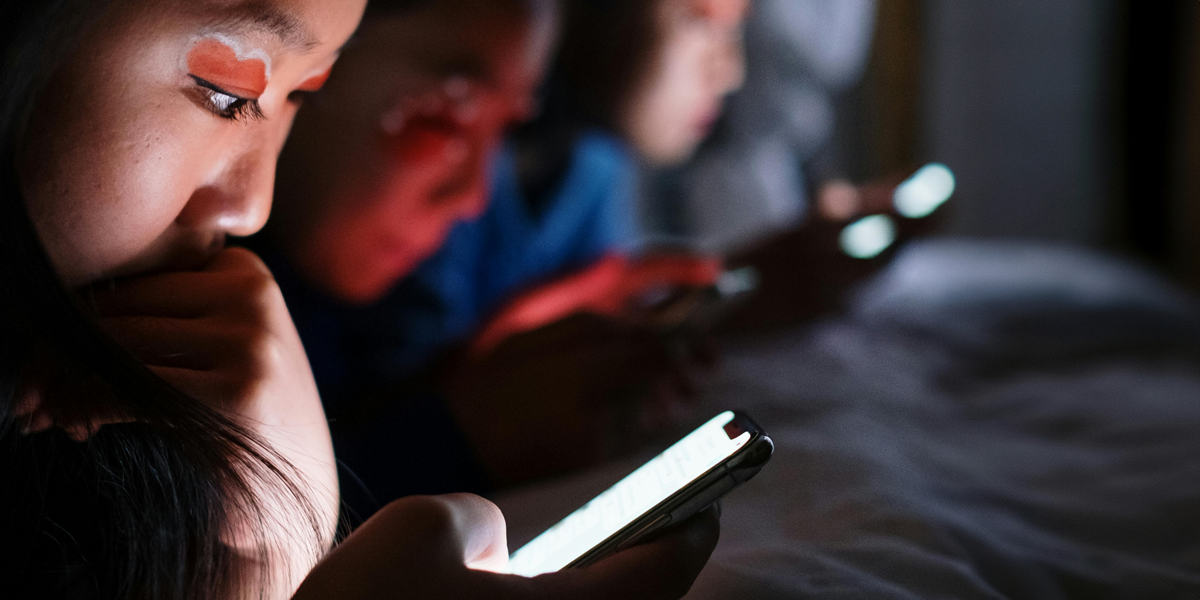
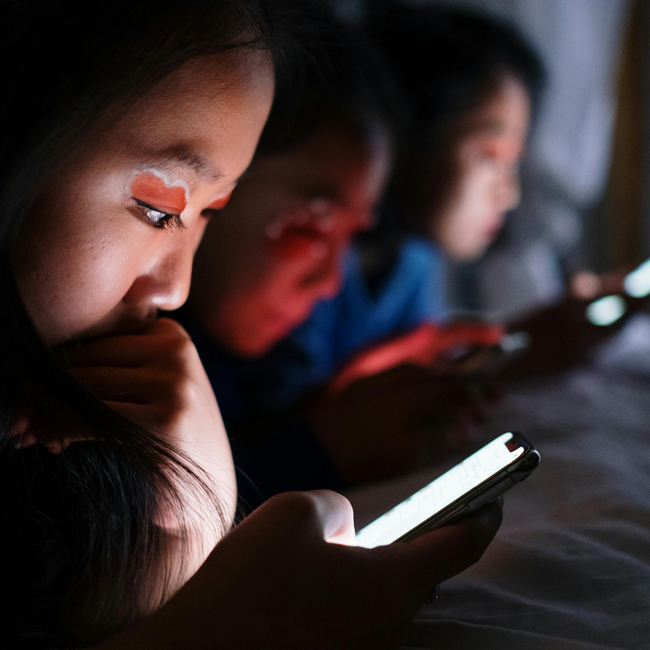
In early 2025, 60 female students from a Melbourne high school had fake, sexually explicit images of themselves shared around their school and community.
Less than a year prior, a teenage boy from another Melbourne high school created and spread fake nude photos of 50 female students and was let off with only a warning.
These fake photos are also known as deepfakes, a type of AI-augmented photo, video or audio that fabricates someone’s image. The harmful uses of this kind of technology are countless as the technology becomes more accessible and more convincing: porn without consent, financial loss through identity fraud, the harm to a political campaign or even democracy through political manipulation.
While these are significant harms, they also already exist without the aid of deepfakes. Deepfakes add something specific to the mix, something that isn’t necessarily being accounted for both in the reaction to and prevention of harm. This technology threatens our sense of autonomy and identity on a scale that’s difficult to match.
An existential threat
Autonomy is our ability to think and act authentically and in our best interests. Imagine a girl growing up with friends and family. As she gets older, she starts to wonder if she’s attracted to women as well as men, but she’s grown up in a very conservative family and around generally conservative people who aren’t approving of same-sex relations. The opinions of her family and friends have always surrounded her, so she’s developed conflicting beliefs and feelings, and her social environment is one where it’s difficult to find anyone to talk to about that conflict.
Many would say that in this situation, the girl’s autonomy is severely diminished because of her upbringing and social environment. She may have the freedom of choice, but her psychology has been shaped by so many external forces that it’s difficult to say she has a comprehensive ability to self-govern in a way that looks after her self-interests.
Deepfakes have the capacity to threaten our autonomy in a more direct way. They can discredit our own perceptions and experiences, making us question our memory and reality. If you’re confronted with a very convincing video of yourself doing something, it can be pretty hard to convince people it never happened – videos are often seen as undeniable evidence. And more frighteningly, it might be hard to convince yourself; maybe you just forgot…
Deepfakes make us fear losing control of who we are, how we’re perceived, what we’re understood to have said, done or felt.
Like a dog seeing itself in the mirror, we are not psychologically equipped to deal with them.
This is especially true when the deepfakes are pornographic, as is the case for the vast majority of deepfakes posted to the internet. Victims of these types of deepfakes are almost exclusively women and many have commented on the depth of the wrongness that’s felt when they’re confronted with these scenes:
“You feel so violated…I was sexually assaulted as a child, and it was the same feeling. Like, where you feel guilty, you feel dirty, you feel like, ‘what just happened?’ And it’s bizarre that it makes that resurface. I genuinely didn’t realise it would.”
Think of the way it feels to be misunderstood, to have your words or actions be completely misinterpreted, maybe having the exact opposite effect you intended. Now multiply that feeling by the possibility that the words and actions were never even your own, and yet are being comprehended as yours by everyone else. That is the helplessness that comes with losing our autonomy.
The courage to change the narrative
Legislation is often seen as the goal for major social issues, a goal that some relationships and sex education experts see as a major problem. The government is a slow beast. It was only in 2024 that the first ban on non-consensual visual deepfakes was enacted, and only in 2025 that this ban was extended to the creation, sharing or threatening of any sexually explicit deepfake material.
Advocates like Grace Tame have argued that outlawing the sharing of deepfake pornography isn’t enough: we need to outlaw the tools that create it. But these legal battles are complicated and slow. We need parallel education-focused campaigns to support the legal components.
One of the major underlying problems is a lack of respectful relationships and consent education. Almost 1 in 10 young people don’t think that deepfakes are harmful because they aren’t real and don’t cause physical harm. Perspective-taking skills are sorely needed. The ability to empathise, to fully put yourself in someone else’s shoes and make decisions based on respect for someone’s autonomy is the only thing that can stamp out the prevalence of disrespect and abuse.
On an individual level, making a change means speaking with our friends and family, people we trust or who trust us, about the negative effects of this technology to prevent misuse. That doesn’t mean a lecture, it means being genuinely curious about how the people you know use AI. And it means talking about why things are wrong.
We desperately need a culture, education and community change that puts empathy first. We need a social order that doesn’t just encourage but demands perspective taking, to undergird the slow reform of law. It can’t just be left to advocates to fight against the tide of unregulated technological abuse – we should all find the moral courage to play our role in shifting the dial.
BY Daniel Finlay
Daniel is a philosopher, writer and editor. He works at The Ethics Centre as Youth Engagement Coordinator, supporting and developing the futures of young Australians through exposure to ethics.
Ethics in your inbox.
Get the latest inspiration, intelligence, events & more.
By signing up you agree to our privacy policy





Community is hard, isolation is harder

Yesterday I crossed the street to avoid talking to an acquaintance.
Not because I don’t like them. Not because I was in a rush. But because I often feel a deep aversion to participating in small pleasantries or having to socialise when I’m mentally unprepared.
This is only one in a list of anti-social tendencies I’ve noticed myself developing during my adult life.
A lot of them seem more mundane than crossing the street, too. When’s the last time you took off your headphones and casually spoke to a stranger on the train or at the shops? Have you gotten to you know your neighbours or your barista? If a small accident happens in public, do you shy away or pretend you didn’t notice?
Community and Individualism
Recently on TikTok, something that’s caught my attention is a renewed focus on the benefits of and desire for community and how that conflicts with our increasingly individualistic mindsets.
Friction between these two ideas seems unavoidable: community involves a focus on the people around you, and individualism involves a focus on yourself. Go too far in either direction and you’ll inevitably begin to neglect the other.
In his video “This is one of my hills”, creator NotWildlin responds to the view held by some that we don’t owe strangers pleasantries. His gripe isn’t necessarily that we do owe strangers anything, but rather that this attitude appeared to be coming from people who were simultaneously frustrated with the lack of opportunity for community around them. Specifically, they had been advocating for more third places.
Coined by the sociologist Ray Oldenburg in his book The Great Good Place, third places are communal public spaces where casual conversation is the primary (but not necessarily only) activity, and the space is neutral, welcoming, cozy, accessible, playful and homely. Importantly, these spaces are separate from the home, our first place, and from work or study, our second place.
These are places where it’s encouraged to interact with strangers, with a sense of openness for conversation and general interaction with local community.
So, NotWildlin’s argument is this:
If you are the kind of person who laments a decline of local community, who wants to build social capital through things like third places, then how can you also justify being habitually anti-social?
Instead of thinking about pro-social habits as something we owe, we should think about them as something we want to develop in the name of community.
This argument honestly rocked me a little, as someone who is becoming increasingly community-minded, while also holding desperately onto my inalienable right to be left alone.
However, it does seem to me, as an extension of NotWildlin’s point, that a focus on third places is a misprioritisation. On a systemic level, yes, there could be more local government support in creating welcoming public spaces to encourage community. On the other hand, many areas in populous Australian cities do have third places that go underutilised. How many younger people do you know that use libraries, public gardens or other community centres? The deeper problem in my estimation is social and cultural.
Keeping the (inner) peace
Once we leave the education system, many people become creatures of habit, and that unfortunately can extend to the way we view relationships and interact with others. We’re less open to even fleeting interactions with strangers, we might be content with our small circle of friends and unenthusiastic about adding to the noise. We have our routines and any effort outside of them can feel like a small burden.
Unfortunately, that spells disaster for building community. Around the same time as NotWildlin, an Australian creator Jordan Stacey posted a video about the relationship between routine and community. She unpacks the idea that community requires compromise in ways that threaten our often highly sought after bubbles of routine, and too often community is neglected in favour of maintaining these routines.
Stacey talks through this with two main points. Firstly, routine is only a symptom of a broader desire for comfort and convenience. The reason that someone might struggle to accept a spontaneous invitation in lieu of their quiet night in watching tv (for example) is the same reason many people avoid interactions with strangers. And to some extent, this seems obvious, natural and maybe even justified. Why would we want to be uncomfortable or inconvenienced?
But arguably, this is a case of wanting to have your cake and eat it too – at least for those of us who envision a time in the future where we’re surrounded by supportive relationships within thriving communities – because as a reciprocal support network, community necessitates intermittent inconvenience.
If we want to develop and be surrounded by relationships in which we can find support, we also have to be willing to forgo some of our solitude and peace and embrace the inconvenience of being pro-social.
Stacey’s second point is that we live in a world that almost necessitates this level of comfort-protection; that causes us to frame these aspects of community as inconveniences rather than incidental aspects of functioning and fulfilling relationships.
“If you’re working 40 hours a week – a nine to five – the only way, for a lot of people, that this is actually maintainable is through a hefty routine.
The systems we live under directly limit our time and put pressure on our leisure. Our routines often block out weeknights to relax and recover and relegate the majority of our social time to the weekend, creating a sense of isolation throughout the week.
It is also, I would argue, the same inner-peacekeeping measure that motivates our aversion to public interactions. Talking to strangers on our commute or in the lift is a similar disruption to our routines – to the books or podcasts or music that get us from point A to point B without having to cast our attention to the people around us.
Creating Community
All this is not to say that we need to start making forced conversation with strangers. As I write, I’m sitting on a quiet train and would frankly be annoyed if I was interrupted by an overly outgoing commuter. And that’s okay, sometimes.
What I think we should take from this discourse, though, is a readiness to confront our own anti-social dispositions when we reflect that we’re consistently prioritising routine or comfort over building relationships.
While we might dream of a world in which we’re surrounded by supportive relationships and vibrant communities, we’re much less conscious of the personal cost of that dream. The reality is, community doesn’t materialise from thin air – it’s built, moment by moment, through countless small interactions and shared experiences. And yes, those moments often come at the expense of our personal comfort and carefully curated routines.
These compromises aren’t things to shy away from, but reminders that meaningful relationships and thriving neighbourhoods are more than just social policy or urban planning – they’re about us. About stepping out of our bubbles. About choosing to inconvenience ourselves in small, deliberate ways that foster connection.
Maybe the next time we feel the urge to shrink into ourselves, we can choose differently, because community isn’t just something we want—it’s something we create. And creating it means showing up, no matter how uncomfortable it feels in the moment.
The question isn’t whether we owe strangers pleasantries – it’s whether we’re willing to invest in the world we want to live in.
Ethics in your inbox.
Get the latest inspiration, intelligence, events & more.
By signing up you agree to our privacy policy
You might be interested in…




BY Daniel Finlay
Daniel is a philosopher, writer and editor. He works at The Ethics Centre as Youth Engagement Coordinator, supporting and developing the futures of young Australians through exposure to ethics.

Critical thinking in the digital age

It’s a usual Friday night; you’re at a friend’s place. A hush falls over the group as one of the boys pipes up: “Yeah nah but Andrew Tate has some good ideas too”.
Hopefully, you’ve never found yourself in this position, but you might know someone who has. Figures like Andrew Tate, known for his proud advocacy of misogyny among young men, aren’t uncommon on social media and their followings are microcosms of a much larger issue: a deficit of critical thinking in online education and spaces.
Unfortunately, social media platforms aren’t adequately removing hate speech or radicalising figures, nor can we expect filters and rules to ever be enough. With this in mind, we need ways of educating (often young) viewers on how to decide what and who to trust.
I recently attended a live recording of the Principle of Charity podcast at Sydney Writers’ Festival where this idea was raised with comparisons between non-fiction books and videos. Philosopher A.C. Grayling and art historian and content creator Mary McGillivray spoke at length about the various limitations of each medium. While both were reluctant to take polarising positions, eventually a sticking point did arise.
Grayling argued that the relative accessibility and ease of creating social media content makes it more dangerous, given its ability to platform those with little-to-no credibility or expertise. This echoes an interesting evolutionary theory called “costly signalling”, which says the more someone invests in sending a message – i.e. the more “costly” it is for them – the more likely it is to be trustworthy. On the other hand, the less someone invests in sending a message – the “cheaper” it is – the more likely it is to be untrustworthy or noisy. This is one reason why handwritten letters tend to be more thoughtful than fleeting social media posts. McGillivray’s response was two-fold.
Firstly, she noted that there are plenty of questionable published books out there by charlatans and the like – books that prey on insecurities to make sales, or simply peddle well-disguised misinformation. So, this isn’t a problem unique to social media.
Secondly, to which Grayling conceded, traditional avenues of information dissemination are often gatekept behind propriety, things like formal educational status or money. This is the flip side to costly signalling when applied to humans: only those who can “afford” to make costly communications will be heard and believed, so the wealthy and powerful will often dominate public discourse.
There are significant benefits, then, to having a medium that’s accessible to those who have never been afforded the circumstances to engage in these systems. There is still a trade-off: low-cost communication means potential for an oversaturation of inaccurate or useless information, but that is something we must contend with if we want to avoid restricting these things to the already-rich-and-powerful.
McGillivray herself is in the middle of a PhD, not yet an expert in the eyes of academia, yet she has amassed a huge following for her historical art analysis and edutainment (educational entertainment). Using her MPhil in History of Art and Architecture, she is able to produce well-researched and engaging videos that educate an audience that might not otherwise have been introduced to the topic at all.
Unfortunately, it’s especially easy for poor video information to also garner audiences because of its reliance on charisma above all else. We can be easily swayed by charisma as we passively consume it, because passive consumption leaves us more open to suggestion.
We can be prone to dismissing legitimate information and being overly charitable towards frauds based almost entirely on aesthetics.
Whom should we listen to?
Who qualifies as an expert, and when is being an expert relevant?
To figure this out, we have to talk about the combination of trust and critical thinking. Regardless of whether we’re picking up a book or scrolling on our phones, we need to know whether we can trust what we’re consuming and who we’re consuming it from, else we become yet another cog in machines of misinformation.
Unfortunately, there are many forces in the world that try to deceive us every day, from advertisers to influencers to corporations to politicians. To gain a good sense for what to trust, we need to know what to distrust by developing our critical thinking skills. This process isn’t simple, yet anyone can do it.
The first step is acknowledging that we are sometimes gullible and generally easy to convince with rhetoric. Speaking quickly, using jargon, seeming confident, having a high production quality are all things we intuitively associate with intelligence or expertise and yet they can often act as a distraction from the incoherence of the information being presented to us. This isn’t our fault – they’re designed and used specifically to lower our intellectual guards – but it is something we can learn to recognise and counter.
On top of this, even when we are capable of being critical of what we consume, we’re often bombarded with so much information that it makes it almost impossible anyway. In these situations, we rely on heuristics and biases to varying degrees of success. These mental shortcuts let us make faster decisions, but that speed often comes at a cost of accuracy.
Being discerning of sources
One clear thing to look for is the source of the information.
Check if the information comes from a generally trusted source, like a government website, a university, a peer-reviewed study or a reputable news outlet. While it’s dangerous to be overly sceptical, it is important to note that critical thinking should also extend to sources you trust. Just like anything else, governments, universities or other sources can be biased in certain ways, and being aware of those biases can help you understand the motivations behind different ways of presenting otherwise accurate information.
For example, news with a repeated focus on or omittance of a certain group of people can imply to viewers a false sense of significance. Without context, even accurate information can be used to misrepresent a wider picture.
There are many organisations dedicated to fact-checking and bias-checking news and politics, so using them alongside your broader consumption of information can give you a more comprehensive perspective on different issues. For fact-checking of global news trends, there is the International Fact Checking Network, or in Australia there is the Australian Associated Press Fact Check. These resources can help us identify common misinformation trends.
However, there are other ways to train ourselves to be aware of our own biases when we consume media and especially news. For example, Ground News is an organisation that collates news stories from thousands of sources and demonstrates how the same stories are presented differently depending on the general political slant of the publication. This is an effective way of learning about how even subtle differences in language can have a drastic impact on our interpretation of news. Using resources like this is a good way to develop media literacy by training yourself to recognise patterns in media coverage.
Critical reflection
Many people aren’t going to get their information straight from the source, though. Let’s say you have found an author or a creator that you like. Maybe your friend even told you about it. How do you know if you should trust them?
Again, the first thing to check is where they’re getting their information from. If they’re presenting evidence, then check that that evidence is coming from a place that you know to be trustworthy. This isn’t a check that you need to do all the time but putting this effort in at least at the beginning will give you a foundation for trusting this person in the future.
If they aren’t presenting empirical evidence, you can check their credentials and history. Do they have reputable qualifications in a relevant field? Do they have a relevant lived experience to speak from? Do they have a history of presenting accurate information? Is what they’re saying consistent with their own points and with what you know from trusted sources?
While not all necessary, these are all different ways of making sure that you critically reflect on the news and media you consume.
Other useful ways to engage critically with media are to challenge yourself to identify different aspects of it. The intended audience can tell you a lot about a publication, like what their motivations or affiliations might be. You can identify this by looking at the language used and asking yourself how it reflects who it is trying to speak to. You can also find potential bias by imagining how the information might sound different if it was written with another kind of audience in mind.
Another method of testing your understanding of a piece of news is to try to identify what the intended message is by summarising it in 1-2 sentences. Doing this is a good way to practice understanding the implications of lots of bits of information as a whole. It will also help you to ascertain underlying assumptions that are made without the viewer’s comprehension. Identifying these assumptions will help prevent you from being misled.
For example, there is a general implicit assumption that if something is in the news, then it is important. But you might not agree with that. Sometimes things are reported on or spoken about to cause them to seem important, so by questioning that foundational assumption we can begin to critique the content and motivations behind certain information.
Identifying these can help you determine how to process the information being presented to you and whether you need to scrutinise it further. Developing critical thinking skills to increase your media literacy is an important part of ethical consumption because it helps us navigate systems of power and slowly prevents the spread of harmful information and ideas.
The Principle of Charity is a podcast that injects curiosity and generosity back into difficult conversations, bringing together two expert guests with opposing views on big social issues.
Ethics in your inbox.
Get the latest inspiration, intelligence, events & more.
By signing up you agree to our privacy policy

BY Daniel Finlay
Daniel is a philosopher, writer and editor. He works at The Ethics Centre as Youth Engagement Coordinator, supporting and developing the futures of young Australians through exposure to ethics.

Losing the thread: How social media shapes us

“I feel like I invited two friend groups to the same party.”
The slowly spiralling mess that is Twitter received another beating last year in the form of a rival platform announcement: Threads. And although this was a potentially exciting development for all the scorned tweeters out there, amid the hype, noise and hubbub of this new platform I noticed something interesting.
Some people weren’t sure how to act.
Twitter has long been associated with performative behaviour of many kinds (as well as genuine activism and journalism of many kinds). Influencers, comedians, politicians and every aspiring Joe Schmoe adopt personas that often amount to some combination of sarcastic, cynical, snarky and bluntly relatable.
Now, you would think that people migrating to a rival app with ostensibly the same function would just port these personas over. And you would be right, except for the hiccup of Threads being tied directly to Instagram accounts.
Why does this matter? As many users have pointed out, the kinds of things people say and do on Twitter and Instagram are markedly different, partially because of the different audiences and partially because of the different medium focus (visual versus textual). As a result, some people are struggling with the concept of having family and friends viewing their Twitter-selves, so to speak.

These posts can of course be taken with a grain of salt. Most people aren’t truly uncomfortable with recreating their Twitter identities on Threads. In fact, somewhat ironically, reinforcing their group identity as “(ex-)Twitter users” is the underlying function of these posts – signalling to other tweeters that “Hey, I’m one of you”.
The incongruity between Instagram and Twitter personas or expression has been pointed out by some others in varying depth and is something you might have noticed yourself if you spend much of your free time on either platform. In short, Instagram is mostly a polished, curated, image-first representation of ourselves, whereas Twitter is mostly a stream-of-consciousness conversation mill (which lends itself to more polarising debate). There are plenty of overlapping users, but the way they appear on each platform is often vastly different.
With this in mind, I’ve been thinking: How do our online identities reflect on us? How do these identities shape how we use other platforms? Do social media personas reflect a type of code-switching or self-monitoring, or are they just another way of pandering to the masses?
What does it say about us when we don’t share certain aspects of ourselves with certain people?
This apparent segmentation of our personality isn’t new or unique to social media. I’m sure you can recall a moment of hesitation or confusion when introducing family to friends, or childhood friends to hobby friends, or work friends to close friends. It’s a feeling that normally stems from having to confront the (sometimes subtle) ways that we change the way we speak and act and are around different groups of people.
Maybe you’re a bit more reserved around colleagues, or more comical around acquaintances, or riskier with old friends. Whatever it is, having these worlds collide can get you questioning which “you” is really you.
There isn’t usually an easy answer to that, either. Identity is a slippery thing that philosophers and psychologists and sociologists have been wrangling for a long time. One basic idea is that humans are complex, and we can’t be expected to be able to communicate or display all the elements of our psyche to every person in our lives in the same ways. While that’s a tempting narrative, it’s important to be aware of the difference between adapting and pandering.
Adapting is something we all do to various degrees.
In psychology, it’s called self-monitoring – modifying our behaviours in response to our environment or company. This can be as simple as not swearing in front of family or speaking more formally at work. Sometimes adapting can even feel like a necessity. People on the autism spectrum often “mask” their symptoms and behaviours by supressing them and/or mimicking neurotypical behaviours to fit in or avoid confrontation.
In lots of ways, social media has enhanced our ability to adapt. The way we appear online can be something highly crafted, but this is where we can sometimes run into the issue of pandering. In this context, by pandering I mean inauthentically expressing ourselves for some kind of personal gain. The key issue here is authenticity.
As Dr Tim Dean said in an earlier article in this series, “you can’t truly understand who someone is without also understanding all the groups to which they belong”. In many ways, social media platforms constitute (and indicate further) groups to which we belong, each with their own styles, tones, audiences, expectations and subcultures. But it is this very scaffolding that can cause people to pander to their in-groups, whether it simply be to fit in, or in search of power, fame or money.
I want to stress that even pandering in and of itself isn’t necessarily unethical. Sometimes pandering is something we need to do; sometimes it’s meaningless or harmless. However, sometimes it amounts to a violation of our own values. Do we really want to be the kinds of people who go against our principles for the sake of fitting in?
That’s what struck me when I read all of the confused messaging on the release of Threads. It’s one thing to not value authenticity very highly; it’s another to disvalue it completely by acting in ways that oppose our core values and principles. Sometimes social media can blur these lines. When we engage in things like mindless dogpiling or reposting uncited/unchecked information, we’re often acting in ways we wouldn’t act elsewhere without realising it, and that’s worth reflecting on.
It’s certainly something that I’ve noticed myself reflecting on since then. For some, our online personas can be an outlet for aspects of our personality that we don’t feel welcome expressing elsewhere. But for others, the ease with which social media allows us to craft the way we present poses a challenge to our sense of identity.
Ethics in your inbox.
Get the latest inspiration, intelligence, events & more.
By signing up you agree to our privacy policy




BY Daniel Finlay
Daniel is a philosopher, writer and editor. He works at The Ethics Centre as Youth Engagement Coordinator, supporting and developing the futures of young Australians through exposure to ethics.

BY The Ethics Centre
The Ethics Centre is a not-for-profit organisation developing innovative programs, services and experiences, designed to bring ethics to the centre of professional and personal life.


Enough with the ancients: it's time to listen to young people

Nearly 20% of Australia’s population is between the ages of 10 and 24, yet their social and political voices are almost unheard. In our effort to amplify these voices, The Ethics Centre will be hosting a series of workshops where young people can help us better understand the challenges they face and the best ways for us to help. We’re listening.
You’re sitting at the dinner table at a big family gathering. Conversation starts to die down and suddenly your uncle says: “Have you seen that Greta girl on the news? I understand that climate change is a big deal, but the kids these days are so angry and loud. They’d get more done if they showed some respect.”
Many people under 25 have been in this position and had to make a choice about how to respond. This decision is often more difficult than it seems because there doesn’t seem to be a preferable option. Philosopher and feminist theorist Marilyn Frye gave a name to this kind of situation: a double-bind. In her essay Oppression, she defines the double-bind as a “situation in which options are reduced to a very few and all of them expose one to penalty, censure, or deprivation.”
Frye originally used the double-bind to talk about how women often found themselves in situations where they were going to be criticised equally for engaging with or ignoring gender stereotypes. The double-bind can be used to explain the difficult positions that anyone who experiences a negative stereotype finds themselves in and provides insight into why people with important perspectives often feel the need to censor themselves.
Let’s say we do choose to speak up. We can justify our anger. There are so many huge issues that impact the world – climate change, the pandemic, rampant inequality, and so on – and it feels like things are changing far too slowly.
Young people especially should be allowed to be angry, because this is the world we will inherit.
Unfortunately, it’s a common experience for younger generations to feel that their voices aren’t listened to or respected. Even though these reasons should more than justify the anger and frustration of young people, emotion can often (unjustly) obfuscate the reality of what we say.
So, let’s try the other way. We choose to not engage and instead let the comment slide. However, then we’re at risk of being seen as the “apathetic teen,” a narrative that has been perpetuated ad nauseam claiming that young people don’t really care about anything (which we know isn’t true).
Young people care about a lot, and have a lot to care about. Not only do they care, they act. A recent survey of 7,000 young people found that two-thirds of respondents seek out ways to get involved in issues they care about, and 64% believe that it is their personal responsibility to get involved in important issues. So, it’s not always easy to just let your uncle’s tone-policing go when you feel passionate about a topic, especially when staying silent can be as damaging as speaking up.
Here we see the double-bind in action: neither of the most obvious responses to the situation are favourable or even preferable. Because of a build-up of social and cultural assumptions and expectations, we’re often placed in a position where we seem to lose in some way no matter what we decide to do.
The Australian youth experience
Unfortunately, age discrimination towards young people doesn’t end at the dinner table. A 2022 survey conducted by Greens Senator Jordon Steele-John found that “overwhelmingly, young people are feeling ignored and overlooked”. Gen Z (people born between 1995 and 2010) are more likely to be viewed as “entitled, coddled, inexperienced and lazy,” which is having negative effects on young people’s confidence in the workplace. It doesn’t help that young people are hugely underrepresented in the Australian government and positions of power in the private sector.
Young people should not have to convince everyone that their voices are worth listening to. The combination of endless global issues and lack of representation in positions of power, which is compounded by a culture that doesn’t give appropriate weight to their contributions, creates a climate that leaves young people feeling frustrated and disempowered.
So, what can we do? As with most social issues, there isn’t one simple fix to the underrepresentation and misrepresentation of youth because it stems from a few different things that are ingrained in our society and culture. We can question our assumptions and those of others by recognising that “youth” as a social or cultural category isn’t really coherent anymore. There has been an enormous rise in the number of subcultures that are increasingly interconnected thanks to mass media and the internet, meaning that “young people” are more diverse than ever before.
Most importantly, we can bring young people together and into spaces where their voices will be heard by people who are in a position to make change.
As part of our mission to do just that, The Ethics Centre is developing a growing number of youth initiatives, like the Youth Advisory Council and the Young Writer’s Competition.
Through these initiatives, we are starting an ongoing conversation with young people about the areas in their lives and futures that they think ethics is needed the most.
Ethics in your inbox.
Get the latest inspiration, intelligence, events & more.
By signing up you agree to our privacy policy


BY Daniel Finlay
Daniel is a philosopher, writer and editor. He works at The Ethics Centre as Youth Engagement Coordinator, supporting and developing the futures of young Australians through exposure to ethics.