



Feeling rules: Emotional scripts in the workplace

Meta CEO Mark Zuckerberg recently lauded the virtues of company cultures that can ‘celebrate the aggression’. The comment sparked backlash, with many commentators arguing that ‘no one thrives in an aggressive environment’ and that anger and pride have no place at work.
There are many reasons this topic is highly charged. One is that people, on the whole, tend to dislike being told what to feel (even more than they dislike being told what to do).
The aversion is not difficult to explain. Long before the development of the neocortex, our ancestors relied exclusively on the limbic brain, which prompted fast, instinctive responses to a quickly changing and often treacherous physical and social landscape. We fought in anger, ran from danger in fear, and withdrew in disgust from contaminated food. We used our emotions to navigate the world and express our needs, which kept us alive. So to be told not to feel what we feel, and act accordingly can be perceived as a threat to our ability to act adaptively to life. And it is this adaptive ability that constitutes, in part, our sense of being autonomous and free.
And yet, as we mature, we learn to reign in our emotions for the sake of the collective. We live and operate within workplaces and other social institutions that ask us to limit our emotional repertoire to support the collective. Freud thought the laws binding civilised societies required us to ‘sacrifice [our] instincts’, in order to ‘leave no one […] at the mercy of brute force’. Civilisation is a trade-off: it imposes necessary restrictions on freedom that no-one can escape, in turn offering protection from harm and mutual reciprocity.
So, what emotions should we express in the workplace? And should we suppress spontaneous emotional expression in order to conform to emotional scripts?
An emotional script is a bit like a script for a scene in a play. It prescribes a set of emotions appropriate to a given workplace culture, setting, or situation, and asks us to play the role. A basic ‘professionalism’ script, for instance, which exists in most workplaces, asks employees to remain calm and composed, regardless of stress or frustration.
Many workplace scripts have obvious value, such as the script for showing appreciation and gratitude after someone gives a presentation, or using warm salutations in an email.
Others carry potential for harm. The ‘customer-facing pleasantness’ script demands frontline staff treat customers in a friendly and accommodating way, regardless of their true feelings. Many companies train and require frontline workers to display smiles when with customers, some even insisting that these smiles be ‘real’ and not fake. The demand to show a ‘real’ smile whenever interacting with a customer, even if they are rude or aggressive, demands significant emotional labour. Constantly suppressing true emotion to conform with an emotional script is, in essence, method acting. It takes energy.
We can all engage in (and perhaps even enjoy) some method acting from time to time. But too much leads to burnout and, in severe cases, can harm mental health. The British paediatrician and psychoanalyst Donald Winnicott used the term ‘false self’ to describe rigid and pervasive patterns of emotional masking in which a person loses track of the difference between their ‘real’ self and their mask. Winnicott thought the false self was an adaptation to traumatic early caregiving environments in which genuine emotional expression was unsupported or punished, leading individuals to develop a protective façade.
Of course, masking in the workplace as an adult is much less harmful, both because a mature adult is less vulnerable than a child, and also because an adult can ‘take off’ their mask when they leave work.
Nonetheless, excessive emotional labour can still cause harm, and studies of marginalised groups in the workplace attest to this. Many studies show that women are often expected to conform to a ‘nurturing and motherly’ emotional script when interacting with male colleagues or bosses.
Another well-studied phenomenon is the pressure faced by Black men and women to repress their anger, even in situations that clearly warrant it, in order to not conform to the stereotype of the ‘angry Black man [or woman]’. Studies have found that Black women frequently experience traumatic stress symptoms in the workplace due to the strain of conforming to emotional scripts that forbid anger and encourage nurture. These are consequences of the felt need to mask too often and too well, even whilst experiencing microaggressions or more blatant forms of discrimination. Studies have also shown that workplaces that encourage traditionally ‘masculine’ traits are tied to burnout, high worker turnover, anxiety, and poor wellbeing in both male and female workers (and regardless of race).
Balancing the script
While some degree of emotional restraint might be necessary, it seems that too much can be harmful. How do we draw the line?
Freud’s claim that a healthy suppression of ‘instinct’ helps avoid ‘brute force’ was meant to describe how civilisation overcame the philosophy of ‘might makes right’. This philosophy claims that the basis for morality and social order is rightly and naturally set by the most powerful, not by principles of goodness, justice, or fairness. In other words, Freud thought that a reasonable amount of emotional repression would lead to mutual reciprocity and fairer outcomes, overcoming the domination of the less powerful by those with more.
In fact, the ‘professionalism’ script, understood in its original twentieth-century sociological sense, was not simply a common and expected workplace convention. Rather, it was seen as a powerful means to increase the stability and civility of social systems.
One answer, then, is that emotional repression is good when it supports ideals of justice and fairness, and not when it perpetuates oppression and marginalisation of individuals or groups.
Finding balance might require assessing situations as they arise, with an eye for whether individuals are being treated equally and fairly. This vigilance is important, given that we are in an age where more workplaces are beginning to explicitly prescribe emotional scripts, as well as conduct surveillance to ensure compliance.
An emotional script may be, in the end, a poor person’s substitute for true emotional intelligence, which provides us with the ability to flexibly deviate from and conform to prescribed scripts dependent on the situation at hand, and with a genuine concern for the common good. Acquiring this skill is difficult for all of us, but likely surpasses the rigidity of any single emotional ideal.

Ethics in your inbox.
Get the latest inspiration, intelligence, events & more.
By signing up you agree to our privacy policy






BY Elena Walsh
Elena Walsh is a lecturer in philosophy at the University of Wollongong, working across the philosophy of science and the science of emotion. She also has expertise in moral psychology and Buddhist and Asian philosophical traditions. Her current research examines the role of emotion in intelligent systems and the ethical governance of AI. Elena completed her PhD at the University of Sydney in 2020 and has previously held roles as a policy advisor for the NSW Department of Premier and Cabinet and as a researcher at UNSW’s Practical Justice Initiative.


Does your body tell the truth? Apple Cider Vinegar and the warning cry of wellness

Of all the snake oil salespeople who have dominated the wellness space, few have been as destructively, unsettlingly committed to the bit as Belle Gibson.
For a while, Gibson made her name on her own alleged suffering. A social media influencer, author, and wellness personality, she claimed to have been diagnosed with a horrifying assortment of cancers, from tumours in her brain, to tumours on her liver.
More than that, she claimed that these cancers were responding not to mainstream medicine, but to a wholefood diet. Gibson, a young parent based in Melbourne, was essentially arguing that she had found one of the cures for cancer.
Of course, she hadn’t. When it became clear that Gibson was not passing on some of the money that she had made from her successful cookbook and app to charity, as she promised, her tangle of lies began to fall apart. In fact, Gibson had never been diagnosed with cancer, as she admitted in a trainwreck interview with 60 Minutes, half an hour of television so actively unsettling that it is still seared into the mind of many of the Australians who watched it.
But even then, even when challenged, she never quite admitted the truth. In one memorable moment of the 60 Minutes episode, restaged in the recent Netflix miniseries Apple Cider Vinegar, Gibson is asked to define what “truth” is.
Her mumbly non-answer was taken as evidence that Gibson couldn’t stop lying, even when asked to respond to even the most basic of questions. But her inability to give a clean definition of truth cuts right to the heart of the wellness space – and, hopefully, teaches us how to stay clear of its worst impulses.

The whole truth
Traditional medicine and alternative therapies are constantly lobbied by the likes of Gibson and other wellness influencers, who are suspicious of the “objectivity” offered by mainstream medicine. Gibson, and other traditional medicine advocates like disgraced chef Pete Evans, point to science’s flaws – to the way that medicine messes up. This, they say, is proof that mainstream medicine can’t answer all our problems.
But these critiques of science are not just the domain of wellness influencers – they are also common in post-modern and pragmatist philosophy.
In his book Against Method, Austrian philosopher Paul Feyerabend threw chaos into the established notion of the scientific truth. According to Feyerabend, there is no such thing as the “scientific method” – no way to make the multitude of different ways to enact science appear streamlined and “correct.”
By contrast, Feyerabend advocated for an “anything goes” principle of scientific enquiry, arguing that scientists should follow whatever research paths seem particularly interesting to them.
According to him, science is not some way to get to the heart of the matter – to understand what is definitely, objectively true. Instead, he sees medicine as a way of understanding the world, an art form in the same way that painting a picture, or writing a poem, is a way of understanding the world.
In this way, Feyerabend echoes the work of pragmatist philosopher Richard Rorty. Rorty argued that there is no viewpoint that exists outside of context – no way to get “more objective”. We can’t ever see past who we are and where we are in time. We are constantly mired in context. A “viewpoint outside history” does not exist. Science isn’t a mirror that can be better polished, and eventually represent the world exactly as it is. The most we can hope for is some sort of established consensus, a bunch of subjective viewpoints that align with each other, rather than an objective reality.
Rorty and Feyerabend’s arguments do have some genuine pull to them. It is correct that science is always changing – that discoveries that seemed “objectively true” ten years ago get replaced and reordered. It is also correct that medicine mucks up, and that many are disenfranchised from mainstream forms of science because of the way it uses claims of objectivity like a cudgel, silencing all dissenters. As in, “this is true, and anything that goes against this is false.”
But if we agree with the likes of Feyerabend and Rorty, and do away with the mainstream “truth” provided by science, are we stuck with the likes of Belle Gibson? Does throwing away objectivity mean that we must put up with the liars, scammers, and fraudsters? Does it mean that Gibson really does have the same claim to the “truth” – a truth she could not even name?
The healing nature of balance
The short answer is, of course, no. If questioning the scientific method really did mean that Gibson, who definitely, plainly, simply lied – and made a great deal of cash off those lies, and the perpetuated suffering of those who believed her – then that questioning would be patently dangerous.
But, as with so many things, the answer lies in the acceptance of balance. We do not have to treat medicine as a new form of religion, with iron-clad rules that we dare not ever question. Nor do we have to completely, constantly reject all of its findings, and put up absolute falsehoods in their place.
Rorty was never advocating for the likes of Gibson. Even though he undid some of the foundations of objectivity, he was not arguing that we can do whatever we like, or believe whatever we like. One of his most important and practical ideas, as mentioned above, was the idea of consensus. Even if we take the postmodern approach that “objectivity” is a shaky concept, we can create a picture of what consensus is that gives us all the things we like about objectivity.
As in, consensus can be reached by scientists and doctors. These specialists have dedicated their lives to uncovering the best ways to heal and help our bodies. When enough of these specialists find a common way to heal and help, then we have reached consensus. Consensus has the force of objectivity – it has reasons to explain itself. It’s not just random. It’s not Gibson just making things up. It’s a way of saying, “this works, and a lot of people agree that it works.”
What separates this picture of consensus from “objectivity” and its potential harms, moreover, is that consensus can change. When new discoveries are made, they can be shared around specialists, who can alter what they believe. It’s not that they were “wrong” before. It’s that consensus is malleable, changeable, and ever in-flux.
Belle Gibson couldn’t define what the truth is. She used that messiness to exploit people, and to cause harm. But we can ever-so-slightly release our hold on objectivity, without becoming Gibson. And in doing so, we can embrace a modern medicine that does what it was meant to do: help people.
Ethics in your inbox.
Get the latest inspiration, intelligence, events & more.
By signing up you agree to our privacy policy




BY Joseph Earp
Joseph Earp is a poet, journalist and philosophy student. He is currently undertaking his PhD at the University of Sydney, studying the work of David Hume.


Ethics Reboot: 21 days of better habits for a better life

Many of us know how easy it is for our New Year resolutions to fail. And that’s ok, we’re only human. But how do we bring about change, if we want to?
For many people, the start of a new year is a time to make resolutions. For others, it’s a time to reflect on how to make the world a little better by becoming a little better as a person.
Unfortunately, for the majority of people, our commitment to change often fails and the gap between our intentions and actions can feel insurmountable. The Ethics Centre’s Director of Innovation and Education, John Neil says this is because, well, we’re human beings. He offers at least three factors behind this:
- We overestimate the power of ‘willpower.’ Often linked to adjacent concepts like resilience and impulse inhibition, the long-standing belief in psychology is that willpower is a finite resource and people have varying reservoirs of it to draw on. The belief was that by bolstering our willpower we’re better able to attain our goals and those that don’t achieve their goals lack willpower. Unfortunately, it’s more complicated than that. Our ability to maintain choices and attain goals is as much about situational context, genetics, and socioeconomic standing as it is about individual psychological traits.
- As a result, any significant behaviour change requires long-standing practice, environmental changes and thoughtfully designed behavioural cues to create pathways of reinforcement to form new habits. In short, even the simplest resolutions require habitual practice.
- Most resolutions are goal-focused – stop smoking, lose weight – so they take on instrumental importance, meaning they focus exclusively on achieving an end state or outcome. With the high difficulty in achieving these outcomes resolutions can become self-defeating – the end becomes the goal rather than a focus on the motivating reason that inspired the goal.
That’s not to say that resolutions are a bad thing. We are hard-wired to demarcate life into phases. Birthdays, seasons, events, and the change of year are all relatively arbitrary events but are full of symbolic significance. They are moments that matter because we invest these occasions with meaning. They can provide a much-needed pause in the busy and difficult aspects of life to reflect and reassess what’s important to us.
So, how can we reset to focus on what we want more of in our lives?
The Ethics Centre has developed Ethics Reboot, a new, free, online 21-day challenge designed to create better habits.
Rather than feeling the pressure to write down a long list of goals, that have little chance of sticking, the course asks you to think instead about the qualities you’d like to cultivate. What qualities for you express the best aspects of a life well lived? Which of those would you choose to have more of in your life?
Some philosophers refer to these qualities as virtues – those behaviours, skills or mindsets that are worthy to be regarded as features of living a good life. Wisdom, justice, and courage were on Aristotle’s shortlist.
Rather than setting goals like reading more books or spending less time on my phone – think instead of the quality you are calling more of into your world – like being curious, courageous or compassionate.
Ethics Reboot provides you with one new quality or virtue to focus on each day for 21 days. Each daily challenge will give you guidance, motivation and inspiration to bring that quality into your every day.
In the midst of busy lives – and an increasingly tumultuous world – the challenge of the course is to carve out a few minutes each day to learn something new, put it into practice and reflect on it’s impact in your life. The result? Creating a new habit of daily self-reflection that might just help kick-start new ways of thinking, being and doing life that little bit better.
The course kicks off from when you sign up and lasts for 21 days – just enough time to develop some fresh new habits. You can join by signing up on our website.
Each day you’ll receive:
- A daily email explainer introducing you to a new virtue
- A guided activity to help practice what you’ve learnt
- A reflection exercise to build your ethical muscle and integrate the virtue into your everyday
In a time where many aspects of life can feel tough, focus on what you can control. And you might just see that resolution through.
Take our 21-day challenge and sign up for Ethics Reboot here.
Ethics in your inbox.
Get the latest inspiration, intelligence, events & more.
By signing up you agree to our privacy policy




BY The Ethics Centre
The Ethics Centre is a not-for-profit organisation developing innovative programs, services and experiences, designed to bring ethics to the centre of professional and personal life.

The right to connect
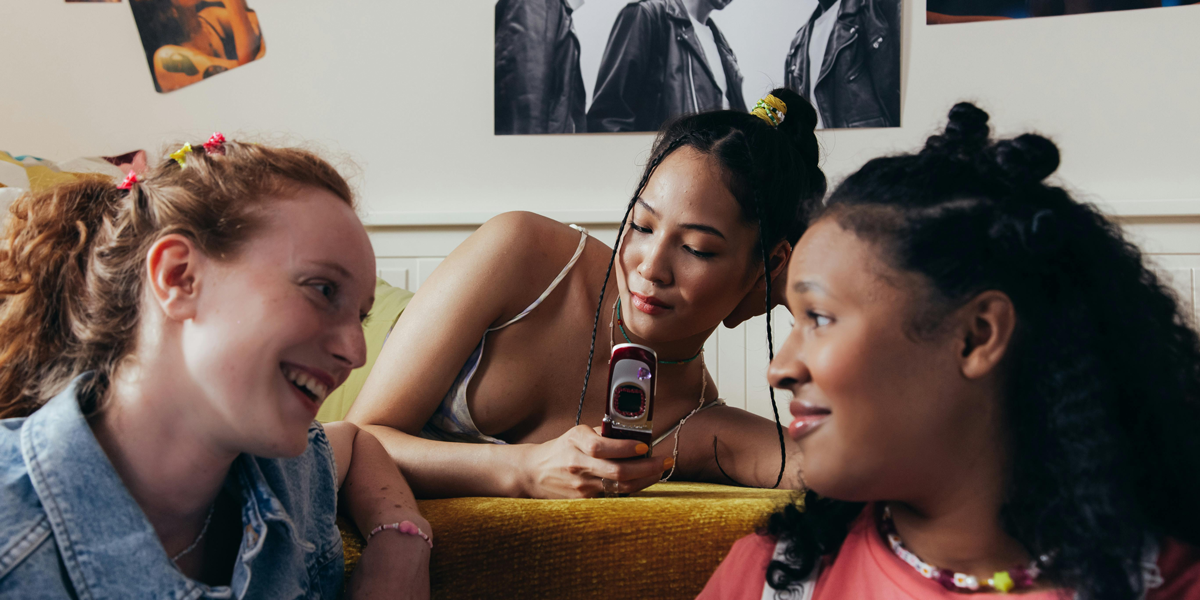
Gen Zs are terrifying: we are the wizards of the digital world that is increasingly alien to the older generations.
We are hooked up by the veins to the ever flowing current of information and all of its chaos and simulacra, often seen as being emblematic of technology gone too far; escapists subsumed to a Matrix-like existence.
The other terrifying thing about us: we’re all mentally ill, apparently. So much so that Jonathan Haidt released a book about us called “The Anxious Generation”, expanding on the most popular explanation for rising mental illness in youth: the infamous ‘phone bad’ argument.
This claim has undeniable legitimacy: studies correlate social media usage with mental illness, including rising self-harm ER admissions for American teenage girls. There is no world in which a teen scrolling TikTok in their bed after a long day at school can defend their attention from a trillion-dollar organisation of world-class optimisers. Our generational psyche has been crafted into a consumer mind by a minority of technocrats.
In short, our generation has been raised into addiction. Understandably, this problem is now starting to drive policy, underlying a social media blanket ban for youth, as is being proposed by the Australian government.
I don’t think I would miss social media necessarily. But when I entertain what it would look like to close the portal to that void world, I do wonder: what then would I build on that empty plot?
My addict attention-span, whittled down to the duration of a good reel, attempts to ground itself firmly into the real world: OK, I’ve wasted so much time. I should focus on work — earning money. Money for what? Perpetual rent, until I can double my salary to buy a house. A house for what? My future family. But it feels unfair to have kids in this future, anticipating worsening climate disaster. Can I even manage a family when I can barely manage my own life? Or, well, this is kind of exhausting… I should relax… I’ll just quickly check Instagram to see if my friend sent something funny…
The checking is an itch. I scratch it compulsively when distracted, anxious, bored, or depressed, thereby gaining short-term relief. But like other types of addiction, while the object of addiction makes it worse, it is not the same as the source. Psychiatrist Gabor Mate’s mantra is: “Don’t ask why the addiction, ask why the pain.”
Perhaps my train of thought seems overly catastrophic — the kind of hysteria to be expected from the ‘anxious generation’. But the content of these anxieties driving addiction has real, material legitimacy, and they are not arbitrary. A home, a community, and a safe climate: these are frequently cited themes driving Gen Z’s anxieties.
They are recurring themes because they are how we connect to the outside world. Johann Hari wrote that the opposite of addiction isn’t sobriety: it’s connection. A physical home is the cradle of our connection to a place; a safe base. A community and friends who know and care for us is our connection to people, allowing us to develop fluid and dynamic social identities. A safe climate represents the connection to any foundational future; a promise that our actions today are and will continue to be meaningful. Therefore, these basics are also our critical defences against addiction — or more precisely, they are the salve for the part of us that is drawn to the escape it offers.
When basic needs for connection have become unattainable fantasies, it is less mysterious why mental illness in youth may not be easily solved by unplugging.
Home ownership is a pipe dream rather than a mundane right in an absurdly land-rich city like Sydney. Neoliberal market logic reigns supreme over the provision of basic needs, treating houses as a class of speculative investment assets over functional shelter. Alan Kohler notes house prices have increased from four to eight times annual income in one generation. This is not just an aberrant property of Australia, but a global crisis as pointed out by the World Economic Forum.
This alienation is worsened by looming climate disasters which can uproot entire homes, as it does so for many people in rural communities and the global south, with its reach to the rest of the world only being a matter of time. Yet while three-quarters of Australians aged 18-29 believe climate change is a pressing problem, only ~50% of Australians aged over 50 do.
The epidemic of loneliness is also a global epidemic, according to the World Health Organisation. The average person has fewer and fewer friends, with Gen Zs feeling more lonely than other generations, including those aged 65 and over. On the flipside, young people increasingly engage in unsatisfying forms of intimacy like non-committal relationships (situationships) and AI personas such as Character.AI — forms of commoditised connection which, similar to social media, are exacerbating symptoms of disconnection rather than drivers.
There is a clear inequality in the opportunities to build physical, social and lasting connections between young people now and the older generations who also comprise most positions of power. Without recognising this structural unfairness, it is too easy to imagine mental illness as a linear consequence of technology, which incidentally has the unfortunate side effect of hysterical social complaints.
But our ‘hysteria’ is Janus-faced: yes, young people may be ungrounded, overstimulated and sensitive — but we are also flexible, intensely curious, and sensitive. Behind our grief is a quiet hope that needs to be understood and nurtured — never belittled. It is correct but incomplete to say that our generation is overly anxious and negative: many Gen Zs often through social media write letters to MPs, courageously reaching for environmental justice. When understood and armed with the right tools for connection and change, our sensitivity is a source of strength.
Fixing ‘phone bad’ with a blanket ban will not fix the root causes of mental illness, particularly for a generation with so few existing tools for coping and connection. Experts on digital media fear that a social media ban will further isolate already-isolated youth, and with social media being a nexus for youth activism, it will only serve to silence youth voices further. Practically speaking, this legislation has also failed to work in other countries. Fundamentally, the escapism of the digital world is driven by the hostility of the real world towards youth.
What the older generations owe us, then, is to form solutions that sincerely integrate the experiences of youth to treat the structural sources of illness: the lack of Gen Z’s physical security, social connection and a future. Technology should be regulated through a framework of harm reduction, recognising its role as an object of addiction.
Lastly, they should recognise that our visible vulnerability is not the sole problem but reflective of the system’s failures; in the age of climate collapse, we are canaries in a coal mine. That does not make us weak, but protectors of what is soft. And if we are no longer willing to create structures to protect the soft, then what, exactly, do we create our society for?
This is one of the Highly Commended essays in our 2025 Young Writers’ Competition over 18s category.
Ethics in your inbox.
Get the latest inspiration, intelligence, events & more.
By signing up you agree to our privacy policy





BY Marlene Jo Baquiran
Marlene Jo Baquiran is a writer and activist from Western Sydney (Dharug land), Australia. Her writing focuses on culture, politics and climate, and is also featured in the book 'On This Ground: Best Australian Nature Writing'. She has worked on various climate technologies and currently runs the grassroots group 'Climate Writers' (Instagram: @climatewriters), which won the Edna Ryan Award for Community Activism.

How to live a good life

What do you need to flourish in life? Philosophy and science suggest there are six key ingredients.
How do you decide where to live, what work to do, what kinds of relationships to cultivate and generally what kind of life to live? These are some of the most important questions we can ask, and the answers we arrive at can have profound impacts on whether we end up flourishing or miserable.
At the heart of these decisions is some implicit idea of what a good life looks like. But which picture should guide our actions? There is no shortage of voices selling us a range of visions of a good life, including our family, the media, pop culture, our workplace and, of course, advertising. We might hear that we should pursue wealth, status, success, comfort, happiness, etc., but philosophers and scientists have shown that these goals don’t necessarily lead to a better life.
So how should you guide the big decisions in your life? Here are six pillars that make up a good life.
Wisdom
Socrates famously said “the unexamined life is not worth living”. This relates to what we call wisdom. It’s a precondition that enables us to understand what a good life is, as well as gain knowledge about ourselves, what makes us tick and what causes our suffering.
Gaining wisdom is a life-long pursuit that requires a healthy dose of what we call ‘loving self-scepticism,’ because we are so good at fooling ourselves into taking the easy option rather than one that will be genuinely rewarding.
You can start cultivating wisdom by engaging in mindful behaviour, where you focus on being aware of your own internal state as well as what’s around you, rather than just running on auto-pilot all the time. You can deepen this by practicing meditation, but that’s not a requirement. Simply acknowledging what’s happening, and then taking time to reflect on it with a critical eye and an open mind can help you to better understand yourself and the world around you.
Purpose
Purpose means pursuing meaningful goals. Of course, many of the goals we pursue are imposed on us, whether that’s due to life’s necessities or because of our responsibilities. But we can also create goals for ourselves, and these often guide our big decisions, such as what career to pursue or whether to become a parent.
The key is pursuing meaningful goals that connect with our intrinsic aspirations rather than just pursuing things that seem important, like money or status, but that don’t actually help us flourish. An intrinsic aspiration is something that you find meaningful in its own right, and these are often activities that don’t just benefit ourselves, but have a positive impact on the world and other people. This could be through the work you do, helping other people in need or bettering your environment, or it could be through the time you spend caring for your family. There is abundant evidence that people who toil to help others report greater life satisfaction, even if they receive less money and status than if they did an easier job.
Agency
Agency is connected to the work we do in the world – your ability to have a sense of control in your life and to attain and practice mastery in what you do.
We probably all know that feeling when we’re deep in a task, using and stretching our abilities, we’re fully present in the moment and lose all sense of time. That’s called a ‘flow’ state, and it’s an indication that you’re exercising your agency. The task itself might even be unimportant: perhaps you’re creating art or music that no-one else will ever see or hear, but it’s in the making that you experience your agency. Some people can connect purpose and agency, and strive for mastery while doing meaningful work – but that’s not required for a good life.
Intimacy
Intimacy speaks to our fundamentally social nature. This means more than just having a lot of friends, in the real or online worlds. Casual friends are fine, but what is truly nourishing is having at least a few close friends, the kind of people around whom we can be our authentic selves, express vulnerability safely, and feel like we are seen and understood while reciprocating back. This could be your partner, but you can also have intimate friends. You don’t need many intimate relationships like this to flourish. Even a handful can give help you live a good life.
Of course, intimate friendships are not easy to cultivate, not least in the massively anonymous, technologically-mediated world many of us live in. One way to build meaningful friendships is to seek out people with similar values to you, whether that be through shared activities or just by keeping an eye out for people you admire and click with.
The trick is then to move from a superficial relationship into a closer one. While we often expect that we have to project our best, most confident and successful persona to the world, it’s actually when we lower the mask slightly, and reveal a bit of who’s underneath – including our uncertainties, anxieties and vulnerabilities – that we can build a deeper connection with someone, especially if they are willing to lower their mask in turn. We can do this by practicing what’s called escalating self-disclosure. This is about gradually lowering that mask and building trust and respect, which can then lead to a closer relationship.
Belonging
In addition to a few intimate friends, we also need to belong. This means that we feel like we’re a member of a social group that we care about, and that we’re seen, recognised and respected by other members of that group. This dimension of social life is often overlooked in modern society, which tends to promote atomic individualism, neglecting the importance of group identity.
We probably already belong to several different identity groups, whether that be connected to ethnicity, religion, local community or even our profession or a hobby. But cultivating a sense of belonging means more than just sharing some customs or activities, it means contributing something meaningful back to that community, and being proud of what your group represents – while also ensuring that belonging doesn’t slip into insularism or elitism.
Elevation
The final pillar of a good life is perhaps an odd one, but is no less important for many people. Elevation is captured in those experiences where we forget about ourselves, our problems, goals and anxieties for a moment, and we allow ourselves to sink into the background, focusing instead on the wonders of the world around us.
We can find elevation by spending time in nature or contemplating the vast stretches of space and time at an observatory or museum. We can find it by connecting with our ancestors by studying history or by walking through a cemetery. We find elevation by recognising the sacred is all around us, not just in religion, but in the rituals, objects and places that we hold dear. We can also experience elevation by acknowledging remarkable people around us, such as those who have performed great acts of kindness, compassion or self-sacrifice. Elevation reminds us that we are just a small part of a bigger system, and it helps us to escape our self-obsession and appreciate the world we live in.
Of course, there’s a lot more to each of these pillars, and different ones will resonate with different people based on your ability to choose how to live your life. But consider this guide to help you start the process of self-examination to discover what constitutes a good life for you.
Ethics Tune Up is an innovative and engaging masterclass series that will take your ethical skills to the next level. Our next series of workshops is running during May and June 2025. Book your tickets here.
Ethics in your inbox.
Get the latest inspiration, intelligence, events & more.
By signing up you agree to our privacy policy


BY Tim Dean
Dr Tim Dean is a public philosopher, speaker and writer. He is Philosopher in Residence and Manos Chair in Ethics at The Ethics Centre.

Alpha dogs and the toughness trap: How we can redefine modern masculinity

Jill Stark, recently wrote a controversial piece likening athlete Nedd Brockmann’s 1600km charity run to a broader trend of men “repackaging mental health as mental toughness”, where the “blokeification of mental fitness” is “just toxic masculinity rebranded”.
She has since apologised for the headline, acknowledging that it “was reductive and clumsy and failed to capture the complexity of the issue”. But she also received a lot of vitriolic abuse that proved the very things she was trying to call out.
Whilst it’s not new for men to engage in extreme acts to prove themselves, there has been an increase in shirtless men on social media, with rock-hard abs and beards, embarking on extreme ritualistic adventures to reclaim their manhood. Men are going to brutal boot camps to develop their physical wellbeing, mental toughness, and “find their tribe” through a spartan lifestyle, a navy seal mindset and howling at the moon. Beating drums, near-naked wrestling, the rejection of alcohol, drugs, technology, women and other worldly distractions are the homo-social privations in this cult of masculinity, where Jordan Peterson is regularly quoted, and Andrew Tate is tolerated, if not revered.
Whilst I won’t tar Nedd Brockman with the same brush, there’s something about how he’s been received that could be used as a gateway to the manosphere.
The “no pain no gain” movement in men’s mental health, and the performative tribalism that goes along with it, has worrying similarities to the humiliating initiation rituals of university colleges, the military and cults. But it’s not the first time men have desired the return to an idealised “natural”, “tough” and masculine past.
Paradoxically, the term “toxic masculinity” emerged from the mytho-poetic men’s movement of the 80s and 90s. It was an explicit response, by men, to feelings of powerlessness at a time when the feminist movement was challenging traditional male authority. It was an attempt to navigate the social pressures placed upon men to be violent, competitive, independent, and unfeeling.
But toxic masculinity doesn’t simply condemn all men or male attributes. It refers to the rigid and excessive policing of masculine norms, such as dominance, self-reliance, and competition, that are harmful to men, women, and society overall. And this is how the performance of alpha-male, lone-wolf, toughness can be toxic. But we must consider the intent.
Is the focus on toughness an act of self-interest to stroke the ego? Is it necessarily tied to masculinity, and used to dominate other men? Or is it a mechanism for self-understanding, self-growth and service to the community?
How is Brockman’s achievement different to Jessica Watson sailing around the world? Or Grace Tame competing in ultra marathons and processing her trauma? Or Darius Sam, from the Lower Nicola First Nation in Canada, who ran 100 miles to raise awareness around addiction and mental illness, and to grapple with how these issues affected his life?
As an officer in the Australian Army, my training challenged me mentally, physically and emotionally to develop resilience and moral courage. But this was not about glory. My ego actually got in the way when I faced those dark places within. Sitting with my emotions and transcending my ego became a source of profound growth and self-understanding. For Stoics like Aurelius and Epictetus, they taught that resilience comes from within, based on inner values rather than external displays of strength.
When we look cross-culturally, extreme rituals are not only about the promotion of self, or masculinity. Ritual theatre and performance is also a way to create intense social bonds and transcend the self, with adaptive and evolutionary benefits. We can even see this in the strong feelings of community experienced by both men and women who do ultramarathons or cross-fit.
But what troubles me in this discussion is the assumption that external challenges are inherently masculine and performative, and internal ones are somehow feminine and more authentic. It’s a false binary that ignores the fact that this is beyond gender. It ignores how external challenges facilitate the journey within.
But, why do we necessarily associate anger, aggression and competition with masculinity? Why do we associate empathy, nurturing and care with femininity?
I’m not competitive or aggressive. In our home I’m seen as more empathetic. My wife is the opposite. She’s more decisive, and doesn’t like talking about her feelings. Does this make her less of a woman and me less of a man? Of course not. What’s more, we both possess all the qualities listed above, just in different measures.
Essentialist concepts of masculinity ignore the fact that there are many ways to be a man. Whether you define masculinity in “traditional” or “alternative” terms, you are still constraining it, and that can make it toxic.
And so, we need to interrogate the very definition of masculinity itself, so we can safely explore our sex and gender, and find healthy versions of what it means to be human in all its brilliant complexity.
We’re all at different stages of personal growth, so perhaps the answer is not simply “news-jacking” Nedd Brockman, stopping ultra-marathons or ice-baths, and lumping them in the same bucket as toxic “raw-dogging” masculinity. Perhaps the answer is the very thing we want those alpha-males to embody? Perhaps the answer is empathy and compassion?
Rather than pushing these men away, Mike Dyson, founder of The Good Blokes Co, an organisation that runs Healthy Masculinity Retreats, says:
“A lot of men think the conversation about masculinity is negative and dominated by women, so they are disengaging. Nothing is going to change if men are not having this conversation too.”
“We’re seeing a desire of men to explore toughness and resilience – and that’s because our culture of masculinity rewards the performances of toughness. So, we need to meet blokes where they are in order to take them to where they need to go.”
“Rigid masculinity is the thing that gets in the way of true resilience because it stops us talking about our emotions, so we have an opportunity and a responsibility to have a deeper conversation about this with the men in our communities”.
And perhaps that is precisely what Stark and Brockman are allowing us to do right now. We can actually draw men in with the language of mental toughness, and then open the conversation to include other things like service, humility, intimacy, emotional maturity, accountability, calling out your mates, and stopping gender-based violence. And this can be a really important thing to give young men as they navigate the internal and external challenges of what it means to be a man in the world today.
Further resources
Mental Health
Head to Health: https://www.headtohealth.gov.au/
Open Arms: https://www.openarms.gov.au/
Relationships Australia: https://relationships.org.au/
Talk2MeBro: https://www.talk2mebro.org.au/
Community Groups
The Man Walk: https://themanwalk.com.au/
Dads Group: https://www.dadsgroup.org/
Tough Guy Book Club: https://toughguybookclub.com/
Mens Shed: https://mensshed.org/
The Men’s Table: https://themenstable.org/
Immediate Support
Beyond Blue: https://www.beyondblue.org.au/
Men’s Line: https://mensline.org.au/
Lifeline: https://www.lifeline.org.au/
Studies and interactive resources
Together: The Healing Power of Human Connection in a Sometimes Lonely World: https://www.vivekmurthy.com/together-book
The Man Box Study: https://jss.org.au/programs/tmp-research/the-man-box/
The Good Blokes Co: https://www.goodblokes.co/
Healthy Male website: https://www.healthymale.org.au/mens-health-week-2023
For more, tune into the FODI24 panel discussion, Positive Masculinity:
Ethics in your inbox.
Get the latest inspiration, intelligence, events & more.
By signing up you agree to our privacy policy




BY Monty Badami
Dr Monty Badami is an Anthropologist and the Founder of Habitus, a social enterprise that gives you Lifehacks to be a Good Human! Monty combines evolutionary evidence with cross-cultural research to explain the secret to our adaptability and success as a species. He designs and delivers workshops that help people put more meaning and joy back into their lives.

The super loophole being exploited by the gig economy

Imagine what it must feel like not to receive compulsory superannuation – despite it being a mandated part of our employment landscape for more than three decades. For many Australian workers this is a reality.
The Super Guarantee legislates that employers have to pay super contributions of 11 per cent of an employee’s ordinary time earnings, regardless of whether they’re a casual or full time employee.
But the legislation that is meant to protect working rights falls short for an increasingly large group of workers.
We’re referring to the gig economy, which appeared out of nowhere around 2006 when Menulog launched Australia’s first online meal delivery service and has since grown nine-fold to employ as many as 250,000 workers across platforms such as Upwork, Fiverr, Uber and Airtasker.
While the system is providing Australians with flexibility, autonomy and options for an additional source of income, its participants are also being exploited. More than half of gig workers are under 35 and a similarly a large number are international students and migrants who can struggle to get a foothold onto the career ladder in Australia – sometimes due to language or cultural setbacks. It appears nearly two decades later, the super system appears to still be playing catch-up with a changing workforce.
Despite some contractors being eligible to be paid super if they meet the additional eligibility requirements, gig economy workers miss out on the same rights as most working Australians. These workers trade basic workplace entitlements, such as sick leave and holiday pay, for flexibility, and critically, they also miss out on the Superannuation Guarantee, despite the national mandate.
Scratch the surface, and it’s clear to see that a significant loophole exists in current labour force regulations, meaning that most gig workers are likely to be classified as independent contractors.
The superannuation system was built to ensure that Australians can retire comfortably without having to rely on the Government-funded Age Pension, taking significant pressure off government coffers so that funds can be diverted into health, education and other critical infrastructures.
Quite simply, it’s a crime not to pay super. The Australian Taxation Office clamps down on employers that don’t pay superannuation in full, or who fail to keep adequate records. The system works well, and is under constant review as reforms continue to make improvements solely aimed at growing our retirement nest egg.
But despite the removal of the $450 threshold so that workers earning even a small amount from an employer in a month are still eligible for super, the legislation hasn’t yet caught up with the gig economy, creating a deep chasm between the haves, and the have nots.
This is because most gig workers are paid per job, and not as part of a company’s payroll. In the eyes of the Australian Taxation Office, these workers are considered self-employed, or sole traders. As such, any super they put aside for themselves is a choice, rather than a legal requirement.
As a result, gig workers risk falling well short of the super they should have accrued during their working life, bringing about longer term concerns around financial security. For example, if someone worked in the industry for a decade, their super balance upon retirement would dip to $92,000 less than a minimum wage employee. Consequently, gig economy workers are more likely to rely solely on the government-funded Age Pension in retirement.
This disparity raises questions about current superannuation legislation, which doesn’t go far enough to provide protections for all workers.
While Industry Super chief Bernie Dean has made public calls for gig workers to be paid super so they can be self-sufficient in retirement, it has so far fallen on deaf ears.
Fair Work Legislation sets out to close loopholes by creating minimum standards for all workers and proposes a new definition of casual employment, but until all workers earn the same rate of super regardless of how they are employed, it doesn’t look to be all that fair.
So what is our responsibility to those caught in the gap?
Long term disparities about who is and isn’t entitled to Super raises serious questions about inequities in the system and how we consider all types of workers as part of our community and the economy.
While real change comes with policy and regulation, workers do bear some responsibility to prevent inequity falling on them. With many workers in the industry lacking practical information about their rights, education is paramount. Users of the gig economy should seek to better understand industry rules and their options, which starts by asking the right questions: What protections do I have by taking on this job? What are the risks involved? Am I setting up the right fund for myself? And how can I best think about my future self?
And in the meantime, the law might just catch up with consideration for all.
Ethics in your inbox.
Get the latest inspiration, intelligence, events & more.
By signing up you agree to our privacy policy




BY Nina Hendy
Nina Hendy is an Australian business & finance journalist writing for The Financial Review, The Sydney Morning Herald, The Age and The New Daily.

I changed my mind about prisons

Every time the face of a criminal flashed up on the screen of our flatscreen TV, my parents would never hesitate to condemn the perpetrator, and demand the prolonged imprisonment of the thief or shoplifter.
For violent crimes, the death penalty would often come into conversation.
My siblings and I, perched on the leather couch, would listen open-mouthed, our young minds unable to comprehend how anyone would even consider such an act. I thought to myself: anyone who went to jail was inherently evil, different to normal people.
Yet, as I grew older and started to reach beyond the sheltered confines of our upper-middle-class home, that perspective gradually fell apart.
I have come to realise that our prison system is dysfunctional, a warped interpretation of right and wrong. A system designed for retribution, that essentially calls an end to a person’s potential in life, is both ethically and practically malfunctioning. Intended to benefit society through rightful punishment and restorative justice, it is instead one of the largest perpetrators of discrimination and often even worsens a prisoner’s life after release.
For instance, consider the story of Wesley Ford: a gay Whadjuk/Ballardong man, who battled with a drug addiction that fuelled 13 prison stints over two decades. He was just one of the 60% of Australian prison detainees who have been previously incarcerated. We have one of the highest recidivism rates in the world and, in a world where over half of prisoners expect to be homeless after release, and it is nearly impossible to secure employment, is that really such a surprise?
Our sentences do not tend to be harsh enough to fully realise the power of deterrence, nor are the quality or quantity of support services anywhere near sufficient to rehabilitate offenders.
In the words of Ford, ‘There were services there, but it is such a farce, because … they are so few and far between hardly anyone can get onto them.’
This also promotes a cycle of crime, further disadvantaging minority groups. Despite making up only 2% of the overall population, Indigenous Australians constitute nearly 30% of prisoners. They are twice as likely to have been refused bail by police before their first court appearance.
As for a solution, the harsher approach, employed by regimes such as Russia, is evidently unethical. Criminal behaviour must be punished, but the unnecessary imposition of prolonged sentences or even death penalties for minor offenders is closer to a violation of basic human rights, rather than the intended enforcement of justice. This is supported by various ethical frameworks, be it a utilitarian goal to preserve life, or the Christian belief in grace. Instead, especially for those who are low-risk offenders, restorative justice measures should be utilised to punish behaviour whilst also incentivising criminals to make better decisions. This approach has been proven to work, as evidenced by the Norwegian system.
With a system of small, community facilities that focus on rehabilitation and reintegration into society, Norway’s prison system ensures that prisoners do not lose their humanity and dignity whilst incarcerated. The facilities are typically located close to the inmates’ homes, ensuring that they can maintain relationships, and the cells resemble dormitories rather than jails. Norwegian prisoners have the right to vote, receive an education, and see family.
This approach may seem radical, but it has been incredibly successful in Norway. The Scandinavian nation has one of the lowest recidivism rates (20% within 2 years), a dramatic decrease since the 1990s (70-80%, like modern-day USA) when it had a more traditional system. Furthermore, ensuring that prisoners can live normal lives after release benefits the economy. Fewer people in prison means more capable adults available for employment, and many prisoners even leave with additional skills, leading to a 40% increase in employment rates after prison for previously unemployed inmates.
Yet, one drawback is the higher expenses of this system. Norway spends an average of 93,000 USD per year per prisoner, which is potentially unviable for countries with larger prison populations. Such a proposal would also likely be controversial amongst voters, unhappy with their taxpayer dollars being spent on criminals.
And might it be unethical to divert taxpayer funds to lawbreakers? To what extent does one deserve forgiveness? When does an act become unforgivable?
The issue is extremely complex, and realistically, a slightly different setup might be necessary for each unique society. Yet, the approach is undeniably more ethical, and benefits of rehabilitation are well-documented. In Australia, a country with a low population and high recidivism rates, success is highly likely.
Through the recognition that lawbreaking does not definitively indicate moral character and that factors such as socioeconomic status, bias, and even racism can impact the likelihood of incarceration, we can begin to see prisoners as human, too.
Forgiveness is a moral imperative and this is something that our prison system should reflect.
‘I changed my mind about prisons‘ by Sophie Yu is one of the Highly Commended essays in our Young Writers’ Competition. Find out more about the competition here.
Ethics in your inbox.
Get the latest inspiration, intelligence, events & more.
By signing up you agree to our privacy policy




BY Sophie Yu
Sophie Yu is a Year 12 student at Redlands, Sydney, where she studies the International Baccalaureate. She is interested in philosophy, culture, and international affairs, and explores these through the mediums of public speaking, writing and the visual arts.

Gen Z and eco-existentialism: A cigarette at the end of the world

“Where ignorance is bliss, tis folly to be wise.” – Thomas Grey
Gen Z live inside of an hourglass. The sand leaks steadily from underneath our feet at an imperceptible rate so that we don’t realise the ground is slipping away until we are plummeting toward the bottleneck. The 21st century has been characterised by the impending, seemingly unstoppable doom of climate change and ecosystem collapse. There is a rising epidemic amongst young people of feelings of anxiety and dread towards a future made uncertain by global warming. This sensation, the drop in the pit of our stomachs from a fall that doesn’t seem to be ending, has caused mixed reactions amongst Gen Z. While those who use sustainability as an antidote to their anxiety are praised, others who appear to act in complete denial of climate change are frequently vilified. Young people who smoke cigarettes and partake in fast fashion appear to show blatant disregard for the impact of their actions on the climate.
Unethical behaviours amongst young people are often attributed to delinquency and delayed cognitive development. While, in some cases, this may be true, the impact of climate change on moral decision-making in today’s youth is often overlooked. Gen Z hold the heavy responsibility of reversing the catastrophic impacts of climate change. As such, partaking in activities that cause both physical and environmental damage may stem from an attitude of wilful ignorance that allows young people to feel momentary freedom from this burden. With a reputation as one of the most climate-conscious generations,
Gen Z is often held to high moral standards regarding social and environmental issues. These standards make very little allowance for complex reactions to climate change that may appear to older generations as apathy. Subsequently, young people are owed a greater deal of compassion and understanding from older generations for their reactions to this unimaginable catastrophe.
Young people of the 21st century appear to be both driving and abating the effects of climate change. Some of the world’s most passionate and radical anti-climate change organisations have been spearheaded by Gen Z – reflecting their climate-consciousness. Yet, paradoxically, young people are the biggest users of disposable vapes and are frequent patrons of fast fashion giants. It’s an easy conclusion to draw that these behaviours (in a time of rampant climate change) seem to reflect opposing ideologies at best and a lack of general empathy at worst. In an article for the online publication Refinery29, ‘Gen Z & the fast fashion paradox’, Fedora Abu describes young people as “environmentally engaged yet seduced by what’s new and ‘now’”.
This attitude represents an oversimplification of the mental and ethical impacts of climate change on young people. Abu depicts Gen Z as a generation whose ethical and moral beliefs are easily corrupted by consumerism-driven desire. Many adults are quick to overlook the extreme mental load felt by Gen Z toward climate change and the emotional maturity that lends itself to this responsibility. Amongst young people, there has been a notable rise in feelings of eco-anxiety – described by the American Psychological Society as a “chronic fear of environmental doom”. Climate-related mental health issues manifest themselves through trauma, shock, substance abuse and depression.
In an online article published by the University of Melbourne about the rise of climate anxiety amongst young people, recommendations to relieve negative emotions include partaking in sustainable consumption (recycling, picking up rubbish etc.) and becoming involved in environmental campaigns. While there is no doubt that sustainable consumption and activism are positive, they may not adequately alleviate the anxiety felt by some young people. Those who structure their lives around sustainability and those who indulge in unsustainable practices may seem like opposing forces; they are, in fact, two sides of the same highly anxious, existential coin – both equally valid reactions to a sense of disillusionment with 21st-century adulthood.
Young people adopted their expectations of adulthood from the media they consumed as children. However, within a rapidly changing world, many feel a sense of disconnect with an experience of adulthood characterised by climate anxiety. Essentially, there’s a resounding sense that we haven’t gotten what was promised. As a child, my mother and I spent our bonding time in front of the TV – together she shared with me the television shows and movies that characterised her childhood and early adulthood. Before I was old enough to recognise it, the formulaic American sitcoms of the 90s and grand, romantic flicks of the 80s (often accompanied by a soundtrack of synth-heavy ballads) had begun to construct my worldview.
Watched in retrospect and with the use of a fully developed brain, however, one aspect is glaringly missing from the portrayal of adulthood presented by the media that raised us – the omnipresent threat of climate change. While only linear time is to blame for the fact that media from the past can’t represent our current reality, there is a sense of cognitive dissonance amongst young people between the future we were raised to expect, and the way adulthood has unfolded before us. For young people, the rampant, mindless consumerism of the 80’s and 90’s appears like a neon-lit mirage. The increased uptake of sustainable practices by large corporations is a movement of the 21st century. As such, many young people have rarely made a purchase without considering the environment.
For older generations, sustainability may provide feelings of empowerment and agency against the overwhelming monolith of climate change. However, sustainable living requires a significant amount of intentional thought against habitual, unsustainable habits built over generations. Within the domestic space, in particular, adopting sustainable approaches such as ‘zero waste’ living requires a significant mental load – the often invisible responsibilities of management and organisation. Whilst young people are rarely the organisers of large households, I believe a similar burden is felt towards sustainable consumerism.
Sustainable consumerism is often denoted as ‘morally good’. Thus, any action or purchase that results in waste or promotes unsustainable production carries negative moral connotations.
Climate-based moral decision-making is largely all that young people have known. In some form, choosing not to consider the planet in every choice can provide young people with a prized commodity – freedom from pressure to act with morality.
For young people, living in wilful ignorance of climate change and damaging the planet (and their bodies) in the process is a form of catharsis and escapism. Drinking from plastic water bottles, smoking chemical-filled cigarettes and purchasing clothes mass-produced in sweatshops allows Gen Z to experience a pantomime of the careless, invincible youth that was promised.
Viewed through a binary moral lens, older generations are quick to criticise young people as careless and apathetic. In reality, there’s an unshakable sense of dread amongst young people that a natural disaster will take our lives by the time we reach our parents’ age. In Thomas Grey’s poem ‘Ode on a distant prospect of Eton college’, he states “Where ignorance is bliss, tis folly to be wise”. In essence, if knowing something harmed you, would you be better off not knowing at all? If there’s one thing that Gen Z know, it’s that there is unavoidable harm in their future. If that is the case, and there’s nothing that can be done, may as well have a cigarette.
‘Gen Z and eco-existentialism: A cigarette at the end of the world‘ by Layla Zak-Volpato is one of the Highly Commended essays in our Young Writers’ Competition. Find out more about the competition here.
Ethics in your inbox.
Get the latest inspiration, intelligence, events & more.
By signing up you agree to our privacy policy




BY Layla Zak-Volpato
Layla is a 22-year-old writer and poet living and working in and around Eora/Sydney. With an educational background in ecology and wildlife conservation, her work focuses heavily on the ethical and moral dilemmas of the anthropocene. Through a creative lens, Layla examines the intersections between gender, identity, philosophy and environmental issues. She aspires to use these themes as the backbone for a career as a scientific communicator who utilises both creative and informative literary forms.

The ethics of workplace drinks, when we’re collectively drinking less

There is no denying that alcohol is inextricably linked to Australia’s social DNA. Going to the pub with mates, drinking at a BBQ or picnic, at dinner parties, house parties, birthdays or gigs – all of these link “having a drink” with “having a good time” in our national consciousness.
A Roy Morgan research study in 2022 found that the majority (67.9%) of Australians had consumed alcohol in the last month, with the average Australian consuming nearly 10 litres of pure alcohol a year (2017-18 study).
In fact, a 2021 survey named Australians the heaviest binge drinkers in the world, finding we would binge an average of 27 times a year, almost double the global average – although overall alcohol consumption rates have been dropping since the early 2000s.
When it comes to work, alcohol is closely tied to socialising – Friday after work drinks, celebratory drinks to recognise a goal achieved, Christmas parties, launches, networking events; all of them invariably involve alcohol in some capacity. Some people might even say they can’t stomach a work social event unless alcohol is involved.
In some cultures binging is even built into work culture – in China, heavy drinking after a deal has been sealed is a time-honoured ritual, where everyone involved has to let their guard down and form a “moral contract” bound by heavy drinking together. In Japan, nomikai, or drinking parties, are an integral part of workplace culture for socialising and bonding, and everyone is expected to take part.
Alcohol certainly has its benefits as a social lubricant at work events, allowing people to bond together faster, but it also has its dark side – harassment after the lowering of inhibitions, saying something inappropriate to a colleague, potentially embarrassing yourself in front of your team or clients, even assault can follow heavy drinking with work mates.
Having work social rituals based around the consumption of alcohol is also exclusionary for those who choose not to drink, whether because of physical or mental health reasons, religious or cultural reasons, or because they’ve quit or just don’t want to. People may feel pressured to drink in work social spaces, to be social, to network and keep up with the team. A 2019 survey by the UK’s Drinkaware found that more than half of workers surveyed would like there to be less pressure to drink at work events.
And people are increasingly opting out of alcohol-fuelled leisure time, a trend led by the more risk-aware Gen Z. The 2019 National Drug Strategy Household Survey found that, in 2001, the people most likely to have consumed alcohol daily, used illicit drugs or smoked cigarettes were in their 20s. By 2019, that had changed to people in their 40s and 50s. The survey also found the number of people in their 20s who don’t drink at all increased from 9% to 22% between 2001 and 2019.
The drinks industry has adapted, with sales of zero alcohol substitutes rising over 100% in the two years to 2022, but in many cases our workplaces have not.
As more people are becoming ‘sober curious’, or trying to reduce their alcohol intake, it can make it awkward in the workplace when you decline an “al-desko” beer or to troop along to Friday after work drinks. Missing out on socialising with your colleagues can also be a barrier to making closer connections and friendships.
So what responsibility do workplaces have to their employees to offer alcohol free options for socialising, while also respecting the rights and choices of employees who want to drink responsibly?
Employers are mandated ethically and legally to provide safe, inclusive workplaces, and this should include respecting people’s decision to either drink alcohol or not drink alcohol and still be able to participate socially with their workmates and colleagues.
Rather than banning alcohol at work, providing zero alcohol drink options and alcohol-free bonding activities are an easy way employers can foster an inclusive environment, while respecting individual choice.
Just as we’ve seen the “smokers huddle” outside office buildings dwindle to near invisibility in the past ten years, I predict that we’ll soon see a marked increase in the availability of non-alcoholic options at work events and alternative socialising options that don’t come with any pressure, latent or otherwise, to imbibe. Which can only be a good thing for our livers and work-related hangxiety.

BY Nick Jarvis
Nick Jarvis is a Sydney-based editor and writer on the arts, culture and technology. He's written for The Ethics Centre, the Walkleys, Sydney Festival, Sydney Film Festival, Vice and many Australian arts organisations. He currently works for Sydney Festival.
Ethics in your inbox.
Get the latest inspiration, intelligence, events & more.
By signing up you agree to our privacy policy