


The ethics of workplace drinks, when we’re collectively drinking less

There is no denying that alcohol is inextricably linked to Australia’s social DNA. Going to the pub with mates, drinking at a BBQ or picnic, at dinner parties, house parties, birthdays or gigs – all of these link “having a drink” with “having a good time” in our national consciousness.
A Roy Morgan research study in 2022 found that the majority (67.9%) of Australians had consumed alcohol in the last month, with the average Australian consuming nearly 10 litres of pure alcohol a year (2017-18 study).
In fact, a 2021 survey named Australians the heaviest binge drinkers in the world, finding we would binge an average of 27 times a year, almost double the global average – although overall alcohol consumption rates have been dropping since the early 2000s.
When it comes to work, alcohol is closely tied to socialising – Friday after work drinks, celebratory drinks to recognise a goal achieved, Christmas parties, launches, networking events; all of them invariably involve alcohol in some capacity. Some people might even say they can’t stomach a work social event unless alcohol is involved.
In some cultures binging is even built into work culture – in China, heavy drinking after a deal has been sealed is a time-honoured ritual, where everyone involved has to let their guard down and form a “moral contract” bound by heavy drinking together. In Japan, nomikai, or drinking parties, are an integral part of workplace culture for socialising and bonding, and everyone is expected to take part.
Alcohol certainly has its benefits as a social lubricant at work events, allowing people to bond together faster, but it also has its dark side – harassment after the lowering of inhibitions, saying something inappropriate to a colleague, potentially embarrassing yourself in front of your team or clients, even assault can follow heavy drinking with work mates.
Having work social rituals based around the consumption of alcohol is also exclusionary for those who choose not to drink, whether because of physical or mental health reasons, religious or cultural reasons, or because they’ve quit or just don’t want to. People may feel pressured to drink in work social spaces, to be social, to network and keep up with the team. A 2019 survey by the UK’s Drinkaware found that more than half of workers surveyed would like there to be less pressure to drink at work events.
And people are increasingly opting out of alcohol-fuelled leisure time, a trend led by the more risk-aware Gen Z. The 2019 National Drug Strategy Household Survey found that, in 2001, the people most likely to have consumed alcohol daily, used illicit drugs or smoked cigarettes were in their 20s. By 2019, that had changed to people in their 40s and 50s. The survey also found the number of people in their 20s who don’t drink at all increased from 9% to 22% between 2001 and 2019.
The drinks industry has adapted, with sales of zero alcohol substitutes rising over 100% in the two years to 2022, but in many cases our workplaces have not.
As more people are becoming ‘sober curious’, or trying to reduce their alcohol intake, it can make it awkward in the workplace when you decline an “al-desko” beer or to troop along to Friday after work drinks. Missing out on socialising with your colleagues can also be a barrier to making closer connections and friendships.
So what responsibility do workplaces have to their employees to offer alcohol free options for socialising, while also respecting the rights and choices of employees who want to drink responsibly?
Employers are mandated ethically and legally to provide safe, inclusive workplaces, and this should include respecting people’s decision to either drink alcohol or not drink alcohol and still be able to participate socially with their workmates and colleagues.
Rather than banning alcohol at work, providing zero alcohol drink options and alcohol-free bonding activities are an easy way employers can foster an inclusive environment, while respecting individual choice.
Just as we’ve seen the “smokers huddle” outside office buildings dwindle to near invisibility in the past ten years, I predict that we’ll soon see a marked increase in the availability of non-alcoholic options at work events and alternative socialising options that don’t come with any pressure, latent or otherwise, to imbibe. Which can only be a good thing for our livers and work-related hangxiety.


BY Nick Jarvis
Nick Jarvis is a Sydney-based editor and writer on the arts, culture and technology. He's written for The Ethics Centre, the Walkleys, Sydney Festival, Sydney Film Festival, Vice and many Australian arts organisations. He currently works for Sydney Festival.
Ethics in your inbox.
Get the latest inspiration, intelligence, events & more.
By signing up you agree to our privacy policy




On saying “sorry” most readily, when we least need to

One of the first things I learned when travelling in Europe, knowing only English, was to prioritise learning the word “sorry” when preparing to enter a new country.
There’s nothing wrong with learning “hello”, “thank you” and “please”, “I am…” and “where’s the nearest…”, but if you’re going to learn one word by heart, that’s the one I’d recommend. If you get yourself in trouble, it will likely be the word you need the most.
I speak from experience. Picture a nineteen-year-old washing her hands in the fountain at the foot of The Spanish Steps. Unbeknownst to her, the police have just rebuked some fellow tourists for cooling their sweaty feet in the waters of this national treasure—and told the watching crowd to heed their warning, show respect.
When their whistles blew at me and I was asked to show my passport, I didn’t have the words to explain that I’d just been to the loo and had been unable to find a handle for the tap. This was before sensors became commonplace; perhaps there was a pedal, but I hadn’t thought to look. Instead, I’d opened the door (with difficulty—I’d already covered my hands in pink slimy soap) and headed for the next available water source.
I had my reasons, but I didn’t have the words to explain why I’d done what I’d done, and until some friends explained later, I couldn’t fully understand why what I’d done had been so very wrong.
I could say Lo siento, and did, repeatedly.
I was reminded of this incident when reflecting on the ways in which we use the word “sorry” in daily life.
Sometimes we’re not apologising at all—we’re expressing sympathy to a bereaved friend, or being polite to a stranger. The bereavement “sorry” might translate to: “I wish you didn’t have to go through this”, or “I really feel for you”. The polite “sorry” to a stranger might translate to “excuse me”, or “I excuse you”. It might not be “performative” at all; we use it as a statement, nothing more. Or we’ll say “sorry I’m late” when we’re not sorry, but are late. If we really are sorry we’re late; our eyes, our tone, must do the work.
At other times, we apologise when we needn’t; we say “sorry” if we burst into tears when we are “supposed” to be keeping it together, or if we’ve had to ask for help when we’d hoped to solve a problem on our own.
In the workplace, if we’ve been asked to do something we haven’t been trained to do, and need to take up a manager’s time to find out how, we might apologise when really, we’re just doing our job, and asking them to do theirs.
In the context of close friendship, pouring out our worries, or asking for help, or advice, or both, isn’t something to apologise for, it’s (in part) what friendship is for. I know this, yet I find myself behaving otherwise. Just the other day I said “sorry” to a friend while crying on the phone, even though when friends do this to me I tell them off. Being trusted in this way honours a person more than it puts them out. When you love someone, you want to help; real “sorry” territory is more likely to be shutting a loved one out, than letting them in.
This is because “real sorry territory” is using the word in the deepest sense of the word; it’s apologising for hurting someone. It’s not using the word to escape consequence, it’s using the word to express heartfelt regret for causing real harm and, rather than making excuses, choosing to take responsibility.
It can be easy to say “sorry” when we don’t really mean it—when we’re being polite, when we’re going through a motion, avoiding punishment. It’s easy to say it, even mean it, when we see we’ve made a dumb mistake: Lo siento! Lo siento! It can roll right off the tongue.
In the case of the Fontana della Barcaccia, I’m pretty sure my excuses would have only caused further offence. Looking back, I’m glad I couldn’t say another word. But that sorry didn’t cost me, it helped me.
It’s using the word to admit—to ourselves as much as to somebody else—that we’ve not only caused offence, but ongoing hurt, and to ask for undeserved forgiveness, that’s hard. Even if we haven’t done wrong technically, we might have had a chance to help, and turned away. Using “sorry” to express true regret—to “repent”—could be the rarest use of “sorry” there is.
The rarest and, when it’s sincere, when it changes how we think and act, the most powerful. A word that can mean little can mean much; can be the difference between making excuses, or facing the truth; between a wound that keeps on causing pain, and one that, finally, begins to heal.

BY Emma Wilkins
Emma Wilkins is a journalist and freelance writer with a particular interest in exploring meaning and value through the lenses of literature and life. You can find her at: https://emmahwilkins.com/
Ethics in your inbox.
Get the latest inspiration, intelligence, events & more.
By signing up you agree to our privacy policy





Whose fantasy is it? Diversity, The Little Mermaid and beyond

The original The Little Mermaid, an animated fable about a young woman searching – literally – for her voice, has what may seem like only a loose relationship with reality.
Sure, the film is filled with themes of yearning, the desire for autonomy, and a struggle for independence, all of which still resonate deeply with the lived experience of its target audience of young women. But it’s also populated with a singing fish, a cursed sea witch, and a range of colourful, deeply fantastical supporting characters.
But in our increasingly divided age, fantasy is not a simple proposition anymore. Just look at the culture war that the CGI-saturated remake of The Little Mermaid has been dragged into, with the film facing “backlash” from those who have argued that the casting of a black Ariel (Halle Bailey) represents a break from “reality”. Their argument – that this new Ariel is not the one they grew up with, a premise that rests on the idea that there is a “real” Ariel to be deviated from.

These arguments are, in essence, arguments about the nature of fantasy – about how fantastical these stories are allowed to be. Fantasy authors can do anything. So what should they do?
How much fantasy is allowed?
The Little Mermaid is not the only modern fantasy story that has been plunged into debates around diversity and representation. The characters of Rey and Rose Tico from Disney’s new Star Wars trilogy faced significant backlash for being female, while the series’ black Stormtrooper, Finn, was criticised as breaking the canon. Stormtroopers were clones, went the argument – so how could one of them be black? Indeed, racist backlashes against casting in fantasy have become so commonplace that Moses Ingram, who played the villainous Reva Sevander in the Obi-Wan Kenobi miniseries, started sharing some of the vile messages that she received.

Those responsible for these backlashes tend to argue that the casting of diverse actors “breaks canon”, and disrupts storytelling rules. Some fans will argue that as Stormtroopers are always white in the world of the Star Wars story, they always must be. This was the explanation for the backlash that met the casting of diverse actors in the new Lord of the Rings series, The Rings of Power – Tolkien’s world was white, went the argument, so any story told in that world should be too. Of course, these “fans” do not acknowledge the possibility that the canon of these stories could be racist, and that breaking the canon might be morally necessary. They merely hold to the story as it was written.
This is an argument about fantasy: about how “real” these stories should be. Fantasy authors can do anything, tell any story, infuse their characters with magical explanations that fly in the face of reality. But they do still have to abide but certain rules. No-one would enjoy the world of Hogwarts if J.K. Rowling constantly threw up magical explanations that defied one another to advance the plot. There needs to be some consistency; some “reality”.
Those who cry foul when diverse actors are cast in fantasy do so because they have smuggled a bad ethical argument into one about consistency.
They are making an ethical claim – they do not want to see diverse communities in their art – and pretending it is an aesthetic claim – that they are talking about stories, not about ethics.
In at least some cases, we can assume that this is just a bad faith argument: that these people know in our modern age that they cannot make an openly racist remark, and so scratch around in the world of aesthetics to disguise their bigotry. But even if these people really think that they’re talking about aesthetics, the mistake is to assume that ethics and aesthetics easily pull apart.
Your dreams aren’t divorced from the real world
In her landmark essay The Right To Sex, the philosopher Amia Srinivasan explores the moral weight of aesthetic choices. In her case, she was exploring those who express sexual preference – cis men who desire a certain kind of woman, for instance, with a certain body. But her conclusions are helpful for us here too.
In essence, Srinivasan wants to balance the freedom to choose – people should be able to desire whom they want to desire, and not be forced to change their desires by others – with the idea that some choices are bigoted or small-minded in some way – say, the person who only desires Asian women, or the person who doesn’t desire any Asian women at all.
What Srinivasan encourages is an interest in one’s own desires. She suggests people explore and understand why they want what they want, and to be aware that sometimes those wants can come from bad, unethical places. In essence, Srinivasan made it clear that purely aesthetic choices are actually ethical choices – that things that seem “merely a matter of taste” can actually come from bigotry.
So it goes with fantasy. The fantasy genre is one of dreams; of pure imagination. But that imagination is born from the real-world. And our real-world contains bigotry and hate.
Fantasy writers dream, but they dream in a way that is influenced by morals, preferences, and real-world concerns.
This isn’t just imaginative play. This is play that is responsive to the real world. And as such, ethics should remain a concern. There are people out there who say that they genuinely desire a white Ariel – that seeing a Caucasian mermaid is of tantamount importance to them. What Srinivisan teaches us, is that we do not need to see this desire as emerging from a vacuum. It’s not “just” taste. It’s taste formed from a society that for too long has prioritised white bodies.
It’s like the philosopher Regina Swanson writes.: “[Fantasy] writers bring form to formlessness, creating a narrative that arises from the deep inner places of the mind,” she has put it. “As such, fantasy can reveal our collective hopes, dreams, and nightmares.” Those hopes, dreams, and nightmares aren’t “just” fantasies. They’re meaningfully real.
Ethics in your inbox.
Get the latest inspiration, intelligence, events & more.
By signing up you agree to our privacy policy





BY Joseph Earp
Joseph Earp is a poet, journalist and philosophy student. He is currently undertaking his PhD at the University of Sydney, studying the work of David Hume.
Moral injury
Each of us believes that, at our core, we are fundamentally ethical people. We always try to do the right thing. We have deeply held values and principles that we are not willing to compromise.
But sometimes we are thrust into situations where there appears to be no ‘right answer’ – where the best we can hope for is to take the ‘least bad’ option or, worse still, where we are forced to act against what we believe is right.
Moral injury is caused when we are compelled to act against what we believe is right in a high stakes situation.
Ethics in your inbox.
Get the latest inspiration, intelligence, events & more.
By signing up you agree to our privacy policy




BY The Ethics Centre
The Ethics Centre is a not-for-profit organisation developing innovative programs, services and experiences, designed to bring ethics to the centre of professional and personal life.

How to find moral clarity in Gaza

Confronted by the horrors of war between Israel and Hamas, one is naturally drawn to those who offer moral certainty.
After all, it is repugnant to the soul to think that there is no sure ground for the revulsion we feel when confronted by the carnage unleashed on October 7th. Yet, to reject the dead hand of moral relativism does not mean that we must uncritically embrace one side or the other as being either wholly vicious or wholly virtuous.
Here, distinctions matter. For example, there is a vital difference between the Jewish people and the Government of Israel. Likewise, the Palestinian people are not defined by Hamas. When free to do so, many Jews and Palestinians are as one in criticising and condemning the actions of those, in power, who claim to be acting in their name. So, in our search for ethical clarity, we need tools to produce certainty while allowing us to discern relevant distinctions.
By way of background, I should mention that I have been teaching military ethics, both at home and abroad, for more than three decades. In that time, I have typically dealt with what occurs at the ‘pointy end’ of warfighting – with people of all ranks and many cultures. This has included sitting with generals, most of them active operational commanders, from twenty-five nations, as we have discussed some of the most challenging issues ever to be encountered by those who serve in the profession of arms. In the course of my work in this area, we have naturally focused on the requirements of Humanitarian Law and Just War Theory. Those requirements are routinely quoted at times such as these. However, I think that there are even more fundamental principles that can serve us well – whether military or civilian – as we seek to establish firm ground on which to stand.
The first and most fundamental of these principles is that of ‘respect for persons’. This principle requires us to recognise the intrinsic dignity of every person – irrespective of their culture, gender, sex, religion, etc. As such, no person or group can be used merely as a means to some other end. Thus, the prohibition against slavery. No person or group can be deemed ‘less than fully human’ – even those who engage in unspeakably wicked deeds. The torturer or genocidal murderer might forfeit their lives under some systems of justice – but never their intrinsic dignity. That is why we insist on minimum standards of care for prisoners of war – and even war criminals awaiting their fate. Those who deny others intrinsic dignity open the gates to the hells of torture, genocide and the like.
The second principle is captured in an aphorism derived from the Canadian philosopher, Michael Ignatieff. Ignatieff argues that the difference between a ‘warrior’ and a ‘barbarian’ is ‘ethical restraint’. The idea is reflected in principles like those of ‘proportionality’ (minimum force required) and ‘discrimination’ (only legitimate targets) that are a core part of military ethics. However, I think that Ignatieff takes us somewhat deeper. His concept of ethical restraint – as the basis for distinguishing between ‘warriors’ and ‘barbarians’ – asks us not only to consider actions but also intent.
For example, to mount an attack of the kind launched by Hamas on October 7th – with the clear intention of massacring and mutilating innocent civilians – is to be distinguished from military action that tries, with utmost sincerity, to limit the harm caused to non-combatants. Hamas knows that Israel will always prevail in a direct contest of arms. However, following the logic of ‘asymmetric warfare’ it also knows that if it can goad Israel into fighting a ground war in areas heavily populated by civilians then the latter’s strategic strength can be broken in line with a loss of moral authority at home and abroad.
But how do you retain the status of a ‘warrior’ against an opponent who is deliberate in their use of the tactics of the ‘barbarian’ – and whose success absolutely depends on the wounding and death of the innocent?
This brings me to a third principle – familiar the world over. Expressed by the Chinese philosopher, Confucius, in the form, “Do not do to others what you would not have done to yourself”, the same principle (or a version of it) can be found in Jewish writings: “What is hateful to you, do not do to your fellow-man. This is the entire Law, all the rest is commentary” (Talmud, Shabbat 3id – 16th Century BCE). The same sentiment can be found expressed in the Hadith – the sayings and deeds of the Prophet Muhammad who is recorded as having said, “Not one of you truly believes until you wish for others that which you wish for yourself.” In a further formulation of the same basic principle, the Prophet is also recorded as having said, “Do unto all men as you would wish to have done unto you; and reject for others what you would reject for yourself.” Such precepts reflect the essence of the ‘Golden Rule’.
What then might be the implications for the current conflict if this widely recognised principle was given practical effect? Even the most savage Hamas terrorist, with an abiding hatred of the Jewish people, will refuse to countenance that a child of his be raped and murdered in pursuit of his cause. Nor would the most zealous defender of Israel allow the bombing of a Jewish hospital – even if a Hamas command centre is located beneath the structure. One hopes that both would refuse to do to others what they would not have done to their own. In short, the exercise of moral imagination (in which you stand in the others’ shoes) as required by the application of the Golden Rule, should produce just the kind of ethical restraint that Ignatieff calls for.
So, why the carnage?
One explanation lies in the violation of the first principle outlined above. Antisemitism of the kind written into the core ideology of Hamas is fueled by an ancient denial of the full and equal humanity of the Jewish people. It is the same denial that made the Holocaust possible – with Nazi propaganda deliberately dehumanising the Jews by comparing them to vermin. Extermination was the logical next step once the vicious premise had taken root. And that is why it chills one to the bone to hear the Israeli Defence Minister, Yoav Gallant, say that in the latest conflict, “We are fighting against human animals”. Israel is the one nation on earth where we might have hoped such words never to be uttered.
If one seeks moral clarity, it will not be found in a flag around which one can rally. It will not be found in ties of blood or history alone. It lies in the conscious application of principle – without fear or favour, beyond the ties of kinship.
This is not to say that one must set aside emotion. It is proper to grieve for family and friends and those closest to you in belief and culture. But sympathy, grief, anger and a lust for revenge are not the ground on which judgement must rest.
An edited version of this article was originally published in the Australian Financial Review.
Image: Justin Lane / AAP Photo

BY Simon Longstaff
Simon Longstaff began his working life on Groote Eylandt in the Northern Territory of Australia. He is proud of his kinship ties to the Anindilyakwa people. After a period studying law in Sydney and teaching in Tasmania, he pursued postgraduate studies as a Member of Magdalene College, Cambridge. In 1991, Simon commenced his work as the first Executive Director of The Ethics Centre. In 2013, he was made an officer of the Order of Australia (AO) for “distinguished service to the community through the promotion of ethical standards in governance and business, to improving corporate responsibility, and to philosophy.” Simon is an Adjunct Professor of the Australian Graduate School of Management at UNSW, a Fellow of CPA Australia, the Royal Society of NSW and the Australian Risk Policy Institute.
Ethics in your inbox.
Get the latest inspiration, intelligence, events & more.
By signing up you agree to our privacy policy




The ethics of exploration: We cannot discover what we cannot see

For many years, I took it for granted that I knew how to see. As a youth, I had excellent eyesight and would have been flabbergasted by any suggestion that I was deficient in how I saw the world.
Yet, sometime after my seventeenth birthday, I was forced to accept that this was not true, when, at the end of the ship-loading wharf near the town of Alyangula on Groote Eylandt, I was given a powerful lesson on seeing the world. Set in the northwestern corner of Australia’s Gulf of Carpentaria, Groote Eylandt is the home of the Anindilyakwa people. Made up of fourteen clans from the island and archipelago and connected to the mainland through songlines, these First Nations people had welcomed me into their community. They offered me care and kinship, connecting me not only to a particular totem, but to everything that exists, seen and unseen, in a world that is split between two moieties. The problem was that this was a world that I could not see with my balanda (or white person’s) eyes.
To correct the worst part of my vision, I was taken out to the end of the wharf to be taught how to see dolphins. The lesson began with a simple question: “Can you see the dolphins?” I could not. No matter how hard I looked, I couldn’t see anything other than the surface of the waves and the occasional fish darting in and out of the pylons below the wharf. “Ah,” said my friends, “the problem is that you’re looking for dolphins!” “Of course, I’m looking for dolphins,” I said. “You just told me to look for dolphins!” Then came the knockdown response. “But, bungie, you can’t see dolphins by looking for dolphins. That’s not how to see. What you see is the pattern made by a dolphin in the sea.”
That had been my mistake. I had been looking for something in isolation from its context. It’s common to see the book on the table, or the ship at sea, where each object is separate from the thing to which it is related in space and time. The Anindilyakwa mob were teaching me to see things as a whole. I needed to learn that there is a distinctive pattern made by the sea where there are no dolphins present, and another where they are. For me, at least, this is a completely different way of seeing the world and it has shaped everything that I have done in the years since.
This leads me to wonder about what else we might not see due to being habituated to a particular perspective on the world.
There are nine or so ethical lenses through which an explorer might view the world. Each explorer will have a dominant lens and can be certain that others they encounter will not necessarily see the world in the same way. Just as I was unable to see dolphins, explorers may not be able to see vital aspects of the world around them—especially those embedded in the cultures they encounter through their exploration.
Ethical blindness is a recipe for disaster at any time. It is especially dangerous when human exploration turns to worlds beyond our own. I would love to live long enough to see humans visiting other planets in our solar system. Yet, I question whether we have the ethical maturity to do this with the degree of care required. After all, we have a parlous record on our own planet. Our ethical blindness has led us to explore in a manner that has been indifferent to the legitimate rights and interests of Indigenous peoples, whose vast store of knowledge and experience has often either been ignored or exploited.
Western explorers have assumed that our individualistic outlook is the standard for judgment. Even when we seek to do what is right, we end up tripping over our own prejudice. We have often explored with a heavy footprint or with disregard for what iniquities might be made possible by our discoveries.
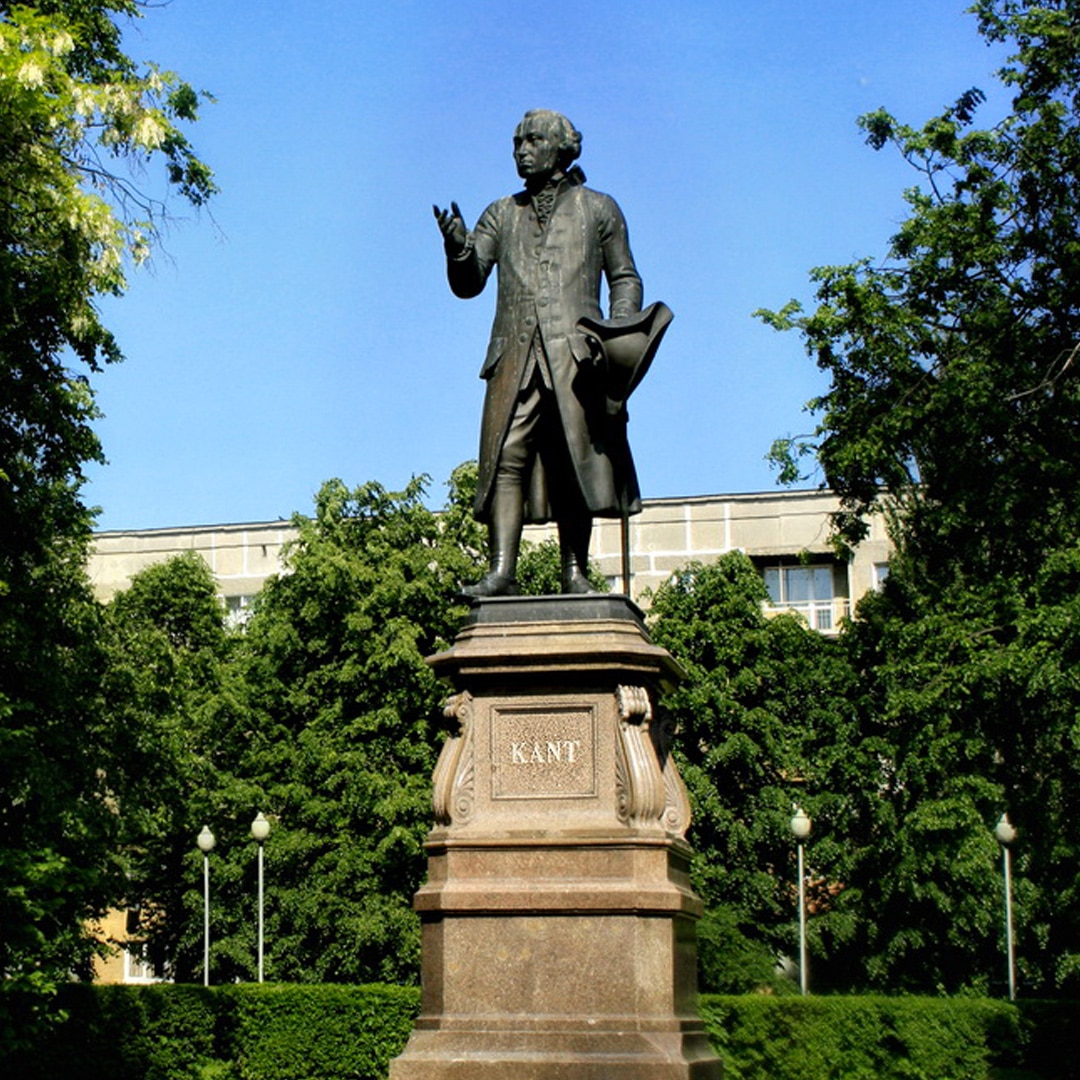
There is also the question of whether there are some places that we ought not explore. The fact that we can do something does not mean that it should be done. Inverting Kant’s famous maxim that “ought implies can,” we should understand that can does not imply ought! I remember debating this question with one of Australia’s most famous physicists, Sir Mark Oliphant. He had been one of those who had helped make possible the development of the atomic bomb. He defended the basic science that made this possible while simultaneously believing that nuclear weapons are an abomination. He put it to me that science should explore every nook and cranny of the universe, as we can only control what is known and understood. Yet, when I asked him about human cloning, Oliphant argued that our exploration should stop at the frontier. He could not explain the contradiction in his position. I am not sure anyone has yet clearly defined where the boundary should lie. However, this does not mean that there is no line to be drawn.
So how should the ethical landscape be mapped for (and by) explorers? For example, what of those working on the de-extinction of animals like the thylacine (Tasmanian tiger)? Apart from satisfying human curiosity and the lust to do what has not been done before, should we bring this creature back into a world that has already adapted to its disappearance? Is there still a home for it? Will developments in artificial intelligence, synthetic biology, gene editing, nanotechnology, and robotics bring us to a point where we need to redefine what it means to be human and expand our concept of personhood? What other questions should we anticipate and try to answer before we traverse undiscovered country?
This is not to argue that we should be overly timid and restrictive. Rather, it is to make the case for thinking deeply before striking out, for preparing our ethics with as much care as responsible explorers used to give to their equipment and stores.
The future of exploration can and should be ethical exploration, in which every decision is informed by a core set of values and principles. In this future, explorers can be reflective practitioners who examine life as much as they do the worlds they encounter. This kind of exploration will be fully human in its character and quality. Eyes open. Curious and courageous. Stepping beyond the pale. Humble in learning to see—to really see—what is otherwise obscured within the shadows of unthinking custom and practice.
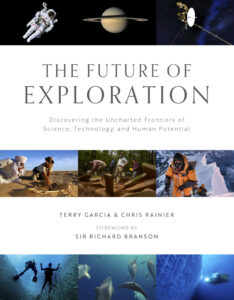
This is an edited extract from The Future of Exploration: Discovering the Uncharted Frontiers of Science, Technology and Human Potential. Available to order now.
BY Simon Longstaff
Simon Longstaff began his working life on Groote Eylandt in the Northern Territory of Australia. He is proud of his kinship ties to the Anindilyakwa people. After a period studying law in Sydney and teaching in Tasmania, he pursued postgraduate studies as a Member of Magdalene College, Cambridge. In 1991, Simon commenced his work as the first Executive Director of The Ethics Centre. In 2013, he was made an officer of the Order of Australia (AO) for “distinguished service to the community through the promotion of ethical standards in governance and business, to improving corporate responsibility, and to philosophy.” Simon is an Adjunct Professor of the Australian Graduate School of Management at UNSW, a Fellow of CPA Australia, the Royal Society of NSW and the Australian Risk Policy Institute.
Ethics in your inbox.
Get the latest inspiration, intelligence, events & more.
By signing up you agree to our privacy policy


Unconscious bias
Our brains are evolved to help us survive.
That means they take a lot of shortcuts to help us get through the day. These shortcuts, or heuristics, are vital. But they come at a cost. Learn what unconscious bias is and how you become aware of your own unconscious bias.
Ethics in your inbox.
Get the latest inspiration, intelligence, events & more.
By signing up you agree to our privacy policy



BY The Ethics Centre
The Ethics Centre is a not-for-profit organisation developing innovative programs, services and experiences, designed to bring ethics to the centre of professional and personal life.


How to have moral courage and moral imagination
Every time we make a decision, we change the world just a little bit.
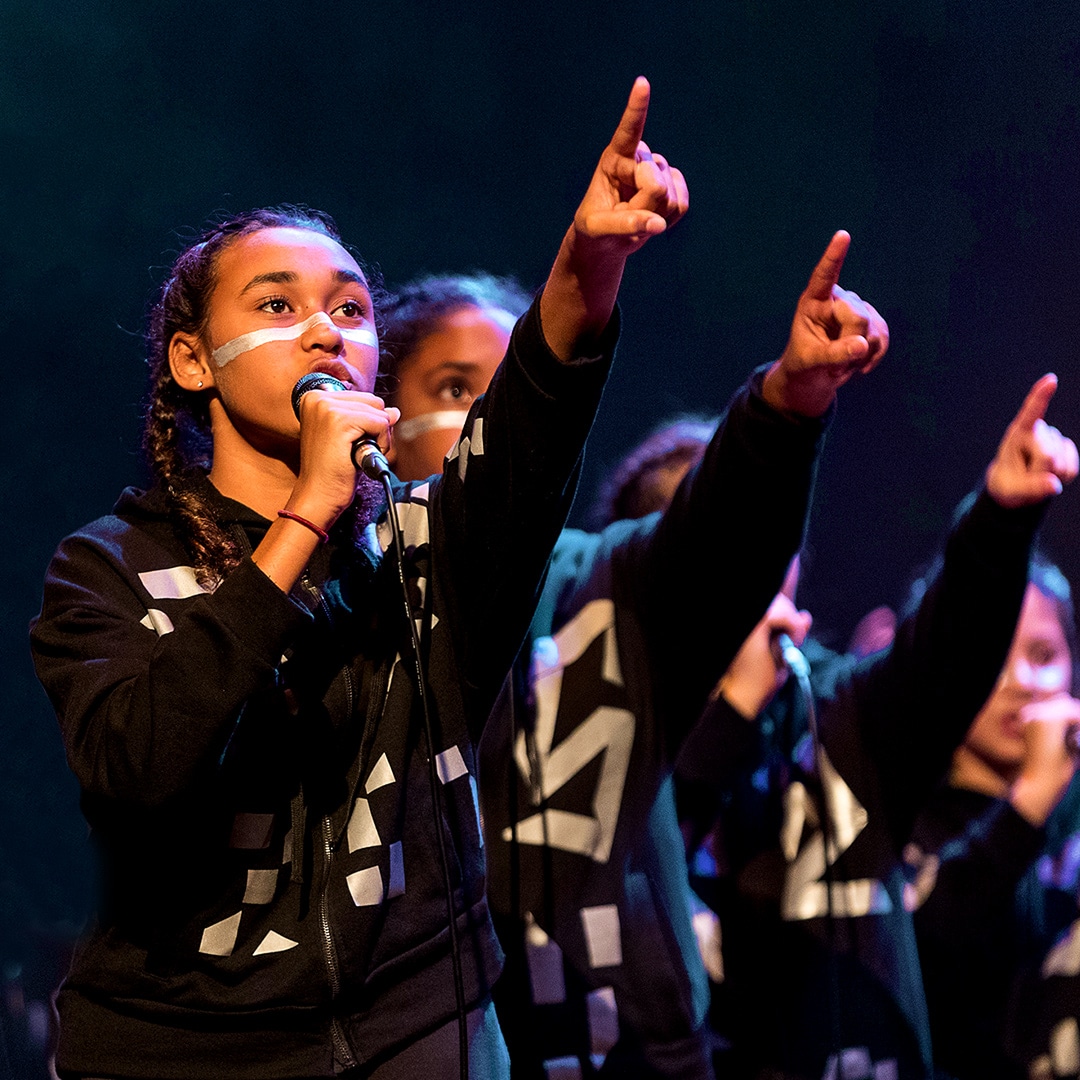
This is why moral imagination plays a crucial role in good ethical decision making. It helps us appreciate other people’s perspective. And sometimes when we must make those decisions, they can be difficult, this is where moral courage comes into play.
Ethics in your inbox.
Get the latest inspiration, intelligence, events & more.
By signing up you agree to our privacy policy



BY The Ethics Centre
The Ethics Centre is a not-for-profit organisation developing innovative programs, services and experiences, designed to bring ethics to the centre of professional and personal life.

Moral intuition and ethical judgement
By checking in to our intuitions and using them to inform our judgements, we can come up with decisions that make sense, but also feel right.
Ethics in your inbox.
Get the latest inspiration, intelligence, events & more.
By signing up you agree to our privacy policy




BY The Ethics Centre
The Ethics Centre is a not-for-profit organisation developing innovative programs, services and experiences, designed to bring ethics to the centre of professional and personal life.

What is the difference between ethics, morality and the law?
The world around us is a smorgasbord of beliefs, claims, rules and norms about how we should live and behave.
It’s important to tease this jumble of ethical pressures apart so we can put them in their proper place. Otherwise, it can be hard to know what to do when some of these requirements contradict others. Let’s talk about three different categories of demands on how we should live: ethics, morality and law.
Ethics in your inbox.
Get the latest inspiration, intelligence, events & more.
By signing up you agree to our privacy policy