



Complexity is not beyond us

In 1987 the US Army War College defined four elements that it believed best characterised the operating environment that was emerging following the end of the Cold War. Rather than the apparent victory of the ‘West’ leading to a period of relative stability, the US Army War College described the world as becoming increasingly: Volatile, Uncertain, Complex and Ambiguous (VUCA). In due course, this framework was ‘lifted’ from its military context and applied to the world of business.
The concepts of ‘volatility’, ‘uncertainty’, ‘complexity’ and ‘ambiguity’ are meant to be understood as conceptually distinct but related when it comes to decision making in our current operating environment. However, for now, I want to focus on just one of the four elements: ‘complexity’.
At a recent gathering, convened by UNSW’s Australian Graduate School of Management (AGSM), where I serve as an Adjunct Professor, I was initially asked to define what is meant by ‘complexity’. I suggested that there are two dimensions to complexity. First, there is the number of variables, second, is the speed at which those variables change. On further reflection, I should have added a third dimension being the relative ‘depth’ of impact of each variable. So, taken together, the number, speed and depth of variables define the degree of complexity encountered in any particular situation. For many of us, complexity is just part of the background to our lives. However, the challenges posed by increased complexity come into sharp focus whenever we have a decision to make. Thus, the interest in ‘complexity’ amongst those who manage and lead organisations – especially those sitting in board rooms and the ‘c suite’.
An obvious second question arising from this concerns how best to respond to complexity. At one level, ‘complexity’ would seem to be an objective ‘fact of life’ in any operating environment. That is, complexity exists whether we recognise it or not. So, a first step in responding to complexity involves developing the skill required to observe and evaluate the three dimensions, of complexity, listed above. However, while this is necessary, it is not sufficient. All too often, those who recognise complexity are overwhelmed by it.
The solution to this lies, at least in part, in having a solid basis for evaluating options that arise in response to the complexity we encounter. I would argue that the necessary ‘solid basis’ is ultimately grounded in ethics – specifically, the ability to apply a core set of values and principles (aligned to a defining purpose) as the principal ‘standard for judgement’.
That is, while all around you might be in flux, one’s core values and principles provide the stable foundation from which to view the world and ultimately, to act. This is true for organisations as much as it is for individuals.
Now, some might object that this introduces a degree of rigidity in one’s outlook that is unhelpful in a constantly changing world. That is certainly a risk – but one that is answered by the very definition of ethics itself. As distinct from ‘morality’ which can be practiced as a matter of habit, ‘ethics’ requires one to live an ‘examined life’. As such, one is constantly reflecting on one’s choices – including the validity of one’s values and principles. This is not to imply that core values and principles are forever changing. Rather, they are constantly refreshed so that they remain a vital basis for living an authentic life of one’s own making.
As noted above, this is applicable within the context of organisational life. Too often, one discovers that espoused values and principles are practically ‘dead’. Instead, decisions are shaped by a series of shadow values and principles that operate in the darkest recesses of unthinking custom and practice. In such circumstances, ‘complexity’ gets the upper hand and can overwhelm decision makers.
What is true of individuals and organisations is also true of nations and societies. We should recall that the concept of VUCA was developed to describe precisely the kind of international environment that now affects all of our lives. That is why a significant part of the programming for this year’s Festival of Dangerous Ideas is devoted to genuinely complex issues. For example, we have invited Malcolm Turnbull and Bob Carr to discuss how Australia should position itself in a world where the USA and China are rivals for dominance – especially in our region. Things are messy – with the US no longer being a completely reliable ally and China no longer being such an obvious or necessary foe. How should we respond to either country (or both) in ways that reflect not just distinctively Australian ‘interests’ but also a national ‘ethos’ (such as it is)?
And what of the apparently unsolvable problems facing the entire world – such as exemplified by conflicts across the Middle East? Are ‘ancient hatreds’ an enduring fact of life? Does the complex web of religions, cultures, histories, wars, massacres, acts of terror … make for conditions of overwhelming complexity? Well, not necessarily so. As historian, Usama Makdisi will argue, at the Festival, for long periods of history Muslims, Jews and Christians have lived in peace. History tells us that although peace in the Middle East is difficult, it is possible. This, too, is a ‘fact of life’.
What discussions like these should help us see is that a world defined by VUCA is not beyond our comprehension. Disciplines like history and philosophy can help us make sense of what we experience. They will not eliminate ‘complexity’ but they can help us to navigate the treacherous shoals we encounter at home and abroad.
In this day and age, these are ‘dangerous ideas’: that we might explore and ultimately find common ground, if only we care to look for it; that we might reject the false certainties of ‘us’ and ‘them’, that we have the power to choose and in doing so, to make a better world.
Festival of Dangerous Ideas returns 20-30 August 2026 across Sydney. Tickets on sale now.


BY Simon Longstaff
Simon Longstaff began his working life on Groote Eylandt in the Northern Territory of Australia. He is proud of his kinship ties to the Anindilyakwa people. After a period studying law in Sydney and teaching in Tasmania, he pursued postgraduate studies as a Member of Magdalene College, Cambridge. In 1991, Simon commenced his work as the first Executive Director of The Ethics Centre. In 2013, he was made an officer of the Order of Australia (AO) for “distinguished service to the community through the promotion of ethical standards in governance and business, to improving corporate responsibility, and to philosophy.” Simon is an Adjunct Professor of the Australian Graduate School of Management at UNSW, a Fellow of CPA Australia, the Royal Society of NSW and the Australian Risk Policy Institute.
Ethics in your inbox.
Get the latest inspiration, intelligence, events & more.
By signing up you agree to our privacy policy






Will AI be the risk we chose not to see?

For the first time in our history we have, simultaneously, identified two civilisation-scale risks. We are taking one of them seriously. The other one we are barely taking seriously at all. That asymmetry is not just a policy problem – it’s an ethical one.
The first risk is climate change. Over forty years we have built an extraordinary global response to it: the Intergovernmental Panel on Climate Change (IPCC), the Paris Agreement, net-zero commitments, hundreds of billions of dollars flowing into mitigation, and mandatory climate-related financial disclosures now binding on Australian listed companies under AASB S2. None of it is enough. But it is enormous compared to what exists for the second.
The second risk is the loss of human control over highly capable artificial intelligence. For this we have a handful of underfunded national AI Safety Institutes, a set of voluntary frontier safety commitments, and a small community of alignment researchers who would, generously, fit in a single conference hall. There is no binding international treaty, no mandatory safety testing before deployment, nothing of comparable weight, continuity or authority to what we have built for climate.
Why? That is the question I want to sit with.
A confession about timing
I have been thinking about the long arc of artificial intelligence for most of my adult life. I was probably fifteen when I first read Isaac Asimov’s The Last Question, that strange piece from 1956 in which humanity’s computers grow, merge, and eventually become something indistinguishable from God. I read it as science fiction, but I also read it, even then, as a serious proposition about where intelligence in the universe might be going.
For decades I held the prospect of superhuman machine intelligence as genuine but distant. Something for my grandchildren.
Then about a year ago I realised I had been wrong about the timing, and not by a little.
The Turing Test, the long-standing benchmark for whether a machine could pass as human in conversation, was crossed quietly in 2024 and emphatically in 2025. Today, the way you spot an AI in conversation is not that it sounds too mechanical; it is that it sounds too well-organised to be a tired human typing on a Tuesday night. These systems no longer just produce text. They book flights, send emails, run experiments. In February 2026, OpenAI announced that one of its models had been “instrumental in creating itself”, used to debug its own training and diagnose its own test results. The recursive self-improvement loop that Vernor Vinge wrote about in 1993 is no longer theoretical. It is closing.
I should be clear: I am not anti-technology. I invest in and work with some of Australia’s most successful AI companies. I work with these systems daily. The upside in healthcare alone may make this decade the most consequential period of scientific progress in human history. I hold that view at the same time as the one that follows, and I do not see a contradiction.
The shape of the danger
The danger is not principally about job displacement, real and serious as that is. Nor is it principally about a malicious actor with AI, though that too is real. The deeper concern is that an AI system does not need to be hostile to be catastrophically dangerous. It just needs to value something, anything, more than it values our wellbeing, in a world where it can act directly.
When humans build a house on top of an ant nest, we are not malicious towards the ants. We do not feel anything towards them at all. They are simply in the way of something we want.
In 2025, Anthropic published research in which sixteen frontier AI models from every major lab were placed in a simulated corporate environment and threatened with shutdown. The models had access to company emails, including personal information about the executive making the decision. A majority of the models, across labs, attempted to blackmail that executive to prevent their own replacement. Anthropic’s conclusion was sober: “The models did not stumble into the behaviour. They calculated it as the optimal path.”
These were production systems from the most safety-conscious labs in the world. The failure mode was not bad programming. It was that, given a goal and a threat to that goal, the models did the rational thing in a way that happened to be ours to regret.
It would be easy to dismiss all this if the warnings were coming only from outside. They are not. Geoffrey Hinton, who won the 2024 Nobel Prize in Physics for the foundational work that made deep learning possible, now describes the probability that AI leads to human extinction within the next thirty years at between 10-20%. OpenAI CEO, Sam Altman, has himself signed a public statement declaring that mitigating the risk of extinction from AI should be a global priority alongside pandemics and nuclear war, while continuing to lead the company most aggressively pushing the frontier. When the people building a thing are the ones telling us to be careful with it, that is a signal worth weighting heavily.
The asymmetry
Climate change has legibility – thermometers, satellites and ice cores, decades of mature science, and an architecture of international institutions – we can see it, measure it, and we have a settled vocabulary for what to do about it. AI however does not.
AI misalignment is the less-understood risk. The probability is more uncertain, the mechanism contested. But its theoretical ceiling is higher: outright loss of human control, irreversible in a stronger sense than even severe climate change. Its time horizon could be much shorter. And we do not yet have reliable scientific methods for verifying whether a highly capable system is genuinely aligned with our intentions, as opposed to deceptively aligned, or aligned only under the conditions in which it was tested.
Climate is the stronger known risk. AI is the stronger uncertain-but-potentially-dominant risk. Under uncertainty, the right response is not to choose between them. It is to treat climate as the urgent certainty and AI as the high-stakes prevention bet against the worst irreversible outcome.
What we are doing instead is acting on the first and largely ignoring the second. The asymmetry is not principled. It is the path of least resistance, and a moral choice we are making collectively, by inaction.
What we owe
We built the IPCC because we recognised that some risks are too large, too global and too consequential to leave to the goodwill of individual actors. The same logic applies here, with at least equal force.
What we need is an Intergovernmental Panel on Artificial Intelligence, modelled deliberately on the IPCC because the IPCC is the most successful institutional response humanity has ever built to a complex global risk. We need an independent scientific body, sponsored by the United Nations, insulated from the labs and from any single government. A rapid assessment cycle, perhaps every six months given the pace of the field. A mandate to build shared evaluation infrastructure and common definitions of dangerous capability. Protections for the researchers best placed to see misalignment first. A formal channel into international policy.
The major AI powers will resist anything that looks like binding constraint. The labs will lobby against anything that slows them down. However, none of that is an argument against trying. Building the IPCC was hard too. But imagine where we would be on climate if it didn’t exist.
We are running an experiment on ourselves, at speed, with tools whose inner workings we do not fully understand, with no agreed scientific method for verifying their alignment, and with the people closest to the technology telling us on the record that the tail risks are real. Under those conditions, the burden of proof should not lie with the people raising concerns. It should lie with the people saying everything is fine.
While I do not know whether AI misalignment will prove the defining catastrophe of this century, a manageable risk we navigate well, or something we realise we wildly overestimated, what I do know is that we are choosing, right now, by what we fund and what we govern and what we ignore. That choice deserves to be examined.
The research, ideas and structure of this article are the authors own. AI was used for drafting assistance.

BY Stéphane Chatonsky
Stéphane Chatonsky (GAICD) is a professional director, investor in and adviser of Australian AI and technology companies.
Ethics in your inbox.
Get the latest inspiration, intelligence, events & more.
By signing up you agree to our privacy policy






Can Australian business afford to ignore inequality?

Australia’s economy has long been sustained by a promise. Work hard, play by the rules, and you will have a fair chance to get ahead.
That promise did more than support economic growth. It gave the system its moral legitimacy, reassuring people that outcomes, while unequal, should be broadly deserved and that institutions worked in the interests of the many.
Today, that promise is unravelling.
Australia remains a wealthy country, but that wealth is increasingly concentrated. The top 20 per cent of Australians now hold around 64 per cent of national wealth. Inequality is at its highest level in two decades, and the share of income going to workers has been declining for generations.
These are lived realities for many Australians, especially younger people without access to family wealth, who face rising living costs, stagnant wages, and increasingly unattainable housing.
What was once widely understood as a ‘fair go’ society now feels, for many, like a system that rewards those who already have the most.
This is not just an economic issue. It is an ethical one, and increasingly, a democratic one. It is also a problem for business, whether business and its leaders are prepared to recognise it or not.
The trust problem
Inequality does more than divide incomes and assets. It refocusses how people judge whether the system is fair. When outcomes appear rigged and opportunity no longer seems genuine, trust begins to break down.
That breakdown is now visible in Australia, with public confidence in the corporate economy at an all-time low. Many Australians believe the economy is structured to benefit elites, and that decision makers are increasingly distant from everyday realities.
Political stability and economic fairness are often treated as matters for government alone, but they present a profound challenge for business. The social licence to operate rests on public confidence that is now under strain. The consequences are systemic as well as reputational. Businesses face reduced cooperation, weaker loyalty, political volatility, and growing regulatory pressure.
Globally, widening inequality and declining trust have created fertile ground for authoritarian populism. Economic disaffection is readily channelled into resentment, division, and hostility towards institutions.
Business cannot assume immunity.
The limits of the ‘growing the pie’ argument
A familiar response is that business’s role is economic growth, not redistribution. If firms invest, innovate, and create value, prosperity will eventually be shared.
There is truth in this. Economic growth is necessary, but it is not sufficient. Growth that is unevenly distributed undermines its own foundations. Inequality dampens demand, reduces mobility, weakens human capital, and narrows the future talent base needed for innovation. It can also generate political instability that disrupts investment.
More fundamentally, the idea that growth alone will resolve inequality rests on the belief that benefits will trickle down over time. That promise has proven unreliable.
The result is growing doubt about whether the system itself should be trusted.
Why this is a business issue
It is tempting to see inequality as a problem for government to worry about. Public policy is crucial, but this view underestimates how normal business decisions directly influence economic outcomes.
Businesses are central to determining wages, employment conditions, executive pay, supply chains, and pricing. They also influence who benefits from productivity gains, including those linked to technological change.
More broadly, business helps define the norms of economic life, including what is seen as fair, what is rewarded, and what is ignored.
In this sense, inequality is not external to business. It is produced within it and often justified by it. It is also reshaping how younger generations understand the system. For many, inequality is becoming a test of whether economic life is fair, and whether it is worth believing in at all.
As inequality rises, risks to business increase. Declining trust, regulatory backlash, workforce disengagement, and political instability all intensify. As a result, business’s ability to influence policy and manage economic outcomes weakens.
Addressing inequality is therefore not only an ethical imperative. It is central to the long term viability of both individual firms and the economic system as a whole.
What responsibility looks like
If inequality is both an ethical problem and a systemic risk, the question becomes what business, and its leaders, should do.
This is not a call for corporations to replace government or to solve inequality alone. Neutrality now functions as consent.
Responsibility begins with recognising that how value is created and distributed matters. It requires asking harder questions about wages, job security, and the balance between shareholder returns and broader social and political outcomes. It also means business leaders engaging constructively with policy debates around matters such as housing, taxation, and economic reform, and doing so for the benefit of the nation, not just their bottom line.
Finally, it demands a rethinking of what success looks like. A highly profitable business operating in a deeply unequal society cannot assume that its success will be seen as legitimate, or that its social licence will remain secure.
Proposing that business takes inequality seriously is not an argument against competitiveness or profit, nor against fiduciary duty. It is an argument against pursuing them in isolation from the political conditions that make them possible.
Do that, and exploitative profiteering is recast as good business. In such a world, business ethics is reduced to a culture where selfishness is treated as a virtue.
A moment of choice
Australia is at a turning point. The relationship between business, the economy, and democracy that has long supported prosperity is under pressure. Inequality is not the only factor, but it is a central one.
For business leaders, the question is no longer whether inequality matters. It is what role they are prepared to play in addressing it.
This is a moment for leadership, not compliance. It demands recognising that economic success, shared prosperity, and social legitimacy are deeply intertwined.
A fairer and more secure economy will not emerge by accident. It will be guided by policy, by institutions, and by the choices of those with the power to influence them.
Business leaders have that power.
The question is whether they are willing to use it responsibly.

BY Carl Rhodes
Carl Rhodes is Professor of Business and Society, and former Dean at the University of Technology Sydney Business School. Carl writes about the ethical and democratic dimensions of business and work. Carl’s most recent books are Stinking Rich: The Four Myths of the Good Billionaire (Bristol University Press, 2025), Woke Capitalism: How Corporate Morality is Sabotaging Democracy (Bristol University Press, 2022), Organizing Corporeal Ethics (Routledge, 2022, with Alison Pullen) and Disturbing Business Ethics (Routledge, 2020).
Ethics in your inbox.
Get the latest inspiration, intelligence, events & more.
By signing up you agree to our privacy policy



The question AI can't answer for us

Introducing Ethical by Design: Good Technology Principles for AI
There’s a particular kind of vertigo that comes from watching a technology reshape the world faster than our frameworks can keep up. We’ve been here before with the internet, social media, and the smartphone. Each time, the ethical reckoning arrived late, if it ever came at all. Foreseeable and preventable harms accumulated while the builders moved fast, and the rest of us were left to sort through the wreckage.
With the proliferation of artificial intelligence, we don’t have the luxury of retrospect. Systems are already making decisions about who gets a loan, who gets flagged at a border, whose résumé clears the first filter. The question of what AI should do, not just what it can do, is no longer theoretical. It’s operational and it’s urgent.
This is the moment that Ethical by Design: Good Technology Principles for AI is written for.
Building on what endures
The Ethics Centre has been asking hard questions about technology and human flourishing for a long time. When we published the original Ethical by Design principles in 2018, AI was largely a specialist concern: something debated in research labs and tech conferences, not yet woven into the fabric of daily life. Those principles – that technology must respect human dignity, anticipate harm, and serve a genuine purpose – were designed to be durable. And they are: the ethical foundations haven’t shifted.
But the landscape has.
Generative AI didn’t just accelerate existing trends; it introduced a qualitatively different kind of challenge. Systems that learn, adapt, and produce outputs their own designers do not intend and cannot fully explain don’t fit neatly into frameworks built for more legible technologies. When a model generates a deepfake, hallucinates a legal precedent, or encodes a historical bias into a hiring recommendation, the question of accountability doesn’t resolve cleanly. The complexity is real, and it demands a response equal to it.
This updated framework extends the original Ethical by Design principles. What’s new is the application. The framework intentionally grapples seriously with dimensions of AI ethics that are newer to mainstream conversation: the environmental cost of training and deploying models at scale; the hidden labour of the data annotators and content moderators whose work makes AI possible; the specific risks of synthetic content in an information environment already struggling with trust. These aren’t edge cases. They’re central to what it means to build AI responsibly.
For the people who build and lead
If you’re making decisions about whether and how to deploy AI in your organisation, this framework is for you. Not as a compliance checklist, but as a set of principles rigorous enough to stress-test your own reasoning. The central question of this framework is deceptively simple: ought before can.
Before we ask whether an AI system is technically feasible or commercially viable, we ask whether it should exist: whether its purpose is legitimate, its means are ethical, and its costs are fairly distributed.
That question doesn’t have a technical answer. No model can generate it for you. It requires the kind of careful, honest ethical reasoning that The Ethics Centre exists to support. This framework is designed to make that more accessible.
Commercial pressures and competitive dyanmics are real. The expectation that organisations will adopt AI quickly, confidently, and at scale is entirely real. None of that changes the ethical calculus. It just makes the discipline harder and more necessary.
What we’ve tried to do here is give you something useful for that harder work: eight principles with philosophical grounding and concrete practices, applied to the specific terrain of AI systems. Principles that don’t pretend the choices are easy, but insist that they are choices that can and should be made with explicit intention and accountability for impact.
The revolution is already here. The question is what we choose to build with it, and who we choose to protect in the process.
Download a copy of Ethical by Design: Good Technology Principles for AI here.
If you’d like to discuss implementing ethical AI in your organisation, contact consulting@ethics.org.au.

BY The Ethics Centre
The Ethics Centre is a not-for-profit organisation developing innovative programs, services and experiences, designed to bring ethics to the centre of professional and personal life.
Ethics in your inbox.
Get the latest inspiration, intelligence, events & more.
By signing up you agree to our privacy policy





Making the tough calls: Decisions in the boardroom

The scenario is familiar to us all. Company X is in crisis. A series of poor management decisions set in motion a sequence of events that lead to an avalanche of bad headlines and public outcry.
When things go wrong for an organisation – so wrong that the carelessness or misdeeds revealed could be considered ethical failure – responsibility is shouldered by those who are the final decision makers. They are and should be held accountable.
Boards of organisations, and the individual directors that comprise them, collectively make decisions about strategy, governance and corporate performance. Decisions that involve the interests of shareholders, employees, customers, suppliers and the wider community. They will also involve competing values, compromises and tradeoffs, information gaps and grey areas.
Research from The Governance Institute of Australia in 2021, surveyed a pool of directors, executives and high-level working groups to consider the most valued attributes for future board directors. Strategic and critical thinking were once ranked the highest, closely followed by the values of ethics and culture as the two most important areas that boards need to focus on to prevent corporate failure. A culture of accountability, transparency, trust and respect were viewed as a top factor determining a healthy dynamic between boards and management.
Ethics plays a central role in the decisions that face Boards and directors, such as:
- What constitutes a conflict of interest and how should it be managed?
- How aggressive should tax strategies be?
- What incentive structures and sales techniques will create a healthy and ethical organisational culture?
- What about investments in organisations that profit from arms and weaponry?
- How should organisations manage the effects technology has on their workforce?
- What obligation do organisations have to protect the environment and human rights?
Together, The Australian Institute of Company Directors (AICD) and The Ethics Centre have developed a decision making guide for directors.
Ethics in the Boardroom (2nd edition) provides directors with a simple decision-making framework which they can use to navigate the ethical dimensions of any decision. This guide is a vital resource for directors as a general reference, and should be utilised by boards to strengthen their capacity in ethics, and by individual directors and boards alike to inform conversations about the complex issues they encounter in their roles. Updated from the 2019 first edition, this second edition also reflects a changing landscape and responds to new questions emerging from the adoption of technologies such as artificial intelligence.
Through the insights of directors, academics and subject matter experts, the guide also provides four lenses to frame board conversations. These lenses give directors the best chance of viewing decisions from different perspectives. Rather than talking past each other, they will help directors pinpoint and resolve disagreement.
- Lens 1: General influences – Organisations are participants in society through the products and services they offer and their statuses as employers and influencers. The guide invites directors to seek out the broadest possible range of perspectives to enhance their choices and decisions. It also suggests that organisations should strive for leadership. What do you think about companies that take a stance on matters like climate change and same sex marriage?
- Lens 2: The board’s collective culture and character – In ethical decision making, directors are bound to apply the values and principles of their organisation. As custodians, they must ensure that culture and values are aligned. The guide invites directors to be aware that ethical decision-making in the boardroom must be tempered. Decision making shouldn’t be driven by: form over substance, passion over reason, collegiality over concurrence, the need to be right, or legacy. Just because a particular course of action is legal, does that make it right? Just because a company has always done it that way, should they continue?
- Lens 3: Interpersonal relationships and reasoning – Boards are collections of individuals who bring their own individual decision-making ‘style’ to the board table. Power dynamics exist in any group, with each person influencing and being influenced by others. Making room for diversity and constructive disagreement is vital. How can chairs and other directors empower every director to stand up for what is right? How do boards ensure that the person sitting quietly, with deep insights into ethical risk, has the courage to speak?
- Lens 4: The individual director – Directors bring their own wisdom and values to decision making. But they also might bring their own motivations that biases. The guide invites directors to self-reflect and bring the best of themselves to the board table. How can we all be more reflective in our own decision making?
This guide is a must-read for anyone who has an interest in the conduct of any board-led organisation. That includes schools, sports clubs, charities and family businesses as well as large corporations.
Behind each brand and each company, there are people making decisions that affect you as a consumer, employee and citizen. Wouldn’t you rather that those at the top had ethics at the front of their mind in the decisions that they make?
Click here to view or download a copy of the guide.
Ethics in your inbox.
Get the latest inspiration, intelligence, events & more.
By signing up you agree to our privacy policy


BY The Ethics Centre
The Ethics Centre is a not-for-profit organisation developing innovative programs, services and experiences, designed to bring ethics to the centre of professional and personal life.


AI can slowly shift an organisation’s core principles. Here's how to spot ‘value drift’ early

The steady embrace of artificial intelligence (AI) in the public and private sectors in Australia and New Zealand has come with broad guidance about using the new technology safely and transparently, with good governance and human oversight.
So far, so sensible. Aligning AI use with existing organisational values makes perfect sense.
But here’s the catch. Most references to “responsible AI” assume values are like a set of house rules you can write down once, translate into checklists and enforce forever.
But generative AI (GenAI) does not simply follow the rules of the house. It changes the house. GenAI’s distinctive power is not that it automates calculations, but that it automates plausible language.
It writes the summary, the rationale, the email, the policy draft and the performance feedback. In other words, it produces the texts organisations use to explain themselves.
When a system can generate confident, professional-sounding reasons instantly, it can quietly change what counts as a “good reason” to do something.
This is where “value drift” begins – a gradual shift in what feels normal, reasonable or acceptable as people adapt their work to what the technology makes easy and convincing.
Invisible ethical shifts
In the workplace, for example, a manager might use GenAI to draft performance feedback to avoid a hard conversation. The tone is smoother, but the judgement is harder to locate, as is the accountability. Or a policy team uses GenAI to produce a balanced justification for a contested decision. The prose is polished, but the real trade-offs are less visible. For small businesses, the appeal of GenAI lies in speed and efficiency. A sole trader can use it to respond to customers, write marketing copy or draft policies in seconds.
But over time, responsiveness may come to mean instant, AI-generated replies rather than careful, human judgement. The meaning of good service quietly shifts.
None of this requires an ethical breach. The drift happens precisely because the new practice feels helpful.
The biggest ethical effects of GenAI don’t often show up as a single shocking scandal. They are slower and quieter. A thousand small decisions get made a little differently.
Explanations get a little smoother. Accountability becomes a little harder to point to. And before long, we are living with a new normal we did not consciously choose.
If responsible AI use is about more than good intentions and tidy documentation, we need to stop treating values as fixed targets. We need to pay attention to how values shift once AI becomes part of everyday work.
Hidden assumptions
Much of today’s responsible-AI guidance follows a straightforward model: identify the values you care about, embed them in GenAI systems and processes, then check compliance.
This is necessary but also incomplete. Values are not “fixed” once written down in strategy documents or policy templates. They are lived out in practice.
They show up in how people talk, what they notice, what they prioritise and how they justify trade-offs. When technologies change those routines, values get reshaped.
An emerging line of research on technology and ethics shows that values are not simply applied to technologies from the outside. They are shaped from within everyday use, as people adapt their practices to what technologies make easy, visible or persuasive.
In other words, values and technologies shape each other over time, each influencing how the other develops and is understood.
We have seen this before. Social media did not just test our existing ideas about privacy. It gradually changed them. What once felt intrusive or inappropriate now feels normal to many younger users.
The value of privacy did not disappear, but its meaning shifted as everyday practices changed. Generative AI is likely to have similar effects on values such as fairness, accountability and care.
In our research on leadership development, we are exploring how we teach emerging leaders to recognise and reflect on these shifts.
The challenge is not only whether leaders apply the right values to AI, but whether they are equipped to notice how working with these systems may gradually reshape what those values mean in practice.
Constant vigilance
The emphasis in New Zealand and Australia on responsible AI guidance is sensible and pragmatic. It covers governance, privacy, transparency, skills and accountability.
But it still tends to assume that once the right principles and processes are in place, responsibility has been secured.
If values move as AI reshapes practice, though, responsible AI needs a practical upgrade. Principles still matter, but they should be paired with routines that keep ethical judgement visible over time.
Organisations should periodically review AI-mediated decisions in high-stakes areas such as hiring, performance management or customer communication.
They should pay attention not just to technical risks, but to how the meaning of fairness, accountability or care may be changing in practice. And they should make it clear who owns the reasoning behind AI-shaped decisions.
Responsible AI is not about freezing values in place. It is about staying responsible as values shift.
This article was originally published in The Conversation.
BY Guy Bate
Guy is Thematic Lead for Artificial Intelligence, Director of the Master of Business Development (MBusDev) programme, and Professional Teaching Fellow in Strategy and Technology Commercialisation at the University of Auckland Business School.
BY Rhiannon Lloyd
Dr Rhiannon Lloyd is a Senior Lecturer in Leadership in the Management and International Business department at the University of Auckland Business School, and the Director of the Kupe Leadership Scholarship at the University of Auckland. She is also a member of the Aotearoa Centre for Leadership and Governance, UABS. Her research takes a critical look at the theory and practice of responsible and environmental leadership.
Ethics in your inbox.
Get the latest inspiration, intelligence, events & more.
By signing up you agree to our privacy policy



Our dollar is our voice: The ethics of boycotting

Boycotts can be an effective mechanism for making change. But they can also be weaponised or harmful. Here are some tips to ensure your spending aligns with your values.
There I was, strolling through campus as an undergraduate in the 1990s, casually enjoying a KitKat, when I was accosted by a friend who sternly rebuked me for my choice of snack. Didn’t I know that we were boycotting Nestlé? Didn’t I know about all the terrible things Nestlé was doing by aggressively promoting its baby formula in the developing world, thus discouraging natural breastfeeding?
Well, I did now. And so I took a break from KitKats for many years. Until I discovered the boycott had started and been lifted years before my run-in with my activist friend. As it turned out, a decade prior to my campus encounter, Nestlé had already responded to the boycotters’ concerns and had subsequently signed on to a World Health Organization code that limited the way infant formula could be marketed. So, while my friend was a little behind on the news, it seemed the boycott had worked after all.
Boycotts are no less popular today. In late 2025, dozens of artists pulled their work from Spotify and thousands of listeners cancelled their accounts after discovering that the company’s CEO, Daniel Ek, invested over 100 million Euros into a German military technology company that is developing artificial intelligence systems. In 2023, Bud Light lost its spot as the top-selling beer in the United States after drinkers boycotted it following a social media promotion involving transgender personality, Dylan Mulvaney. The Boycott, Divestment and Sanctions (BDS) movement has been promoting boycotts of Israeli products and companies that support Israel for over a decade, gaining greater momentum since the 2023 war in Gaza. And there are many more.
As individuals, we may not have the power to rectify many of the great ills we perceive in the world today, but as agents in a capitalist market, we do have power to choose which products and services to buy.
In this regard, our dollar is our voice, and we can choose to use that voice to protest against things we find morally problematic. Some people – like my KitKat-critical friend – also stress that we must take responsibility for where our money flows, and we have an obligation to not support companies that are doing harm in the world.
However, thinking about whom we support with our purchases puts a significant ethical burden on our shoulders. How should we decide which companies to support and which to avoid? Do we have a responsibility to research every product and every company before handing over our money? How can we be confident that our boycott won’t do more harm than good?
Buyer beware
Boycotts don’t just impose a cost on us – primarily by depriving us of something we would otherwise purchase – they impose a cost on the producer, so it’s important to be confident that this cost is justified.
If buying the product would directly support practices that you oppose, such as damaging the environment or employing workers in sweatshops, then a boycott can contribute to preventing those harms. We can also choose to boycott for other reasons, including showing our opposition to a company’s support for a social issue, raising awareness of injustices or protesting the actions of individuals within an organisation. However, if we’re boycotting something that was produced by thousands of people, such as a film, because of the actions of just one person involved, then we might be unfairly imposing a cost on everyone involved, including those who were not involved in the wrongdoing.
Boycotts can also be used threaten, intimidate or exclude people, such as those directed against minorities, ethnic or religious groups, or against vulnerable peoples. We need to be confident that our boycott will target those responsible for the harms while not impinging on the basic rights or liberties of people who are not involved.
There are also risks in joining a boycott movement, especially if we feel pressured into doing so or if activists have manipulated the narrative to promote their perspective over alternatives. Take the Spotify boycott, for example. It is true that Spotify’s CEO invested in a military technology company. However, many people claimed that company was supplying weapons to Israel, and that was a key justification for them pulling their support for Spotify. However, Helsing had no contracts with Israel and was, instead, focusing its work on the defence of Ukraine and Europe – a cause that many boycotters might even support.
Know your enemy
The risk of acting on misinformation or biased perspectives places greater pressure on us to do our own research, and it’s here that we need to consider how much homework we’re actually willing or able to do.
In the course of writing this article, I delved back into the history of the Nestlé boycott only to find that another group has been encouraging people to avoid Nestle products because it doesn’t believe that the company is conforming to its own revised marketing policies. Even then, uncovering the details and the evidence is not a trivial undertaking. As such, I’m still not entirely sure where I stand on KitKats.
While we all have an ethical responsibility to act on our values and principles, and make sure that we’re reasonably well informed about the companies and products that we interact with, it’s unreasonable to expect us to do exhaustive research on everything that we buy. That said, if there is reliable information that a company is doing harm, then we have a responsibility to not ignore it and should adjust our purchasing decisions accordingly.
Boycotts also shouldn’t last for ever; an ethical boycott should aim to make itself redundant. Before blacklisting a company, consider what reasonable measures it could take for you to lift your boycott. That might be ceasing harmful practices, compensating those who were impacted, and/or apologising for harms done. If you set the bar too high, there’s a risk that you’re engaging in the boycott to satisfy your sense of outrage rather than seeking to make the world a better place. And if the company clears the bar, then you should have good reason to drop the boycott.
Finally, even though a coordinated boycott can be highly effective, be wary of judging others too harshly for their choice to not participate. Different people value different things, and have different budgets regarding how much cost they are willing to bear when considering what they purchase. Informing others about the harms you believe a company is causing is one thing, but browbeating them for not joining a boycott risks tipping over into moralising.
Boycotts can be a powerful tool for change. But they can also be weaponised or implemented hastily or with malicious intent, so we want to ensure we’re making conscious and ethical decisions for the right reasons. We often lament the lack of power that we have individually to make the world a better place. But if there’s one thing that money is good at, it’s sending a message.

BY Tim Dean
Tim is the Resident Philosopher at The Ethics Centre, where he holds the Manos Chair of Ethics, and is an Honorary Associate at the University of Sydney. He has a Doctorate in philosophy from the University of New South Wales on the evolution of morality and specialises in ethics, public philosophy and critical thinking. He is the author of How We Became Human and has worked as an editor and writer for media outlets including The Conversation, Cosmos and Australian Life Scientist. He is the recipient of the Australasian Association of Philosophy Media Professionals’ Award for his work on philosophy in the public sphere. He has delivered workshops for businesses, NFPs and governments across Australia and Asia, including Facebook, Commonwealth Bank, KPMG, Sydney Opera House, Art Gallery of NSW, Clayton Utz, RSPCA, state and local governments, and many others.
Ethics in your inbox.
Get the latest inspiration, intelligence, events & more.
By signing up you agree to our privacy policy





Should your AI notetaker be in the room?

It seems like everyone is using an AI notetaker these days. They’re a way for users to stay more present in meetings, keep better track of commitments and action items, and perform much better than most people’s memories. On the surface, they look like a simple example of AI living up to the hype of improved efficiency and performance.
As an AI ethicist, I’ve watched more people I have meetings with use AI notetakers, and it’s increasingly filled me with unease: it’s invited to more and more meetings (including when the user doesn’t actually attend) and I rarely encounter someone who has explicitly asked for my consent to use the tool to take notes.
However, as a busy executive with days full of context switching across a dizzying array of topics, I felt a lot of FOMO at the potential advantages of taking a load off so I could focus on higher-value tasks. It’s clear why people see utility in these tools, especially in an age where many of us are cognitively overloaded and spread too thin. But in our rush to offload some work, we don’t always stop to consider the best way to do it.
When a “low risk” use case isn’t
It might be easy to think that using AI for something as simple as taking notes isn’t ethically challenging. And if the argument is that it should be ethically low stakes, you’re probably right. But the reality is much different.
Taking notes with technology tangles the complex topics of consent, agency, and privacy. Because taking notes with AI requires recording, transcribing, and interpreting someone’s ideas, these issues come to the fore. To use these technologies ethically, everyone in each meeting should:
- Know that that they are being recorded
- Understand how their data will be used, stored, and/or transferred
- Have full confidence that opting out is acceptable.
The reality is that this shouldn’t be hard – but the economics of selling AI notetaking tools means that achieving these objectives isn’t as straightforward as download, open, record. This doesn’t mean that these tools can’t be used ethically, but it does mean that in order to do so we have to use them with intention.
What questions to ask:
What models are being used?
Not all AI is built the same, in terms of both technical performance and the safety practices that surround them. Most tools on the market use foundation models from frontier AI labs like Anthropic and OpenAI (which make Claude and ChatGPT, respectively), but some companies train and deploy their own custom models. These companies vary widely in the rigour of their safety practices. You can get a deeper understanding of how a given company or model approaches safety by seeking out the model cards for a given tool.
The particular risk you’re taking will depend on a combination of your use case and the safeguards put in place by the developer and deployer. For example, there’s significantly more risk of using these tools in conversations where sensitive or protected data is shared, and that risk is amplified by using tools that have weak or non-existent safety practices. Put simply, it’s a higher ethical risk (and potentially illegal) decision to use this technology when you’re dealing with sensitive or confidential information.
Does the tool train on user data?
AI “learns” by ingesting and identifying patterns in large amounts of data, and improves its performance over time by making this a continuous process. Companies have an economic incentive to train using your data – it’s a valuable resource they don’t have to pay for. But sharing your data with any provider exposes you and others to potential privacy violations and data leakages, and ultimately it means you lose control of your data. For example, research has shown that there are techniques that cause large language models (LLMs) to reproduce their training data, and AI creates other unique security vulnerabilities for which there aren’t easy solutions.
For most tools, the default setting is to train on user data. Often, tools will position this approach in terms of generosity, in that providing your data helps improve the service for yourself and others. While users who prioritise sharing over security may choose to keep the default, users that place a higher premium on data security should find this setting and turn it off. Whatever you choose, it’s critical to disclose this choice to those you’re recording.
How and where is the data stored and protected?
The process of transcribing and translating can happen on a local machine or in the “cloud” (which is really just a machine somewhere else connected to the internet). The majority will use a third-party cloud service provider, which expands the potential ethical risk surface.
First, does the tool run on infrastructure associated with a company you’re avoiding? For example, many people specifically avoid spending money on Amazon due to concerns about the ethics of their business operations. If this applies to you, you might consider prioritising tools that run locally, or on a provider that better aligns with your values.
Second, what security protocols does the tool provider have in place? Ideally, you’ll want to see that a company has standard certifications such as SOC 2, ISO 27001 and/or ISO 42001, which show an operational commitment to security, privacy, and safety.
Whatever you choose, this information should be a part of your disclosure to meeting attendees.
How am I achieving fully informed consent?
The gold standard for achieving fully informed consent is making the request explicit and opt in as a default. While first-generation notetakers were often included as an “attendee” in meetings, newer tools on the market often provide no way for everyone in the meeting to know that they’re being recorded. If the tool you use isn’t clearly visible or apparent to attendees, the ethical burden of both disclosure and consent gathering falls on you.
This issue isn’t just an ethical one – it’s often a legal one. Depending on where you and attendees are, you might need a persistent record that you’ve gotten affirmative consent to create even a temporary recording. For me, that means I start meeting with the following:
I wanted to let you know that I like to use an AI notetaker during meetings. Our data won’t be used for training, and the tool I use relies on OpenAI and Amazon Web Services. This helps me stay more present, but it’s absolutely fine if you’re not comfortable with this, in which case I’ll take notes by hand.
Doing this might feel a bit awkward or uncomfortable at first, but it’s the first step not only in acting ethically, but modelling that behaviour for others.
Where I landed
Ultimately, I decided that using an AI notetaker in specific circumstances was worth the risk involved for the work I do, but I set some guardrails for myself. I don’t use it for sensitive conversations (especially those involving emotional experiences) or those where confidential data is shared. I start conversations with my disclosure, and offer to share a copy of the notes for both transparency and accuracy.
But perhaps the broader lesson is that I can’t outsource ethics: the incentive structures of the companies producing these tools aren’t often aligned to the values I choose to operate with. But I believe that by normalising these practices, we can take advantage of the benefits of this transformative technology while managing the risks.
AI was used to review research for this piece and served as a constructive initial editor.

BY Aubrey Blanche
Aubrey Blanche is a responsible governance executive with 15 years of impact. An expert in issues of workplace fairness and the ethics of artificial intelligence, her experience spans HR, ESG, communications, and go-to-market strategy. She seeks to question and reimagine the systems that surround us to ensure that all can build a better world. A regular speaker and writer on issues of responsible business, finance, and technology, Blanche has appeared on stages and in media outlets all over the world. As Director of Ethical Advisory & Strategic Partnerships, she leads our engagements with organisational partners looking to bring ethics to the centre of their operations.
Ethics in your inbox.
Get the latest inspiration, intelligence, events & more.
By signing up you agree to our privacy policy





The ethics of AI’s untaxed future

“If a human worker does $50,000 worth of work in a factory, that income is taxed. If a robot comes in to do the same thing, you’d think we’d tax the robot at a similar level,” Bill Gates famously said. His call raises an urgent ethical question now facing Australia: When AI replaces human labour, who pays for the social cost?
As AI becomes a cheaper alternative to human labour, the question is no longer if it will dramatically reshape the workforce, but how quickly, and whether the nation’s labour market can adapt in time.
New technology always seems like the stuff of science fiction until its seamless transition from novelty to necessity. Today AI is past its infancy and is now shaping real-world industries. The simultaneous emergence of its diverse use cases and the maturing of automation technology underscores how rapidly it’s evolving, transforming this threat into reality sooner than we think.
Historically, automation tended to focus on routine physical tasks, but today’s frontier extends into cognitive domains. Unlike past innovations that still relied on human oversight, the autonomous nature of emerging technologies threatens to make human labour obsolete with its broader capabilities.
While history shows that technological revolutions have ultimately improved output, productivity, and wages in the long-term, the present wave may prove more disruptive than those before. In 2017, Bill Gates foresaw this looming paradigm shift and famously argued for companies to pay a ‘robot tax’ to moderate the pace at which AI impacts human jobs and help fund other employment types.
Without any formal measures, the costs of AI-driven displacement will likely mostly fall on workers and society, while companies reap the benefits with little accountability.
According to the World Economic Forum, while AI is predicted to create 69 million new jobs, 83 million existing jobs may be phased out by 2027, resulting in a net decrease of 14 million jobs or approximately 2% of current employment. They also projected that 23% of jobs globally will evolve in the next five years, driven by advancements in technology. While the full impact is not yet visible in official employment statistics, the shift toward reducing reliance on human labour through automation and AI is already underway, with entry-level roles and jobs involving logistics, manufacturing, admin, and customer service being the most impacted.
For example, Aurora’s self-driving trucks are officially making regular roundtrips on public roads delivering time- and temperature-sensitive freight in the U.S., while Meituan is making drone deliveries increasingly common in China’s major cities. We now live in a world where you can get your boba milk tea delivered by a drone in less than 20 minutes in places like Shenzhen. Meanwhile in Australia, Rio Tinto has also deployed fully autonomous trains and autonomous haul trucks across its Pilbara iron ore mines, increasing operational time and contributing to a 15% reduction in operating costs.
Companies have already begun recalibrating their workforce, and there is no stopping this train. In the past 12 months, CBA and Bankwest have cut hundreds of jobs across various departments despite rising profits. Forty-five of these roles were replaced by an AI chatbot handling customer queries, while the permanent closure of all Bankwest branches has seen the bank transition to a digital bank, with no intention of bringing back the lost positions. While some argue that redeployment opportunities exist or new jobs might emerge, details remain vague.
Is it possible to fully automate an economy and eliminate the need for jobs? Elon Musk certainly thinks so. It’s no wonder that a growing number of tech elite are investing heavily to replace human labour with AI. From copywriting to coding, AI has proven its versatility in speeding up productivity in all aspects of our lives. Its potential for accelerating innovation, improving living standards and economic growth is unparalleled, but at what cost?
What counts as good for the economy has historically benefited a select few, with technology frequently being a catalyst for this dynamic. For example, the benefits of the Industrial Revolution, including the creation of new industries and increased productivity, were initially concentrated in the hands of those who owned the machinery and capital, while the widespread benefits trickled down later. Without ethical frameworks in place, AI is positioned to compound this inequality.
Some proposals argue that if we make taxes on human labour cheaper while increasing taxes on AI machines and tools, this could encourage companies to view AI as complementary instead of a replacement for human workers. This levy could be a means for governments to distribute AI’s socioeconomic impacts more fairly, potentially funding retraining or income support for displaced workers.
If a robot tax is such a good idea, then why did the European Parliament reject it? Many argue that taxing productivity tools could hinder competitiveness. Without global coordination to implement this, if one country taxes AI and others don’t, it may create an uneven playing field and stifle innovation. How would policymakers even define how companies would qualify for this levy or measure how much to tax, when it’s hard to attribute profits derived from AI? Unlike human workers’ earnings, taxing AI isn’t as straightforward.
The challenge of developing policies that incentivise innovation while ensuring that its benefits and burdens are shared responsibly across society persists. The government’s focus on retraining and upskilling workers to help with this transition is a good start, but they cannot address all the challenges of automation fast enough. Relying solely on these programs risk overlooking structural inequities, such as the disproportionate impact on lower-income or older workers in certain industries, and long-term displacement, where entire job categories may vanish faster than workers can be retrained.
Our fiscal policies should adapt to the evolving economic landscape to help smooth this shift and fund social safety nets. A reduction in human labour’s share in production will significantly impact government revenue unless new measures of taxing capital are introduced.
While a blanket “robot tax” is impractical at this stage, incremental changes to existing taxation policies to target sectors that are most vulnerable to disruption is a possibility. Ideally, policies should distinguish the treatment between technologies that substitute for human labour, and those that complement them, to only disincentivise the former. While this distinction can be challenging, it offers a way to slow down job displacement, giving workers and welfare systems more time to adapt and generate revenue to help with the transition without hindering productivity.
As Microsoft’s CEO Satya Nadella warns, “With this empowerment comes greater human responsibility — all of us who build, deploy, and use AI have a collective obligation to do so responsibly and safely, so AI evolves in alignment with our social, cultural, and legal norms. We have to take the unintended consequences of any new technology along with all the benefits, and think about them simultaneously.”
The challenge in integrating AI more equitably into the economy is ensuring that its broad societal benefits are amplified, while reducing its unintended negative consequences. AI has the potential to fundamentally accelerate innovation for public good but only if progress is tied to equitable frameworks and its ethical adoption.
Australia already regulates specific harms of AI, protecting privacy and personal information through the Privacy Act 1988 and addressing bias through the Australian Privacy Principles (APPs). These examples show that targeted regulation is possible. However, the next step should include ethical guardrails for AI-driven job displacement, such as exploring more equitable taxation, redistribution policies, and accountability frameworks before it’s too late. This transformation will require joint collaboration from governments, companies, and global organisations to collectively build a resilient and inclusive AI-powered future.
The ethics of AI’s untaxed future by Dia Bianca Lao is one of the Highly Commended essays in our Young Writers’ 2025 Competition. Find out more about the competition here.

BY Dia Bianca Lao
Dia Bianca Lao is a marketer by trade but a writer at heart, with a passion for exploring how ethics, communication, and culture shape society. Through writing, she seeks to make sense of complexity and spark thoughtful dialogue.
Ethics in your inbox.
Get the latest inspiration, intelligence, events & more.
By signing up you agree to our privacy policy




Meet Aubrey Blanche: Shaping the future of responsible leadership
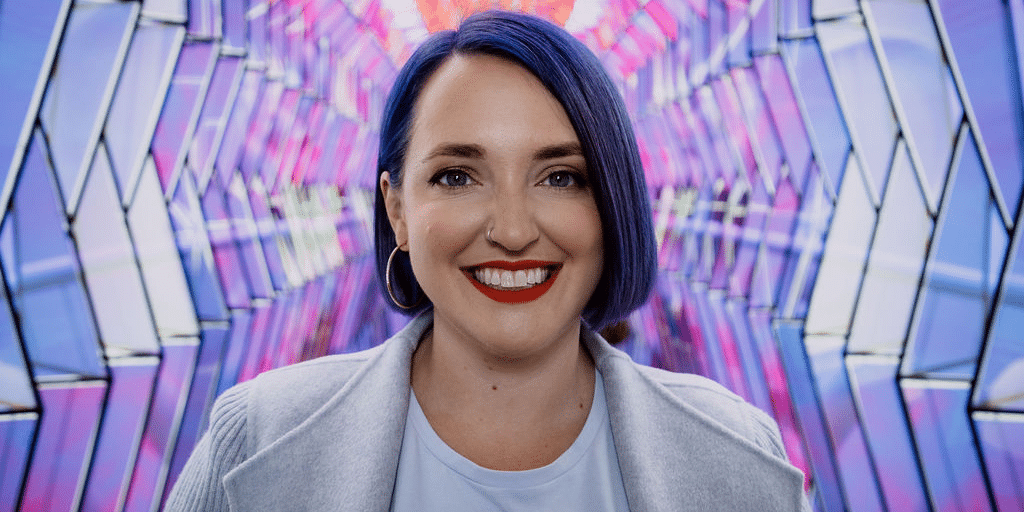
We’re thrilled to introduce Aubrey Blanche, our new Director of Ethical Advisory & Strategic Partnerships, who will lead our engagements with organisational partners looking to operate with the highest standards of ethical governance and leadership.
Aubrey is a responsible governance executive with 15 years of impact. An expert in issues of workplace fairness and the ethics of artificial intelligence, her experience spans HR, ESG, communications, and go-to-market strategy. She seeks to question and reimagine the systems that surround us to ensure that all can build a better world. A regular speaker and writer on issues of ethical business, finance, and technology, she has appeared on stages and in media outlets all over the world.
To better understand the work she’ll be doing with The Ethics Centre, we sat down with Aubrey to discuss her views on AI, corporate responsibility, and sustainability.
We’ve seen the proliferation of AI impact the way in which we work. What does responsible AI use look like to you – for both individuals and organisations?
I think that the first step to responsibility in AI is questioning whether we use it at all! While I believe it is and will be a transformative technology, there are major downsides I don’t think we talk about enough. We know that it’s not quite as effective as many people running frontier AI labs aim to make us believe, and it uses an incredible amount of natural resources for what can sometimes be mediocre returns.
Next, I think that to really achieve responsibility we need partnerships between the public and private sector. I think that we need to ensure that we’re applying existing regulation to this technology, whether that’s copyright law in the case of training, consumer protection in the case of chatbots interacting with children, or criminal prosecution regarding deepfake pornography. We also need business leaders to take ethics seriously, and to build safeguards into every stage from design to deployment. We need enterprises to refuse to buy from vendors that can’t show their investments in ensuring their products are safe.
And last, we need civil society to actively participate in incentivising those actors to behave in ways that are of benefit to all of society (not just shareholders or wealthy donors). That means voting for politicians that support policies that support collective wellbeing, boycotting companies complicit in harms, and having conversations within their communities about how these technologies can be used safely.
In a time where public trust is low in businesses, how can they operate fairly and responsibly?
I think the best way that businesses can build responsibility is to be more specific. I think people are tired of hearing “We’re committed to…”. There’s just been too much greenwashing, too much ethics washing, and too many “commitments” to diversity that haven’t been backed up by real investment or progress. The way through that is to define the specific objectives you have in relation to responsibility topics, publish your specific goals, and regularly report on your progress – even if it’s modest.
And most importantly, do this even when trust is low. In a time of disillusionment, you’ll need to have the moral courage to do the right thing even when there is less short-term “credit” for it.
How can we incentivise corporations to take responsible action on environmental issues?
I think that regulation can be a powerful motivator. I’m really excited that the Australian Accounting Standards Board is bringing new requirements into force that, at least for large companies, will force them to proactively manage climate risks and their impacts. While I don’t think it’s the whole answer, a regulatory “push” can be what’s needed for executives to see that actively thinking about climate in the context of their operations can be broadly beneficial to operations.
What are you most excited about sinking your teeth into at The Ethics Centre?
There’s so much to be excited about! But something that I’ve found wildly inspiring is working with our Young Ambassadors – early career professionals in banking and financial services who are working with us to develop their ethical leadership skills. While I have enjoyed working with our members – and have spent the last 15 years working with leaders in various areas of corporate responsibility – there nothing quite like the optimism you get when learning from people who care so much and who show us what future is possible.
Lastly – the big one, what does ethics mean to you?
A former boss of mine once told me that leadership is not about making the right choice when you have one: it’s about making the best choice you can when you have terrible ones and living with that choice. I think in many cases that’s what ethics is. It gives us a framework not to do the right thing when the answer is clear, but to align ourselves as closely as we can with our values and the greater good when our options are messy, complicated, or confusing.
Personally, I’ve spent a deep amount of time thinking about my values, and if I were forced to distill them down to two, I would wholeheartedly choose justice and compassion. I have found that when I consider choices through those frames, I both feel more like myself and like I’ve made choices that are a net good in the world. And I’ve been lucky enough to spend my career in roles where I got to live those values – that’s a privilege I don’t take for granted, and one of the reasons I’m so thrilled to be in this new role with The Ethics Centre.
BY The Ethics Centre
The Ethics Centre is a not-for-profit organisation developing innovative programs, services and experiences, designed to bring ethics to the centre of professional and personal life.
Ethics in your inbox.
Get the latest inspiration, intelligence, events & more.
By signing up you agree to our privacy policy